


Secondary sourceSculpture
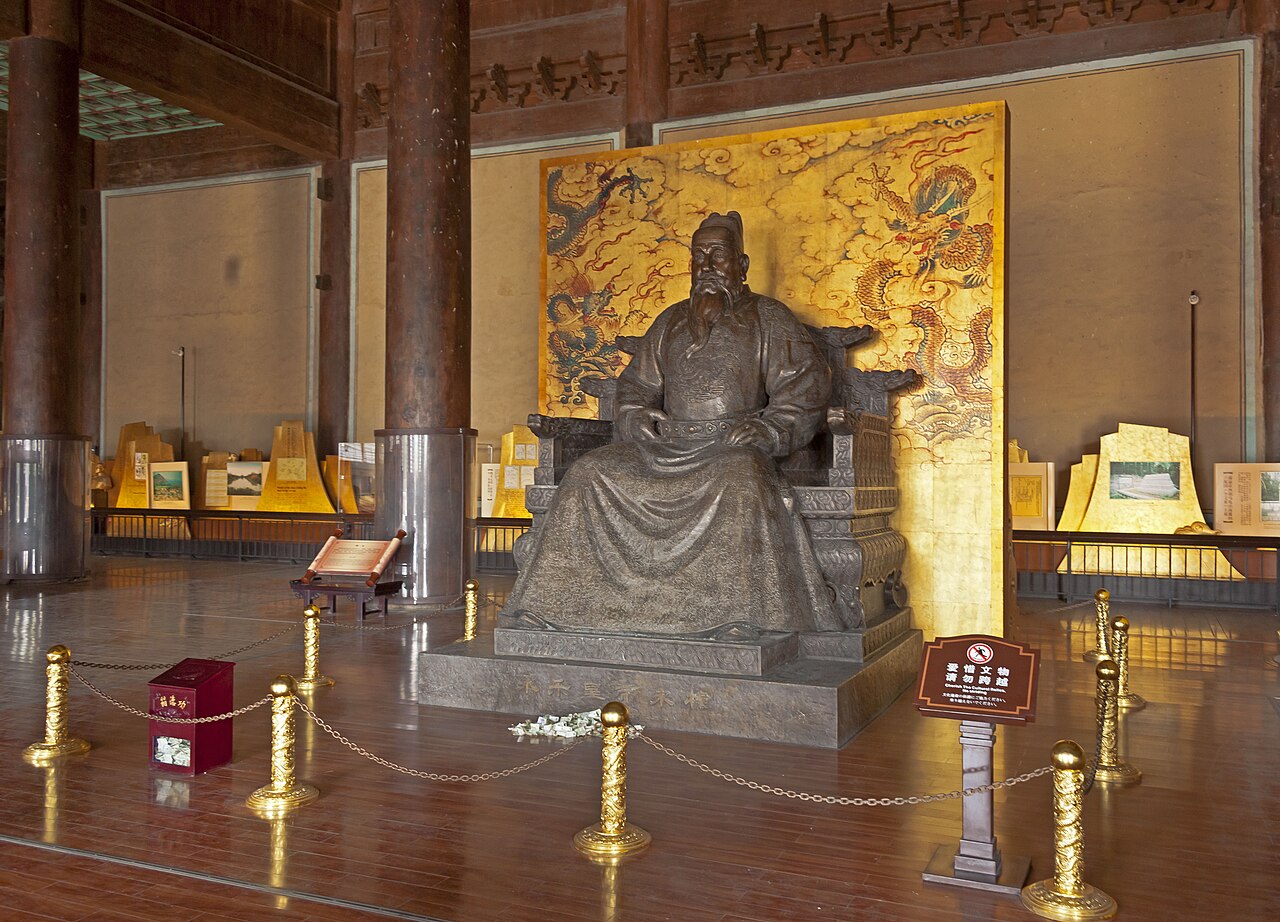
Statue of the Yongle Emperor at Lingen Gate, Changling Tomb
A large bronze seated statue of the Yongle Emperor at the Changling tomb complex outside Beijing. It is a later memorial figure, not a contemporary portrait, and it honors the emperor who was buried there.
The statue commemorates the Yongle Emperor at his own tomb, so it shows how later China honored him as the ruler buried at Changling.
About this source
What it is
This is a bronze statue of the Yongle Emperor, shown seated on a throne with a long-robed, bearded figure. It stands inside a wooden hall at Lingen Gate, in the tomb complex of Changling, outside Beijing. The photograph was taken by Daniel Case on 1 April 2014. The statue was made long after the emperor's death in 1424, so it shows how later generations chose to remember him rather than how he looked in life.
Why it matters
Yongle ruled the Ming dynasty from 1402 to 1424 and was buried at Changling. Imperial tombs and statues like this one were built to honor past rulers and to mark their place in dynastic history. Looking at a later memorial helps students see that many images of historical rulers were created by people who came after them, with their own purposes.
Look closer
- What details of clothing, throne, and setting does the statue use to show the emperor's power?
- Who would have commissioned a statue like this, and what message did they want visitors to take away?
- What does the statue leave out about the emperor's actual life, and how could you find out more about it?
This sculpture is part of the curated material that grounds the AI version of Yongle Emperor on Humy.ai — when students ask about related events, the AI can quote it and cite it.
More Yongle Emperor sources
Meet the AI Yongle Emperor →
Ready when you are
Start chatting with Yongle Emperor now.
20 messages free · No credit card · Available in 50+ languages.