


Secondary sourcePhotograph c. 1527
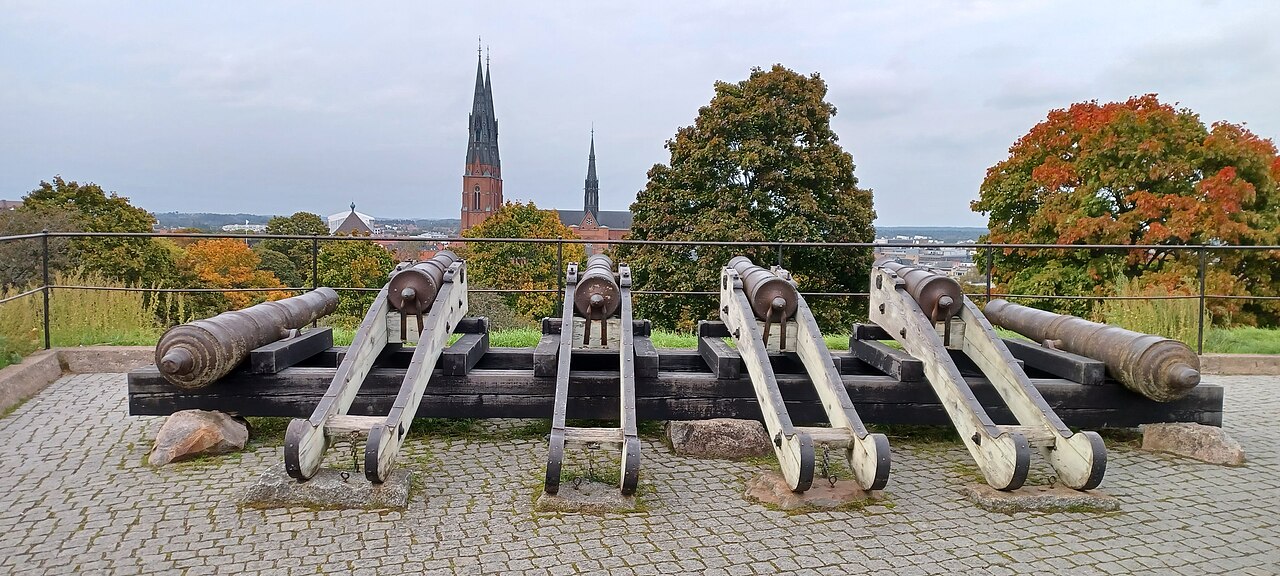
Sty rbiskop Gun Battery, Uppsala Castle
Pi neappleDolly · c. 1527
A battery of cannons at Uppsala Castle, built under Gustav Vasa and aimed at the archbishop's cathedral.
Thi s battery, built under Gustav I, visibly aimed cannons at the cathedral to intimidate church authorities.
About this source
What it is
This is a row of old iron cannons on wooden carriages, part of the Styrbiskop ('Bishop-Controller') gun battery at Uppsala Castle in Sweden. It dates from the 16th century, during the reign of King Gustav Vasa, and sits within the castle's fortifications, pointed toward Uppsala Cathedral.
Why it matters
The battery's name and aim were no accident: it was meant as a constant threat against the archbishop and the church authorities who might resist the crown. This is a striking physical symbol of how Gustav Vasa subordinated the Swedish church to royal power during the Reformation, turning a fortress into a direct warning to Sweden's religious leadership.
Look closer
- Why point cannons at a cathedral rather than at an enemy army?
- What does naming a weapon 'Bishop-Controller' tell you about its intended message?
- What does this tell you about the relationship between crown and church under Gustav Vasa?
This photograph is part of the curated material that grounds the AI version of Gustav Vasa on Humy.ai — when students ask about related events, the AI can quote it and cite it.
More Gustav Vasa sources
Browse all 94 →





Ready when you are
Start chatting with Gustav Vasa now.
20 messages free · No credit card · Available in 50+ languages.