


Secondary sourcePainting1616
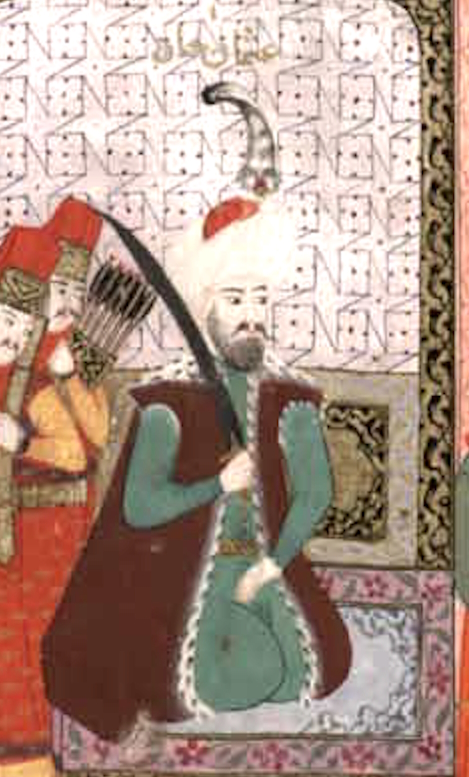
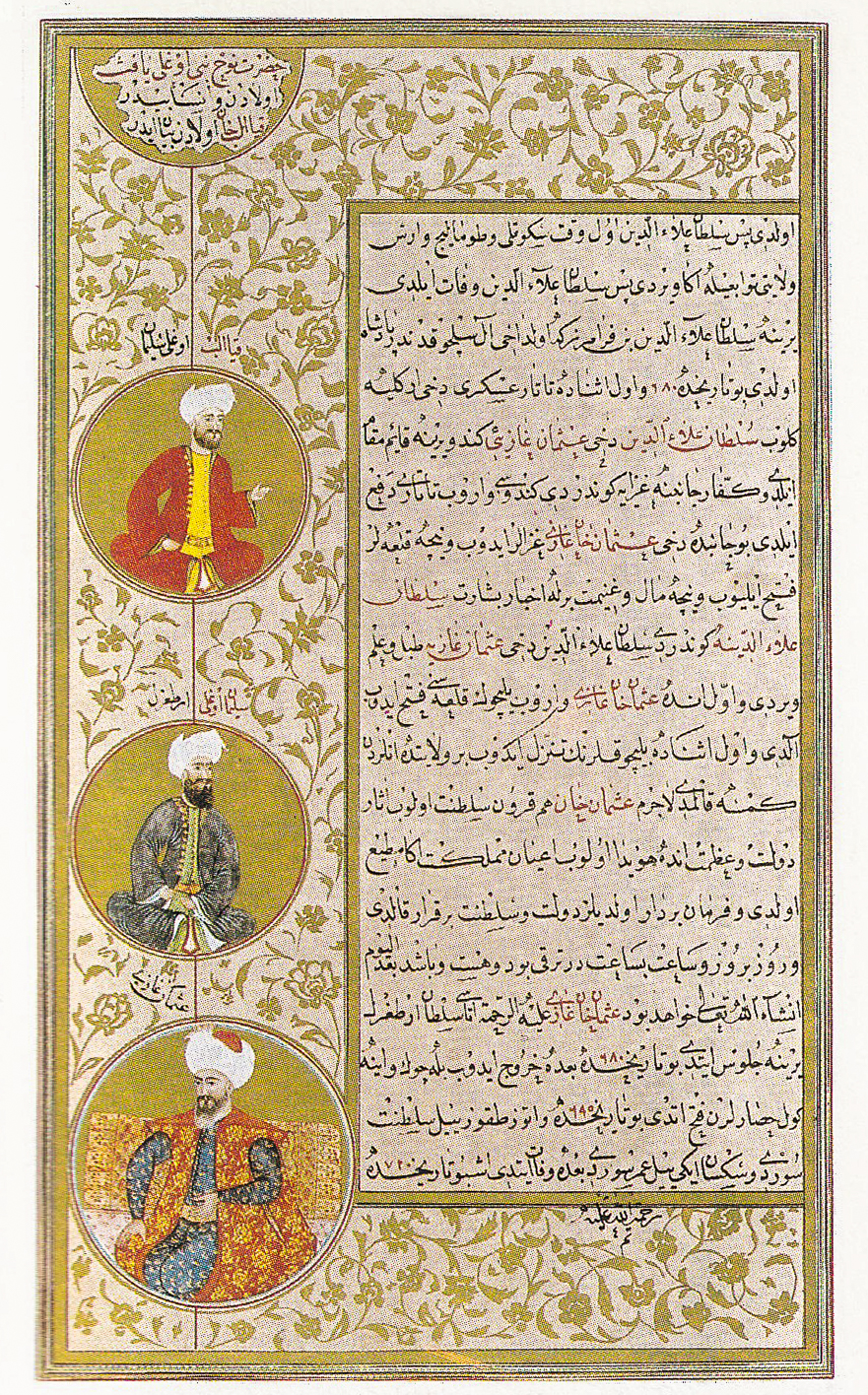
Sultan Osman in the Tacü't-Tevarih Manuscript
1616
A 1616 miniature detail showing Osman I, son of Ertuğrul, from an illustrated Ottoman history manuscript.
Depicting Ertuğrul's son and successor Osman I, this later manuscript image reflects how the Ottomans remembered their founding family.
About this source
What it is
This is a detail from a miniature painting in the Tâcü't-Tevârîh ('Crown of Histories'), an illustrated Ottoman history manuscript made in 1616. It shows Sultan Osman I in rich dress holding a curved sword, surrounded by attendants, and is held at Istanbul University Library.
Why it matters
Osman I was the son and successor of Ertuğrul, and he founded the Ottoman dynasty. This image, made more than three centuries after Osman's death, reflects how later Ottoman artists and historians imagined the dynasty's founder, reinforcing a heroic memory of the family's origins that included Ertuğrul as the founding ancestor.
Look closer
- What details of clothing, color, and posture make Osman look powerful in this image?
- Why would a history written centuries after Osman's death include an illustrated portrait of him?
- What might this image leave out about the real, less glamorous beginnings of the Ottoman state?
This painting is part of the curated material that grounds the AI version of Ertuğrul and Osman I on Humy.ai — when students ask about related events, the AI can quote it and cite it.
More Ertuğrul sources
Browse all 35 →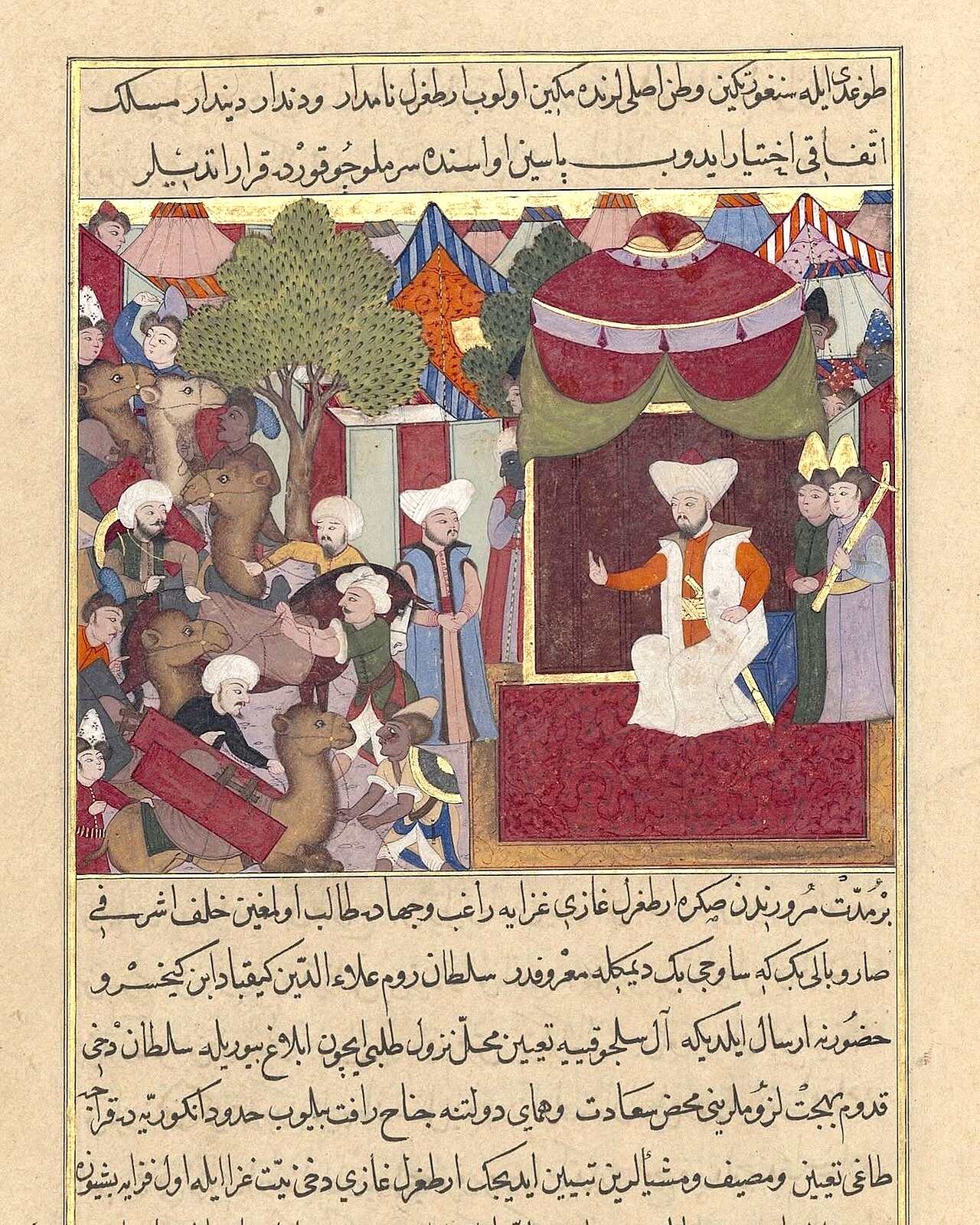 Painting
Primary source
Ertugrul Sends Savci Bey
1616
 Painting
Secondary source
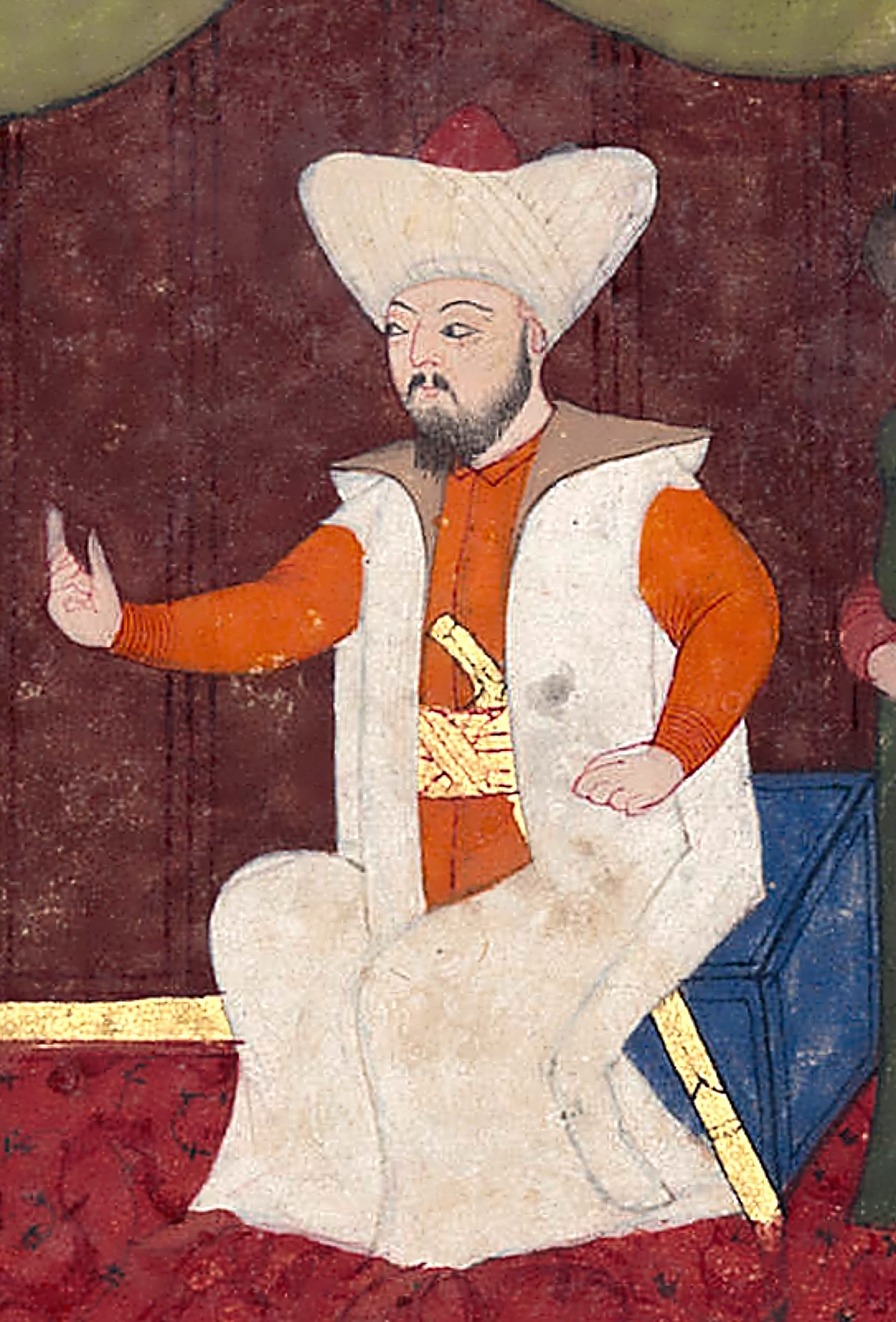
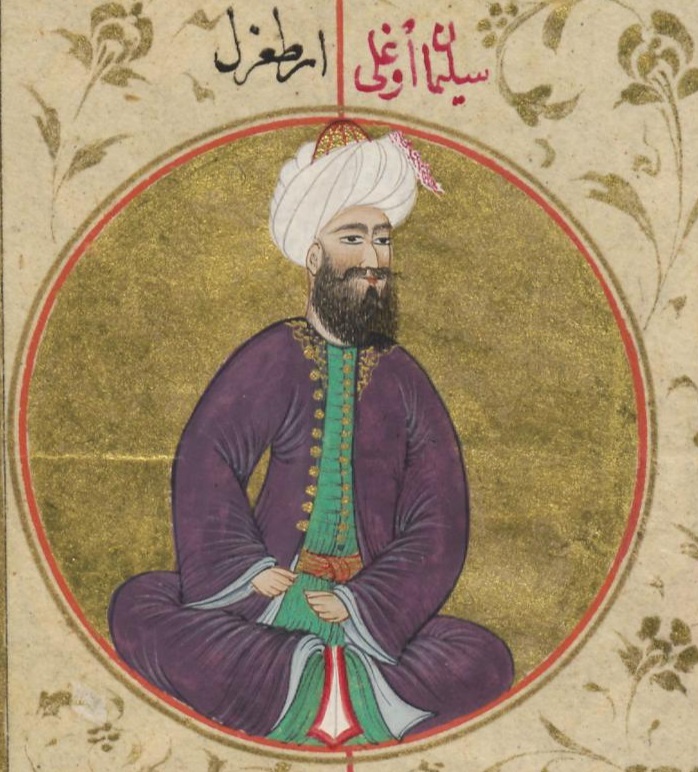
Portrait of Ertuğrul (Enthroned)
Unknown 1616 court artist · 1616
 Painting
Secondary source
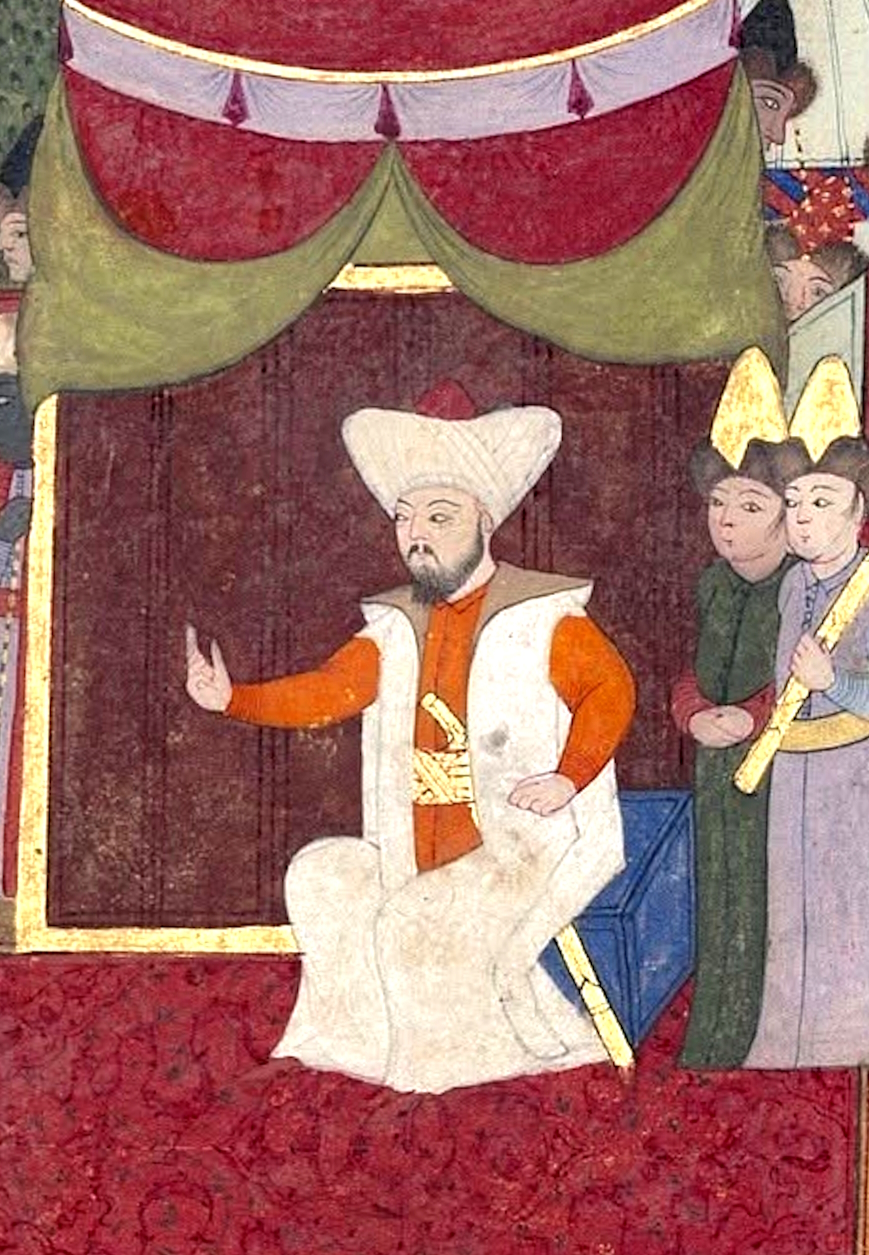
Ertuğrul (Enthroned), Taj al-Tawarikh Miniature
Unknown 1616 court artist · 1616
 Artifact
Secondary source
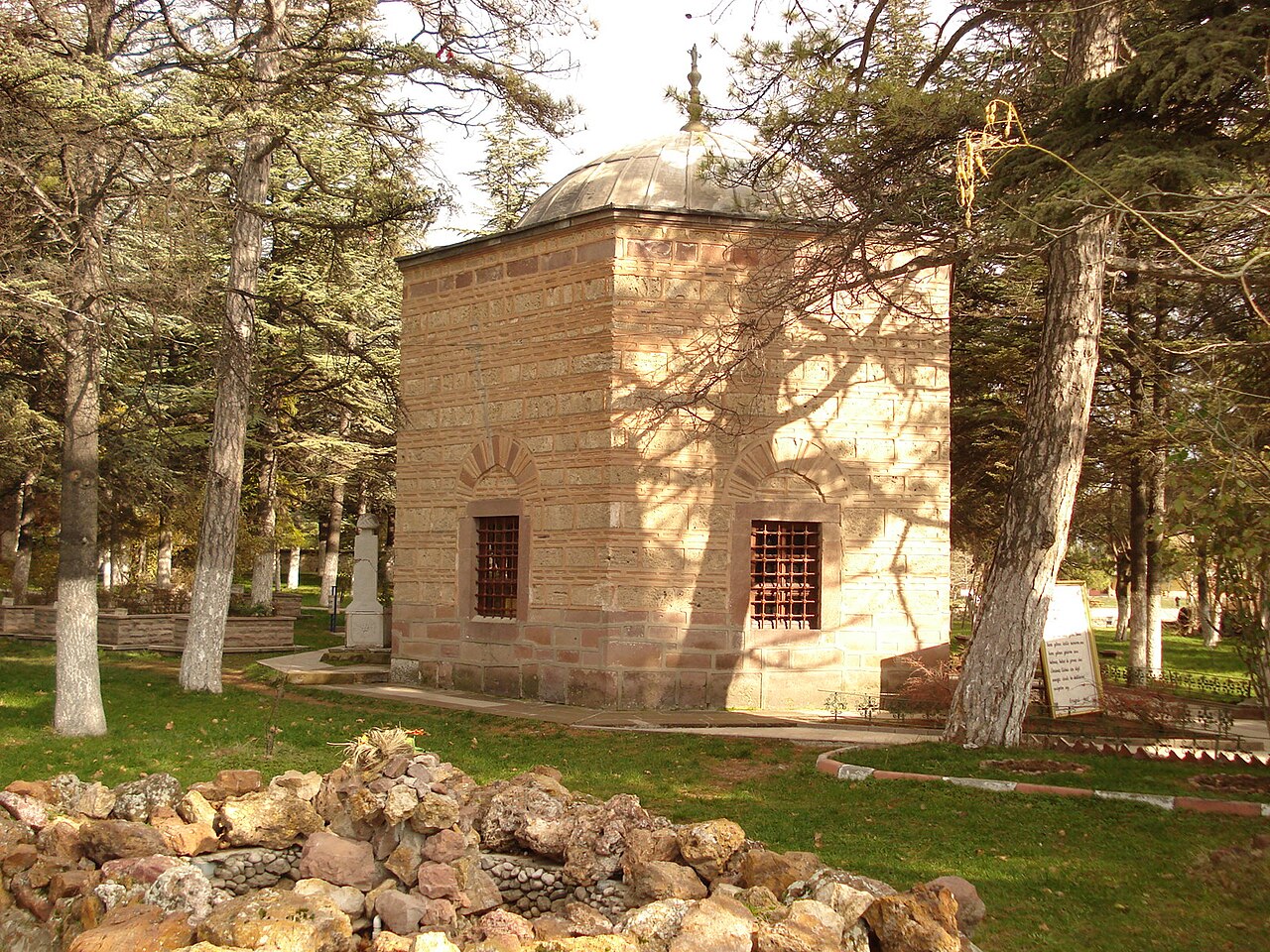
Tomb of Ertuğrul Gazi, Söğüt
Traditionally Osman I; rebuilt under Abdülhamid II · Late 13th century (tradition); rebuilt 1880s
Free account
Read every Ertuğrul source
Sign up free →
Ready when you are
Start chatting with Ertuğrul now.
20 messages free · No credit card · Available in 50+ languages.