


Primary sourcePaintingearly 17th century
Sumiyoshi Taisha Screen
Unidentified artist · early 17th century
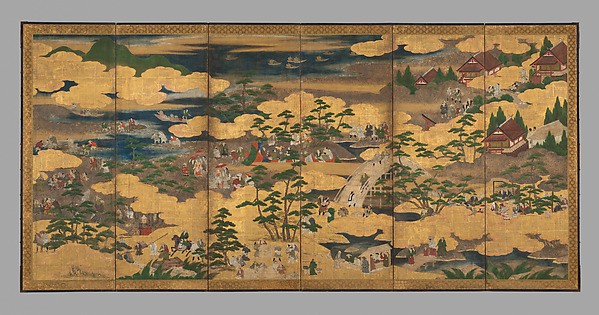
An early 17th-century Japanese folding screen showing a landscape and shrine scene from the same Edo period in which Musashi lived.
A screen from Musashi's own era, giving context for the artistic and religious world of his lifetime.
About this source
What it is
This six-panel folding screen was made by an unidentified artist in the early 17th century, during the Edo period. It uses ink, colour, silver, and gold leaf on paper to show a landscape with pine trees, a river with boats, and shrine buildings, likely connected to Sumiyoshi Taisha. It is now held at The Metropolitan Museum of Art.
Why it matters
The screen does not depict Musashi himself, but it comes from the same era and artistic world he lived in. Screens like this were luxury objects, showing the wealth, religious life, and artistic styles of early Edo-period Japan, the backdrop against which Musashi's career as a swordsman and writer took place.
Look closer
- What details in the screen tell us about religious or daily life in Edo-period Japan?
- Why do you think gold leaf and silver were used in this artwork?
- How might an object like this help us imagine the world Musashi moved through, even without showing him directly?
This painting is part of the curated material that grounds the AI version of Musashi Miyamoto on Humy.ai — when students ask about related events, the AI can quote it and cite it.
More Musashi Miyamoto sources
Meet the AI Musashi Miyamoto →

Ready when you are
Start chatting with Musashi Miyamoto now.
20 messages free · No credit card · Available in 50+ languages.