


Primary sourcePainting17th century
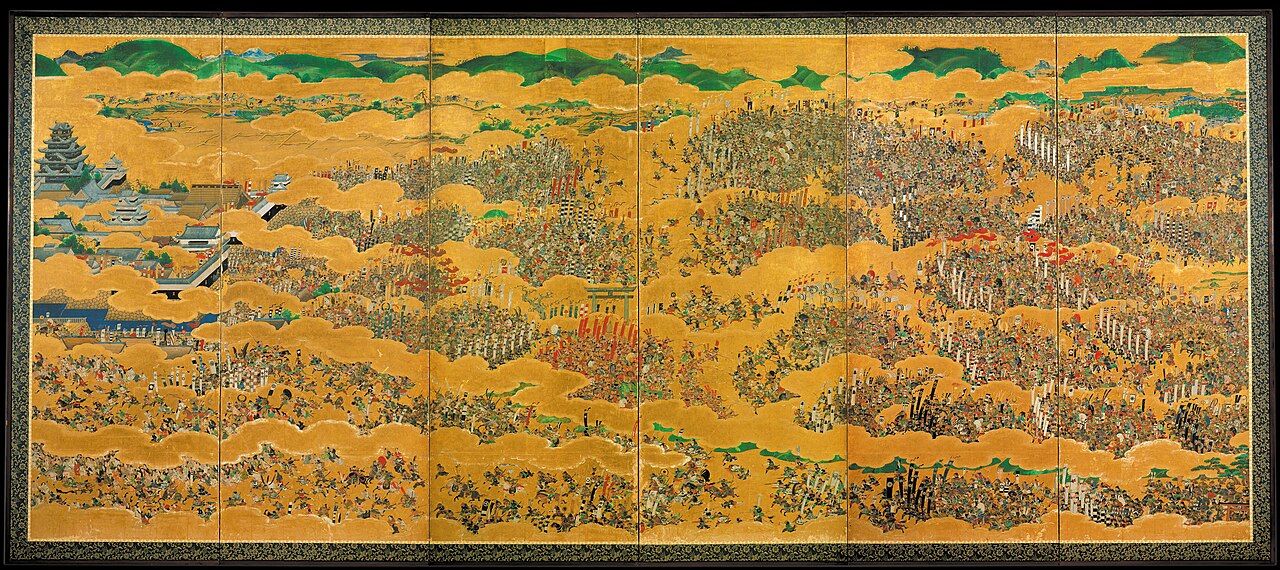
Summer Siege of Osaka Screen
Unknown (anonymous court painters) · 17th century
A 17th-century gold-leaf folding screen depicting the Siege of Osaka, the battle in which Musashi fought for the Tokugawa side.
Depicts the Siege of Osaka, the historic battle in which Musashi fought on the Tokugawa side.
About this source
What it is
This six-panel gold-leaf folding screen, known as the Kuroda Screen, was commissioned by the daimyo Kuroda Nagamasa, who himself fought in the Siege of Osaka. It was painted by leading artists of the time and shows a panoramic view of the battle.
Why it matters
The Siege of Osaka in 1615 was a major turning point in Japanese history, securing Tokugawa rule. Miyamoto Musashi is recorded as having fought on the Tokugawa side in this campaign, making this screen important visual evidence of the world and conflicts he lived through.
Look closer
- What does the scale and detail of the screen tell us about how important this battle was considered?
- Why would a commander like Kuroda Nagamasa want such a grand depiction made?
- What might be missing from this heroic depiction of war?
This painting is part of the curated material that grounds the AI version of Musashi Miyamoto on Humy.ai — when students ask about related events, the AI can quote it and cite it.
More Musashi Miyamoto sources
Meet the AI Musashi Miyamoto →

Ready when you are
Start chatting with Musashi Miyamoto now.
20 messages free · No credit card · Available in 50+ languages.