


Primary sourcePaintingc. 1850
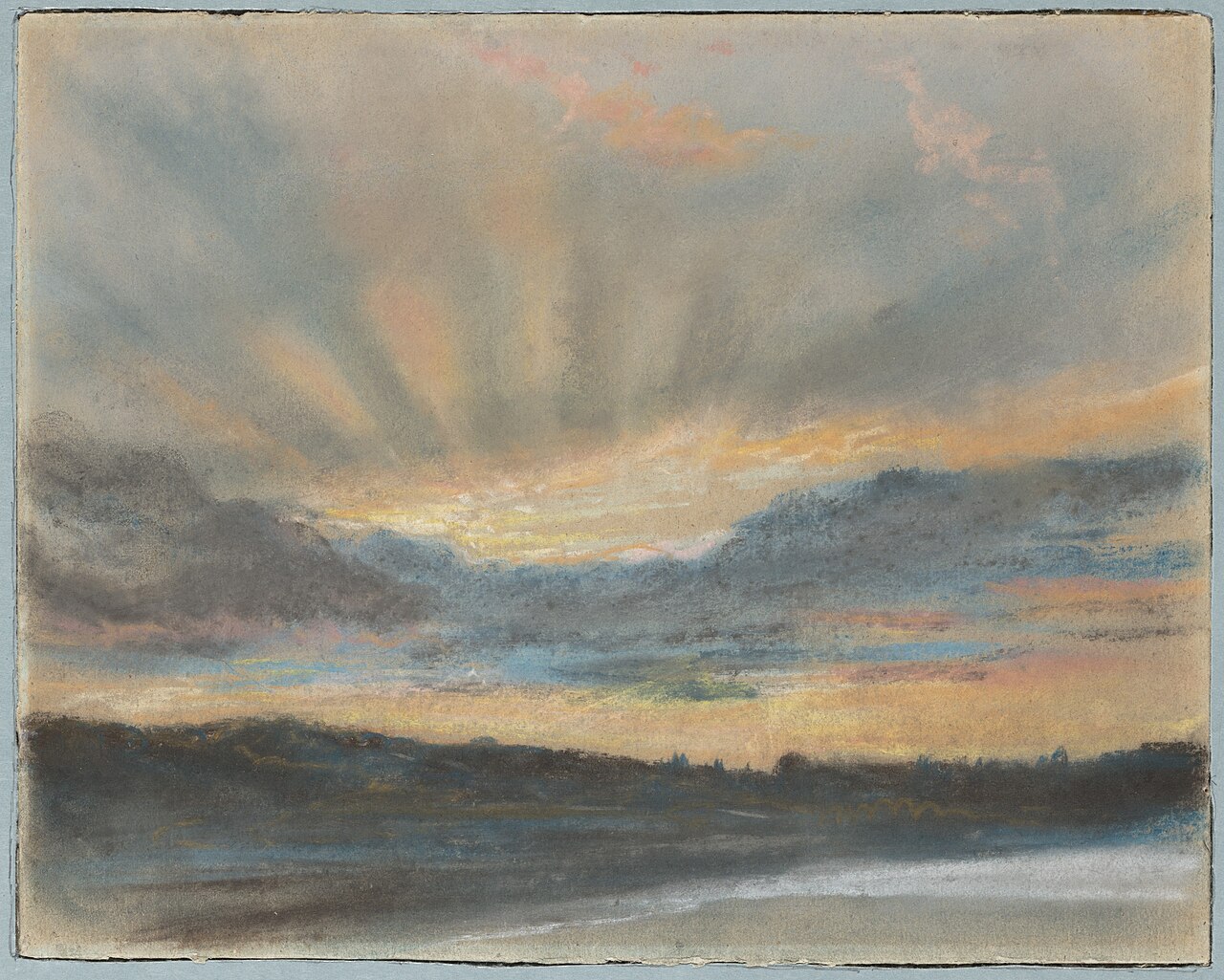
Sunset
Eugène Delacroix · c. 1850
A mid-19th-century oil pastel drawing by Eugène Delacroix showing a sunset over a landscape. It is held by the Metropolitan Museum of Art and reflects his later interest in landscape.
Delacroix made this landscape study himself in his later years, showing a side of his work beyond his figure paintings.
About this source
What it is
This oil pastel drawing by Eugène Delacroix was made around 1850 on lined paper. It is held by the Metropolitan Museum of Art. It shows a sunset behind and above a gently sloping landscape. Rays of orange and yellow light break through grey and blue clouds, with pink streaks at the top. Dark hills and trees line the horizon.
Why it matters
Delacroix is best known for his figure paintings, but in his later years he also made expressive landscapes. In this drawing, the sunlight breaks through two bands of cloud. Some writers have compared it with his earlier work on the Galerie d'Apollon. The Metropolitan's curators describe it as a sky study that shows his free observation of colour, an approach that anticipated Impressionism.
Look closer
- Where does the light seem strongest, and how do the colours create that effect?
- Why might an artist known for crowded figure scenes have studied an empty sky?
- What does a single sunset leave out about the land and people below it?
This painting is part of the curated material that grounds the AI version of Eugène Delacroix on Humy.ai — when students ask about related events, the AI can quote it and cite it.
More Eugène Delacroix sources
Browse all 95 →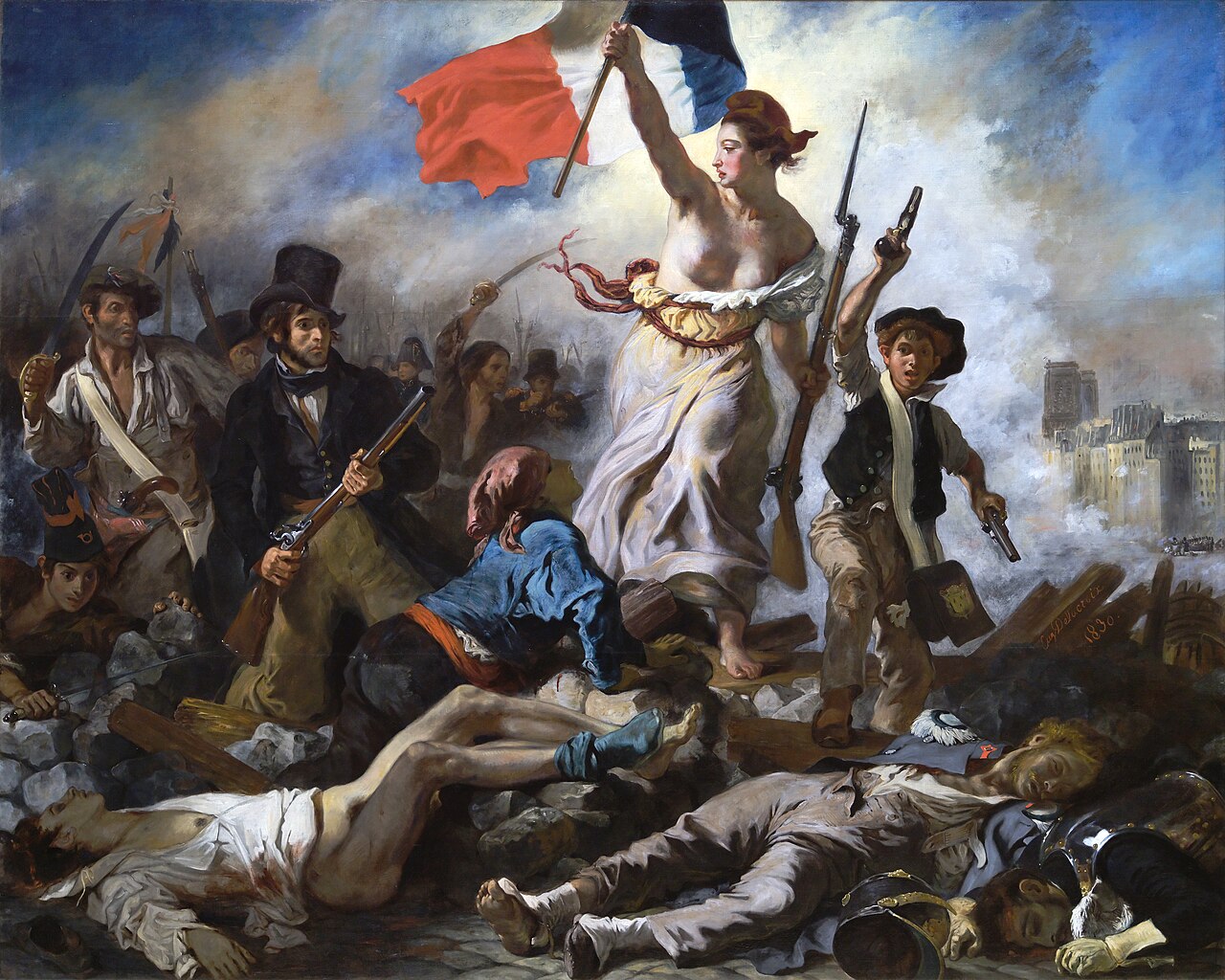 Painting
Primary source
Liberty Leading the People
Eugène Delacroix · 1830
 Painting
Secondary source
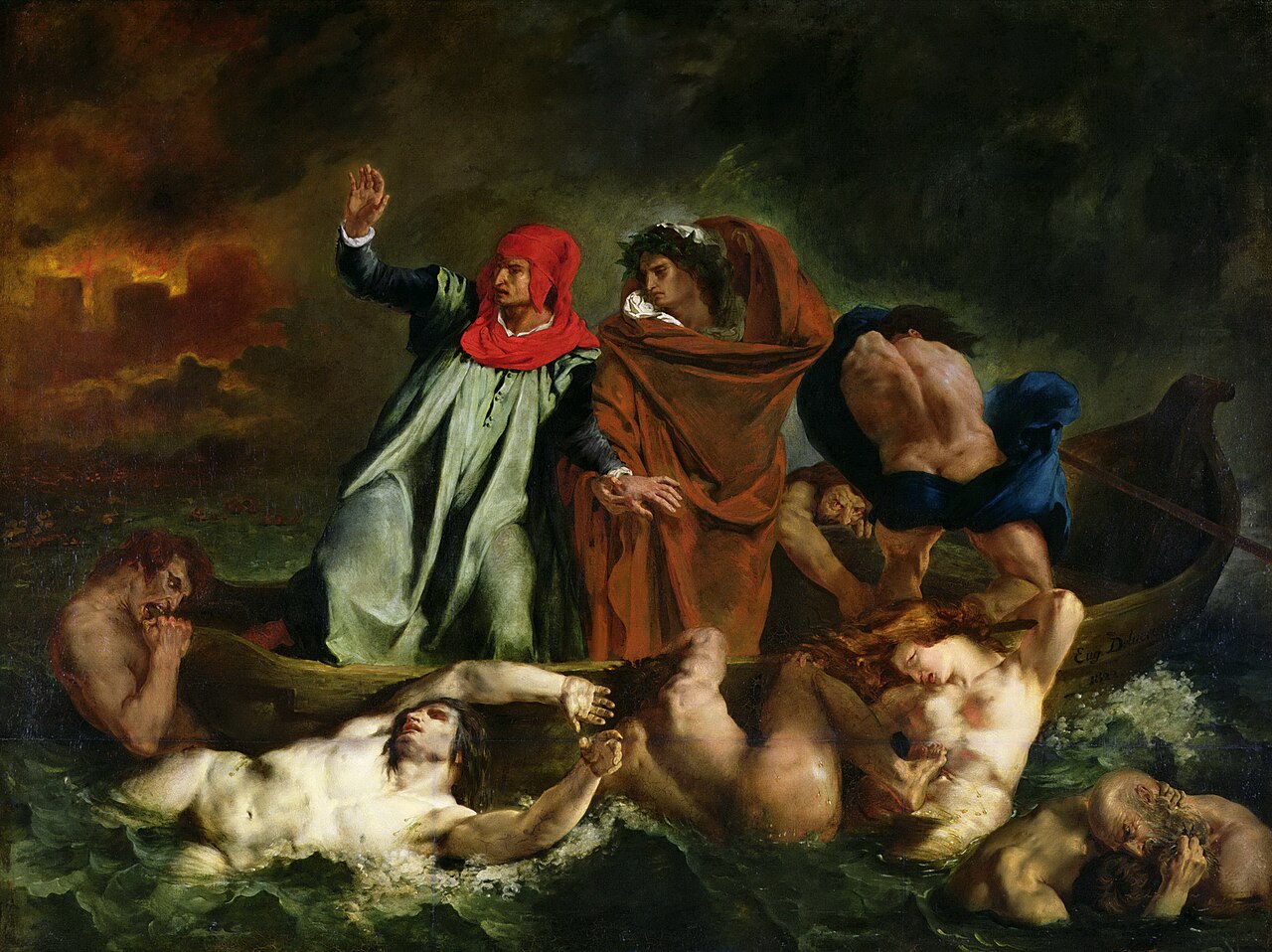
The Barque of Dante
Eugène Delacroix · 1822
 Painting
Primary source
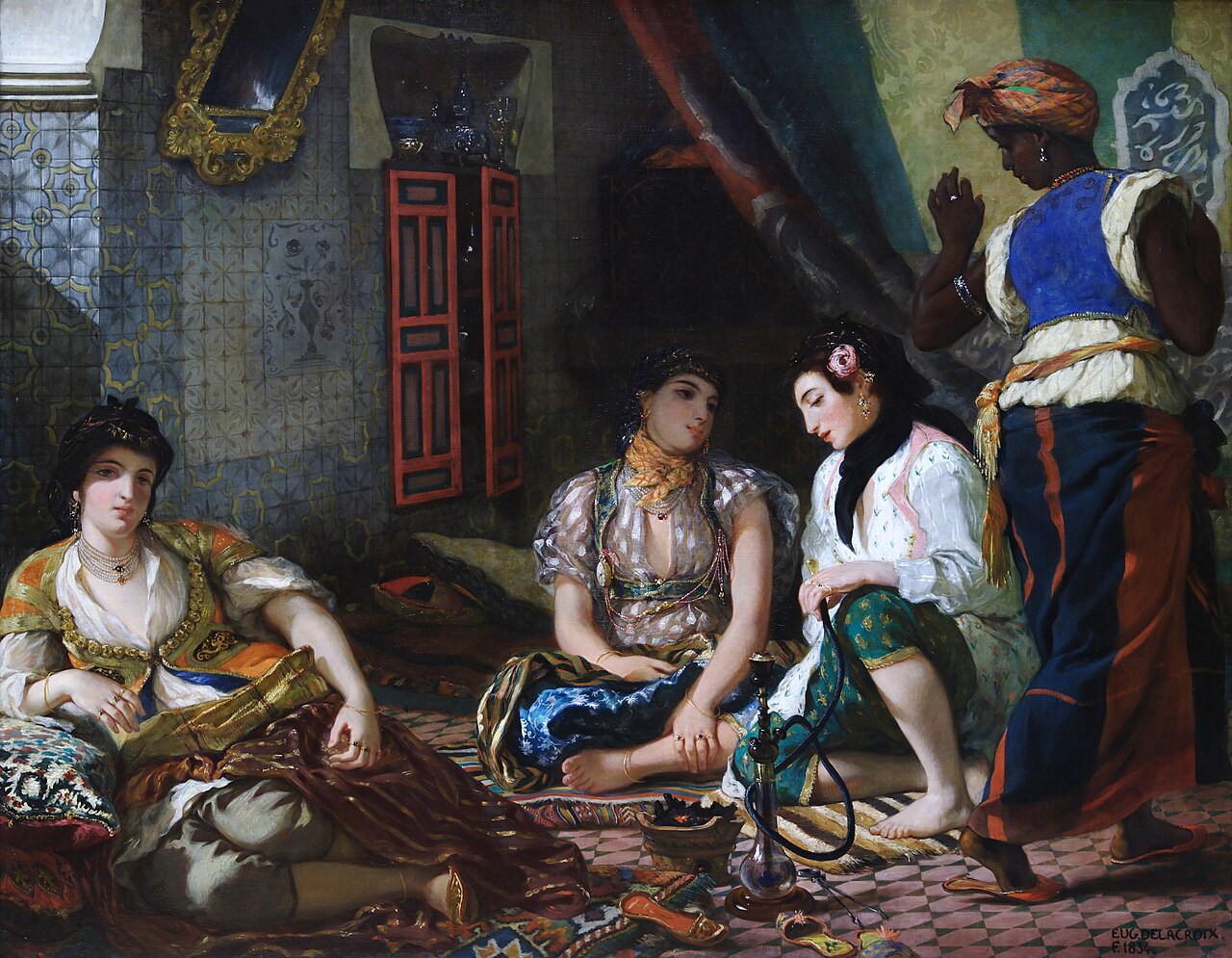
Women of Algiers
Eugène Delacroix · 1834
Primary source
Journal of Delacroix
Eugène Delacroix · 1822–1863
Free account
Read every Eugène Delacroix source
Sign up free →
Ready when you are
Start chatting with Eugène Delacroix now.
20 messages free · No credit card · Available in 50+ languages.