


Secondary sourcePainting1742
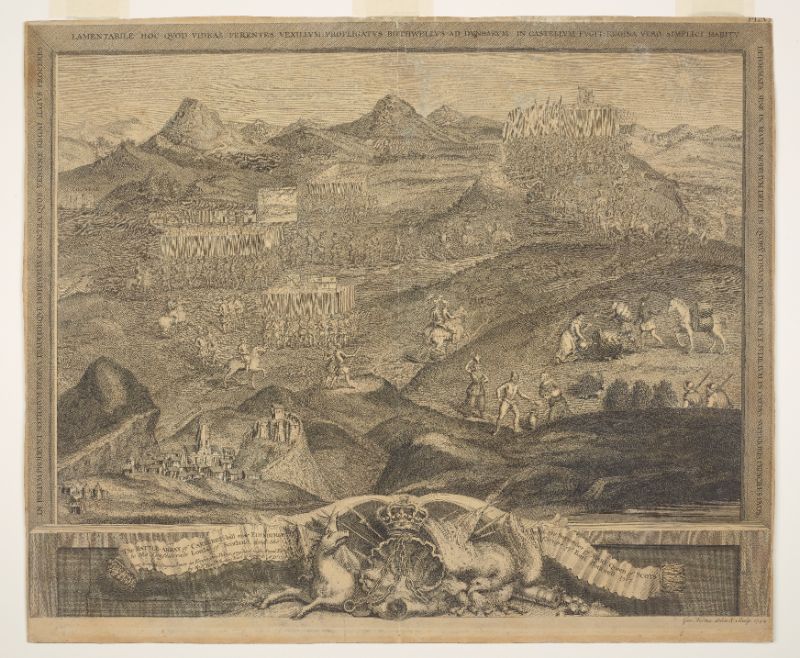
Surrender of Mary Queen of Scots at Carberry Hill
George Vertue (after Livinus de Vogelaare) · 1742
A 1742 engraving by George Vertue, copied from a 1738 painting, showing Mary's surrender to the confederate lords in 1567.
Shows the surrender of Mary at Carberry Hill in 1567, a turning point in her reign, as later remembered.
About this source
What it is
This is a black-and-white engraving and etching made by George Vertue in London in 1742. It copies a painting dated 1738 that is attributed to Livinus de Vogelaare, whose current whereabouts are unknown. The scene shows the Battle of Carberry Hill on 15 June 1567, where Mary, on horseback, approaches the confederate lords. Massed armies, mounted riders, foot soldiers and a fortified castle appear in the landscape, with Latin inscriptions along the top and a coat of arms at the bottom. The Chester Beatty library holds the print.
Why it matters
Mary surrendered to the confederate lords at Carberry Hill in 1567, and this engraving shows how that moment was remembered in the 18th century. Because it copies a painting now lost to view, it is two steps away from the event. The Latin inscriptions and heraldic symbols show how the image was meant to look official and historical.
Look closer
- Which side does Mary appear to be on, and how do the standards help you identify the lords?
- Why might an engraver in 1742 copy a painting from 1738 instead of showing the battle directly?
- What does the print leave out about the escape of Earl Bothwell that its title mentions?
This painting is part of the curated material that grounds the AI version of Mary, Queen of Scots on Humy.ai — when students ask about related events, the AI can quote it and cite it.
More Mary, Queen of Scots sources
Browse all 88 →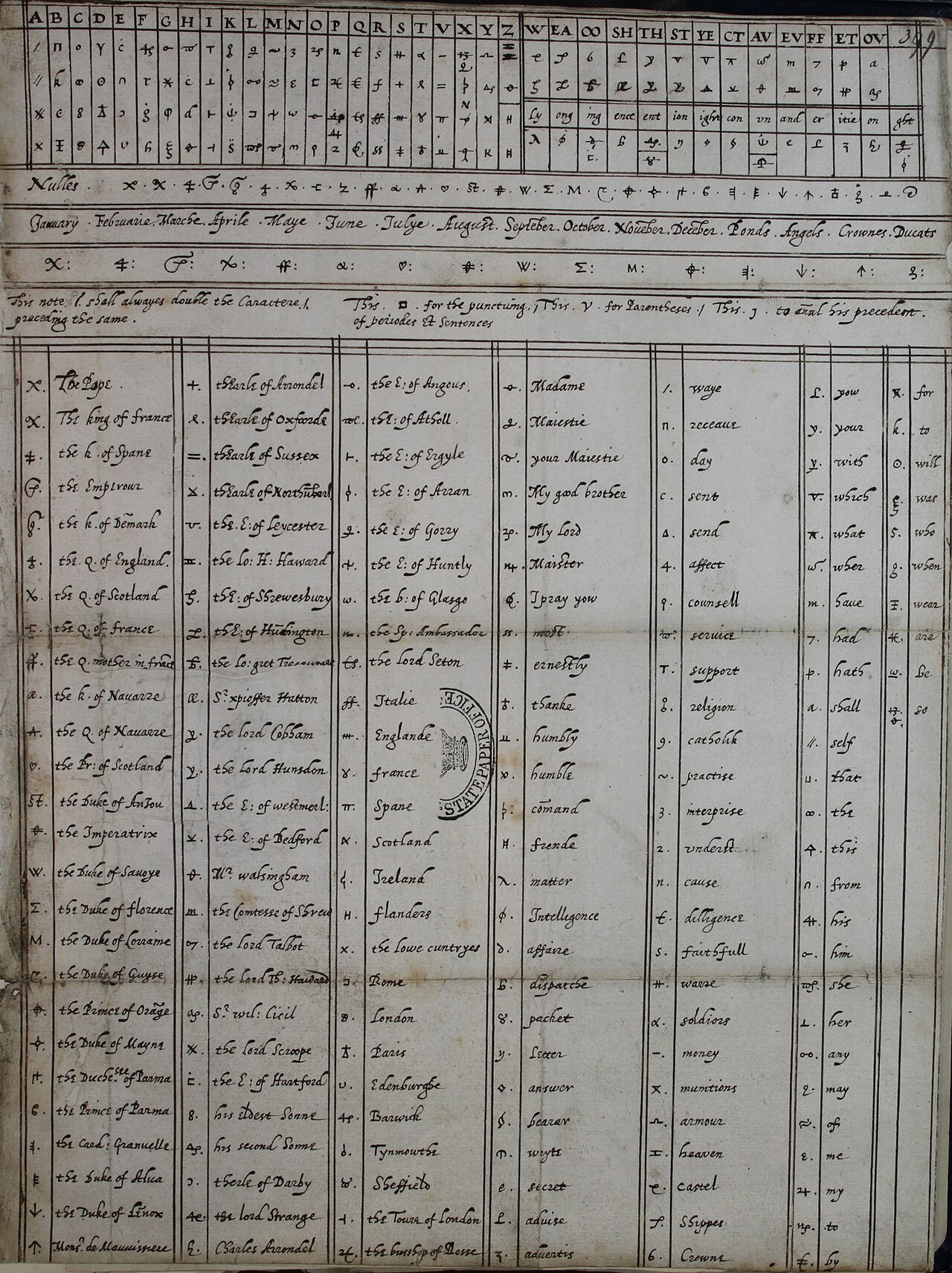 Document
Primary source
Cipher and Code Tables of Mary, Queen of Scots
Mary, Queen of Scots
 Painting
Primary source
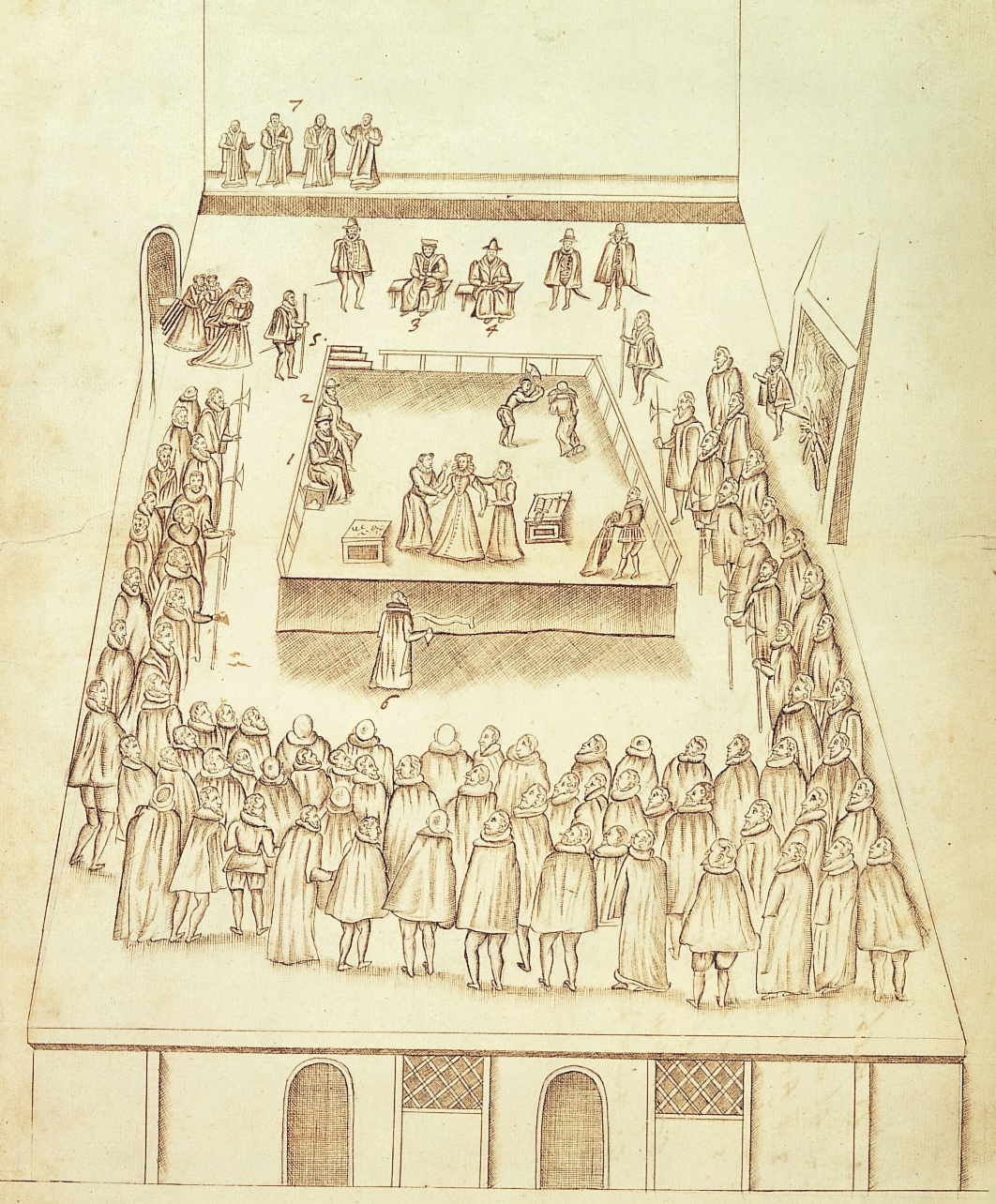
Drawing of the Execution of Mary, Queen of Scots at Fotheringhay
Unknown artist (Beale papers) · 1587
 Painting
Primary source
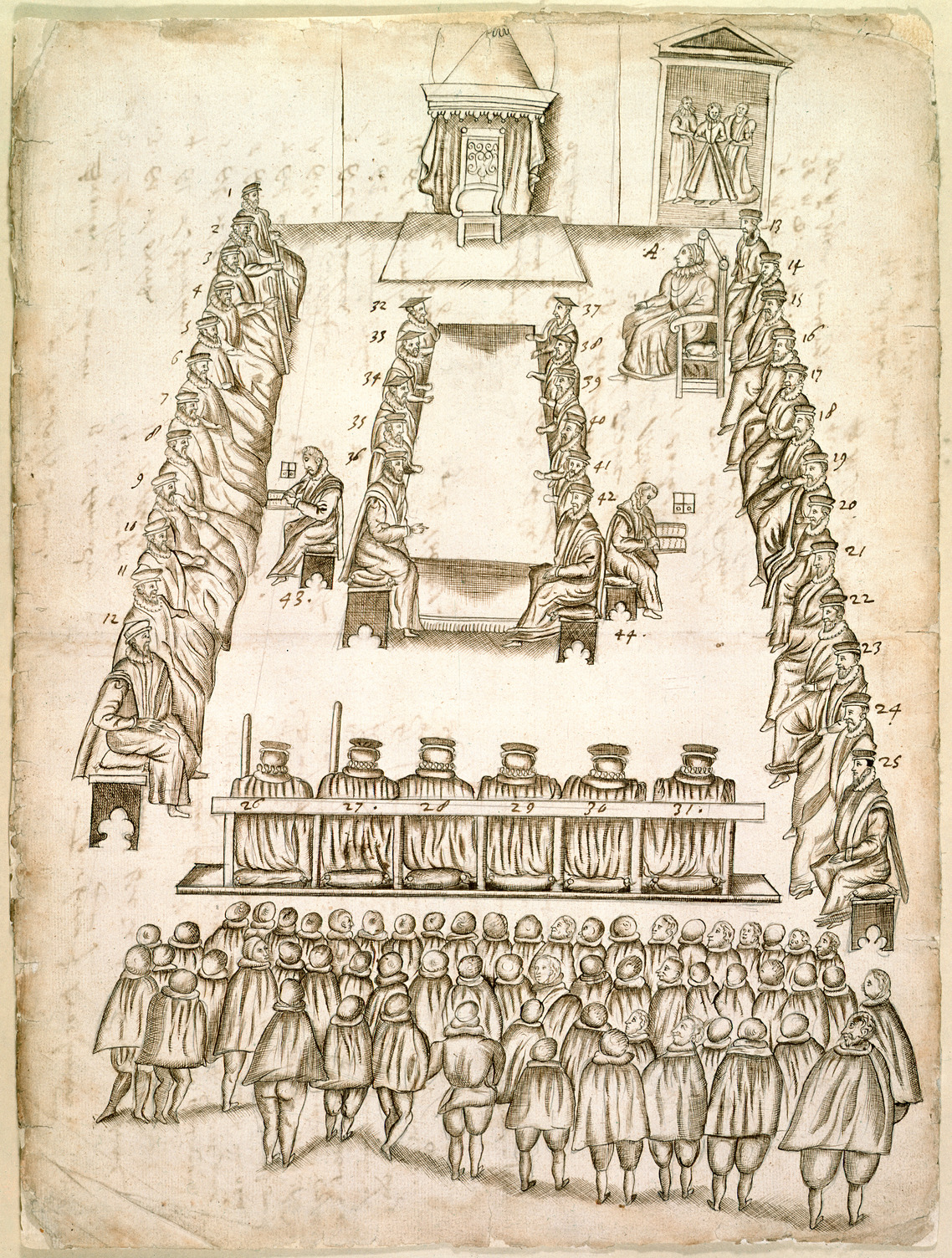
Drawing of the Trial of Mary, Queen of Scots
Unknown artist · 14-15 October 1586
 Letter
Primary source
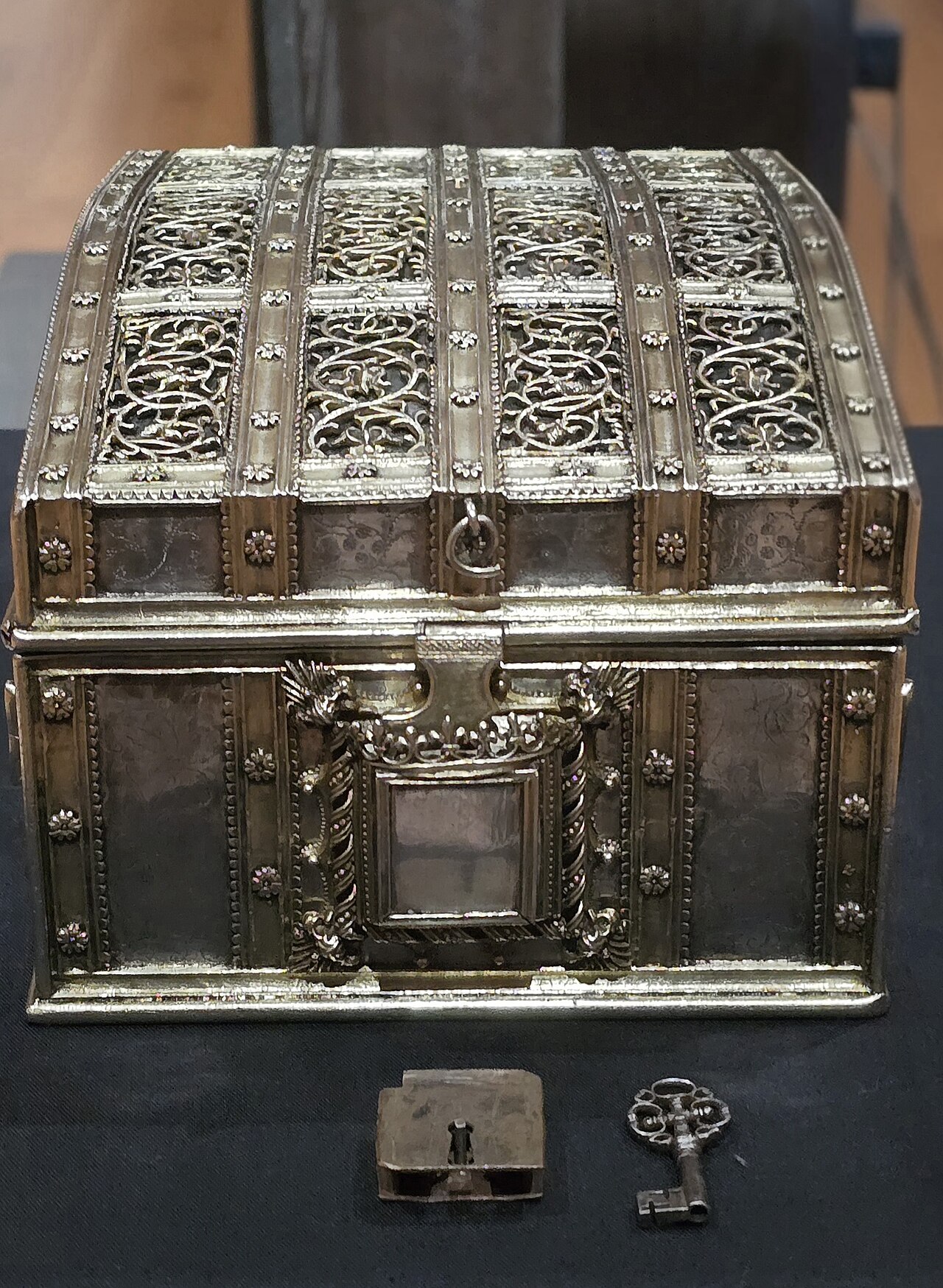
Casket Letters
Attributed to Mary, Queen of Scots (disputed) · January-April 1567
Free account
Read every Mary, Queen of Scots source
Sign up free →
Ready when you are
Start chatting with Mary, Queen of Scots now.
20 messages free · No credit card · Available in 50+ languages.