


Primary sourceDocument5 June 1950
Sweatt v. Painter
5 June 1950
A 1950 Supreme Court case that Marshall argued, forcing the University of Texas Law School to admit Heman Sweatt and undermining 'separate but equal'.
Marshall argued this case for Sweatt, part of his legal campaign against 'separate but equal' before Brown v. Board of Education.
About this source
What it is
This is the Supreme Court's 1950 decision in Sweatt v. Painter, which ruled in favor of Heman Sweatt, a Black man refused admission to the University of Texas Law School. The case was argued by Robert L. Carter and Thurgood Marshall of the NAACP.
Why it matters
The Court found that a separate law school created for Black students was not truly equal, weakening the 'separate but equal' doctrine from Plessy v. Ferguson. The decision was an important step toward Brown v. Board of Education four years later, and it showed Marshall's strategy of proving inequality through concrete facts about facilities and resources.
Look closer
- Why did the Court compare the number of professors, students, and library volumes at the two schools?
- Why do you think the Court avoided directly overturning Plessy in this case?
- What does the case tell you about the legal strategy Marshall used before Brown?
This document is part of the curated material that grounds the AI version of Thurgood Marshall on Humy.ai — when students ask about related events, the AI can quote it and cite it.
More Thurgood Marshall sources
Meet the AI Thurgood Marshall →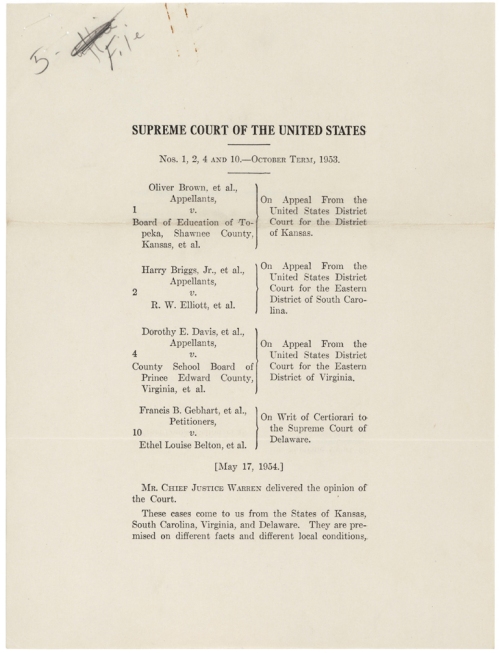 Document
Primary source
Brown v. Board of Education
Earl Warren · 17 May 1954
 Painting
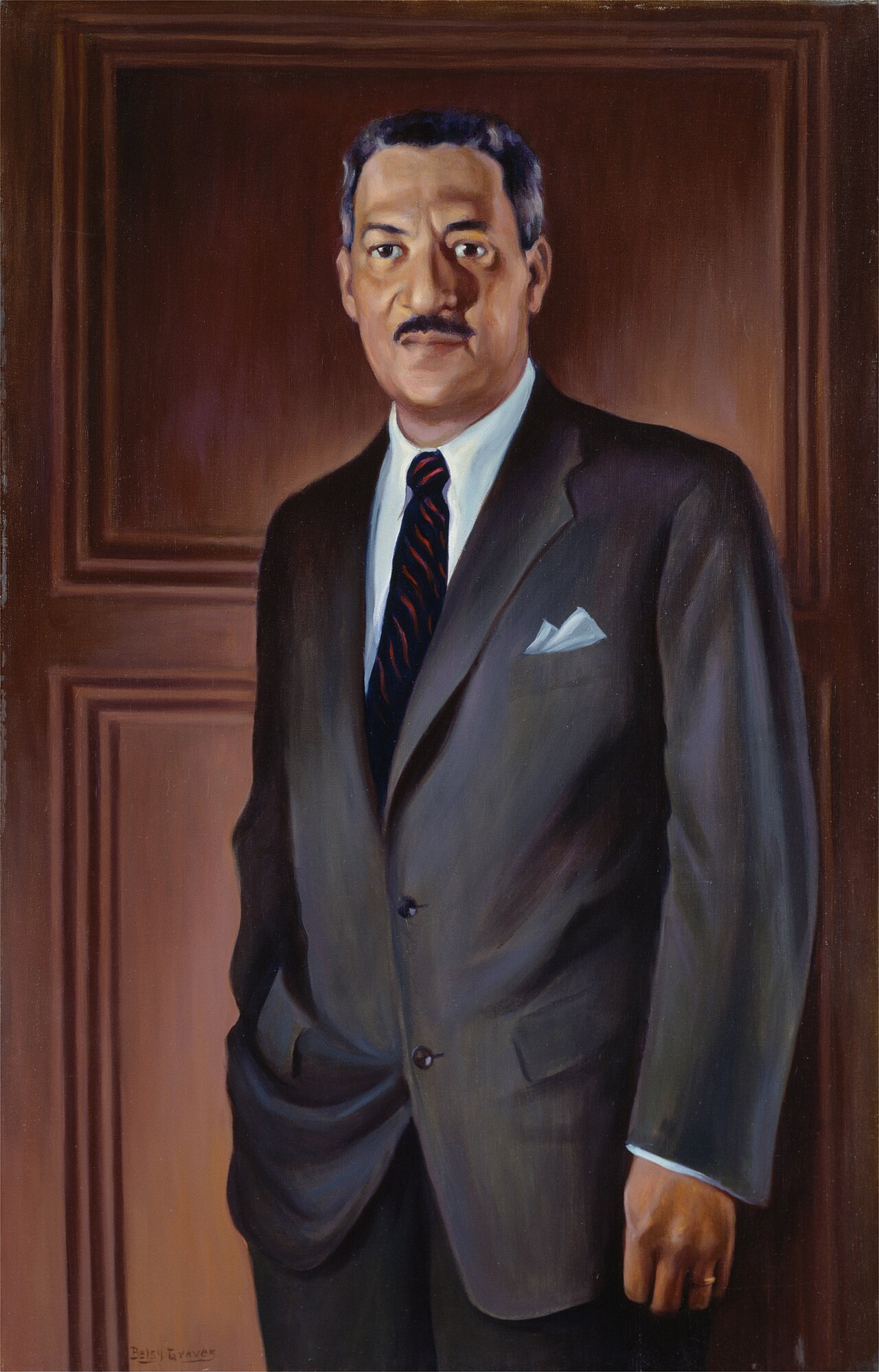
Primary source
Thurgood Marshall
Betsy Graves Reyneau · 1956
 Photograph
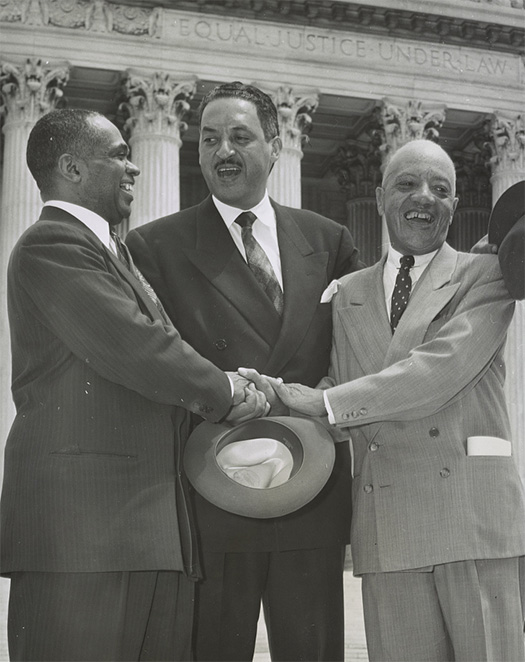
Primary source
George Edward Chalmer Hayes, Thurgood Marshall, and James Nabrit in 1954 winning Brown case
1954
 Photograph
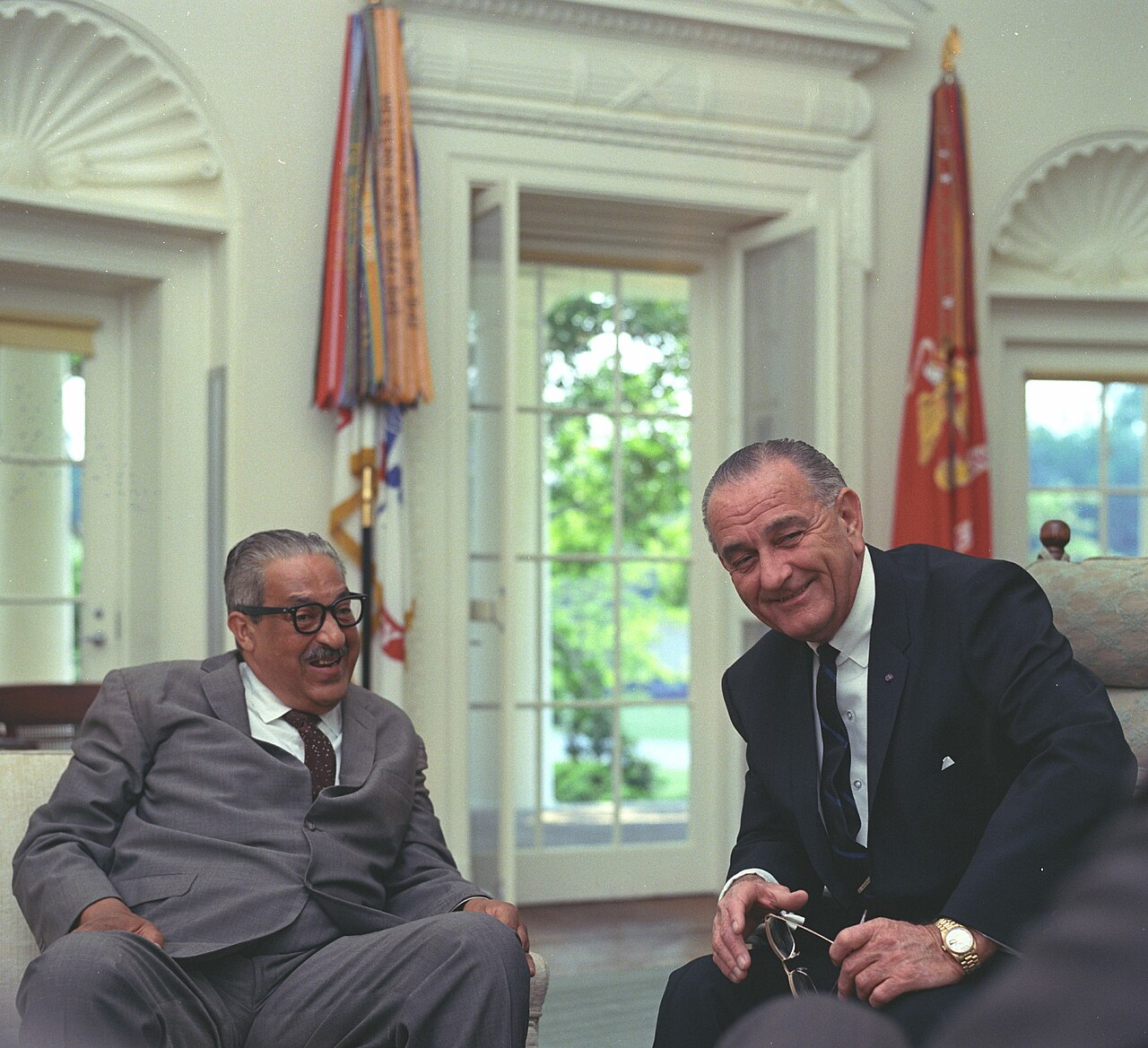
Primary source
Thurgood Marshall and President Lyndon B. Johnson, June 13, 1967
Frank Wolfe · 13 June 1967
Primary source
Cooper v. Aaron
12 September 1958
Ready when you are
Start chatting with Thurgood Marshall now.
20 messages free · No credit card · Available in 50+ languages.