


Primary sourcePainting1848
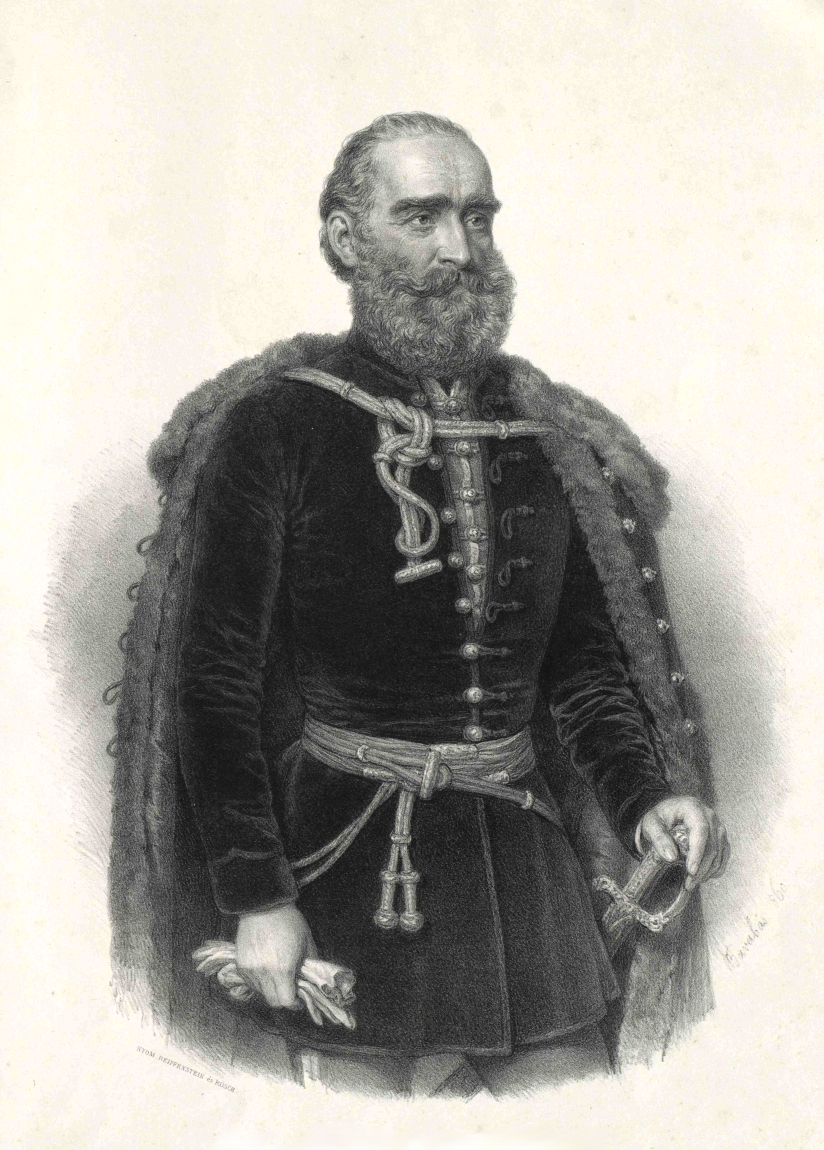
Széchenyi-Sárvár und Felsö-Vidék, Count Stefan, 1848
1848
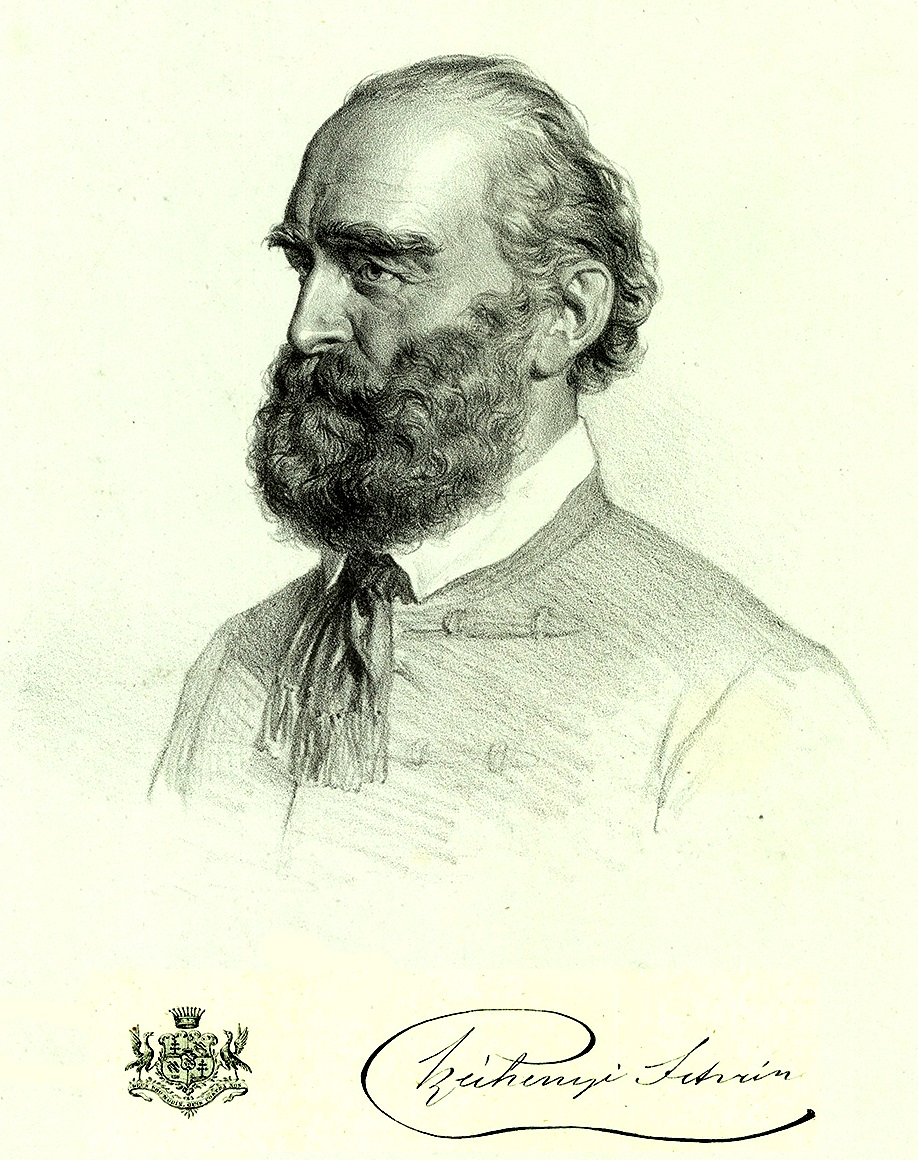
A black-and-white lithograph portrait of Széchenyi from 1848, the year of the Hungarian revolution. The artist is not recorded.
Shows Széchenyi as a sitter in 1848, the revolutionary year in Hungary, through a printed portrait of unknown authorship.
About this source
What it is
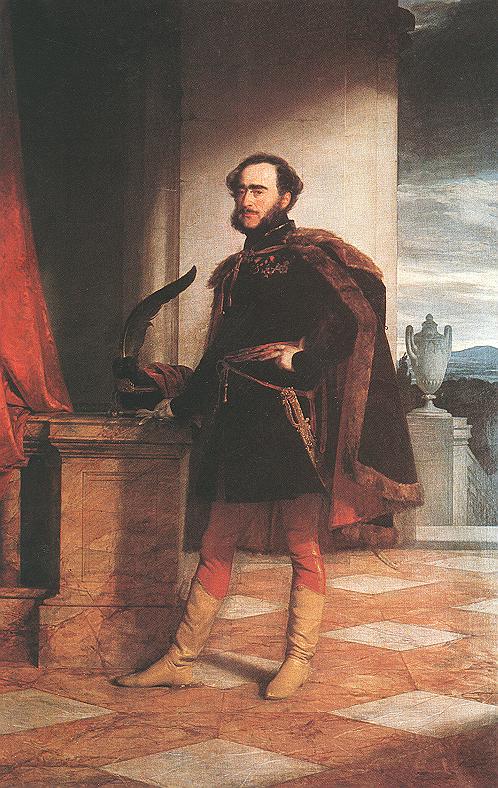
This is a black-and-white lithographic portrait of a bearded man in a dark velvet Hungarian-style jacket. It has braided cord fastenings, a fur-trimmed cloak over the shoulders, a braided belt, and a sabre hilt in his right hand. He looks to the right against a pale background. The record names the sitter as Count Stefan Széchenyi and gives the date 1848. The name of the artist is not known from the facts.
Why it matters
The portrait dates from 1848, the year of the Hungarian revolution, when Széchenyi was still a major public figure. Printed portraits like this one spread the image of prominent people in the 1800s. Because the maker is unknown, the picture shows the sitter more clearly than it shows the people who produced it.
Look closer
- What details of clothing and the sabre suggest how the sitter wanted to be seen?
- Why might a portrait from a revolutionary year have been made and circulated?
- What can we not learn about the artist and the audience from the picture alone?
This painting is part of the curated material that grounds the AI version of István Széchenyi on Humy.ai — when students ask about related events, the AI can quote it and cite it.
More István Széchenyi sources
Browse all 88 →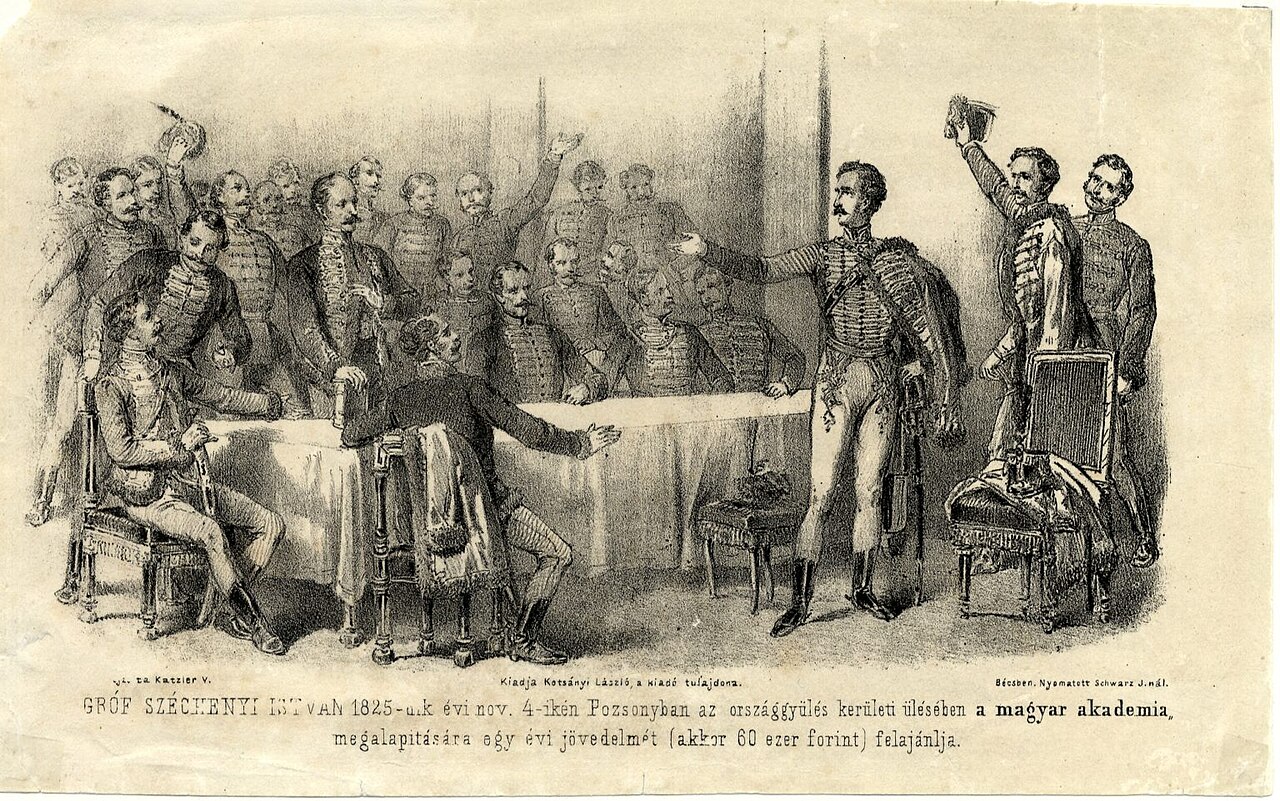 Painting
Secondary source
Széchenyi felajánlása
Vinzenz Katzler
 Artifact
Secondary source
Széchenyi Chain Bridge
William Tierney Clark · 1839-1849
 Painting
Primary source
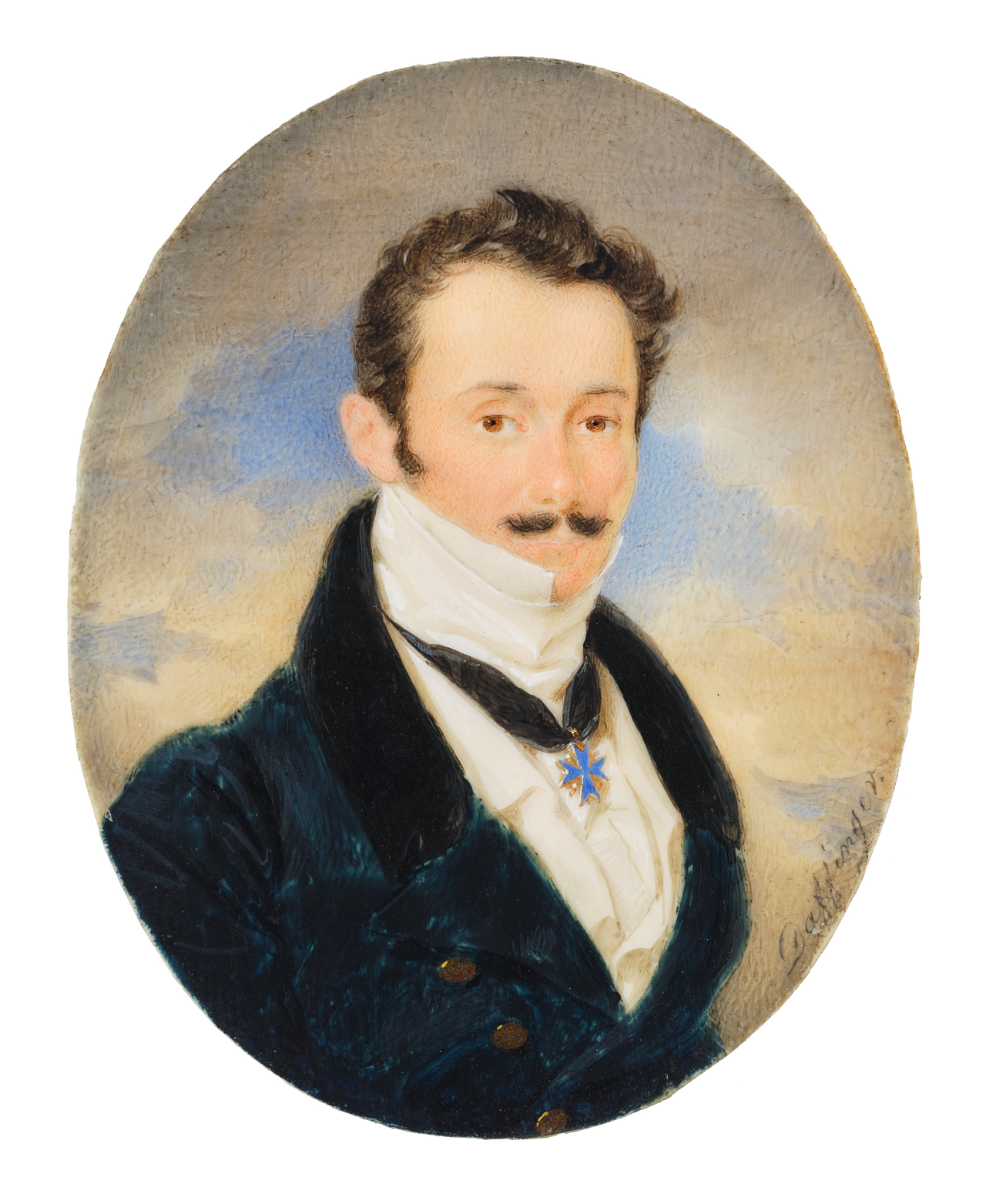
Three-quarter Length Portrait of Count István Széchenyi
Moritz Michael Daffinger · c. early 19th century
 Painting
Primary source
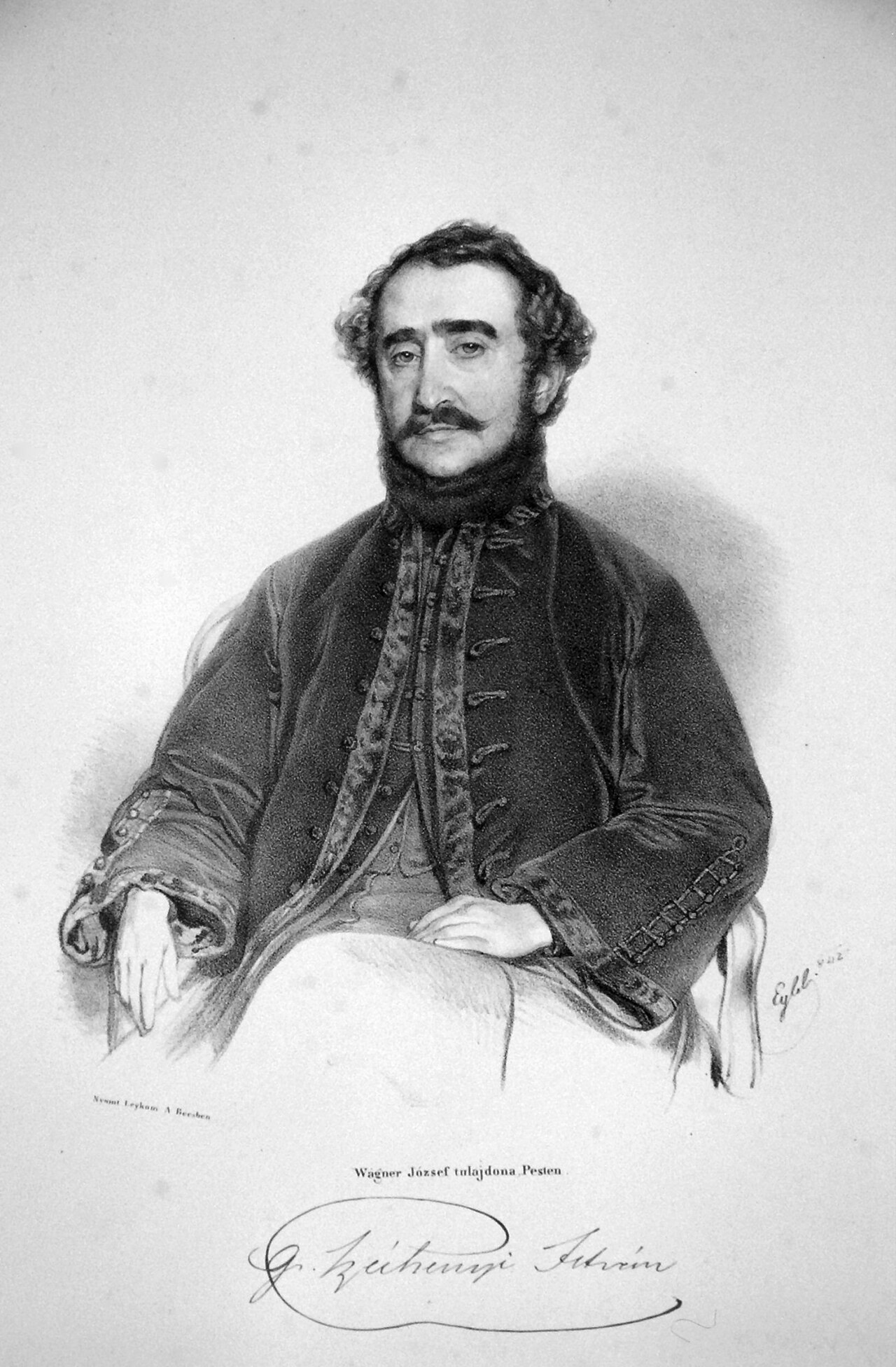
István Széchenyi, Lithograph by Franz Eybl
Franz Eybl · 1842
Free account
Read every István Széchenyi source
Sign up free →
Ready when you are
Start chatting with István Széchenyi now.
20 messages free · No credit card · Available in 50+ languages.