


Primary sourceDocument1787
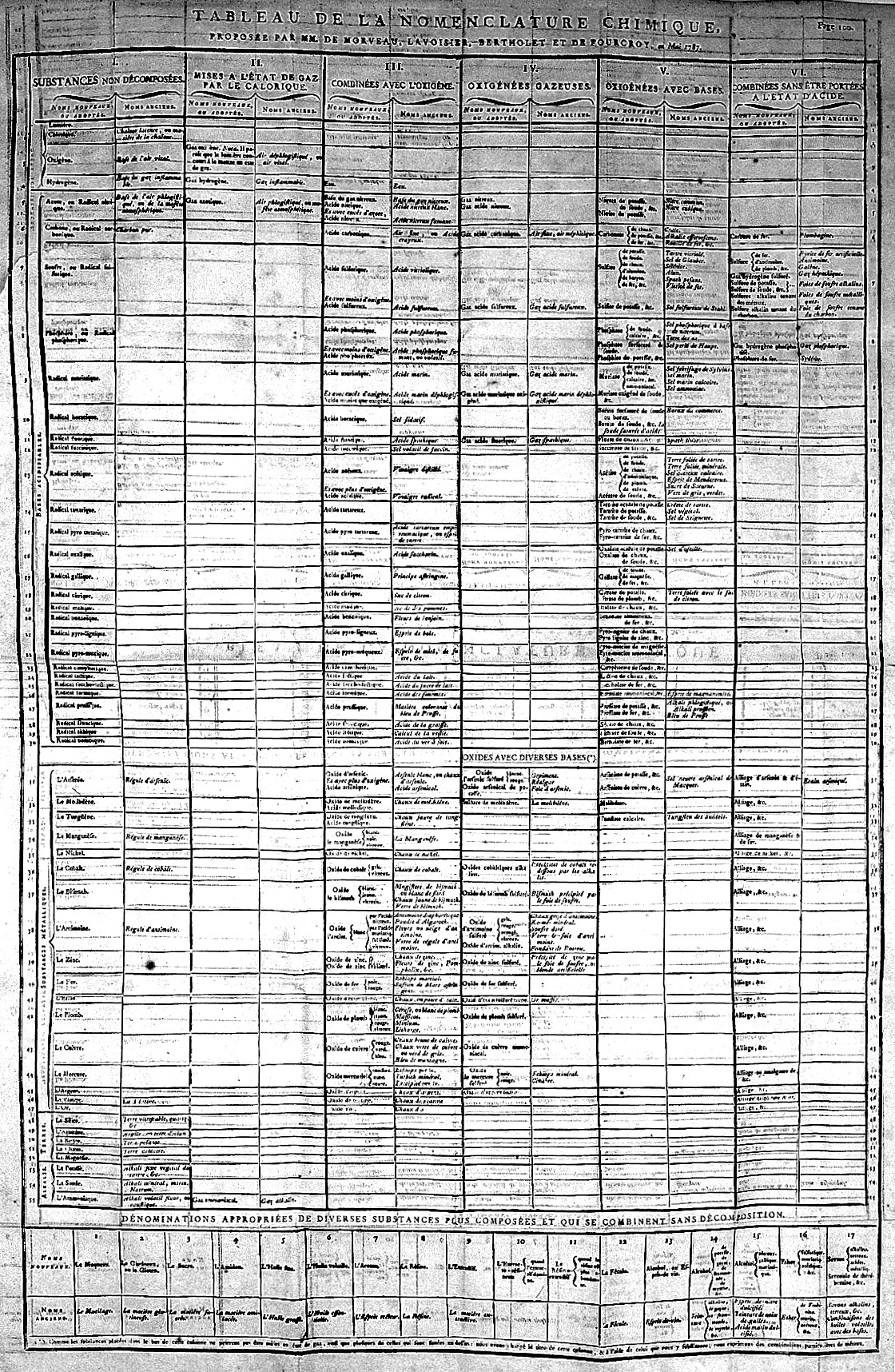
Tableau de la nomenclature chimique
Guyton de Morveau, Lavoisier, Berthollet and de Fourcroy · 1787
A 1787 folding table of old and new chemical names, proposed by Guyton de Morveau, Lavoisier, Berthollet and de Fourcroy. It shows the reform of chemical naming.
Lavoisier co-authored this table, so it shows his part in reforming chemical names and belongs in his archive as a joint work.
About this source
What it is
This is a printed folding table titled Tableau de la nomenclature chimique, proposed by Messrs de Morveau, Lavoisier, Berthollet and de Fourcroy, in Paris in 1787. It is a dense grid of seventeen numbered columns and rows that list chemical substances with their old and new names. Column headings include Substances non décomposées, Oxides and Acids. The record lists it among the rare books of the library that holds it. The image is a scan of a black-and-white printed page.
Why it matters
The table was part of a joint effort by several French chemists to replace older, confusing chemical names with a more systematic language. Lavoisier worked on this reform with his co-authors, and laying old names beside new ones shows how the change was meant to work in practice. It reveals how scientists of the time worked together to agree on common rules.
Look closer
- How are the columns and headings organised, and what does the layout tell you about the new system?
- Which old names appear beside the new ones, and why might readers need both?
- What does a table like this leave out about the arguments the authors had with each other?
This document is part of the curated material that grounds the AI version of Antoine Lavoisier on Humy.ai — when students ask about related events, the AI can quote it and cite it.
More Antoine Lavoisier sources
Meet the AI Antoine Lavoisier →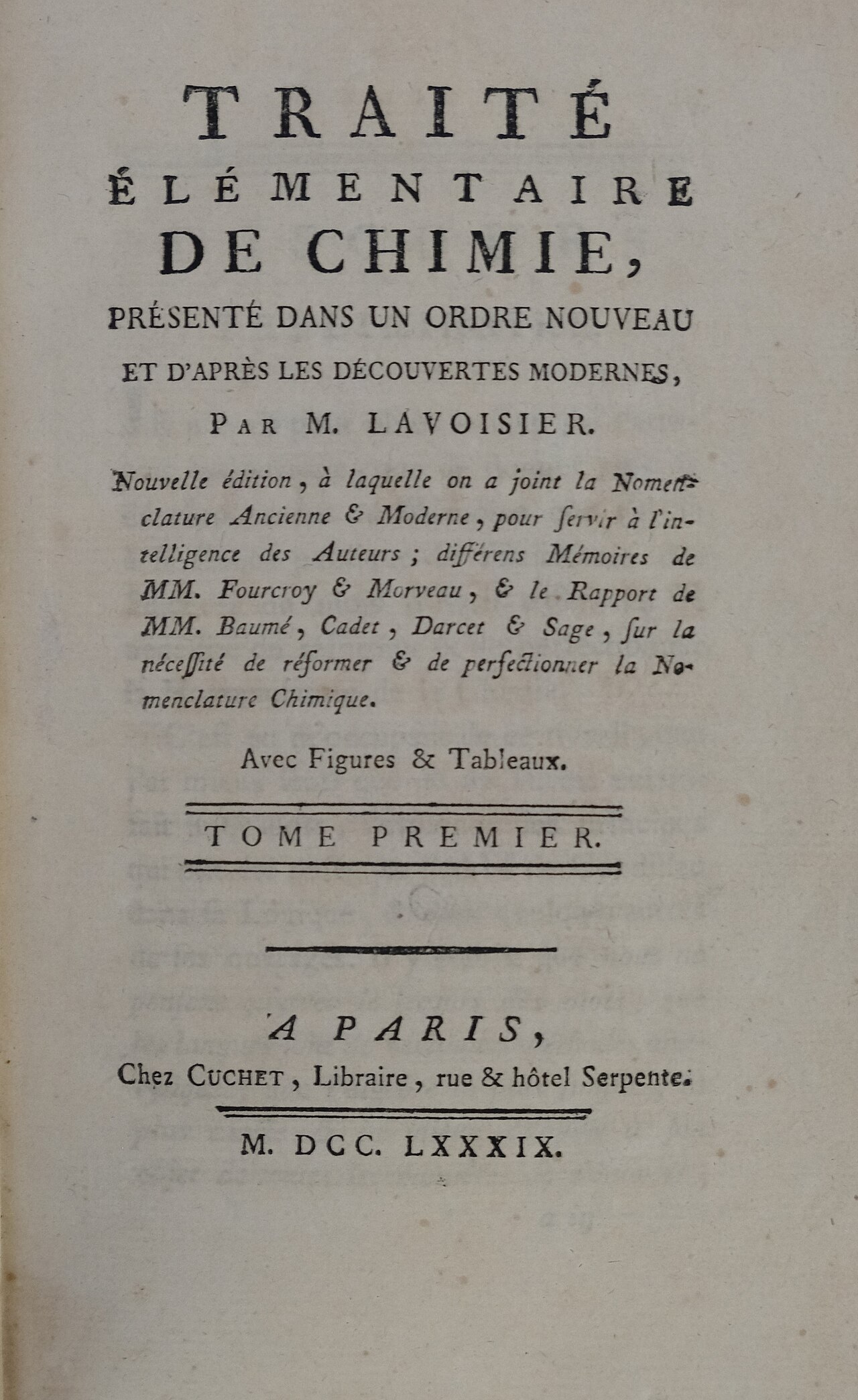 Book
Primary source
Traité Élémentaire de Chimie
Antoine Lavoisier · 1789
 Painting
Primary source
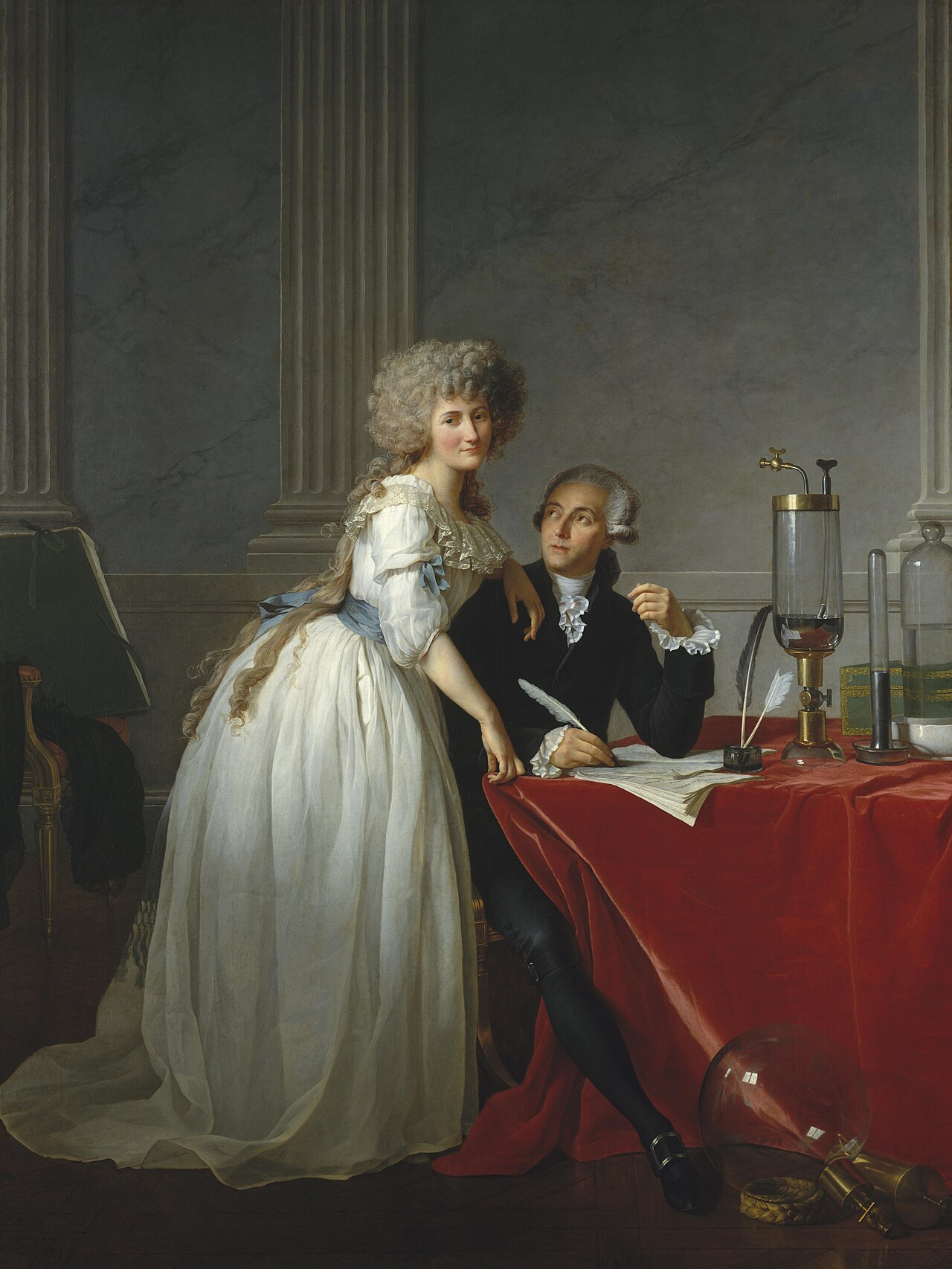
Portrait of Antoine-Laurent Lavoisier and his wife
Jacques-Louis David · 1788
 Book
Primary source
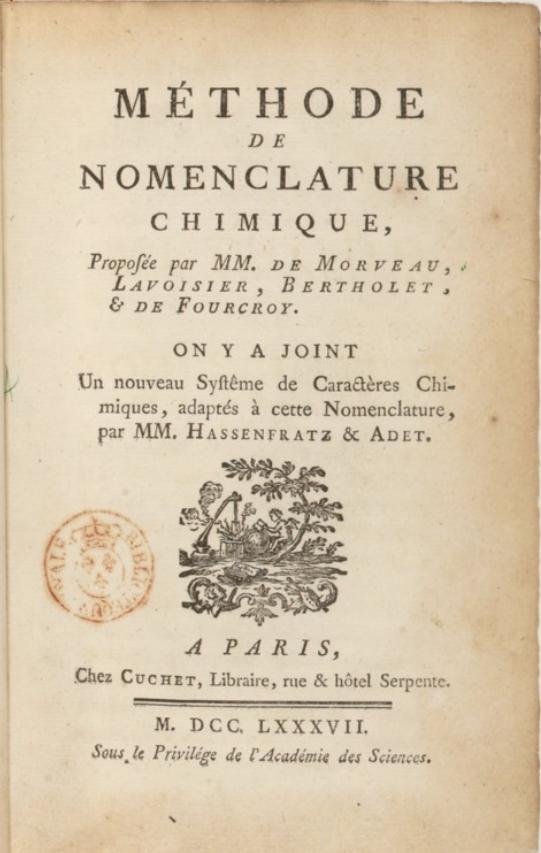
Méthode de nomenclature chimique
Antoine Lavoisier, Louis-Bernard Guyton de Morveau, Claude-Louis Berthollet, Antoine François de Fourcroy · 1787
 Artifact
Primary source
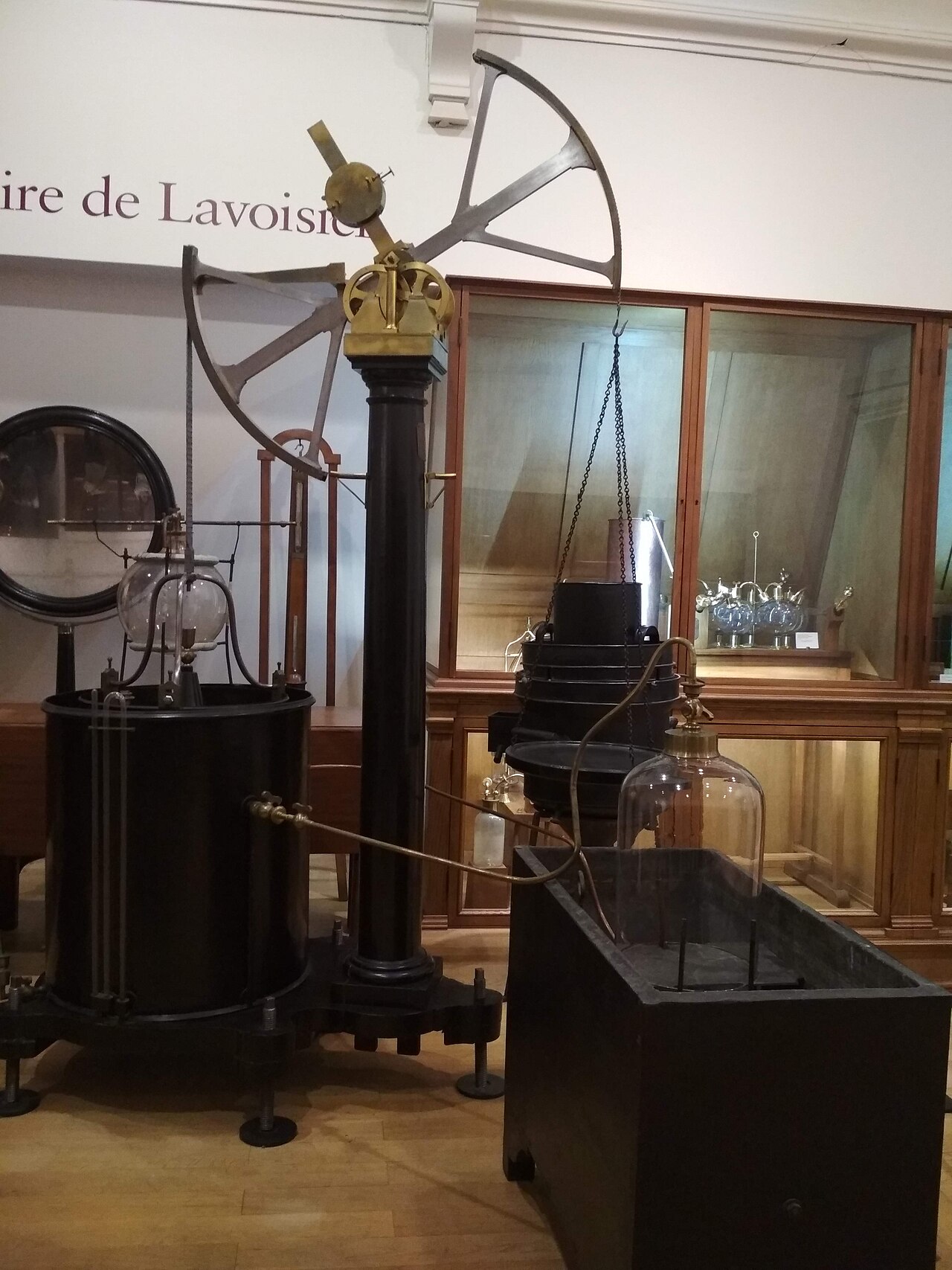
Lavoisier's ice calorimeter
Antoine Lavoisier and Pierre-Simon Laplace · c. 1782-1783
 Artifact
Primary source
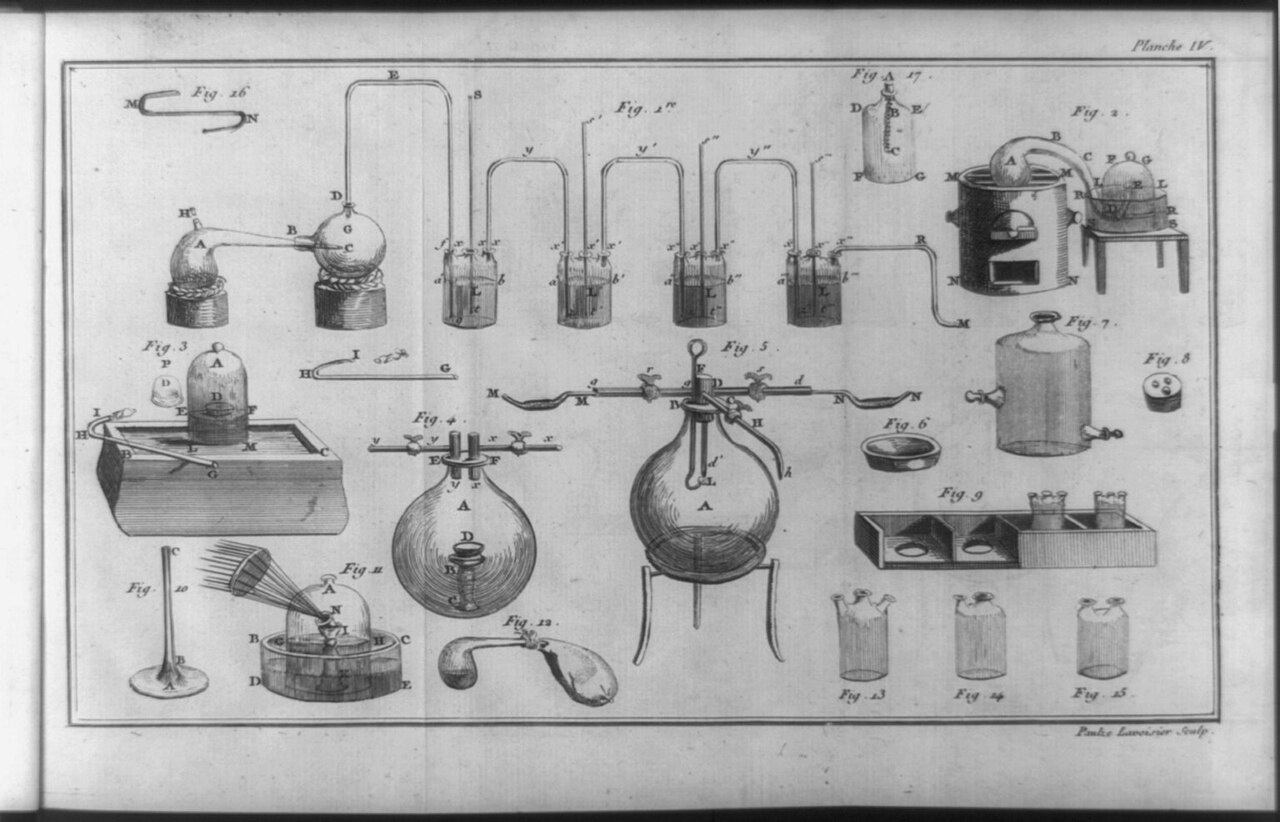
Scientific Apparatus Used by Lavoisier in Studying Chemical Reactions
Marie-Anne Paulze Lavoisier
Ready when you are
Start chatting with Antoine Lavoisier now.
20 messages free · No credit card · Available in 50+ languages.