


Primary sourceArtifact1924–1927 (burial 1934)
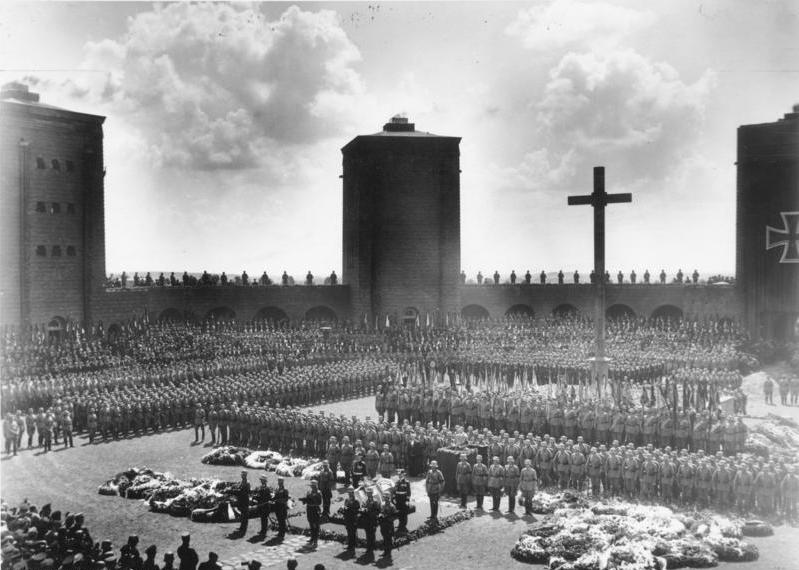
Tannenberg Memorial
Walter and Johannes Krüger · 1924–1927 (burial 1934)
A monument built in the 1920s to Hindenburg's 1914 victory at Tannenberg, which later became his tomb and a Nazi ceremonial site.
Built to honor Hindenburg's 1914 victory, this memorial became his tomb and a stage for Nazi ceremony after his death.
Free Humy account · No credit card · 118,535 sources to read
About this source
What it is
Designed by Walter and Johannes Krüger and built between 1924 and 1927, the Tannenberg Memorial was a massive national monument commemorating Hindenburg's 1914 victory over Russian forces. After Hindenburg's death in 1934, he was buried in its central courtyard, and the memorial became a site of Nazi state ceremony, including a funeral speech by Hitler.
Why it matters
The memorial shows how Hindenburg's wartime fame was deliberately preserved in stone and later absorbed into Nazi propaganda. His burial there, with Hitler presiding, linked the hero of 1914 directly to the new regime, blurring the line between German nationalist memory and Nazi political theatre.
Look closer
- Why might the Nazi regime want Hindenburg buried at this particular site?
- What does the presence of uniformed soldiers and a Nazi leader's speech at the funeral suggest about how his death was used politically?
- How might the meaning of a war memorial change once it also becomes someone's tomb?
This artifact is part of the curated material that grounds the AI version of Paul Von Hindenburg on Humy.ai — when students ask about related events, the AI can quote it and cite it.
More Paul Von Hindenburg sources
Browse all 81 →Primary source
Reichstag Fire Decree
28 February 1933
Primary source
Enabling Act of 1933
24 March 1933
 Photograph
Primary source
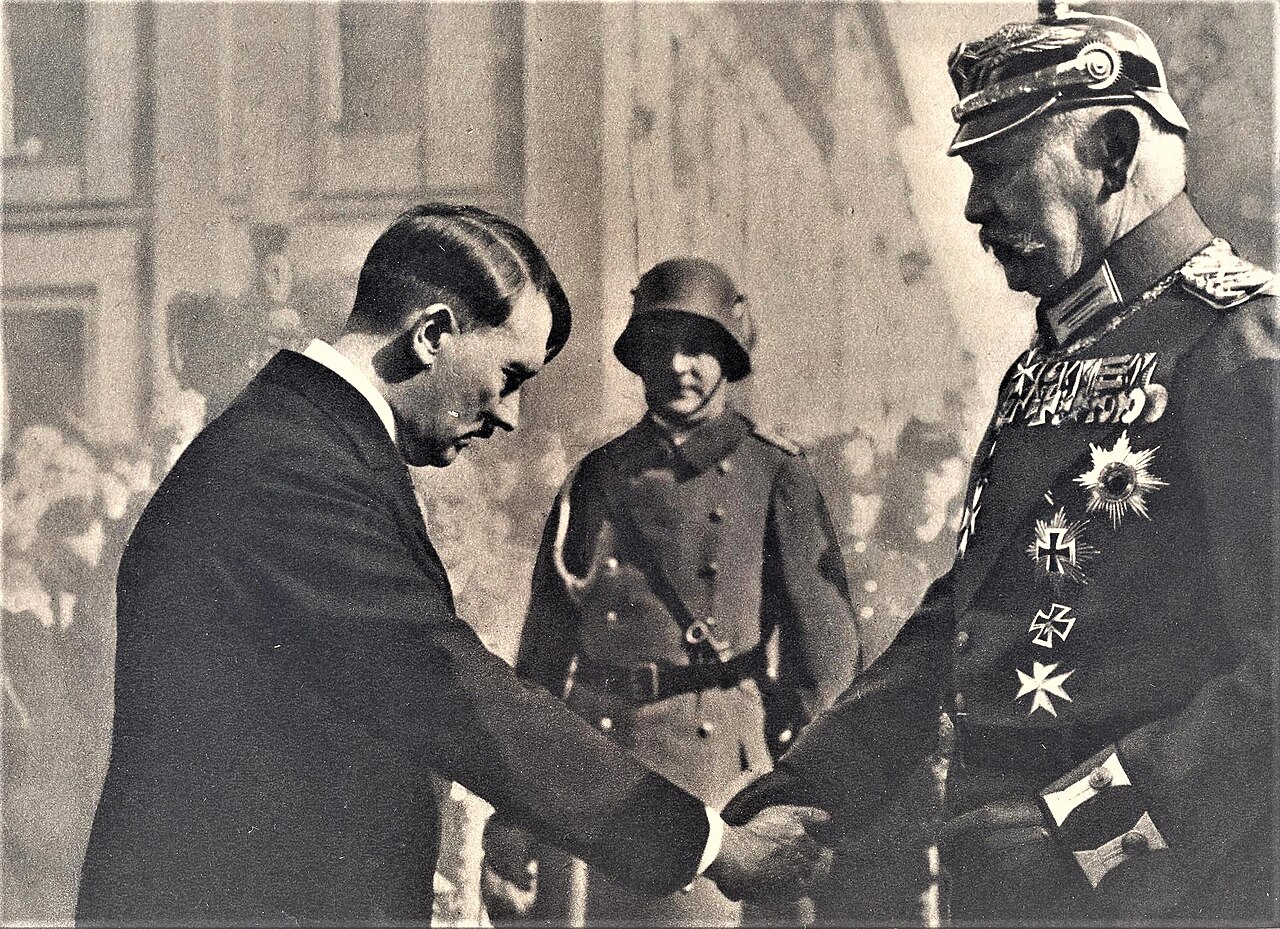
Hitler and Hindenburg at Potsdam
Unknown · 21 March 1933
 Artifact
Primary source
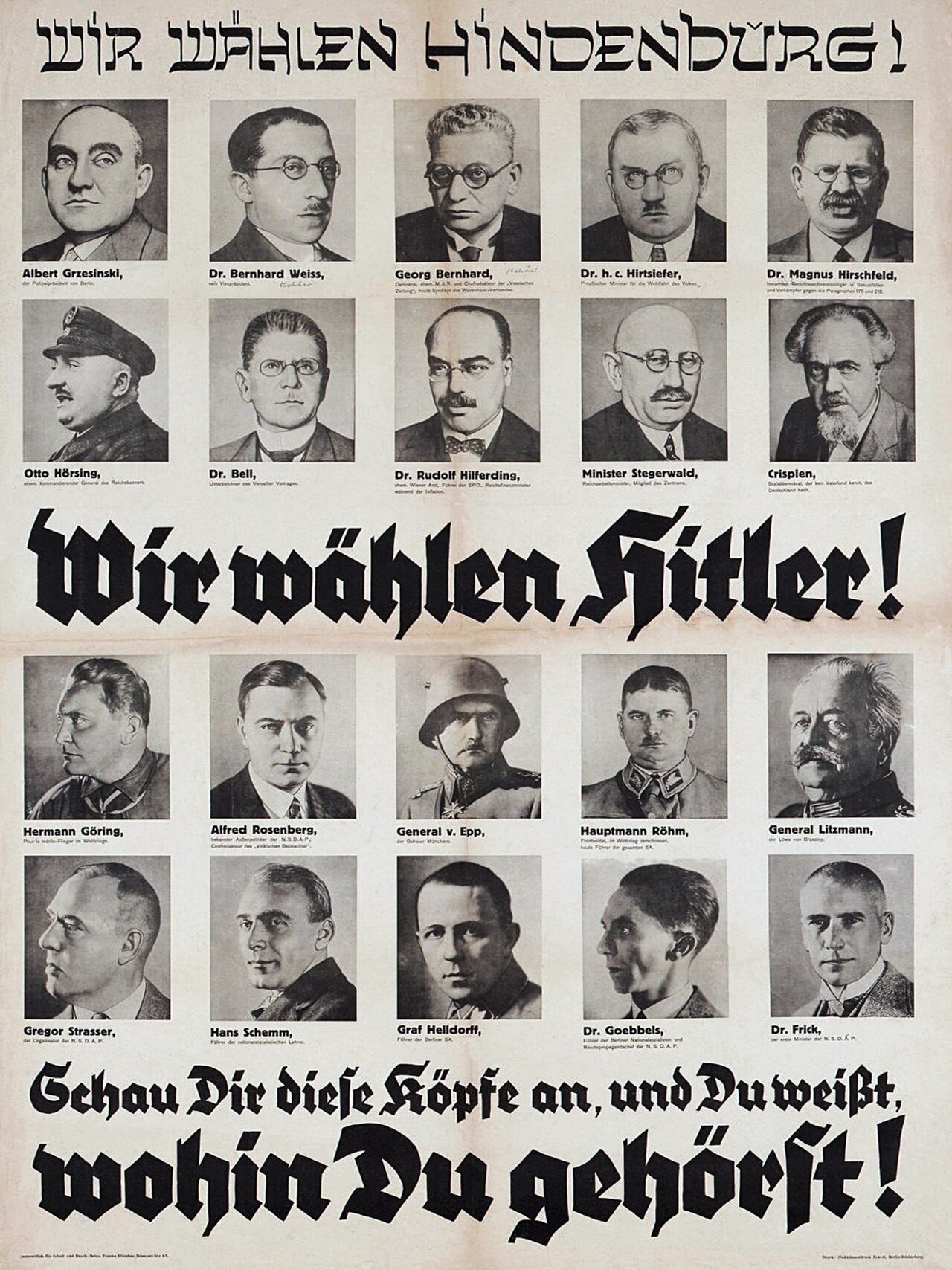
Wir wählen Hindenburg! Wir wählen Hitler! NSDAP election poster
Unknown (NSDAP) · 1932
Free account
Read every Paul Von Hindenburg source
Sign up free →
Ready when you are
Start chatting with Paul Von Hindenburg now.
20 messages free · No credit card · Available in 50+ languages.