


Primary sourceArtifactMomoyama period (1573–1615)
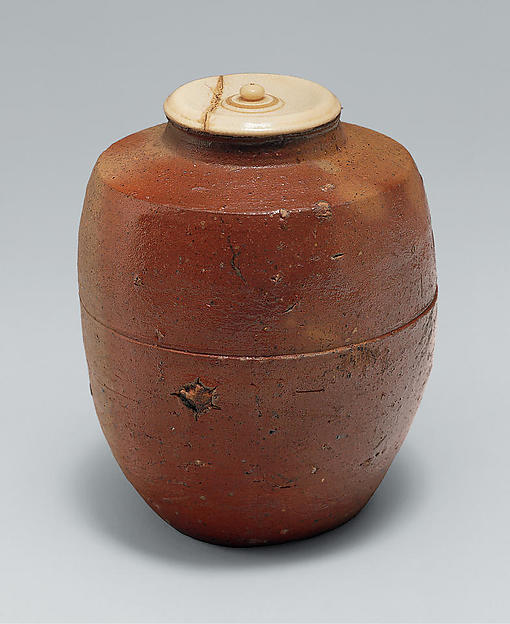
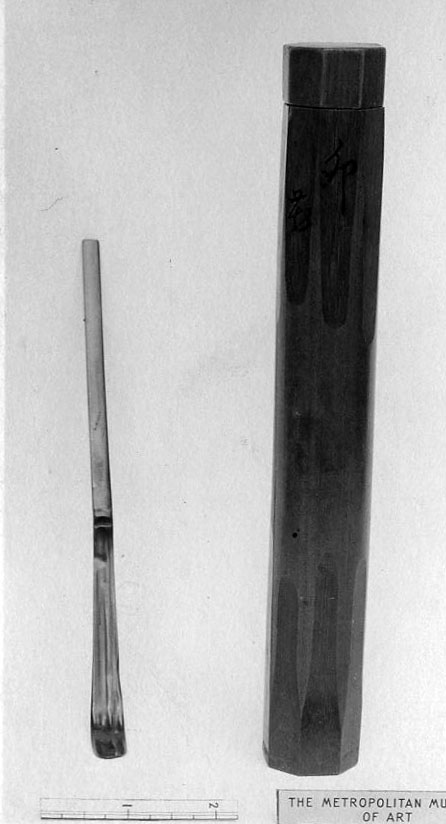
Tea Caddy (Chaire) of Bizen ware
Momoyama period (1573–1615)
A late sixteenth-century stoneware tea caddy from Bizen, Japan, showing the kind of utensils used in the tea world Rikyū shaped.
Shows the style of Bizen ware tea caddy used in the tea ceremony tradition Rikyū shaped, though not his own.
About this source
What it is
This is a small stoneware tea caddy, or chaire, made of Bizen ware during the Momoyama period in Japan. It has a natural ash glaze and is held today at The Metropolitan Museum of Art, part of the Mary Griggs Burke Collection.
Why it matters
Objects like this caddy were used to hold powdered tea in the tea ceremony that Sen no Rikyū helped shape into a refined art. Rikyū prized simple, rustic-looking vessels made by Japanese potters over imported Chinese luxury wares, and Bizen ware fit that taste. This caddy was not necessarily owned by him, but it shows the type of utensil his circle valued.
Look closer
- What does the rough, speckled surface suggest about the beauty Rikyū admired?
- Why might a tea master prefer an unglazed, uneven jar over a smooth, decorated one?
- What is missing from this object that might tell us who actually used it?
This artifact is part of the curated material that grounds the AI version of Sen no Rikyū on Humy.ai — when students ask about related events, the AI can quote it and cite it.
More Sen no Rikyū sources
Browse all 27 →
Ready when you are
Start chatting with Sen no Rikyū now.
20 messages free · No credit card · Available in 50+ languages.