


Primary sourceDocument1662
Testament de Blaise Pascal
Blaise Pascal · 1662
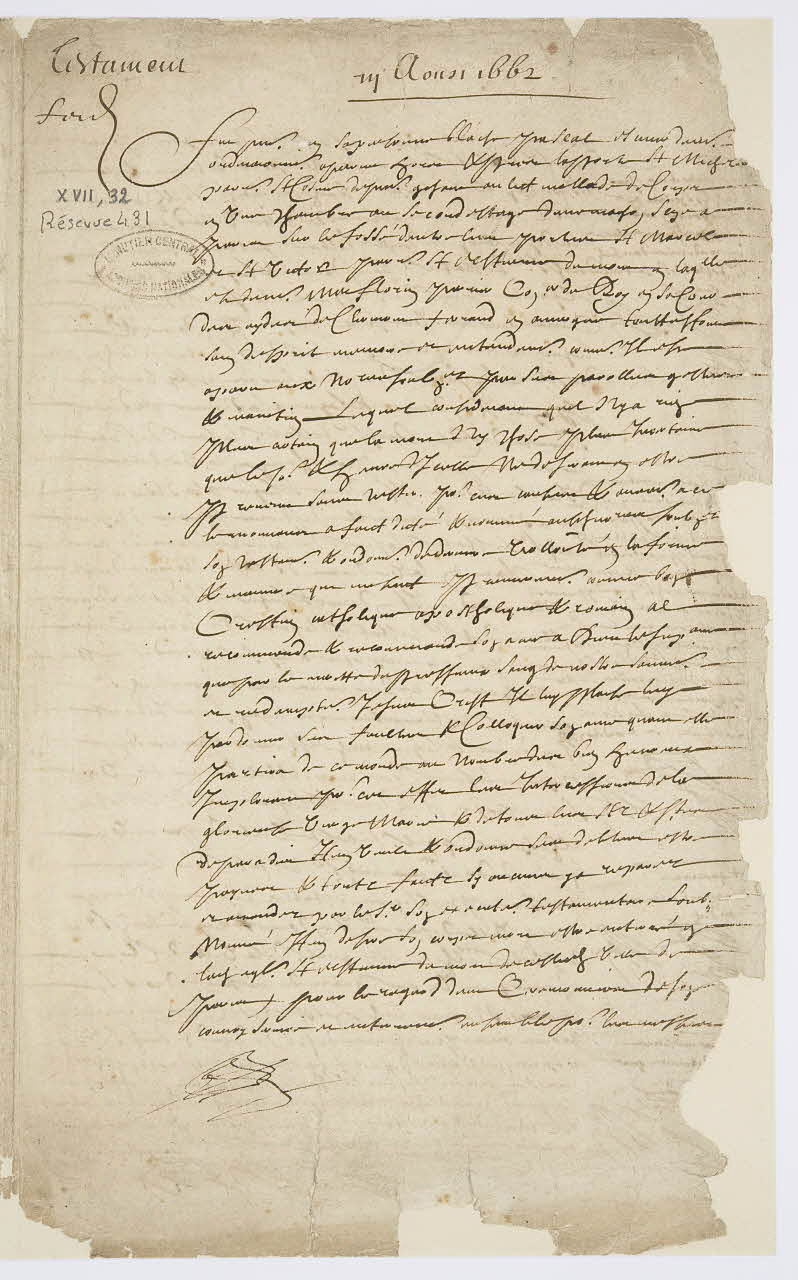
Pascal's 1662 will, preserved in the Paris notarial archives, recording his final wishes including bequests to the poor.
This is Pascal's own will, written and signed by him shortly before his death in 1662.
About this source
What it is
This is the handwritten will of Blaise Pascal, dated 1662, preserved in the Archives Nationales in Paris. It is written in dense cursive French and ends with a signature, with an archival stamp and shelfmark on the page.
Why it matters
A will shows a person's final decisions about their property and values. Pascal's testament, made shortly before his death, includes bequests to the poor, reflecting his deep religious convictions and concern for charity, which shaped much of his later life and writing.
Look closer
- What might a person's choices in a will reveal about their values and priorities?
- Why do you think Pascal chose to leave money to the poor?
- What clues on the page (handwriting, stamps, signature) tell you this is an official legal document?
This document is part of the curated material that grounds the AI version of Blaise Pascal on Humy.ai — when students ask about related events, the AI can quote it and cite it.
More Blaise Pascal sources
Browse all 91 →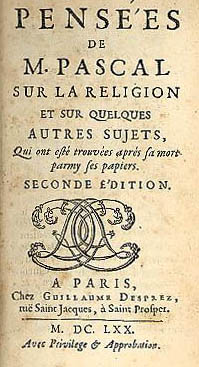 Book
Secondary source
Pensées
Blaise Pascal · 1670
 Book
Primary source
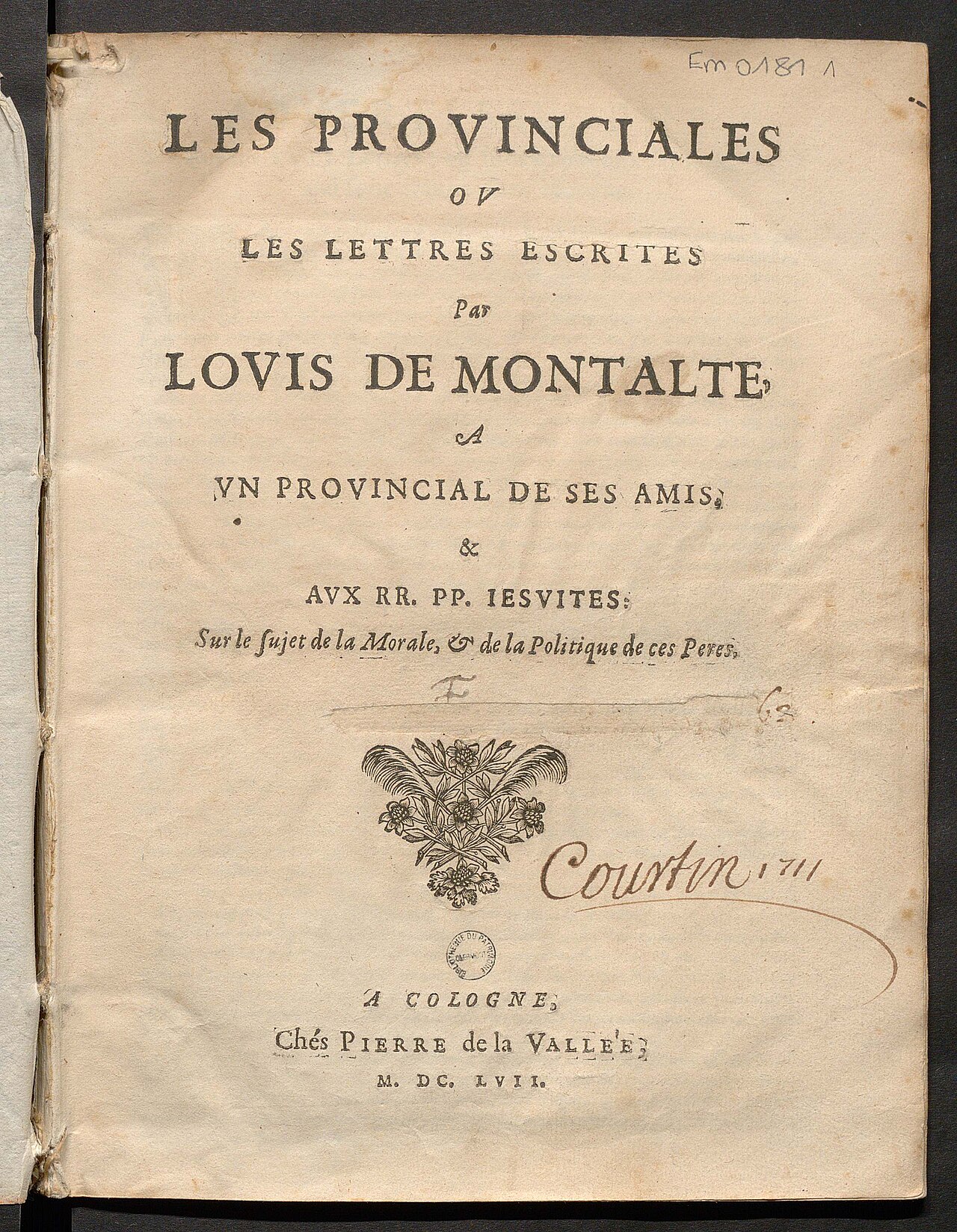
Lettres provinciales
Blaise Pascal · 1656–1657
 Diary entry
Primary source
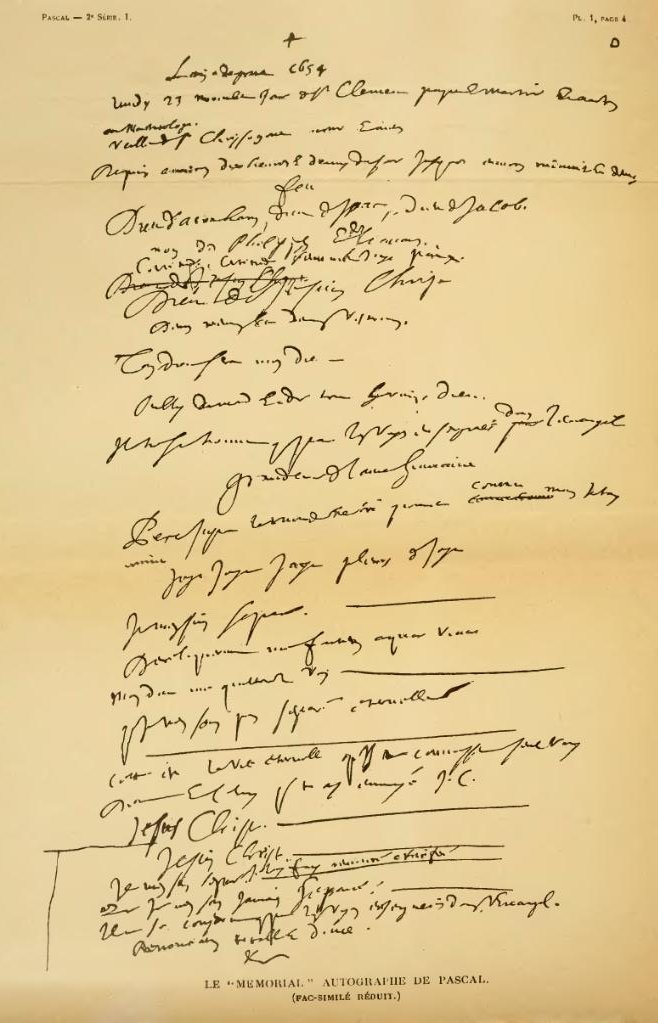
Le Mémorial
Blaise Pascal · 23 November 1654
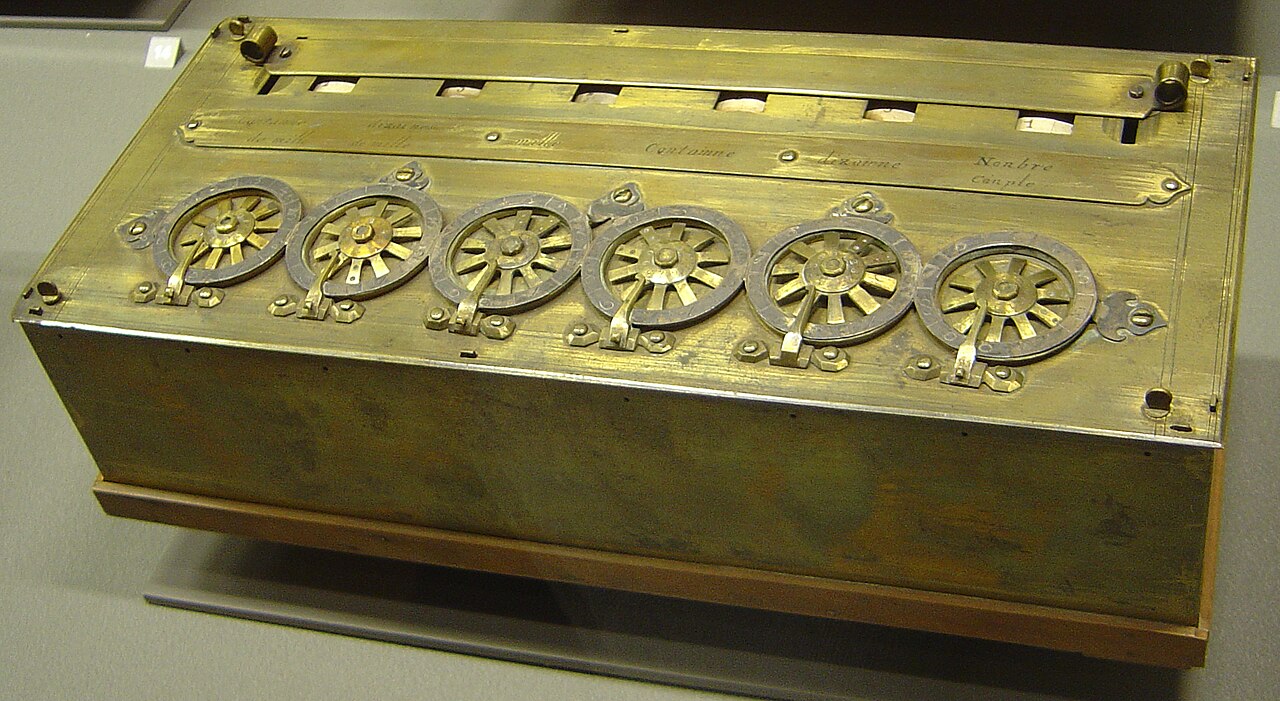 Artifact
Primary source
Pascal's calculator
Blaise Pascal · 1642
Free account
Read every Blaise Pascal source
Sign up free →
Ready when you are
Start chatting with Blaise Pascal now.
20 messages free · No credit card · Available in 50+ languages.