


Secondary sourceBook1670
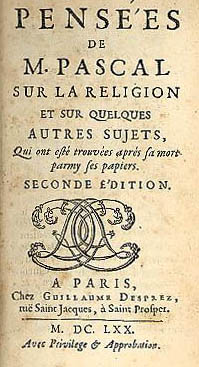
Pensées
Blaise Pascal · 1670
Blaise Pascal's posthumously published notes on religion, which engage directly with Epictetus as a thinker who understood human duties.
Pascal's notes discuss Epictetus directly as a philosopher who understood human duties, showing his later influence on Christian thought.
About this source
What it is
The Pensées is a collection of fragmentary notes by the French philosopher and mathematician Blaise Pascal, left unfinished at his death in 1662 and first published in 1670 as part of his planned defense of Christianity.
Why it matters
Among its reflections, Pascal discusses Epictetus directly, treating him as a philosopher who grasped human duties and obligations well, even without Christian revelation. This shows Epictetus's continuing influence on European thought centuries after his life, especially in debates between Stoic and Christian ideas.
Look closer
- Why might a 17th-century Christian writer like Pascal still take Epictetus's ideas seriously?
- What does it suggest about Epictetus's teachings that they could be discussed hundreds of years later in debates about religion?
- How might Pascal's own purpose, defending Christianity, shape how he presents Epictetus's ideas?
This book is part of the curated material that grounds the AI version of Epictetus on Humy.ai — when students ask about related events, the AI can quote it and cite it.
More Epictetus sources
Meet the AI Epictetus →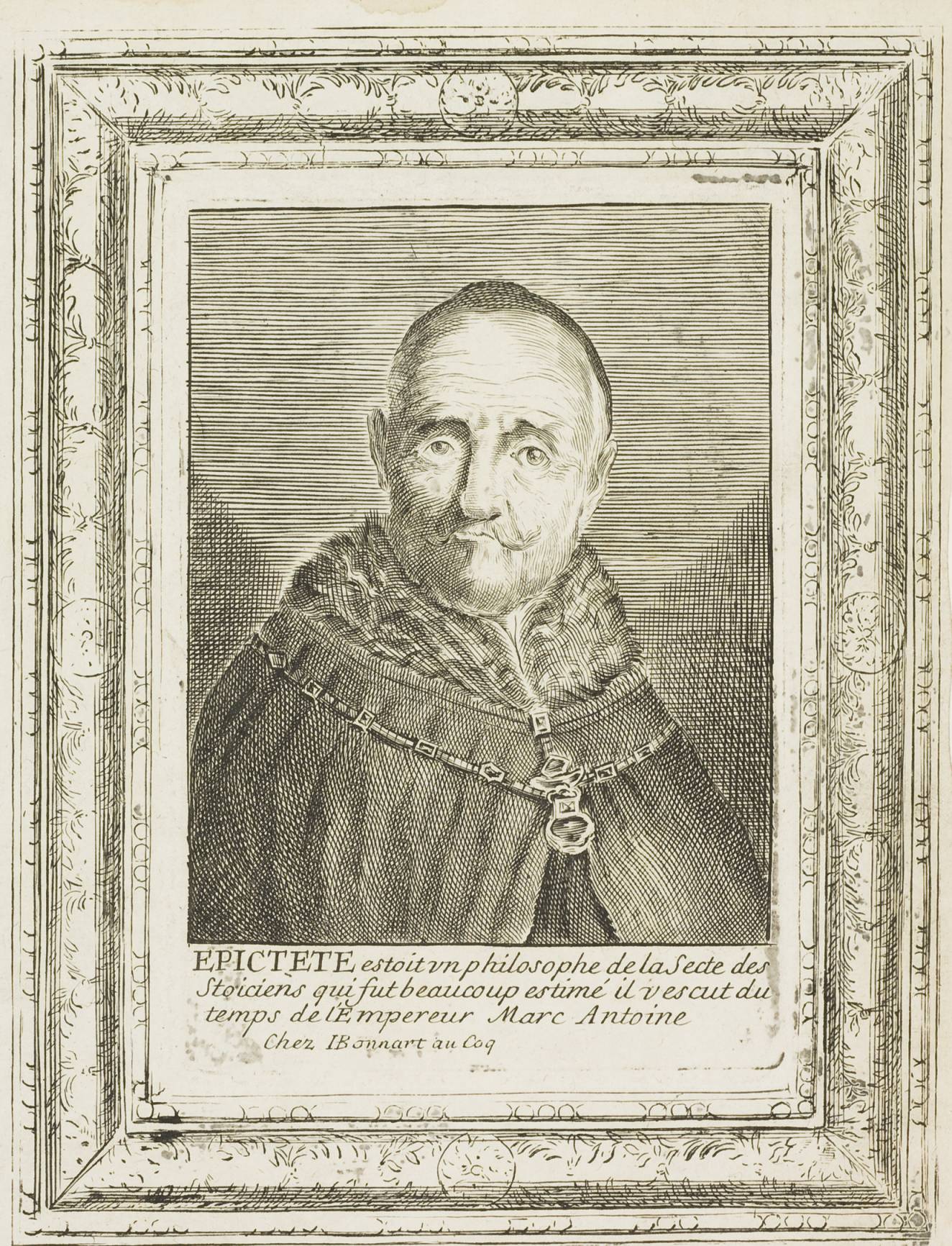 Painting
Secondary source
Epictete
Henri Bonnart · 17th century
 Book
Secondary source
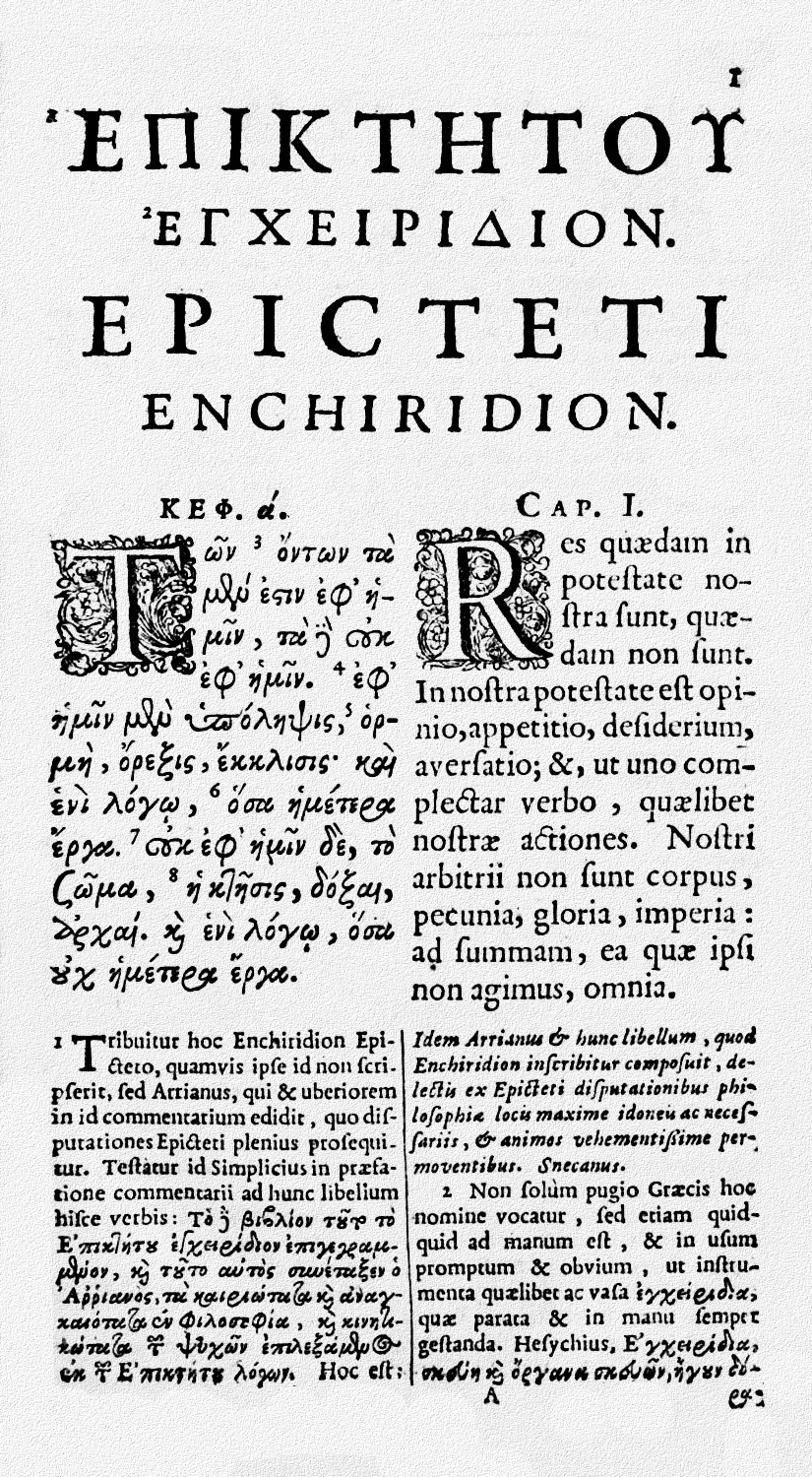
Enchiridion of Epictetus
Arrian · early 2nd century AD (this edition 1683)
 Book
Secondary source
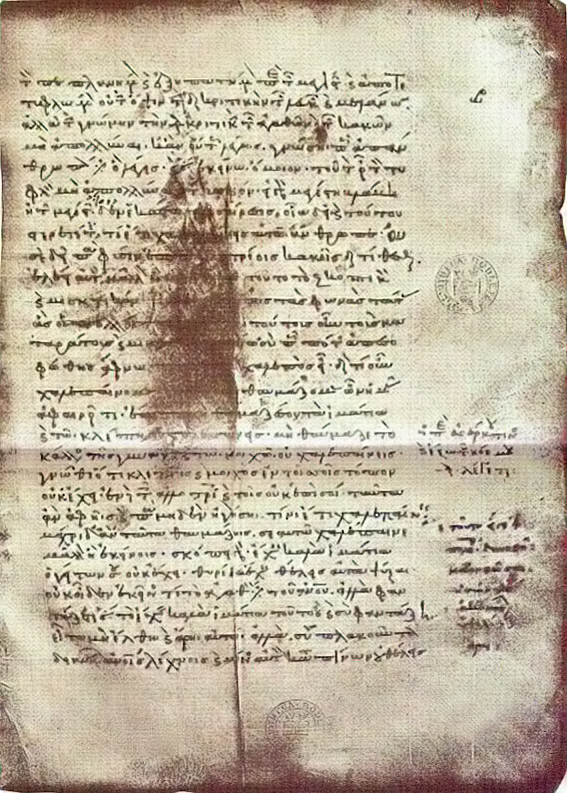
Discourses of Epictetus
Arrian · c. 108 AD
 Painting
Secondary source
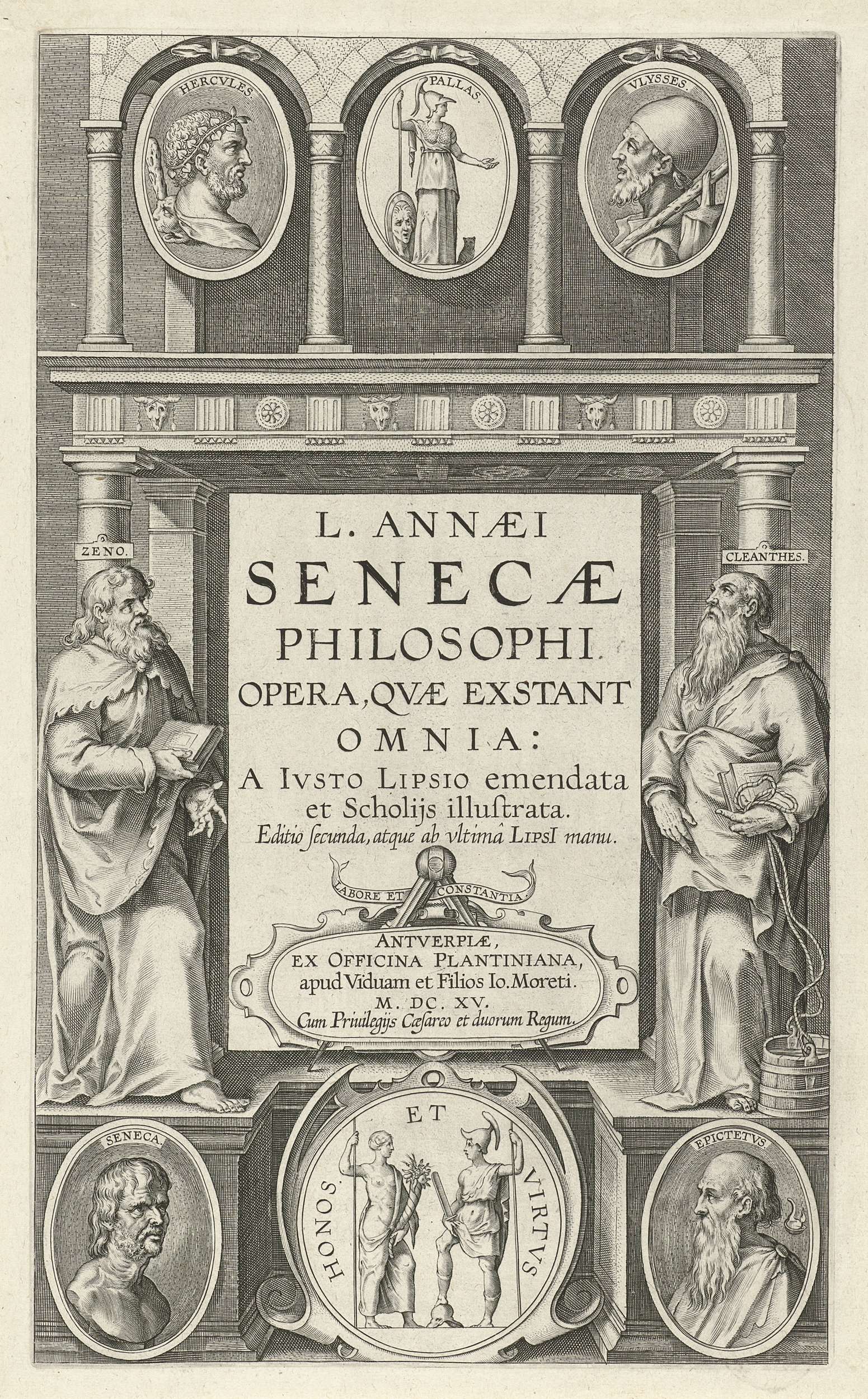
Title Page of L. Annaei Senecae Philosophi Opera
1615
DocumentSecondary source
Codex Bodleianus
c. 11th-12th century
Ready when you are
Start chatting with Epictetus now.
20 messages free · No credit card · Available in 50+ languages.