


Secondary sourcePainting17th century
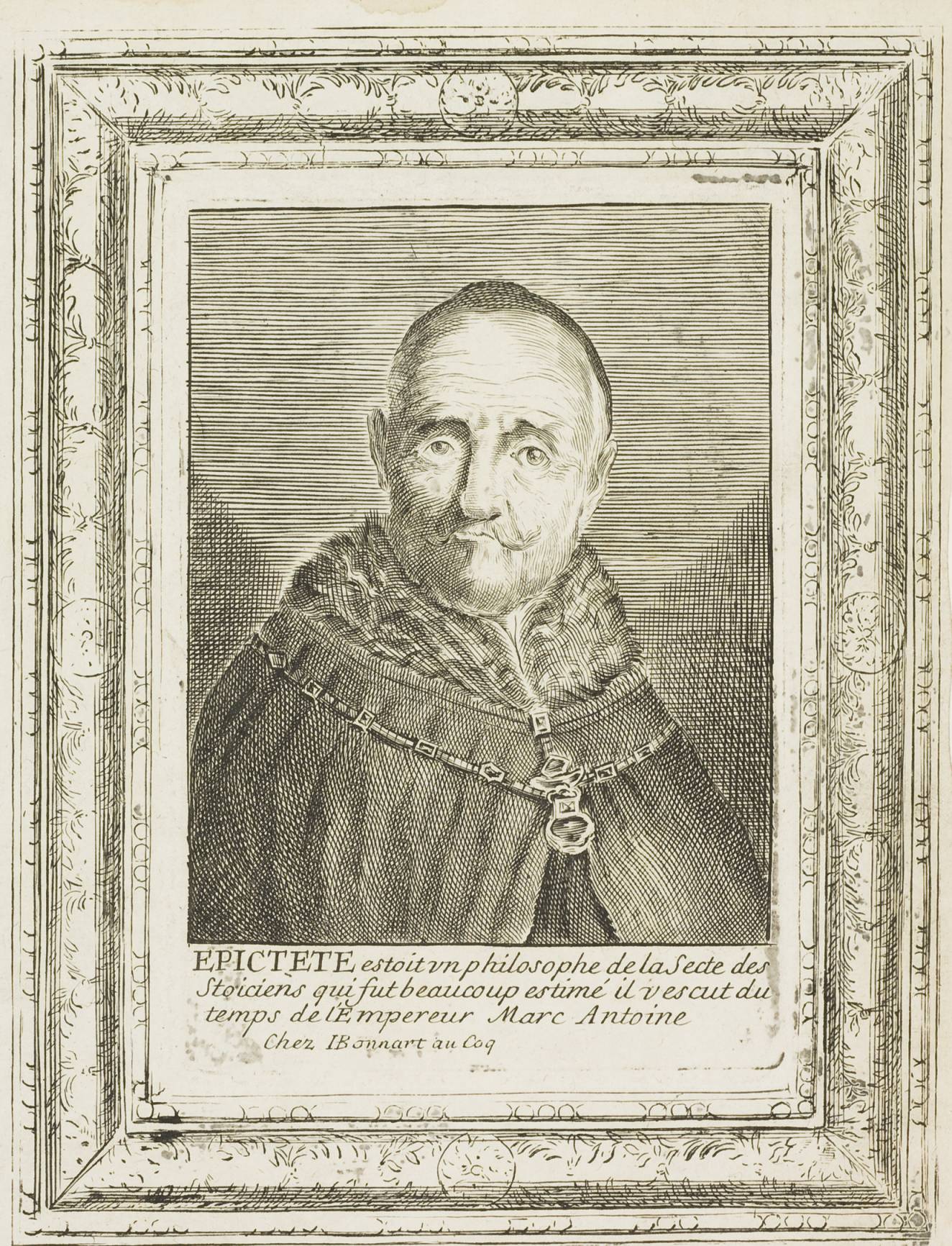
Epictete
Henri Bonnart · 17th century
A 17th-century French engraved portrait of Epictetus, identifying him as a Stoic philosopher who lived in the time of the Emperor.
An imagined later portrait of Epictetus with an inscription naming him as a Stoic philosopher.
About this source
What it is
This is an engraved print made by Henri Bonnart in the 17th century, showing an elderly bald man with a thick moustache, wrapped in a dark cloak and wearing a chain with a pendant, inside a decorative frame. Below the image a French inscription names him as Epictete, describing him as a philosopher of the Stoic school who lived during the reign of the Emperor. It is held today by the Catholic University of Leuven.
Why it matters
The print was made more than fifteen centuries after Epictetus actually lived, so it does not show his real appearance. Instead it reveals how later European printmakers like Bonnart imagined and marketed famous ancient philosophers to a print-buying public, often combining a short biographical label with an invented face.
Look closer
- What clues in the clothing or pose suggest this is an idealised image rather than a true likeness?
- Why might a 17th-century printmaker choose to sell portraits of ancient philosophers?
- What does the inscription tell us, and what does it leave out about his life?
This painting is part of the curated material that grounds the AI version of Epictetus on Humy.ai — when students ask about related events, the AI can quote it and cite it.
More Epictetus sources
Meet the AI Epictetus →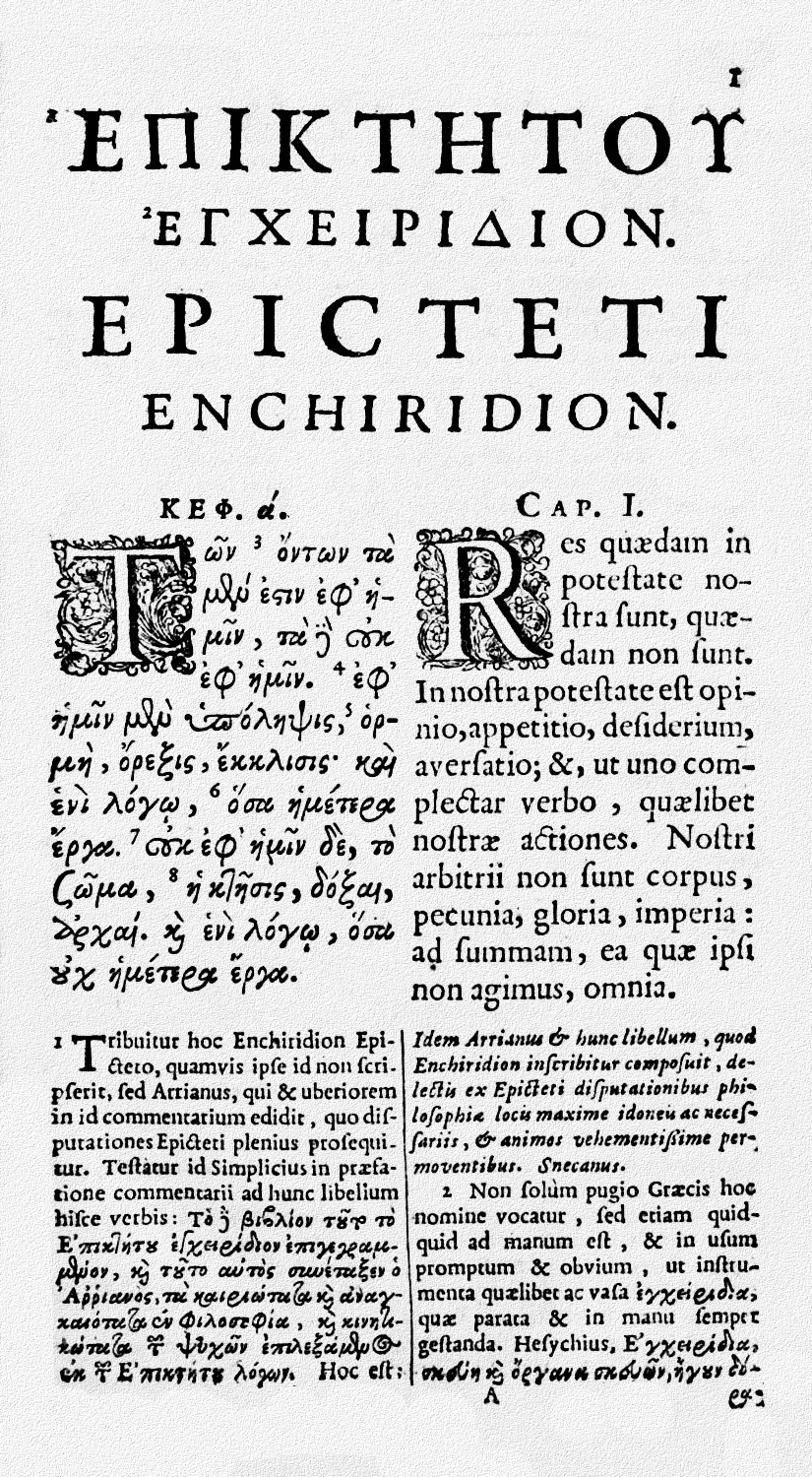 Book
Secondary source
Enchiridion of Epictetus
Arrian · early 2nd century AD (this edition 1683)
 Book
Secondary source
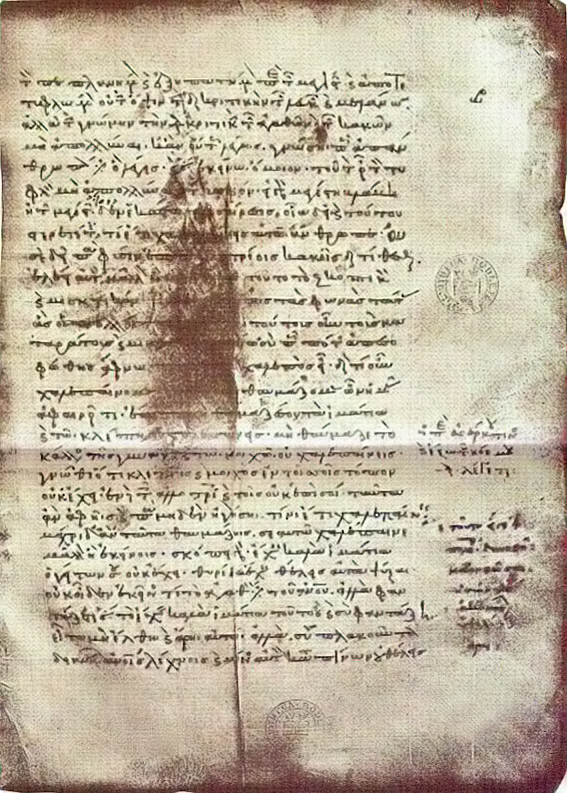
Discourses of Epictetus
Arrian · c. 108 AD
 Painting
Secondary source
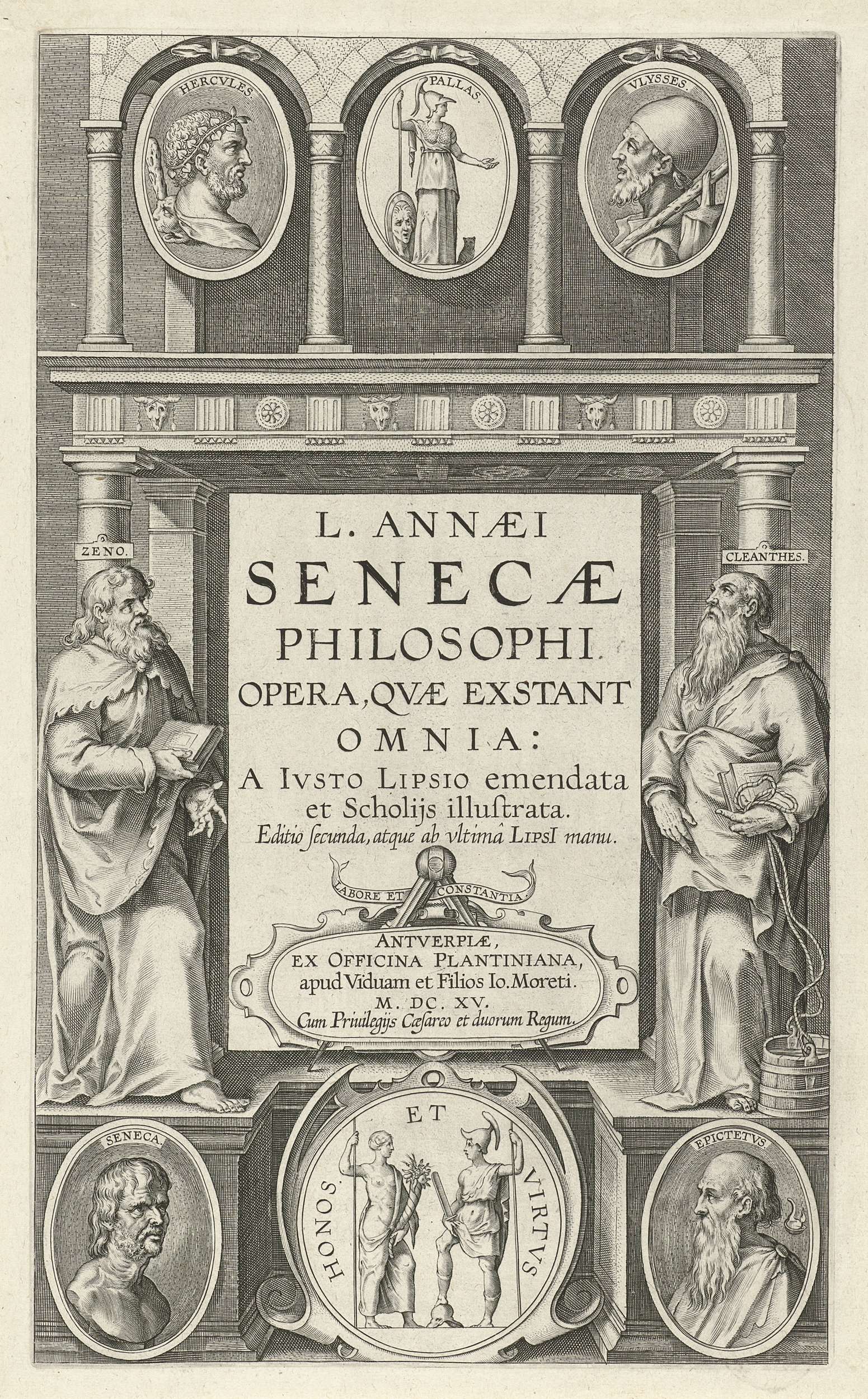
Title Page of L. Annaei Senecae Philosophi Opera
1615
DocumentSecondary source
Codex Bodleianus
c. 11th-12th century
 Book
Primary source
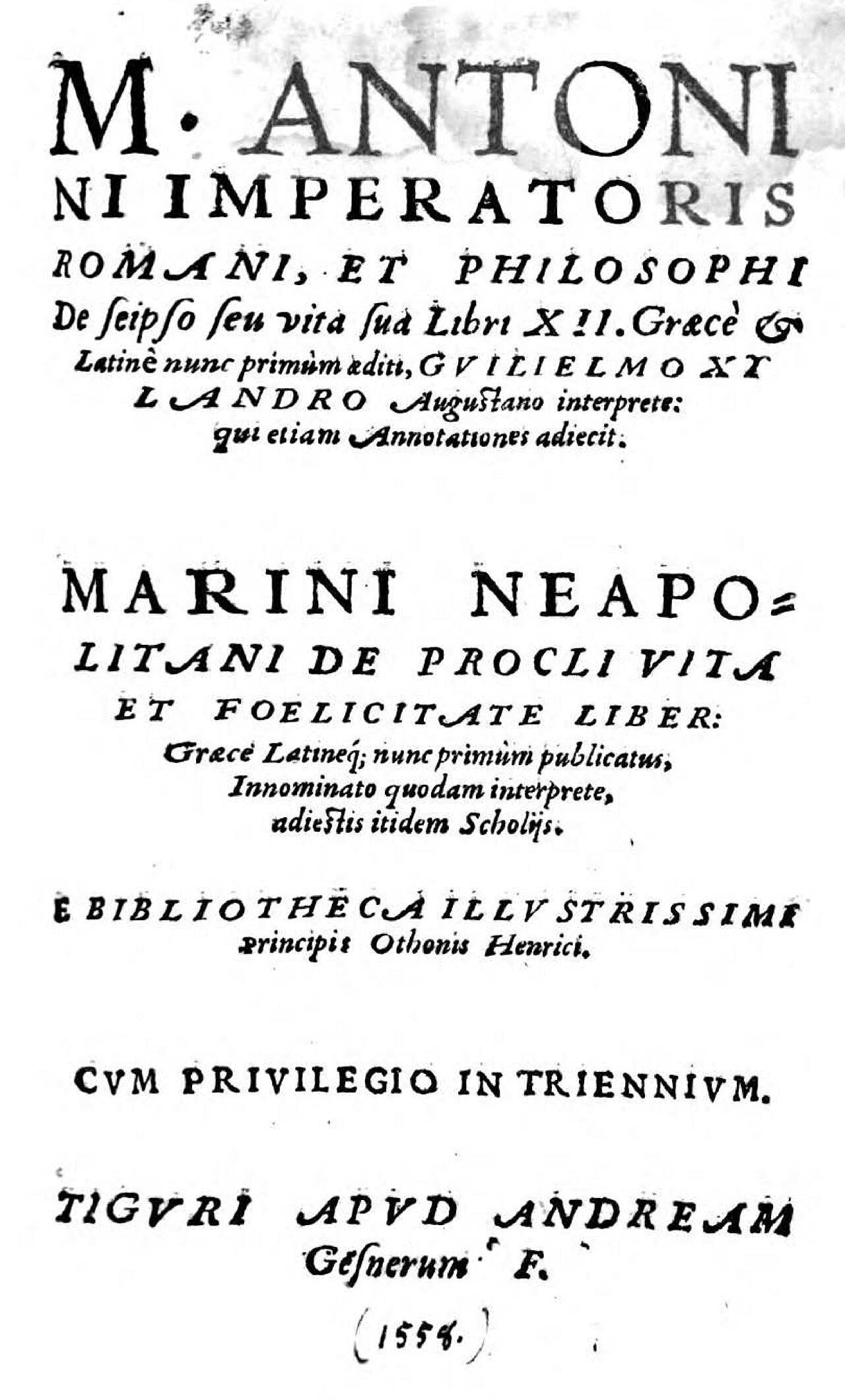
Meditations
Marcus Aurelius · c. 170-180 AD (this edition printed 1558)
Ready when you are
Start chatting with Epictetus now.
20 messages free · No credit card · Available in 50+ languages.