


Primary sourceArtifactAD 64-65
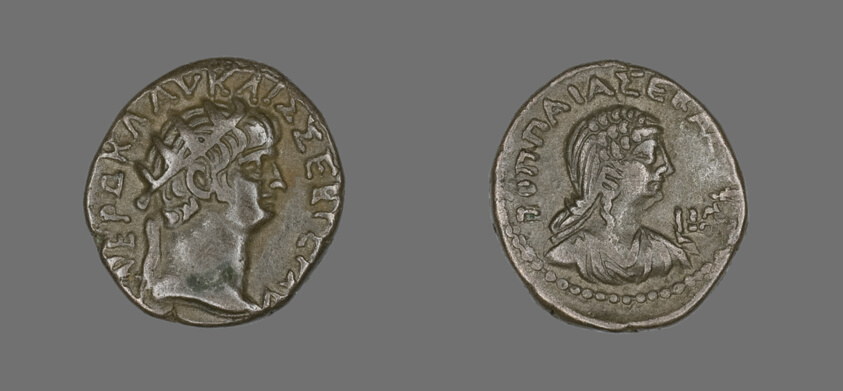
Tetradrachm of Nero from Alexandria
AD 64-65
A billon tetradrachm minted in Alexandria, Egypt, around AD 64-65, bearing Nero's portrait alongside a female bust.
A provincial Egyptian coin bearing Nero's portrait, part of his imperial coinage across the empire.
About this source
What it is
This billon tetradrachm was minted in Alexandria, Egypt, around AD 64-65, during Nero's reign. It is held by the Art Institute of Chicago. One side shows a laureate male bust facing right with Greek lettering, and the other shows a female bust in profile with her hair in a bun, also surrounded by Greek lettering.
Why it matters
The female figure on the reverse may represent a goddess or an empress, showing how imperial coinage linked the emperor's image to ideas of divine favour or family. This coin is further evidence of how Roman authority and imagery were spread through local currency in Egypt.
Look closer
- Who might the female figure on the reverse represent, and why place her alongside the emperor?
- Why would the Roman administration continue to use Greek lettering on coins in Egypt?
- What does this coin suggest about how Nero wanted to connect his rule to ideas of tradition or divinity?
This artifact is part of the curated material that grounds the AI version of Nero on Humy.ai — when students ask about related events, the AI can quote it and cite it.
More Nero sources
Browse all 91 →
Ready when you are
Start chatting with Nero now.
20 messages free · No credit card · Available in 50+ languages.