


Secondary sourcePainting1866
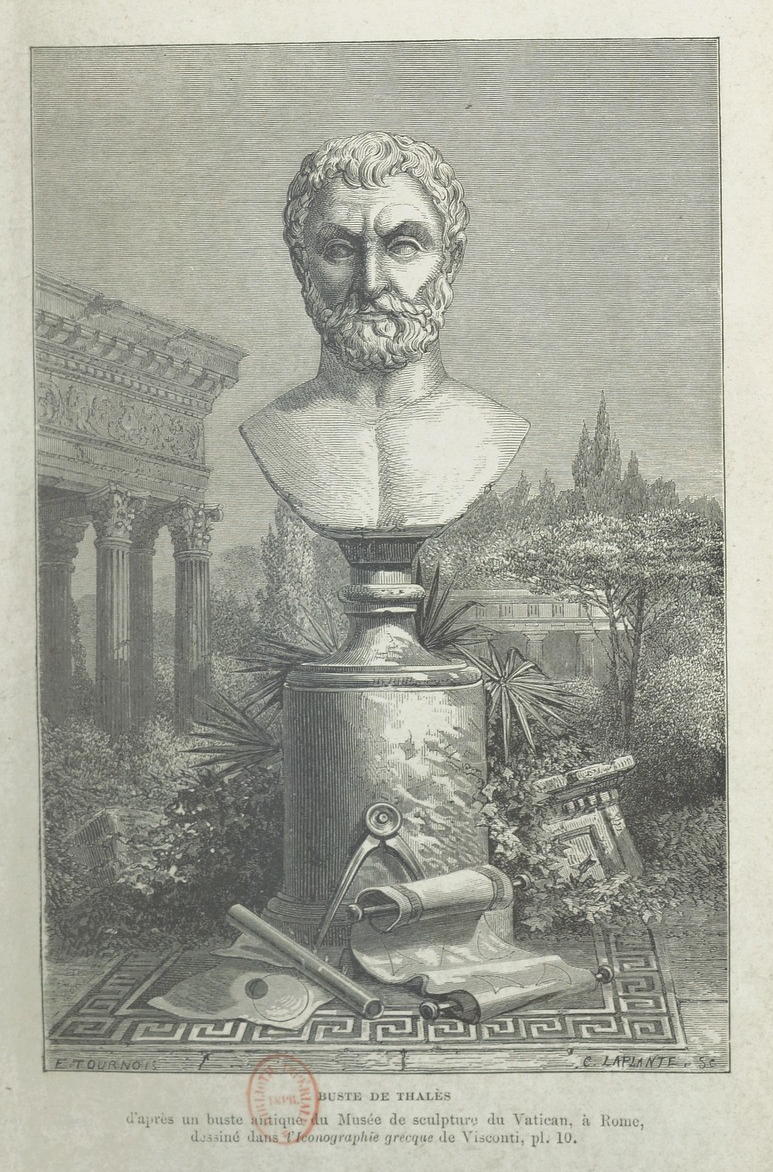
Thales of Miletus Engraving after a Vatican Bust
Charles Laplante (after E. Tournois) · 1866
An 1866 engraving of a bust of Thales, published in a French book of illustrious scientists, showing an imagined likeness of the philosopher.
An imagined 19th-century likeness of Thales, created long after his lifetime for a popular book on scientists.
About this source
What it is
This is an engraving made in 1866, based on an artwork copying a bust held in the Vatican. It was engraved by Charles Laplante after an original by E. Tournois, and printed in Louis Figuier's book Vies des Savants Illustres (Lives of Illustrious Scientists), published in Paris.
Why it matters
No portrait of Thales survives from his own lifetime, so this image is an imagined likeness created almost 2,400 years after he lived. It shows how 19th-century book-makers like Figuier, Tournois and Laplante pictured ancient scientists for their readers, surrounding Thales with symbols of learning such as a scroll and dividers.
Look closer
- What objects surround the bust, and what do they suggest about how Thales was remembered?
- Why might an artist in 1866 want to show Thales as a classical bust rather than inventing a face from nothing?
- What does it mean that this image is based on a bust, which itself may not be an accurate likeness?
This painting is part of the curated material that grounds the AI version of Thales of Miletus on Humy.ai — when students ask about related events, the AI can quote it and cite it.
More Thales of Miletus sources
Browse all 76 → Book
Secondary source
Metaphysics
Aristotle · c. 400 BCE
 Book
Secondary source
Histories
Herodotus · c. 440 BCE
 Book
Secondary source
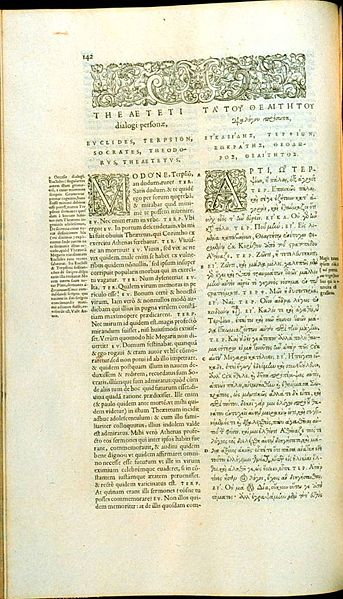
Theaetetus
Plato · early-to-middle 4th century BCE (this edition 1578)
 Book
Primary source
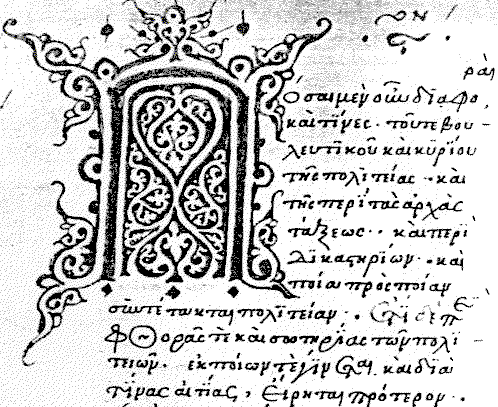
Politics
Aristotle · 4th century BCE
Free account
Read every Thales of Miletus source
Sign up free →
Ready when you are
Start chatting with Thales of Miletus now.
20 messages free · No credit card · Available in 50+ languages.