


Primary sourceArtifactlate 9th–early 10th century
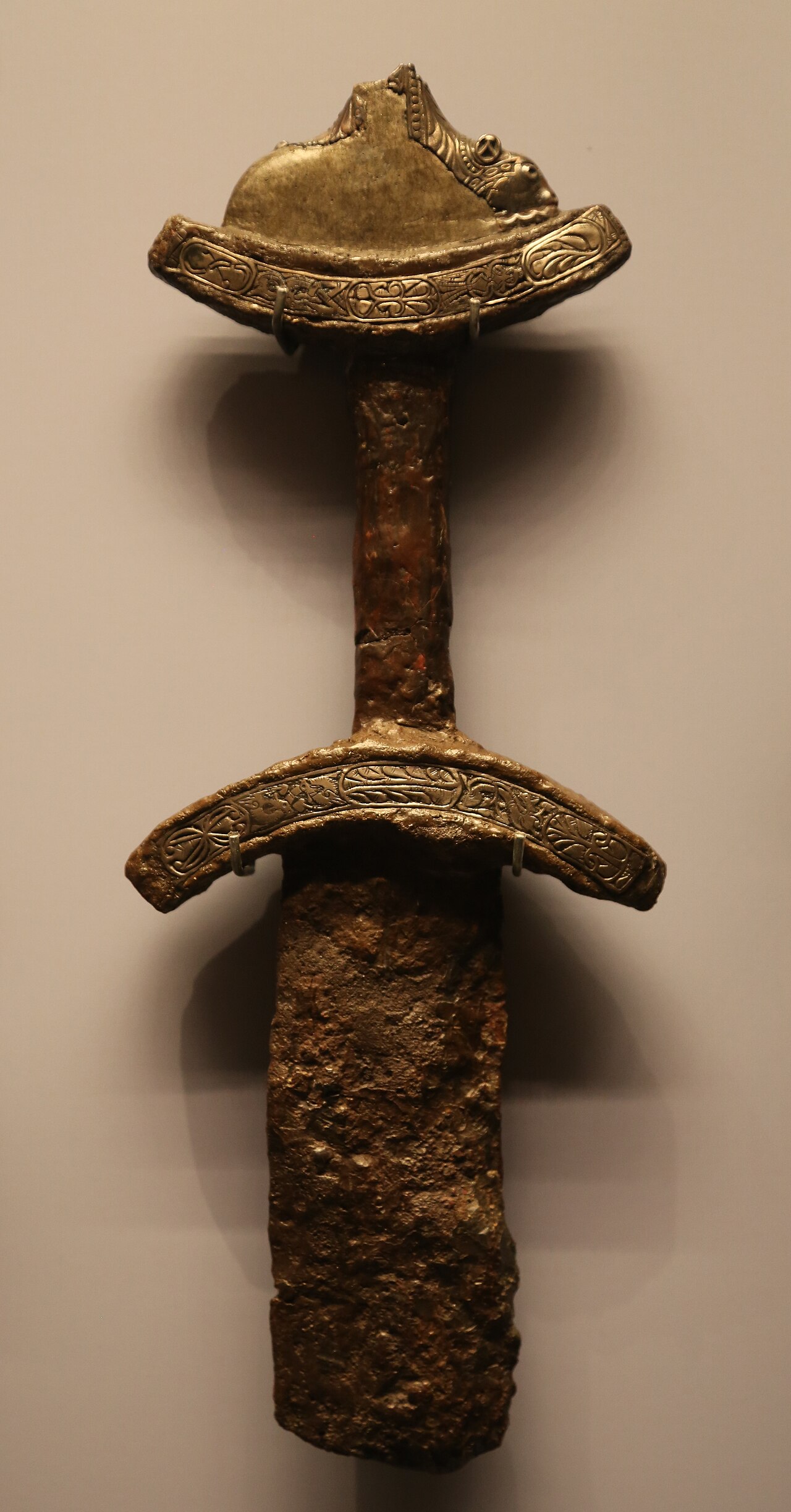
The Abingdon Sword
late 9th–early 10th century
A richly decorated late 9th or early 10th-century sword from Wessex, representing the weaponry used in Alfred's wars against the Vikings.
A sword typical of the weaponry used by Wessex warriors during Alfred's wars against Viking invaders.
About this source
What it is
This iron sword with a decorated silver hilt was found in 1874 near Abingdon on the River Thames. It dates from the late 9th or early 10th century and is held in the Ashmolean Museum in Oxford. Its guard and pommel are inlaid with niello in the Trewhiddle style, showing interlaced animals, human figures, and symbols of the four evangelists.
Why it matters
Though we do not know who owned or made this sword, it represents the kind of elite weaponry used by warriors in Wessex during Alfred's reign, a period dominated by wars against Viking invaders. Its craftsmanship shows the skill of Anglo-Saxon metalworkers of the time.
Look closer
- What do the Christian symbols on the sword suggest about the beliefs of its owner?
- Why might a sword be decorated so elaborately rather than left plain?
- What does the sword's survival, missing its full blade, tell us about objects from this period?
This artifact is part of the curated material that grounds the AI version of Alfred the Great on Humy.ai — when students ask about related events, the AI can quote it and cite it.
More Alfred the Great sources
Meet the AI Alfred the Great →

Ready when you are
Start chatting with Alfred the Great now.
20 messages free · No credit card · Available in 50+ languages.