


Secondary sourcePainting17 April 1797
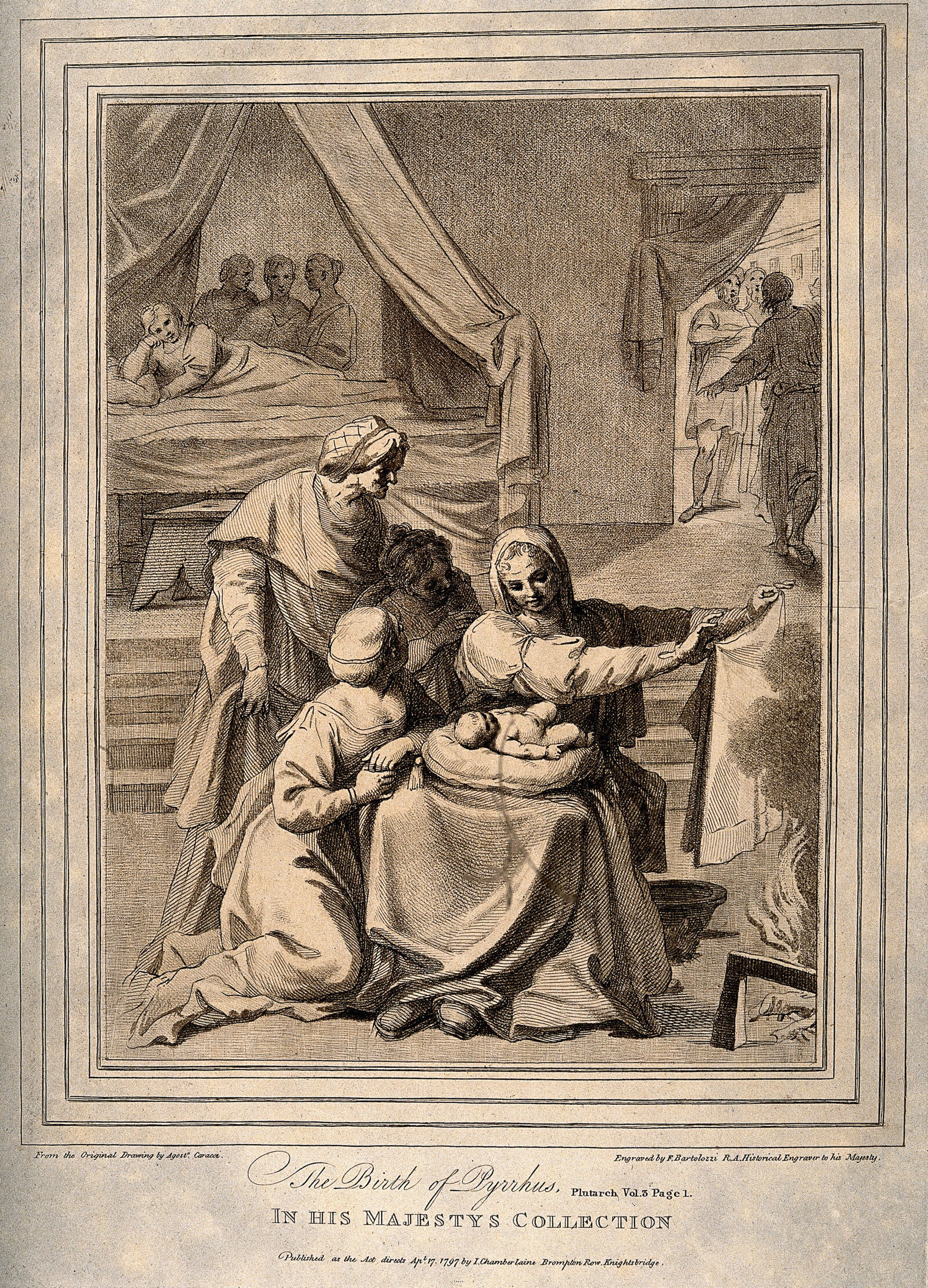
The Birth of Pyrrhus
Francesco Bartolozzi, after Agostino Carracci · 17 April 1797
An 18th-century engraving depicting the legendary birth of Pyrrhus, made centuries after his lifetime.
Depicts the legendary birth of Pyrrhus, imagined centuries after his lifetime.
About this source
What it is
This sepia engraving, made by F. Bartolozzi in 1797 after a design by Agostino Carracci, shows the birth of Pyrrhus. It depicts his mother recovering in bed while attendants wash and care for the newborn. The print is held by the Wellcome Collection in London.
Why it matters
Made nearly two thousand years after Pyrrhus lived, this engraving reflects how later European artists imagined the birth of a famous ancient king, using Carracci's original design as inspiration. It shows how classical history was reimagined through art in later centuries.
Look closer
- What activities are shown happening around the newborn?
- Why might artists in the 1700s choose to depict scenes from ancient legend?
- What does the engraving suggest about childbirth customs as imagined by the artist, rather than historical fact?
This painting is part of the curated material that grounds the AI version of Pyrrhus of Epirus on Humy.ai — when students ask about related events, the AI can quote it and cite it.
More Pyrrhus of Epirus sources
Browse all 78 →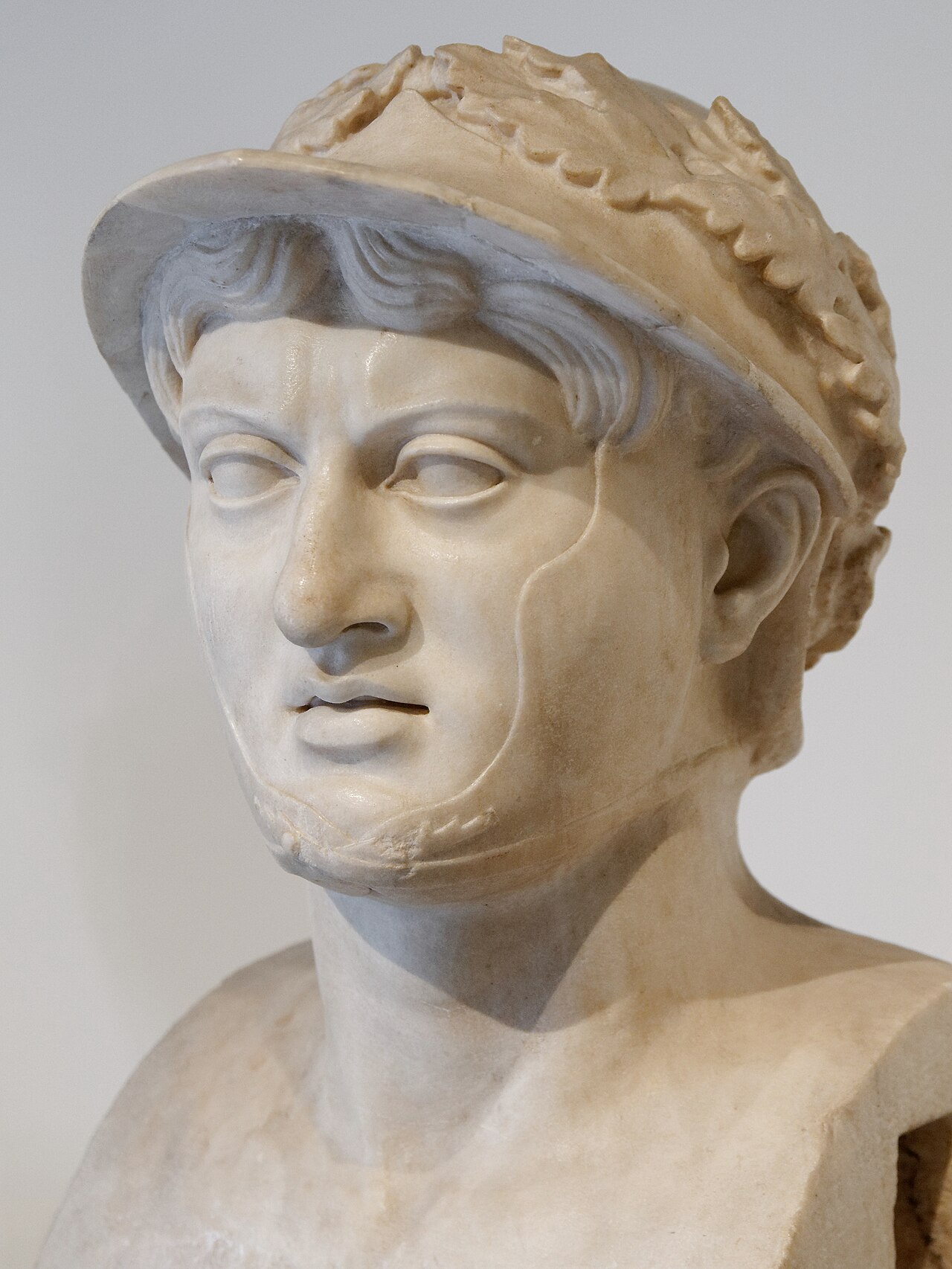
Ready when you are
Start chatting with Pyrrhus of Epirus now.
20 messages free · No credit card · Available in 50+ languages.