


Secondary sourceArtifact1771-1775
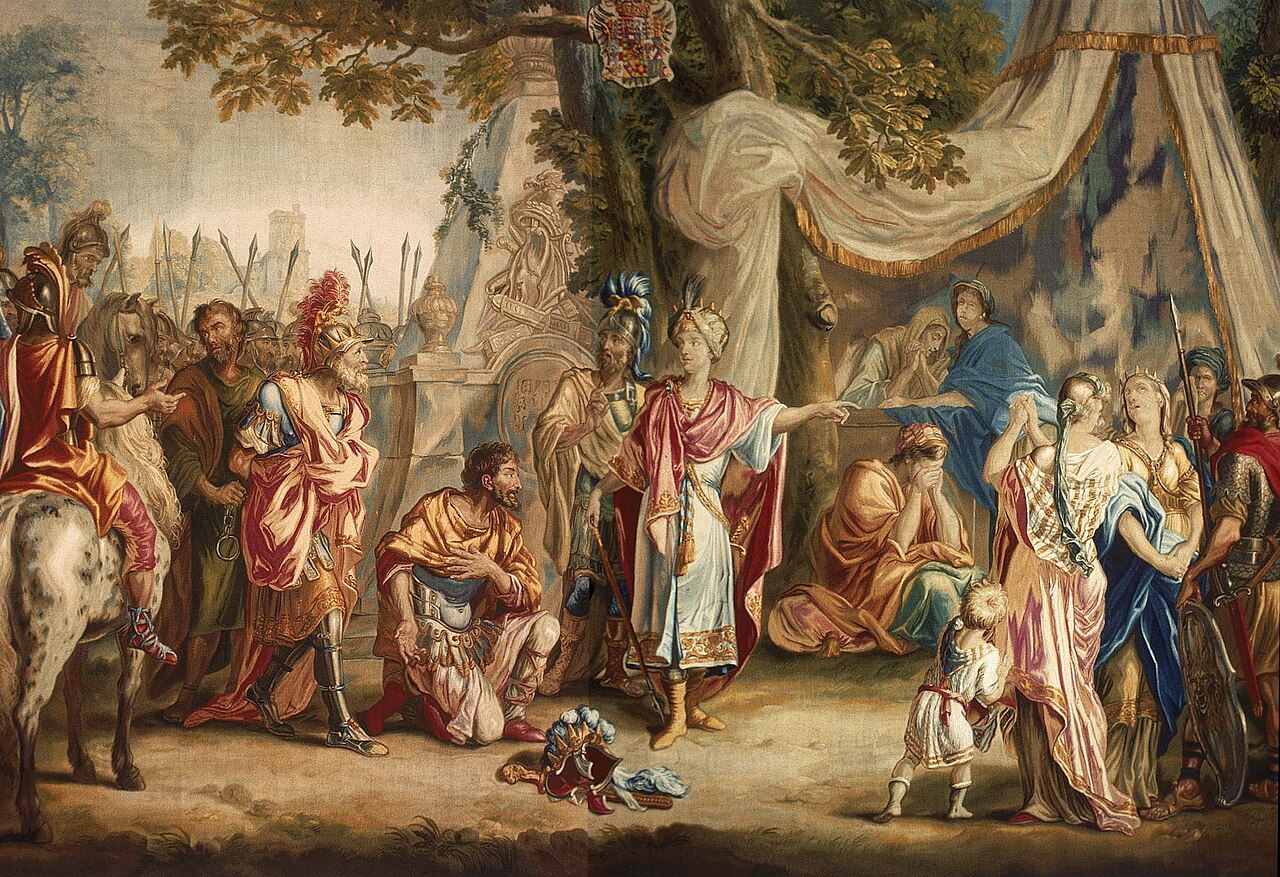
The Defeat of Astyages
Maximilien de Haese; woven by Jac. van der Borght · 1771-1775
A tapestry from the same 18th-century series depicting Cyrus's victory over the Median king Astyages.
Depicts Cyrus's defeat of Astyages, the event that began his rise to found the Achaemenid Empire.
About this source
What it is
This tapestry, woven between 1771 and 1775 and designed by Maximilien de Haese with weaving by Jac. van der Borght, shows the defeat of the Median king Astyages by Cyrus the Great.
Why it matters
Astyages's defeat marked the beginning of Cyrus's rise as founder of the Achaemenid Empire, according to ancient historians like Herodotus. This tapestry is part of a series that turned these ancient stories into grand visual art for European audiences centuries later.
Look closer
- What signs of victory and defeat can you see in this scene?
- Why might this moment from Cyrus's life be chosen for a decorative tapestry?
- What does the inclusion of women and a child suggest about how the artist imagined the aftermath of battle?
This artifact is part of the curated material that grounds the AI version of Cyrus the Great on Humy.ai — when students ask about related events, the AI can quote it and cite it.
More Cyrus the Great sources
Meet the AI Cyrus the Great →

Ready when you are
Start chatting with Cyrus the Great now.
20 messages free · No credit card · Available in 50+ languages.