


Secondary sourcePainting1897
The Dutch Surrender of New Amsterdam
Henry Alexander Ogden · 1897
A colored lithograph of the 1664 surrender of New Amsterdam, made by Henry Alexander Ogden and printed in 1897. It shows the event that Peter Stuyvesant, the Dutch director-general, faced.
It shows the 1664 surrender that Stuyvesant led, drawn long afterward, so it belongs in his archive as a later picture of his moment of defeat.
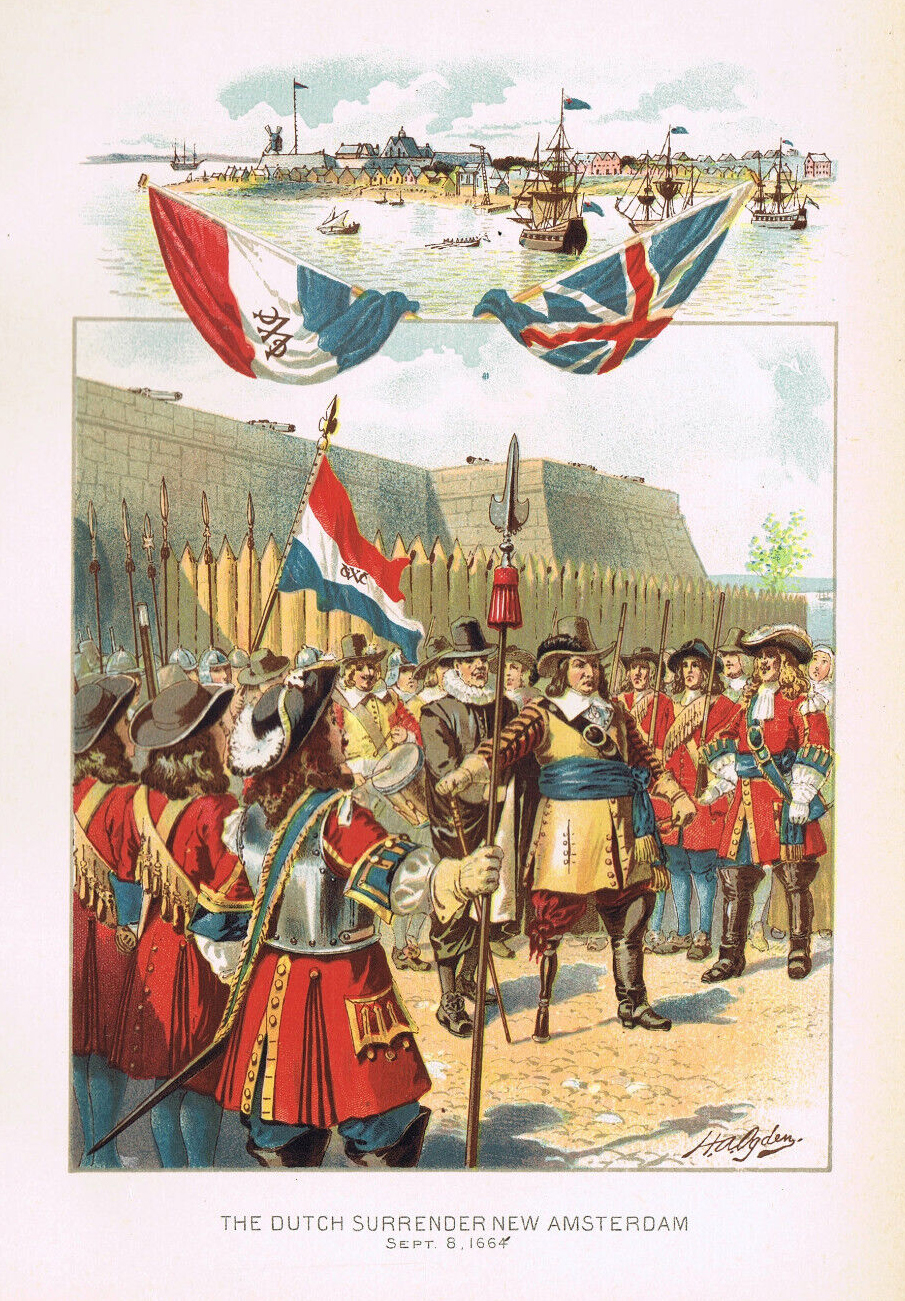
About this source
What it is
This is a colored lithograph titled The Dutch Surrender New Amsterdam, September 8, 1664. Henry Alexander Ogden made it, and it was printed in 1897 for Ellis's History of Our Country. The top panel shows a harbor town with ships and two flags, a Dutch tricolor and a British Union Jack. The lower panel shows armed soldiers in red coats and plumed hats on a fort path, with a bearded officer holding a halberd.
Why it matters
The picture shows the 1664 handover of New Amsterdam, a Dutch colony, to the English. The record says Director-General Peter Stuyvesant of New Netherland surrendered without firing a shot. Ogden made the picture more than two centuries after the event, so it shows how Americans in the 1890s chose to remember the handover, not how it looked at the time. It is a secondary source that illustrates the event in Stuyvesant's story.
Look closer
- Which side does the picture make look orderly, and which side looks uncertain?
- Why might a history book place two flags side by side at the top of the picture?
- What does a picture made in 1897 leave out that a letter written in 1664 would tell you?
This painting is part of the curated material that grounds the AI version of Peter Stuyvesant on Humy.ai — when students ask about related events, the AI can quote it and cite it.
More Peter Stuyvesant sources
Meet the AI Peter Stuyvesant →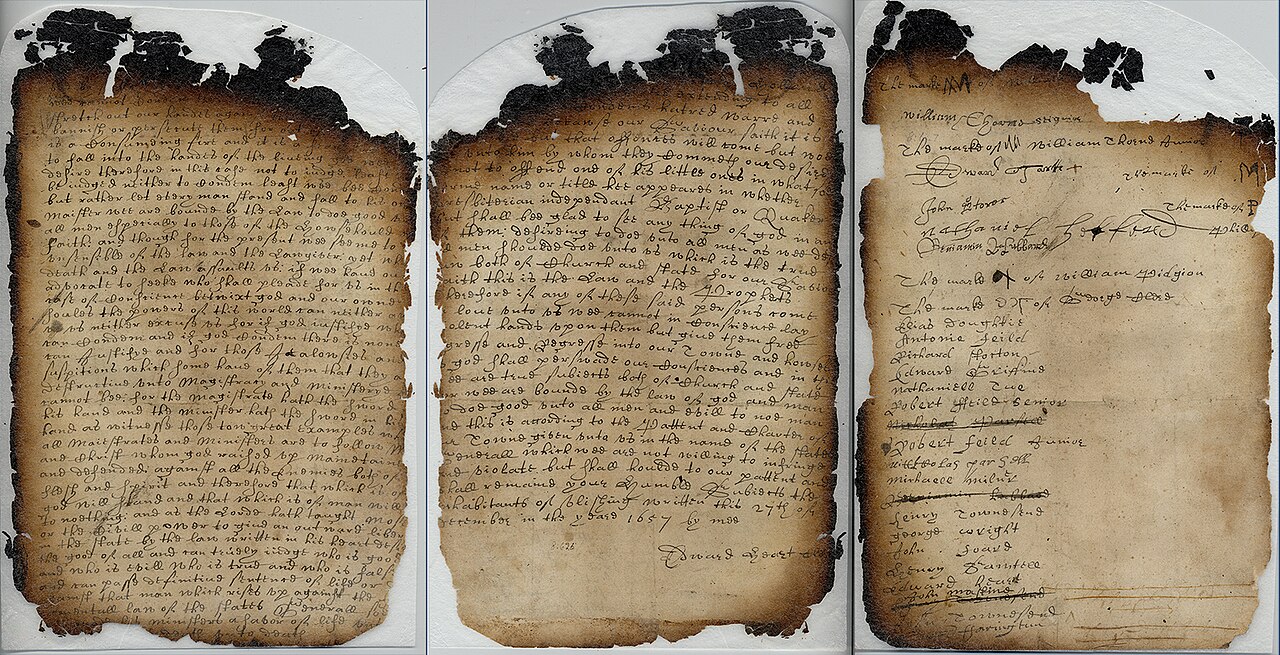 Document
Primary source
Flushing Remonstrance
Edward Hart · 27 December 1657
 Document
Primary source
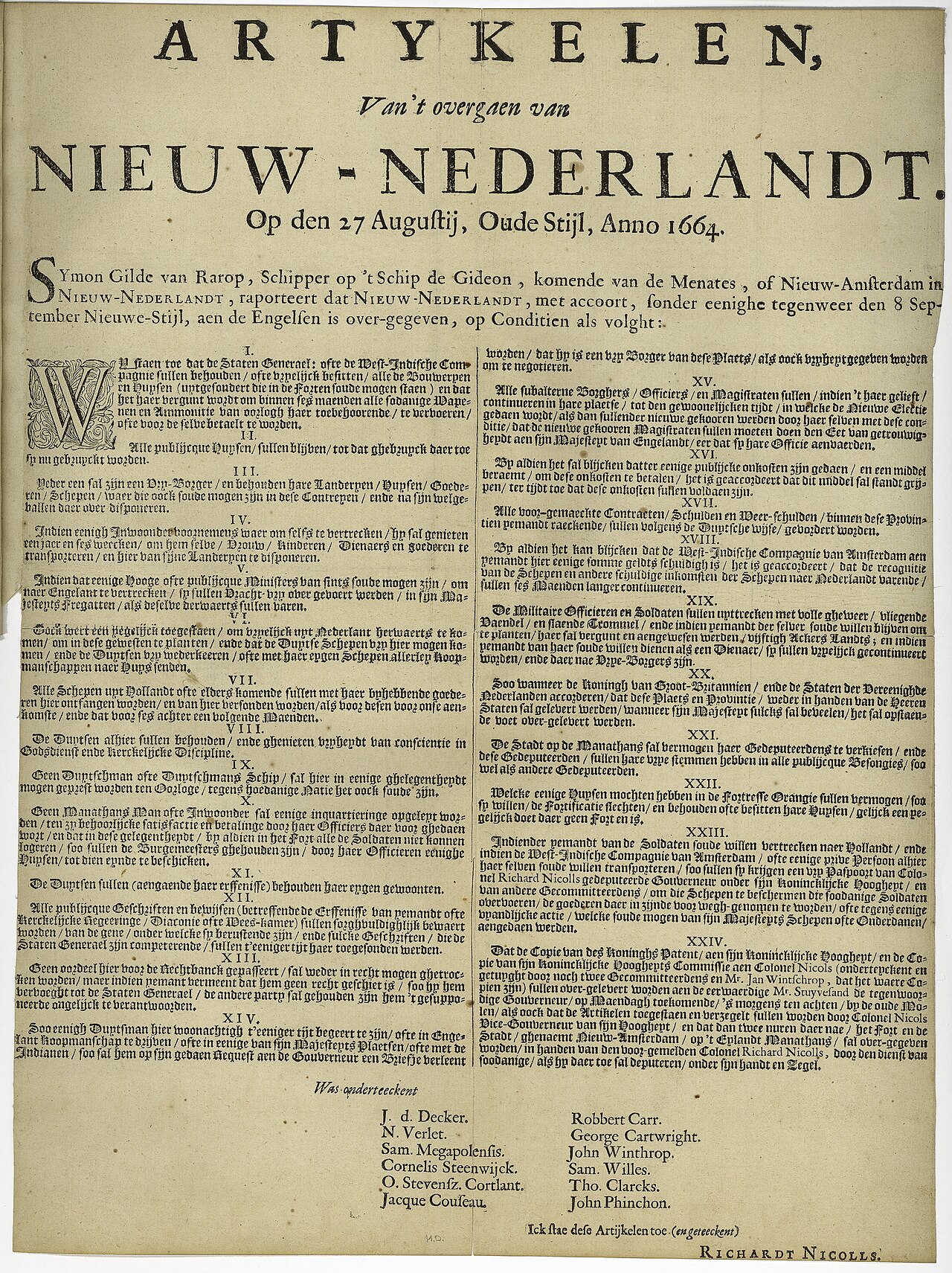
Articles of Capitulation on the Reduction of New Netherland
29 September 1664
 Painting
Primary source
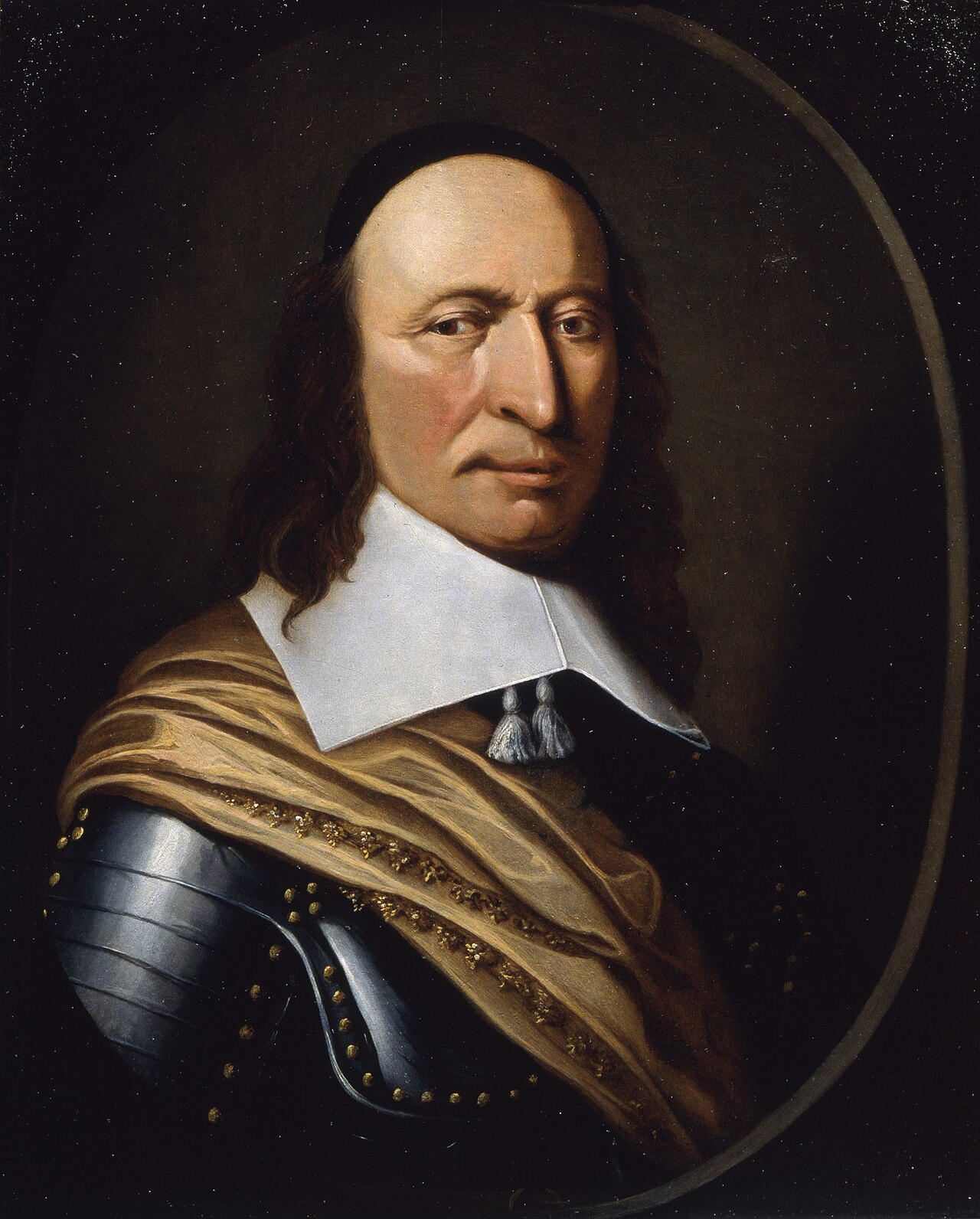
Petrus (Peter) Stuyvesant
Hendrick Couturier (attributed) · 1652
Secondary source
Laws and Ordinances of New Netherland, 1638–1674
E. B. O'Callaghan · 1647–1664 (compiled 1868)
 Artifact
Primary source
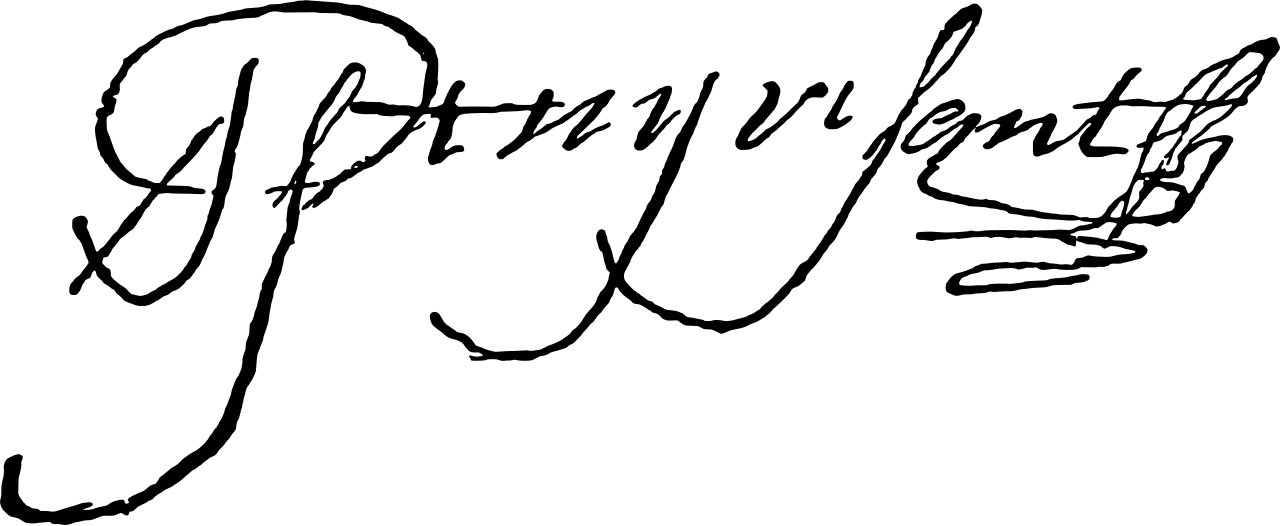
Signature of Peter Stuyvesant
Peter Stuyvesant
Ready when you are
Start chatting with Peter Stuyvesant now.
20 messages free · No credit card · Available in 50+ languages.