


Secondary sourceBook1920
The Equestrian Statue of George III and the Pedestrian Statue of William Pitt
Alexander James Wall · 1920
A 1920 scholarly pamphlet by Alexander J. Wall about the two statues erected in New York City in 1770, one of George III and one of William Pitt.
A scholarly study of the New York statue of George III, showing how colonists remembered the king and the Stamp Act crisis.
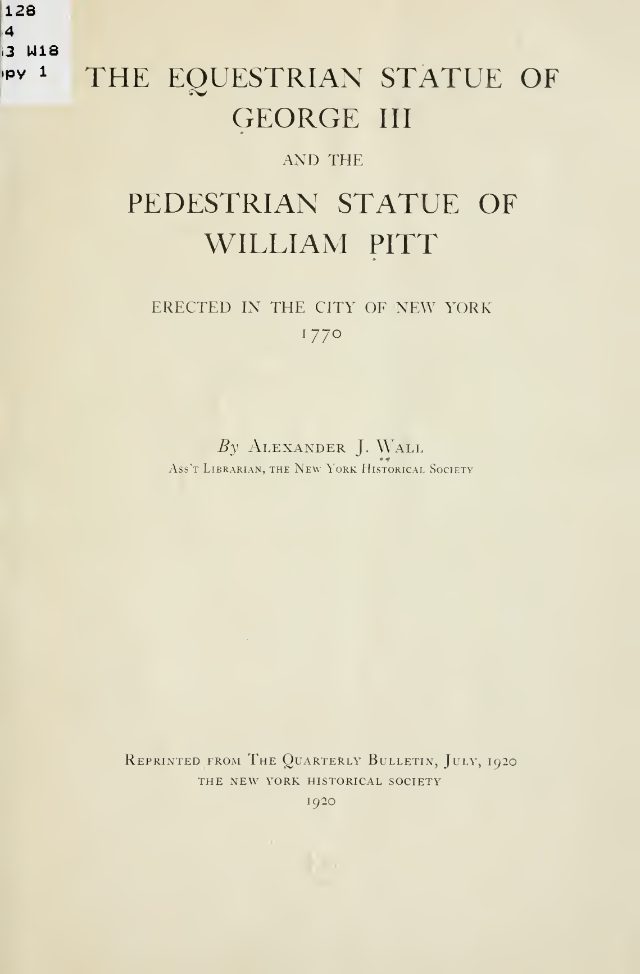 PDF · 28 pages
About this source
What it is
A reprint of a 1920 article by Alexander J. Wall, assistant librarian of the New York Historical Society, first published in its Quarterly Bulletin. It studies the equestrian statue of George III and the statue of William Pitt erected in New York City in 1770. The scanned pamphlet is available as a PDF on the Internet Archive.
Why it matters
The statues were linked to colonial protests against the Stamp Act of 1765. According to the pamphlet's opening, it was William Pitt, who had championed the American cause in Parliament and worked for the repeal of the Stamp Act, who was honoured alongside the king. The pair of statues shows how colonists in New York expressed their views about the king and Parliament.
Look closer
- Why were two statues erected together, and what might each say about the colonists who paid for them?
- What does the author's use of earlier accounts suggest about how the statues are remembered?
- Whose voices are missing from this study of public monuments?
This book is part of the curated material that grounds the AI version of George III on Humy.ai — when students ask about related events, the AI can quote it and cite it.
More George III sources
Meet the AI George III →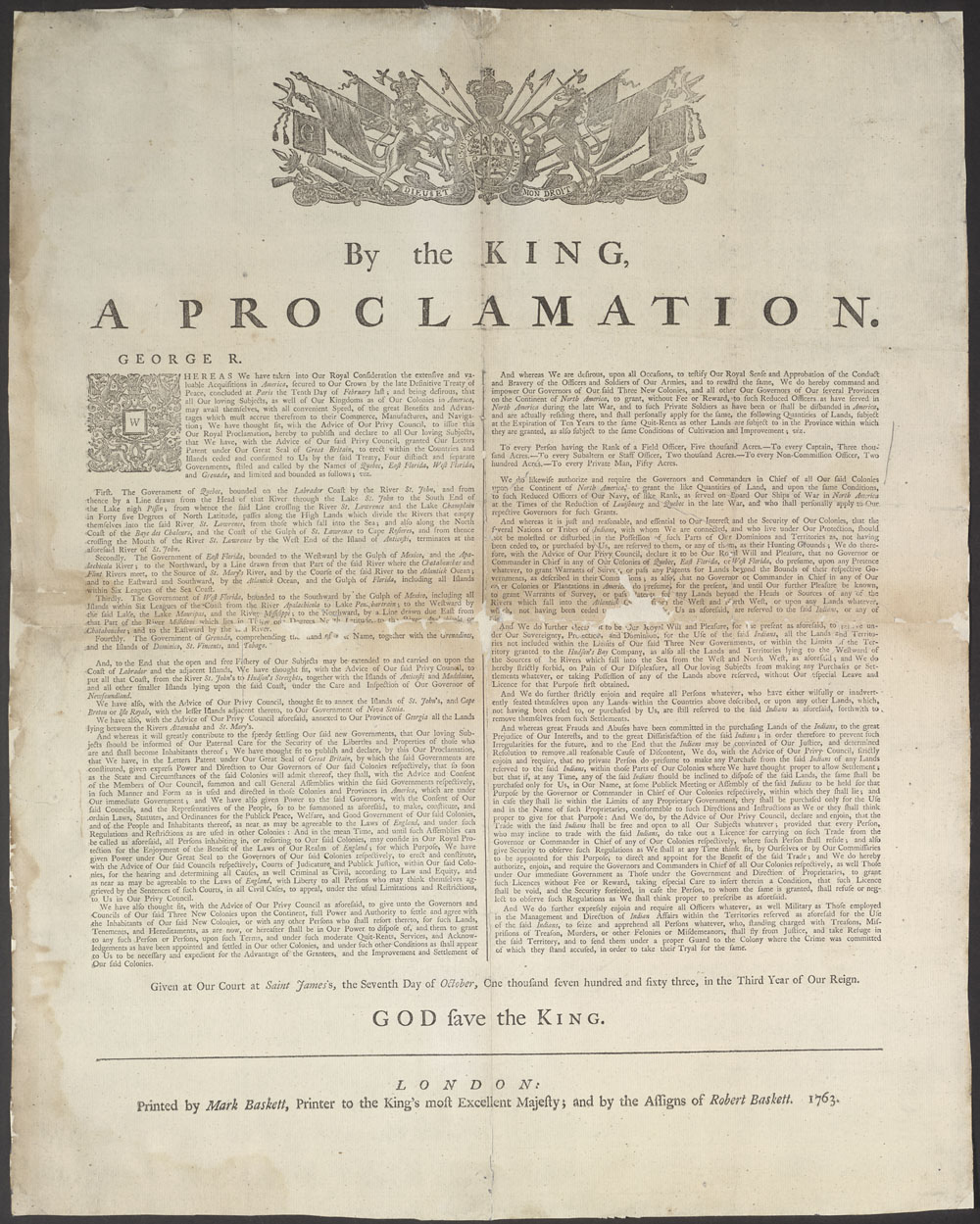 Document
Primary source
Royal Proclamation of 1763
7 October 1763
 Painting
Primary source
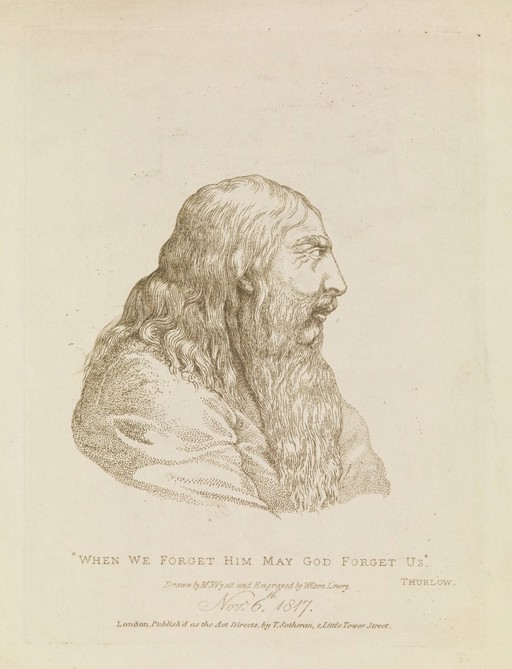
King George III, Etching by Wilson Lowry after M. C. Wyatt
Matthew Coates Wyatt · 6 November 1817
 Painting
Primary source
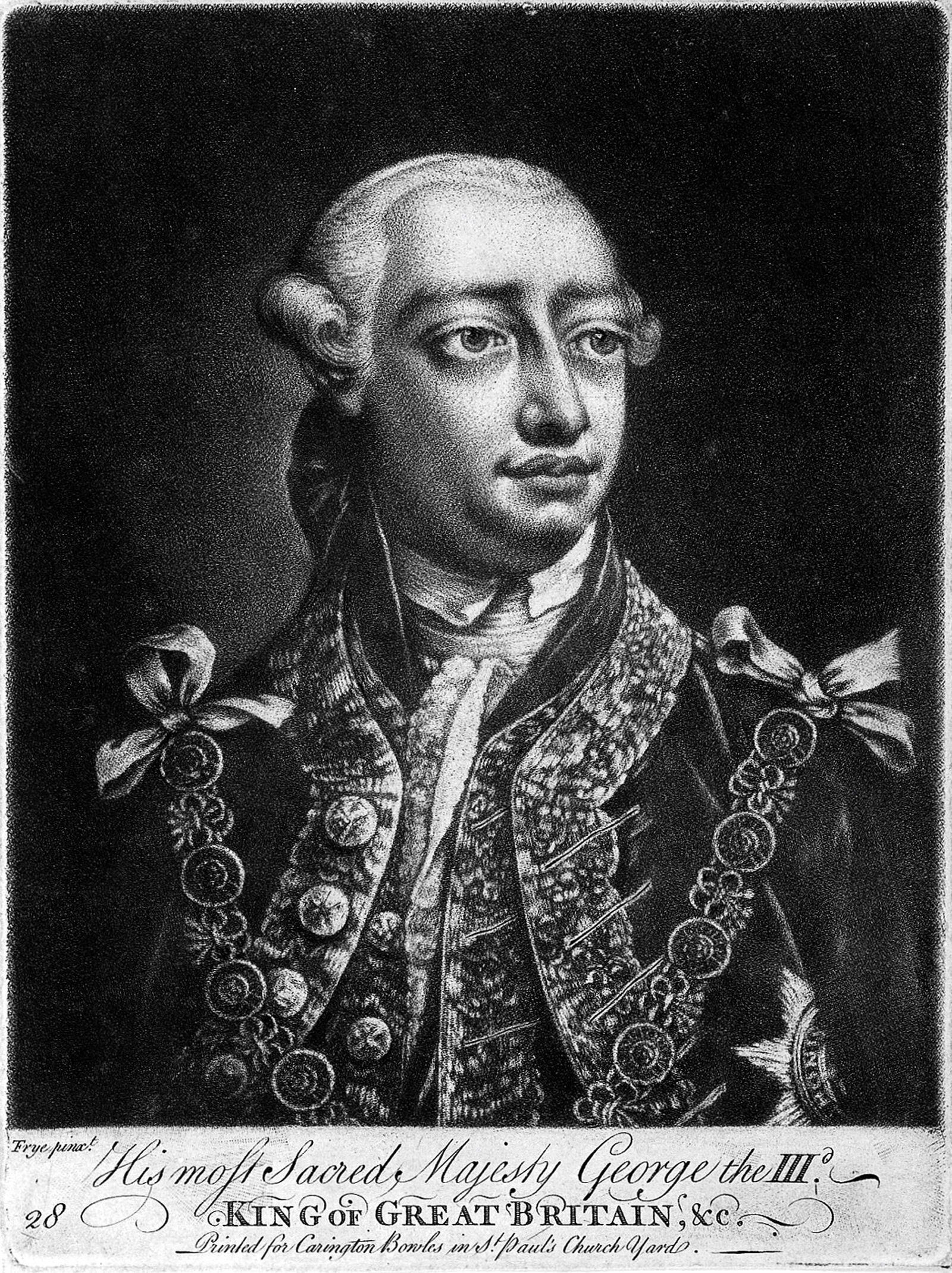
King George III, Mezzotint after Thomas Frye
Thomas Frye · not later than 1762
 Document
Primary source
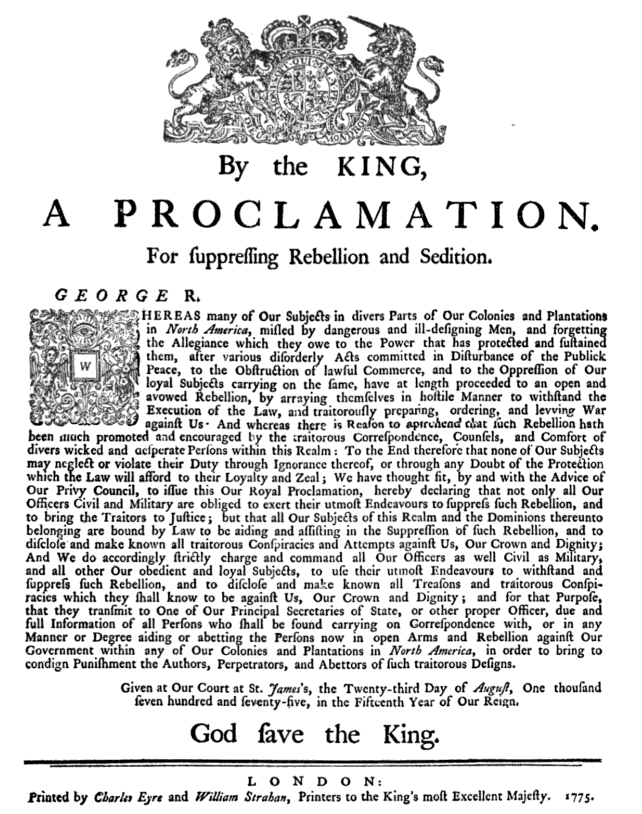
Proclamation of Rebellion
George III of Great Britain · 23 August 1775
 Document
Primary source
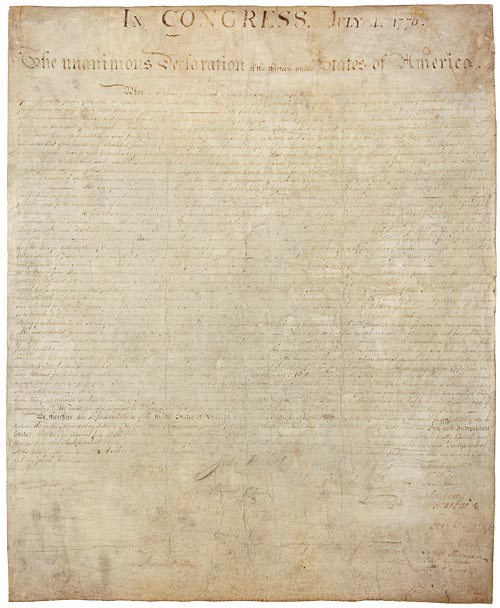
Declaration of Independence
Continental Congress (drafted by Thomas Jefferson) · 1776
Ready when you are
Start chatting with George III now.
20 messages free · No credit card · Available in 50+ languages.