


Secondary sourcePainting1754
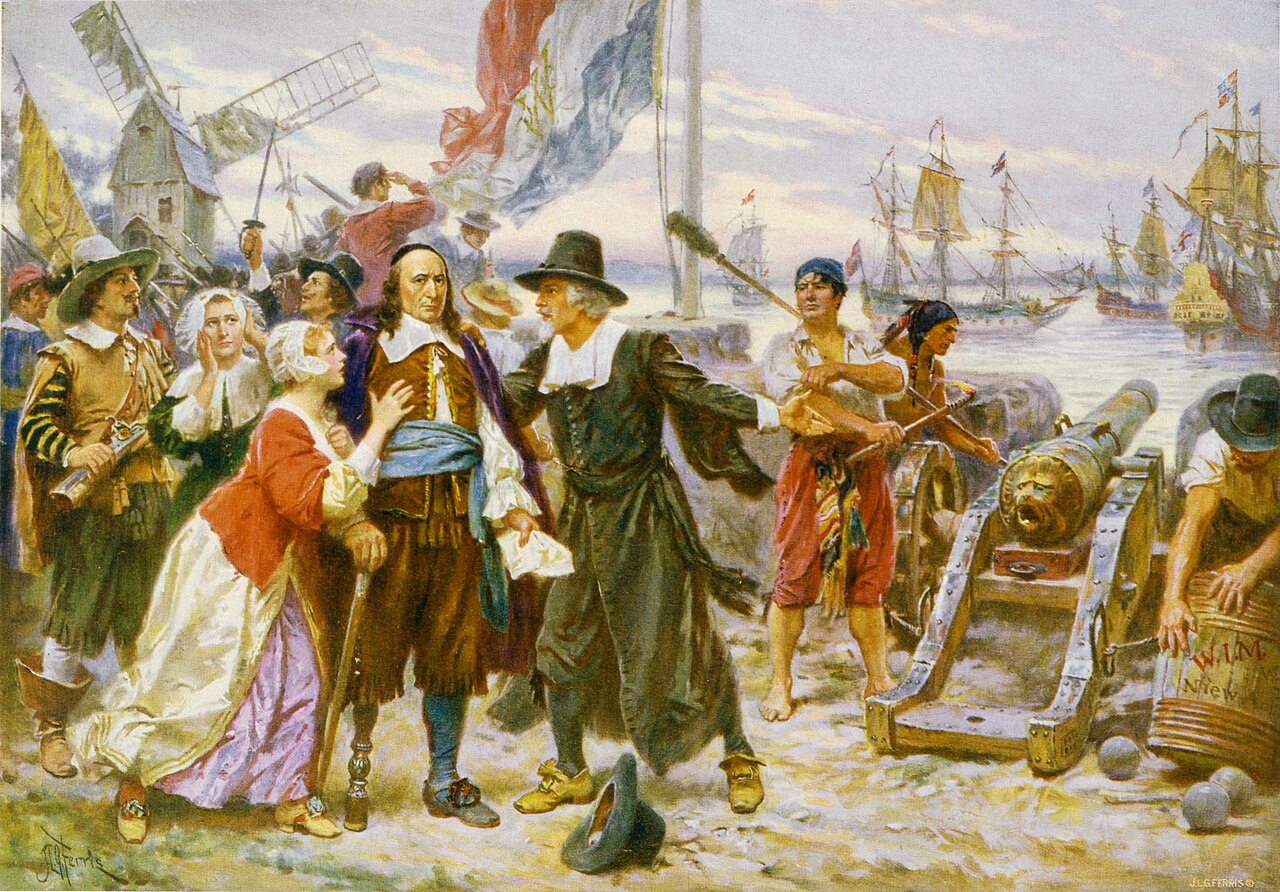
The Fall of New Amsterdam
Jean Leon Gerome Ferris · 1754
A 20th-century painting imagining Stuyvesant refusing to surrender New Amsterdam to the English in 1664.
Depicts Stuyvesant refusing to surrender New Amsterdam, a scene later artists used to shape his legacy.
About this source
What it is
This is a historical painting by the American artist Jean Leon Gerome Ferris, showing a 17th-century colonial harbor scene. A man in a wide-brimmed black hat gestures outward beside a man in a plumed hat holding papers, surrounded by soldiers, ships, and a windmill.
Why it matters
Ferris painted this scene long after the events it depicts, as part of a series imagining dramatic moments in American history. It is widely reproduced in textbooks as an illustration of the 1664 surrender of New Amsterdam, but it reflects how later generations imagined Peter Stuyvesant's defiance rather than an eyewitness record.
Look closer
- What details in the painting look invented or dramatized rather than historically documented?
- Why might an artist centuries later choose to paint this moment, and what story does it tell about Stuyvesant?
- What does the painting leave out about the actual negotiations and people involved in the surrender?
This painting is part of the curated material that grounds the AI version of Peter Stuyvesant on Humy.ai — when students ask about related events, the AI can quote it and cite it.
More Peter Stuyvesant sources
Meet the AI Peter Stuyvesant →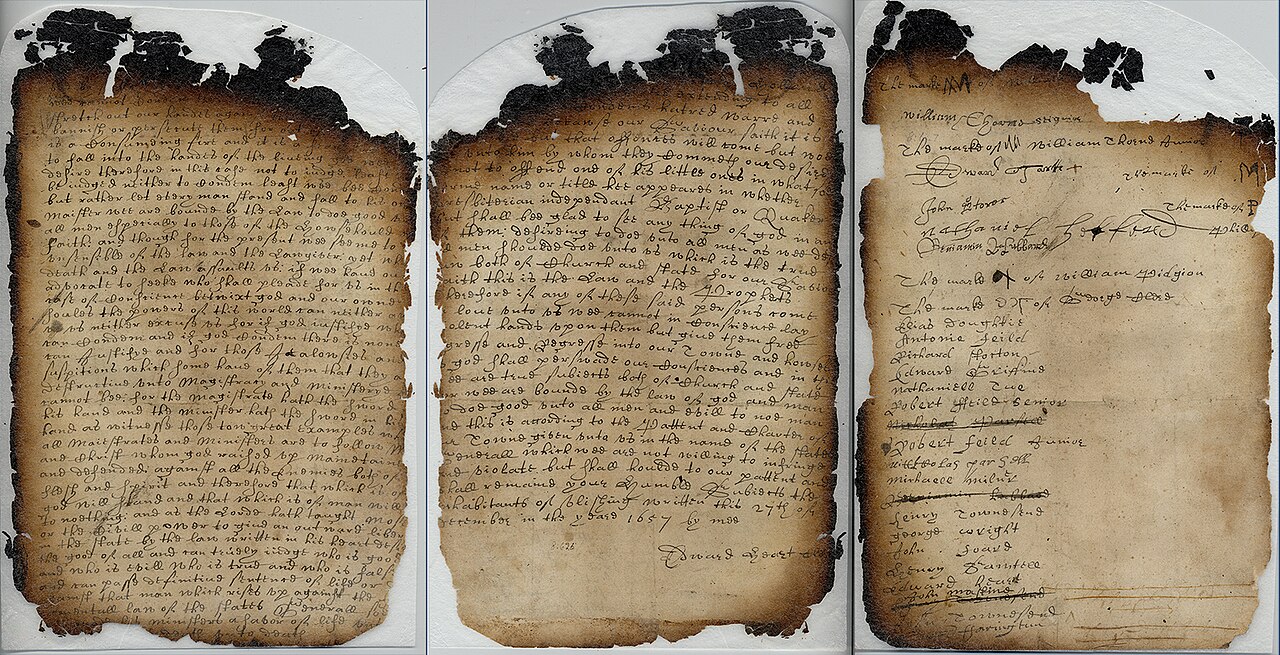 Document
Primary source
Flushing Remonstrance
Edward Hart · 27 December 1657
 Document
Primary source
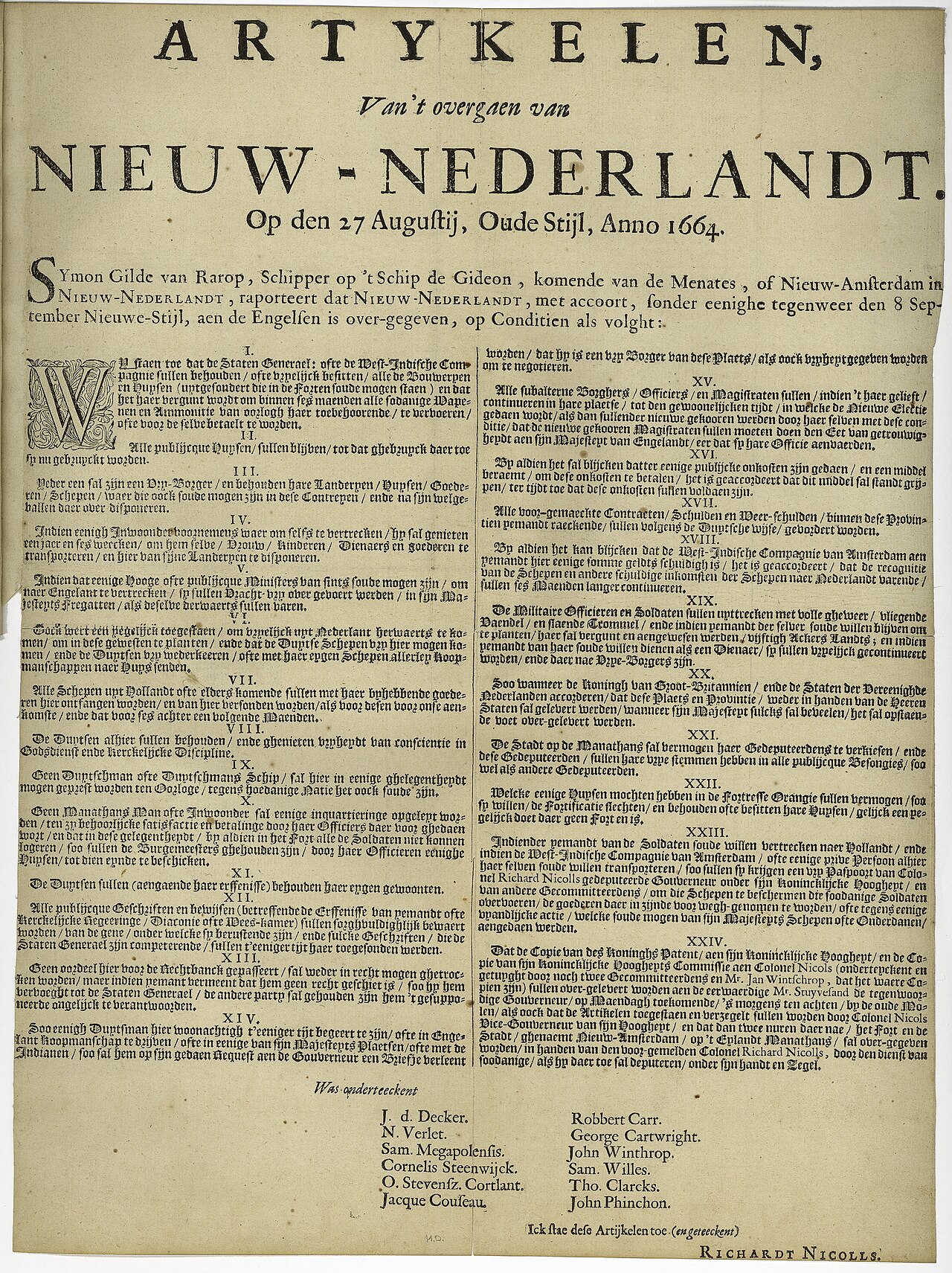
Articles of Capitulation on the Reduction of New Netherland
29 September 1664
 Painting
Primary source
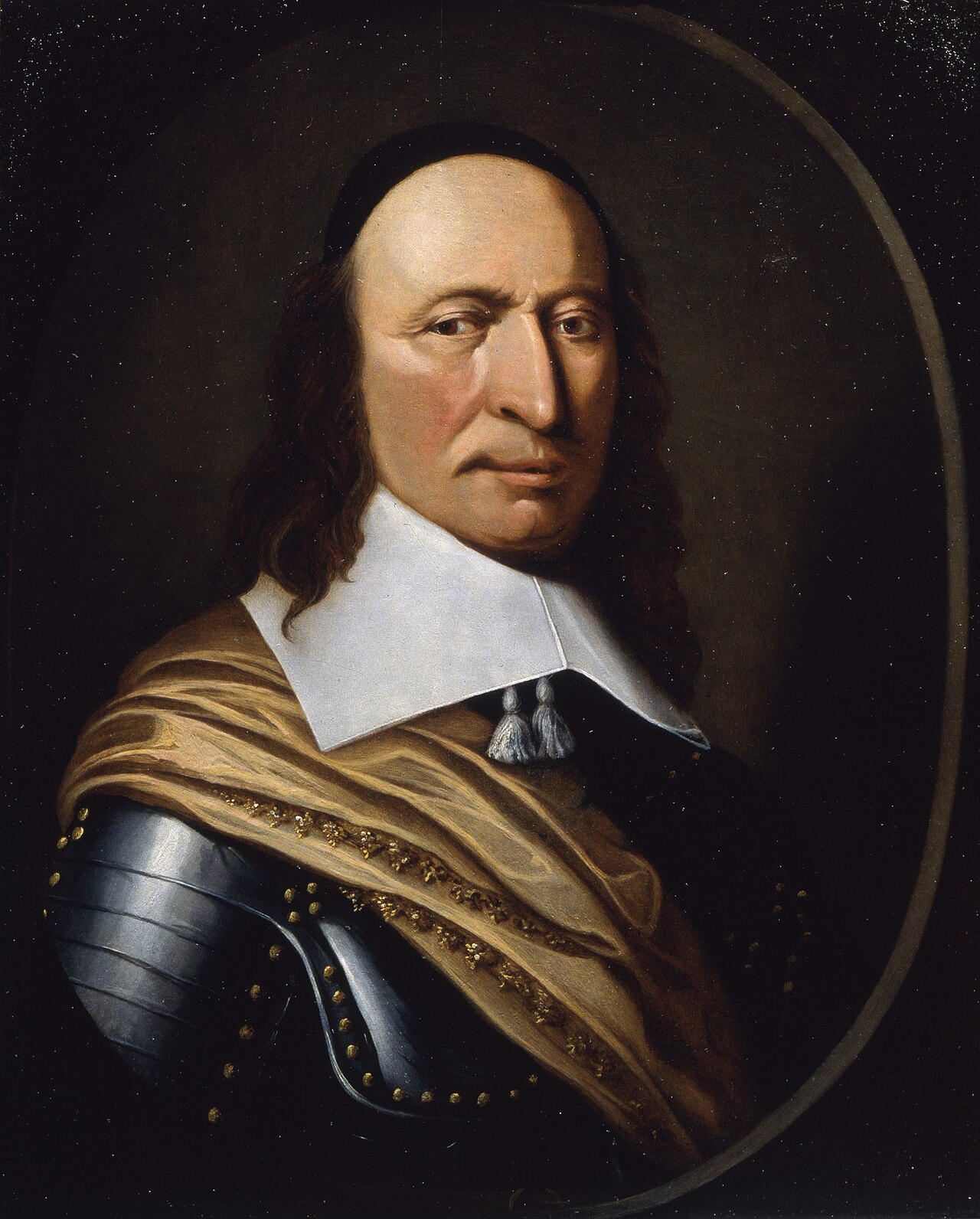
Petrus (Peter) Stuyvesant
Hendrick Couturier (attributed) · 1652
Secondary source
Laws and Ordinances of New Netherland, 1638–1674
E. B. O'Callaghan · 1647–1664 (compiled 1868)
 Artifact
Primary source
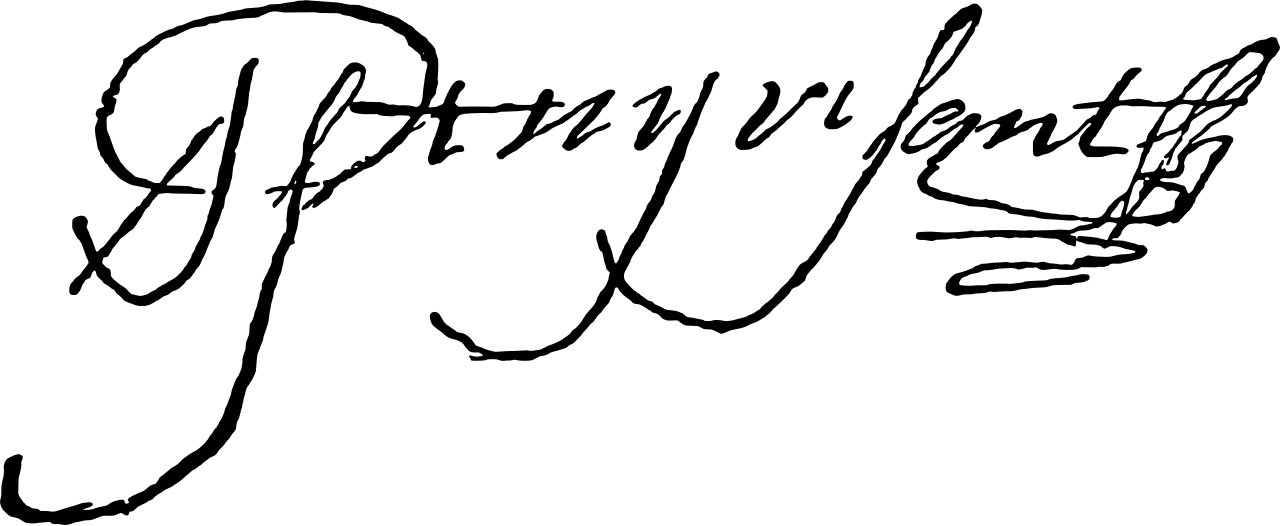
Signature of Peter Stuyvesant
Peter Stuyvesant
Ready when you are
Start chatting with Peter Stuyvesant now.
20 messages free · No credit card · Available in 50+ languages.