


Primary sourcePaintingc. 1533
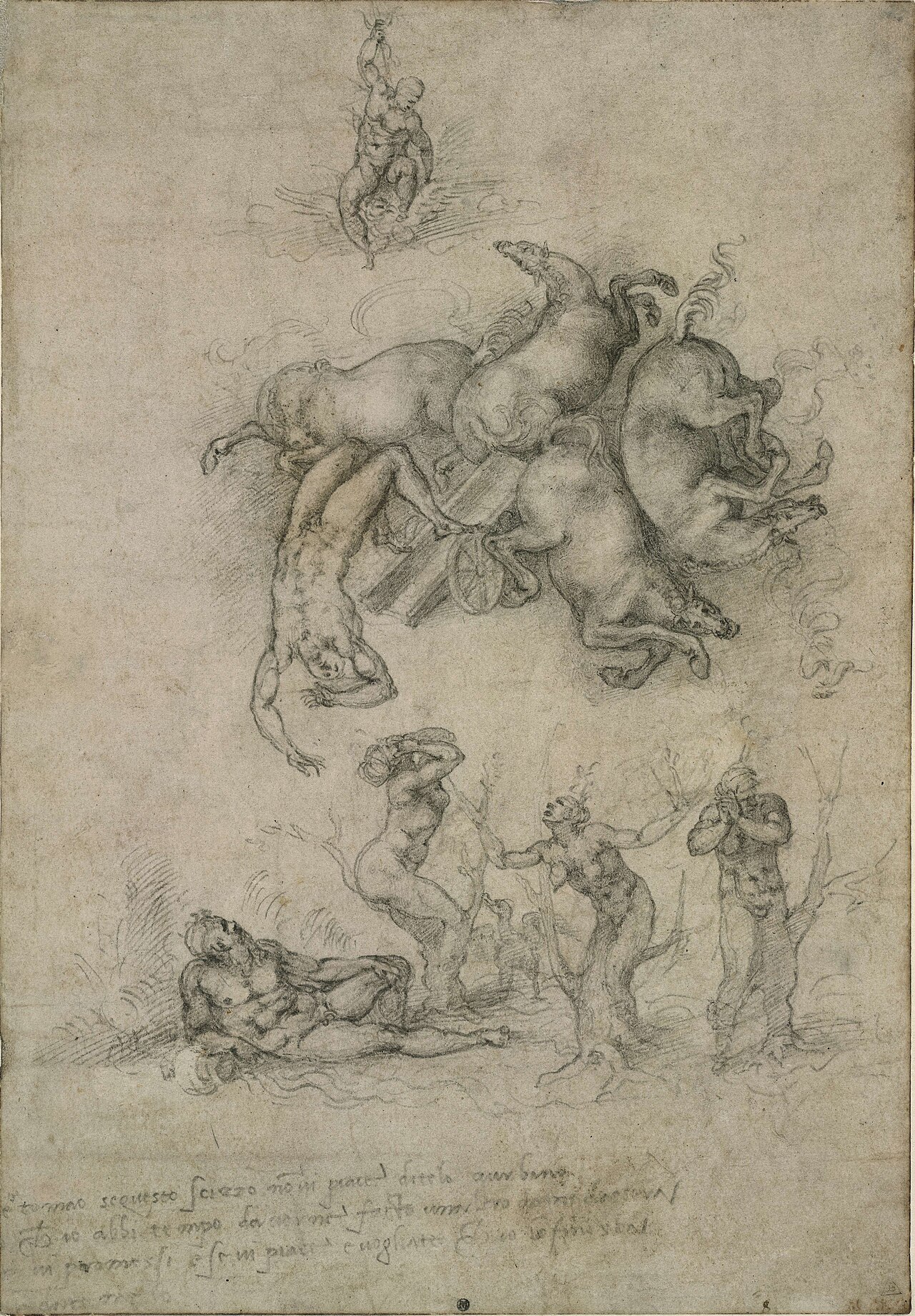
The Fall of Phaeton
Michelangelo · c. 1533
A presentation drawing Michelangelo made as a gift for Tommaso de' Cavalieri, illustrating the myth of Phaeton.
Michelangelo made and inscribed this drawing as a personal gift for Tommaso de' Cavalieri.
About this source
What it is
This drawing, made around 1533, depicts the mythological fall of Phaeton, son of Apollo, from Ovid's Metamorphoses. Michelangelo created it as a presentation gift for Tommaso de' Cavalieri, whom he had met in 1532. A written note at the bottom, in Michelangelo's own hand, calls it unfinished and offers to complete it or make another version if Cavalieri was not satisfied. It is now held at the British Museum in London.
Why it matters
The drawing documents a personal exchange between Michelangelo and Cavalieri, showing the artist's use of mythological subjects as gifts and his careful, self-critical approach to his own work. A second version of the same subject exists in the Royal Collection, showing Michelangelo revisited the theme for his friend.
Look closer
- What does the written note at the bottom reveal about Michelangelo's relationship with Cavalieri?
- Why might an artist offer to redo a finished gift?
- How does the drawing use multiple figures to tell different parts of the same myth?
This painting is part of the curated material that grounds the AI version of Michelangelo Buonarroti on Humy.ai — when students ask about related events, the AI can quote it and cite it.
More Michelangelo Buonarroti sources
Meet the AI Michelangelo Buonarroti →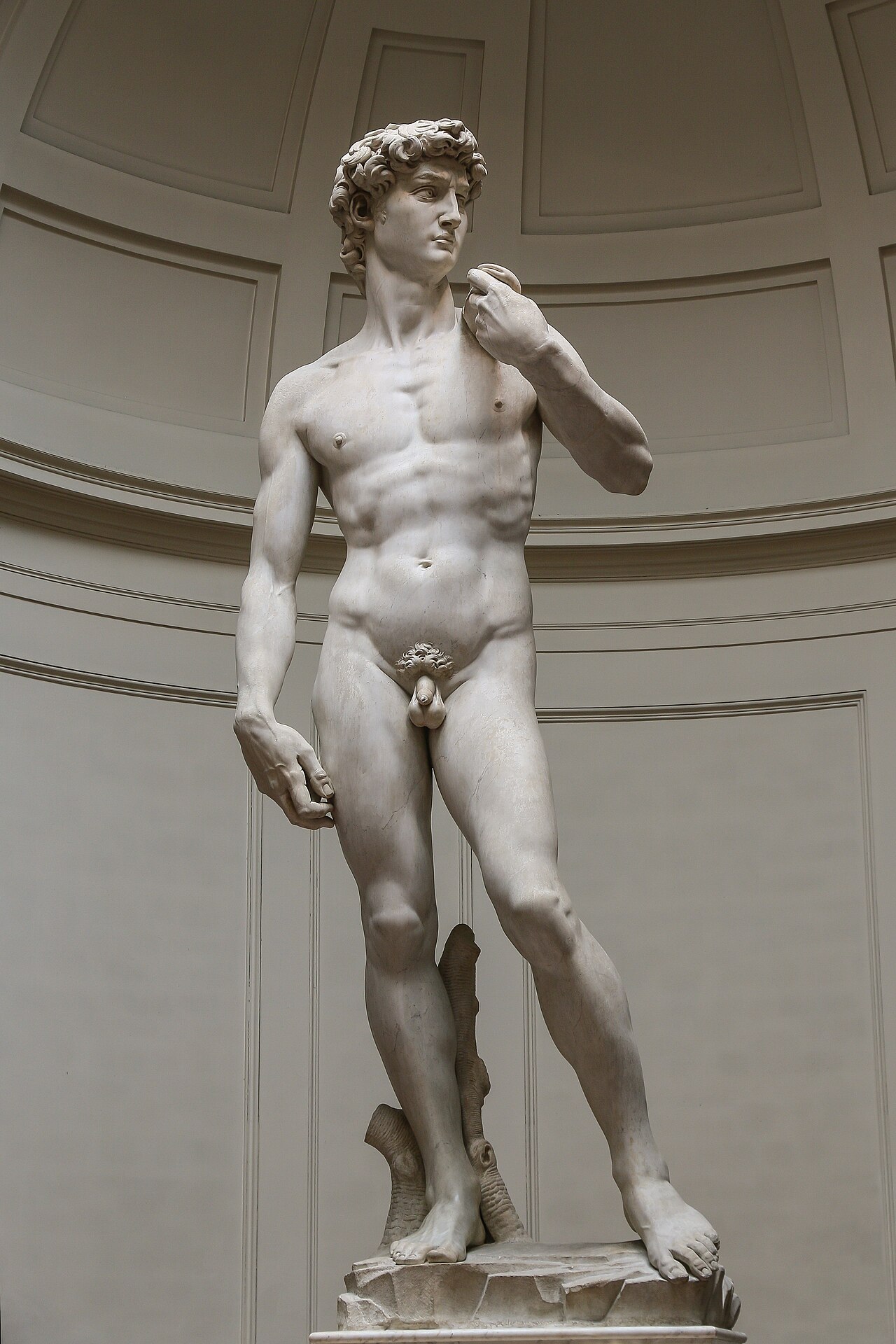 Sculpture
Primary source
David
Michelangelo · 1501-1504
 Artifact
Primary source
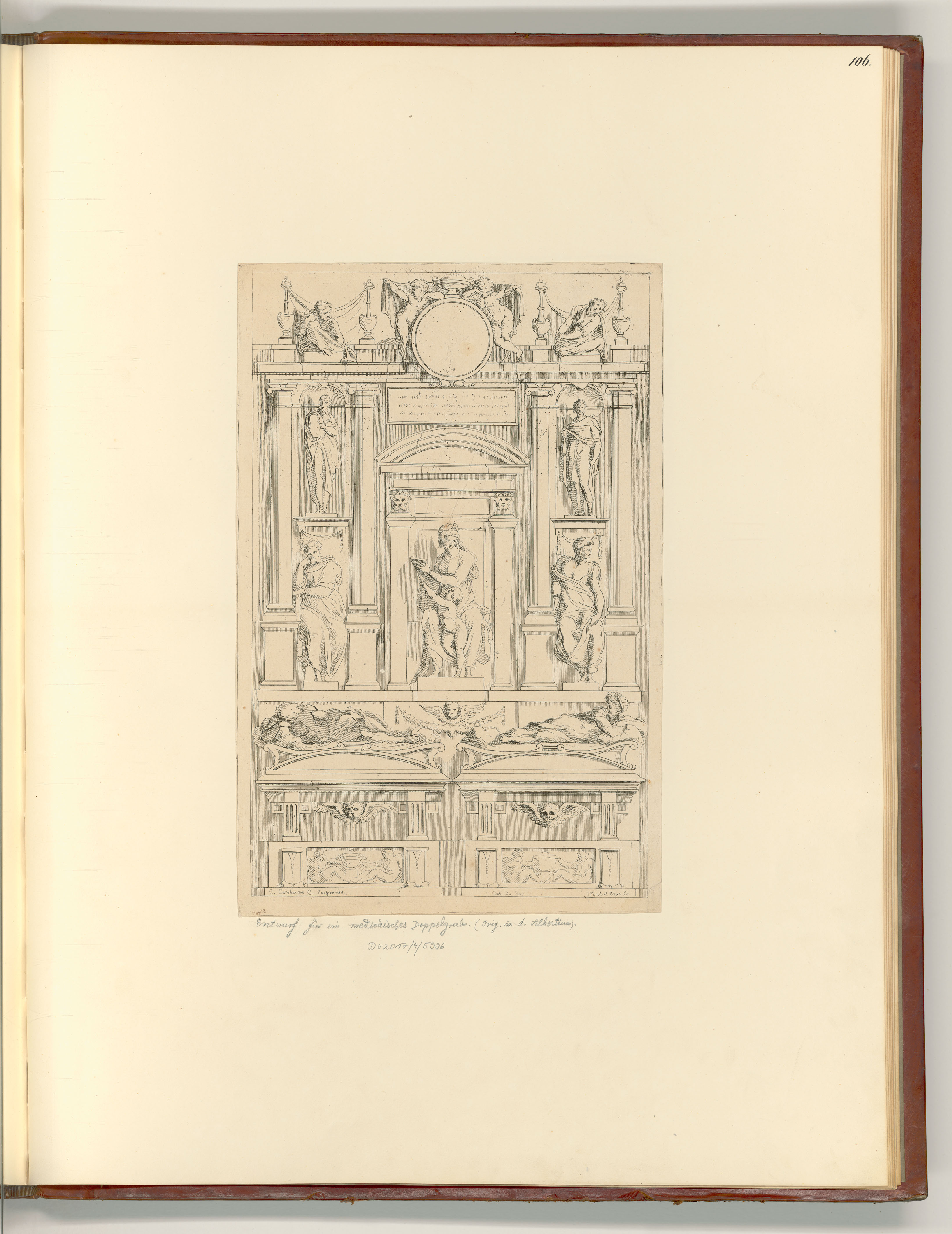
Elevation of a Planned Double Tomb for the Magnifici, Medici Chapel
unbestimmt
 Painting
Primary source
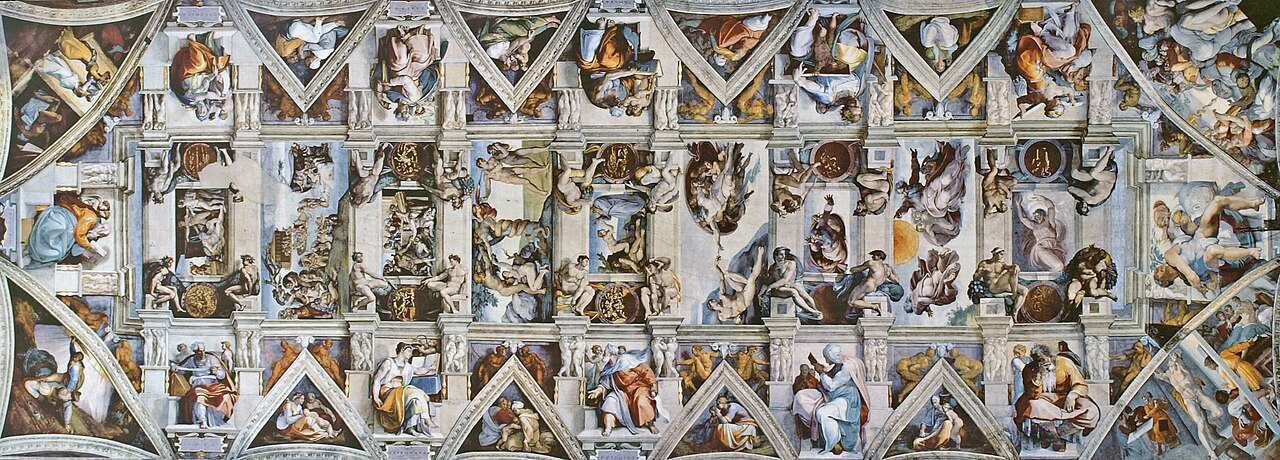
Sistine Chapel ceiling
Michelangelo · 1508-1512
 Painting
Secondary source
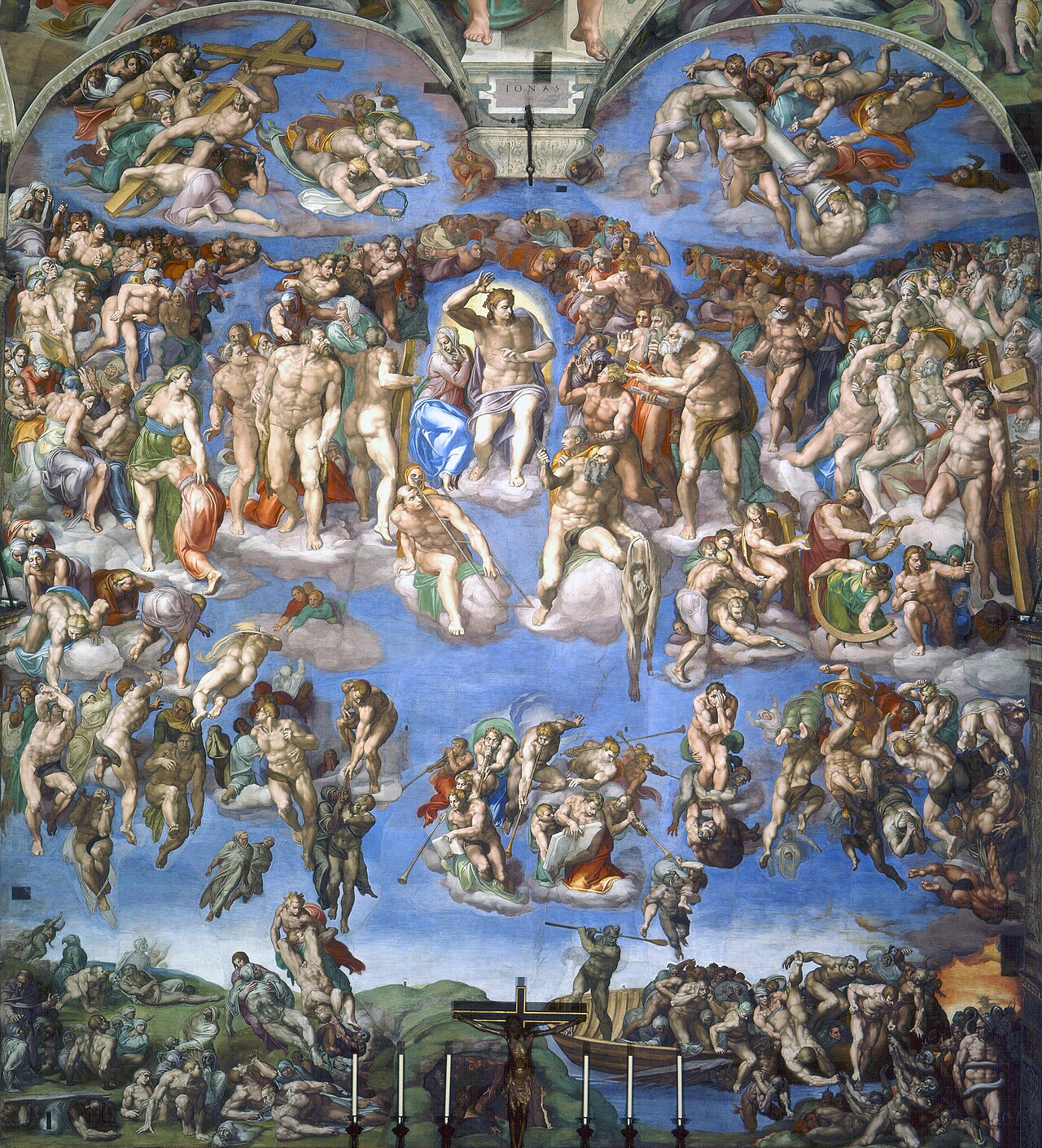
The Last Judgment
Michelangelo · 1536-1541
 Photograph
Secondary source
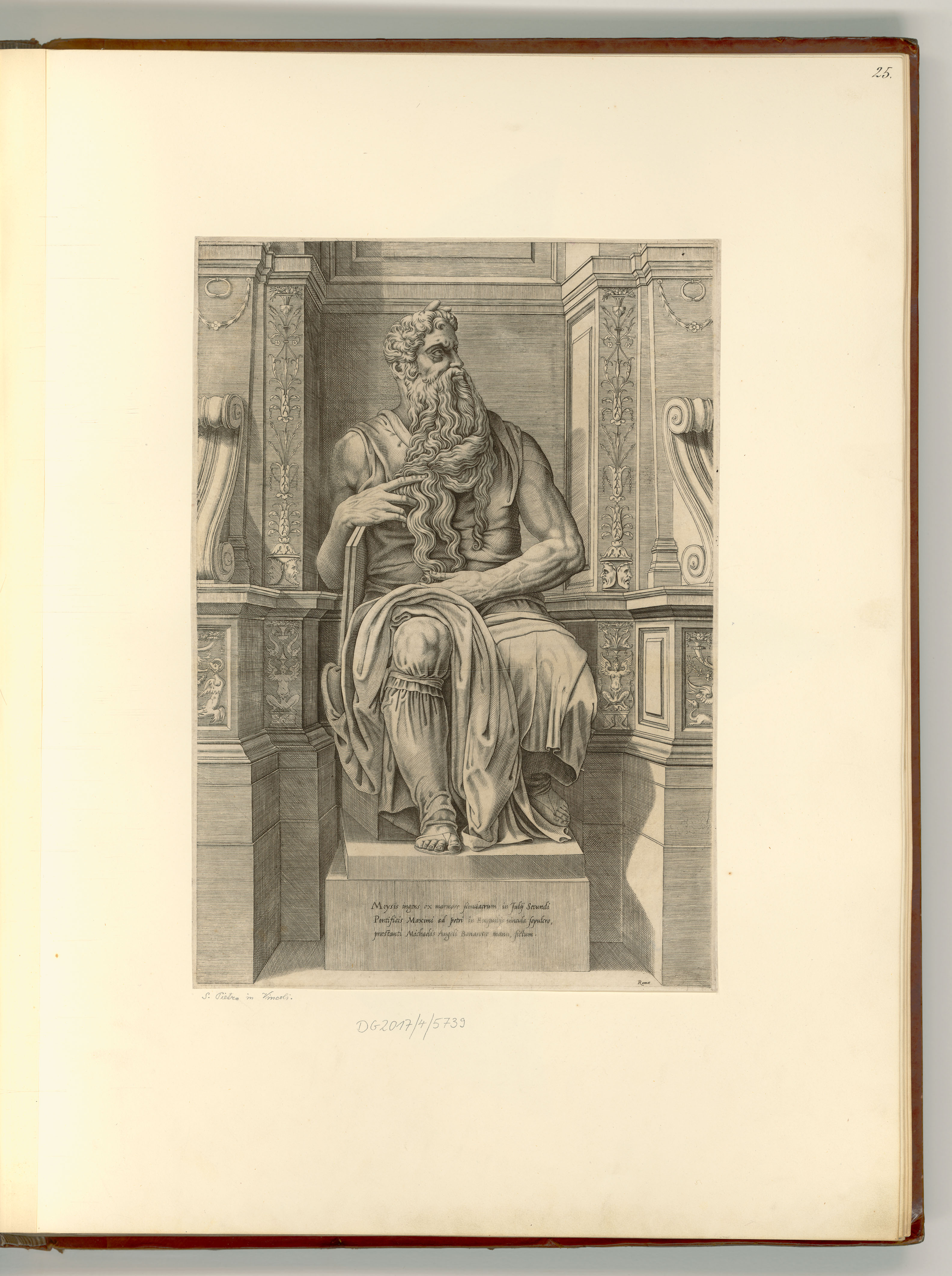
Statue of Moses by Michelangelo, San Pietro in Vincoli
unbestimmt
Ready when you are
Start chatting with Michelangelo Buonarroti now.
20 messages free · No credit card · Available in 50+ languages.