


Secondary sourcePainting1869
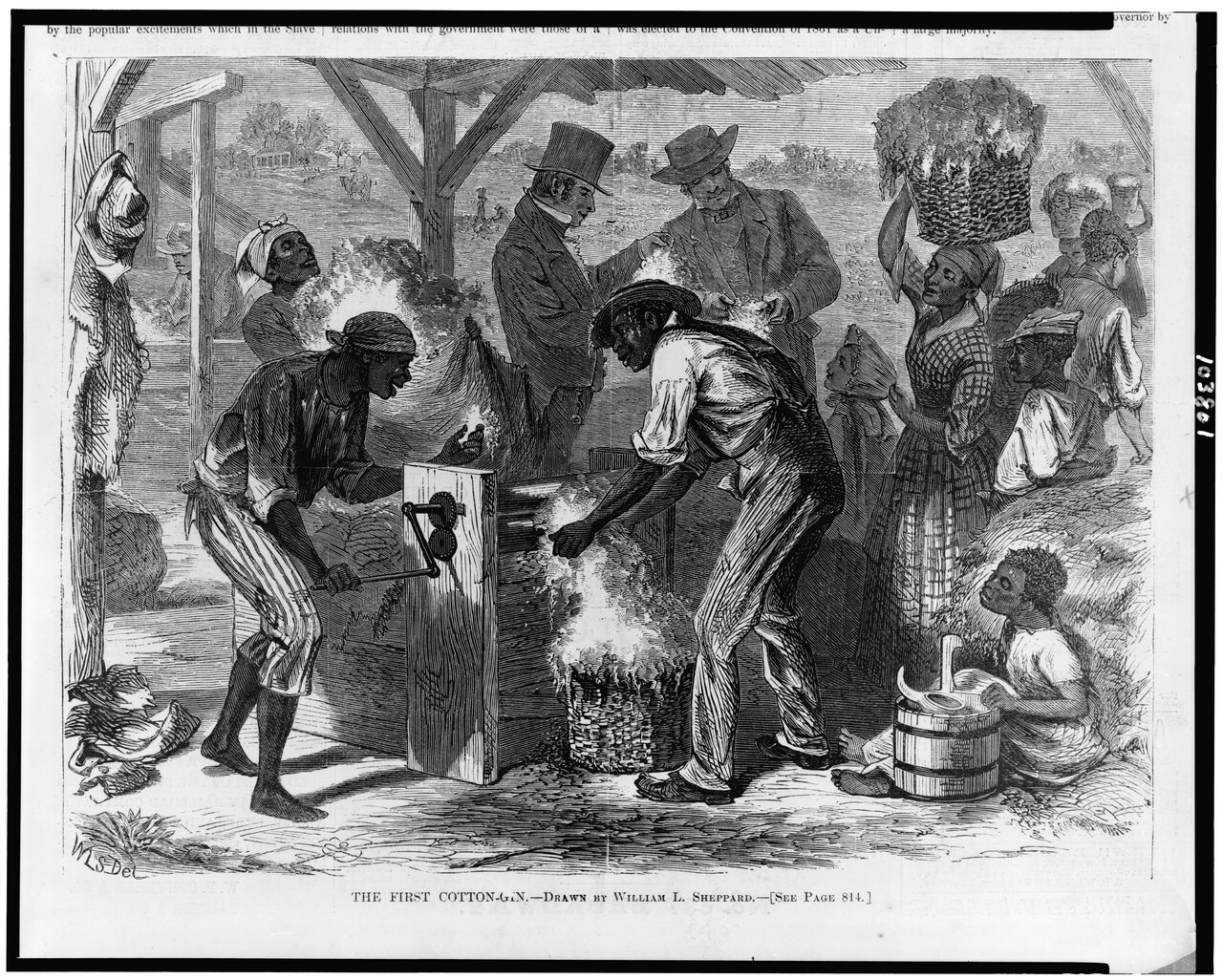
The First Cotton-Gin
William L. Sheppard · 1869
An 1869 engraving imagining the earliest use of Whitney's cotton gin, showing enslaved laborers working the machine.
Depicts the use of Whitney's cotton gin and its connection to the expansion of slave labor in the South.
About this source
What it is
This wood engraving titled The First Cotton-Gin was drawn by William L. Sheppard in 1869, decades after Eli Whitney invented the machine. It shows a scene of people using an early cotton gin.
Why it matters
Whitney's cotton gin dramatically increased cotton production, which expanded the use of enslaved labor across the American South. This later image, created after the Civil War, portrays enslaved Black workers operating the gin while white men in formal dress observe, reflecting both the history of slavery tied to the invention's impact and the racial attitudes of the era in which the image was made.
Look closer
- Why do you think the artist chose to include enslaved laborers and onlookers in this way?
- What does this image suggest about the real consequences of Whitney's invention?
- How does the style of the drawing reflect the biases of the time it was made, rather than the time it depicts?
This painting is part of the curated material that grounds the AI version of Eli Whitney on Humy.ai — when students ask about related events, the AI can quote it and cite it.
More Eli Whitney sources
Meet the AI Eli Whitney →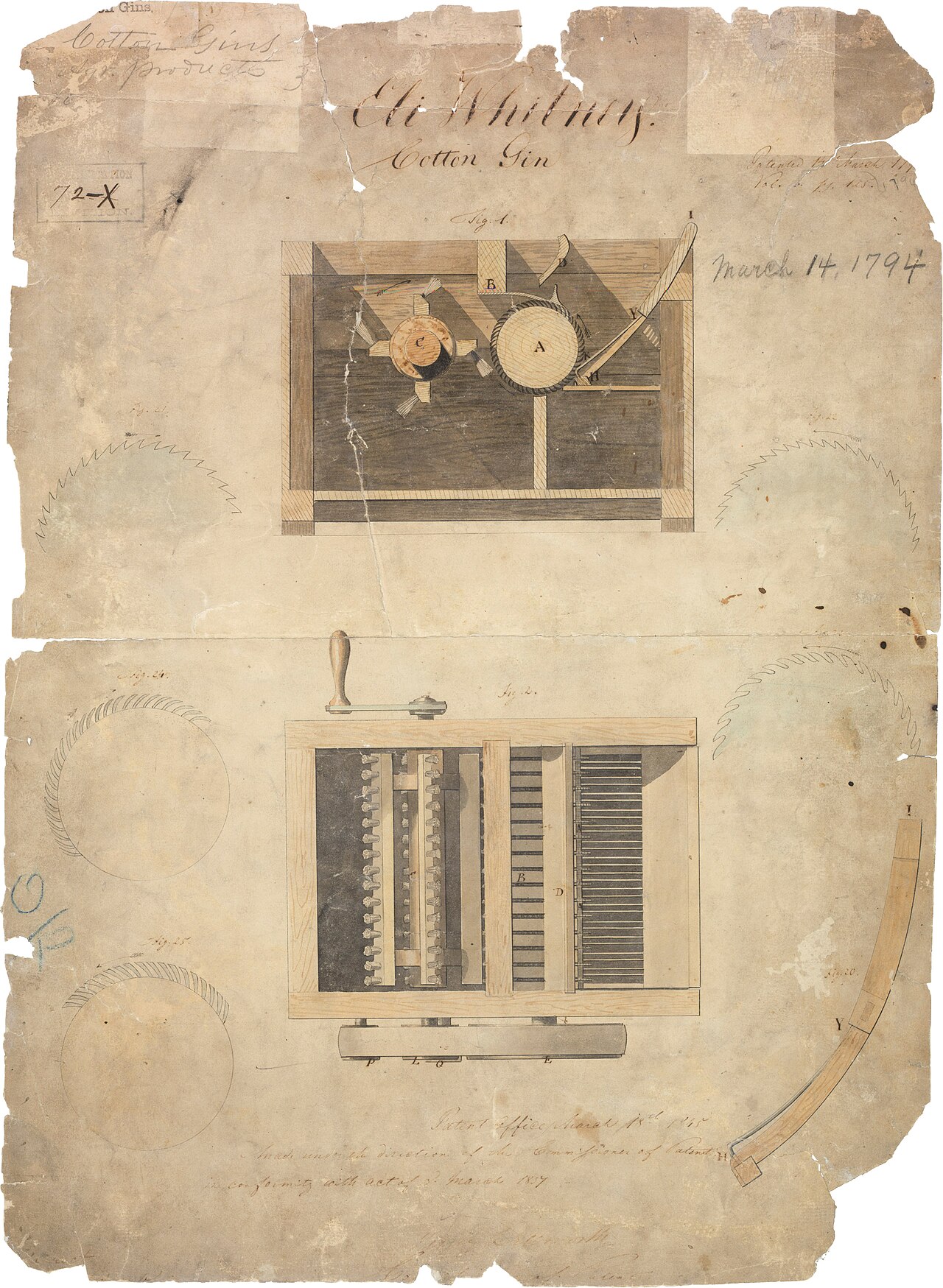 Document
Primary source
Patent for Cotton Gin
Eli Whitney · 14 March 1794
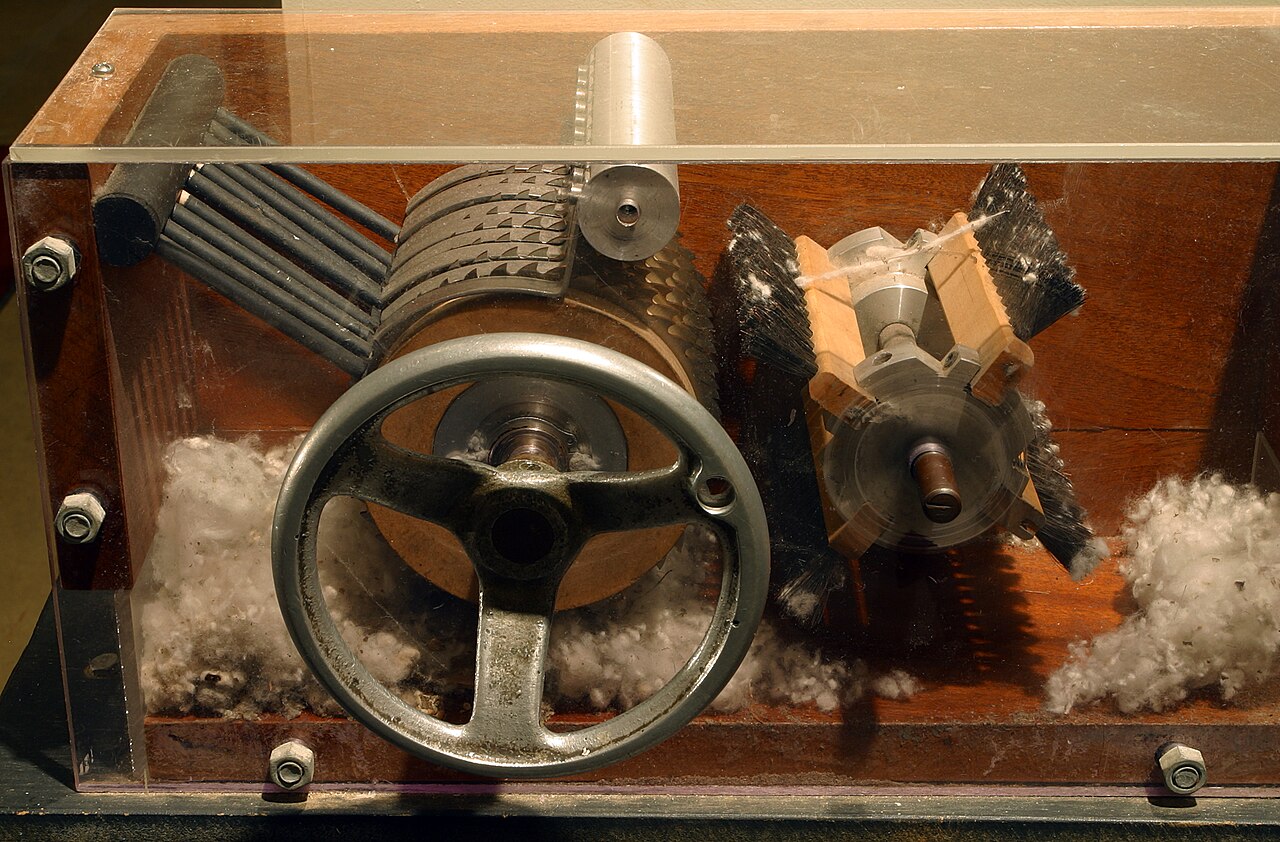 Artifact
Primary source
Cotton Gin
Eli Whitney · 1794
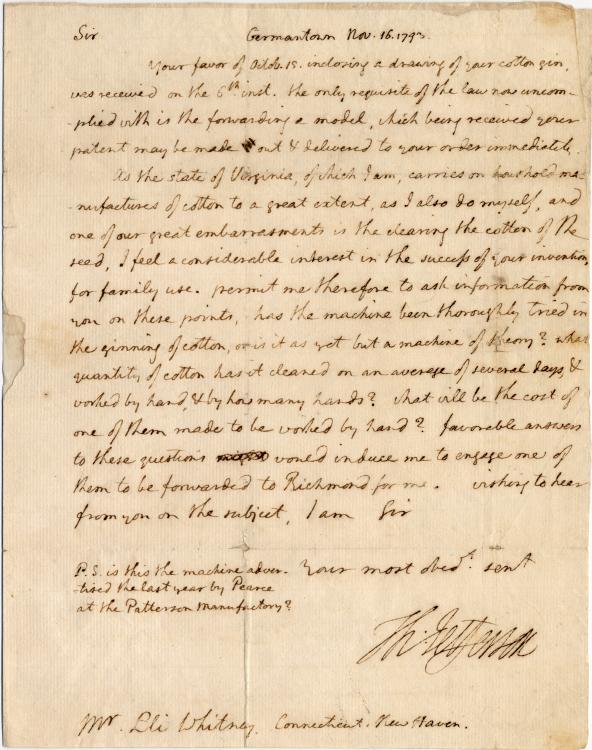 Letter
Primary source
Letter Thomas Jefferson to Eli Whitney 1793
Thomas Jefferson · 16 November 1793
 Document
Primary source
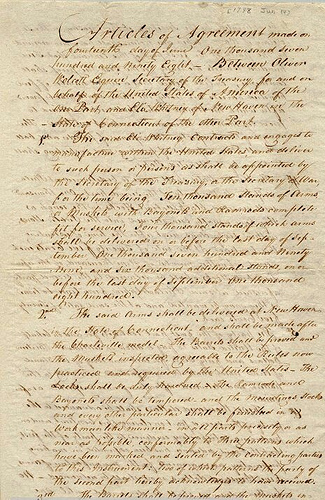
Eli Whitney's First Contract as a Gunfounder
Eli Whitney, Oliver Wolcott, Jr. · 1798
 Painting
Primary source
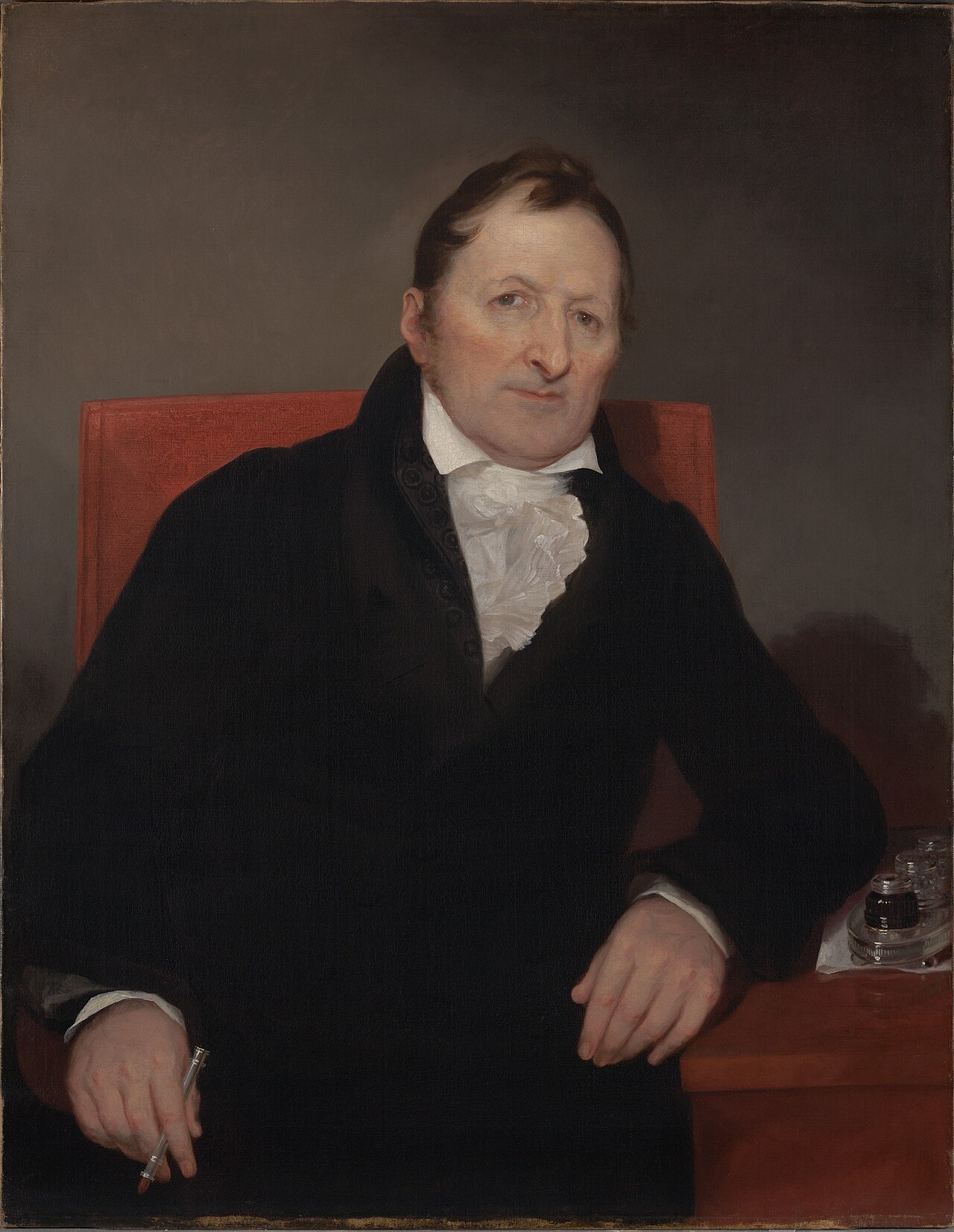
Eli Whitney (1765-1825) B.A. 1792, M.A. 1795
Samuel Finley Breese Morse · 1822
Ready when you are
Start chatting with Eli Whitney now.
20 messages free · No credit card · Available in 50+ languages.