


Primary sourcePainting20 February 1869
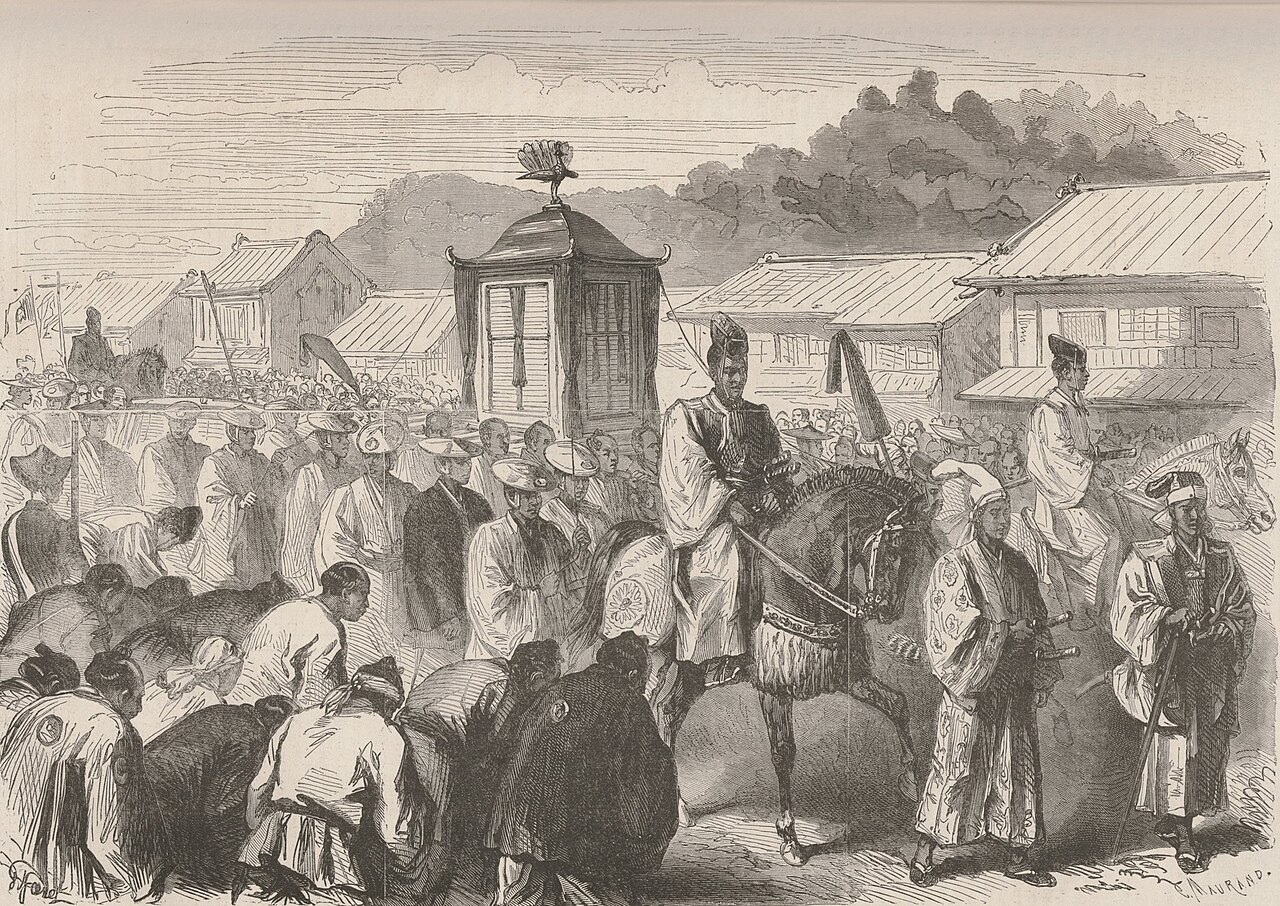
The Mikado Travelling from Miako to Yedo
Alfred Roussin · 20 February 1869
A French newspaper engraving of Emperor Meiji's palanquin procession from Kyoto to Tokyo in 1869.
Depicts Emperor Meiji's procession from Kyoto to Tokyo, a symbolic moment of the new era.
About this source
What it is
This engraving shows the palanquin and procession of Emperor Meiji as he moved from Kyoto to Tokyo along the Tokaido road. It was published in the French illustrated newspaper Le Monde Illustré on 20 February 1869, based on a sketch by Alfred Roussin, a French navy officer stationed in Japan.
Why it matters
The image depicts a major moment in the Meiji era: the emperor's move from the old imperial capital of Kyoto to Tokyo, symbolizing the shift of power and the start of a new period in Japanese history. Made by a European eyewitness for a French audience, it shows how foreign observers depicted and interpreted events in Japan for readers abroad.
Look closer
- Why are the crowds in the picture shown kneeling?
- What does the choice to leave the emperor hidden inside his palanquin suggest about how he was meant to be seen by his own people?
- Why would a French newspaper be interested in illustrating this scene for its readers?
This painting is part of the curated material that grounds the AI version of Emperor Meiji on Humy.ai — when students ask about related events, the AI can quote it and cite it.
More Emperor Meiji sources
Browse all 94 →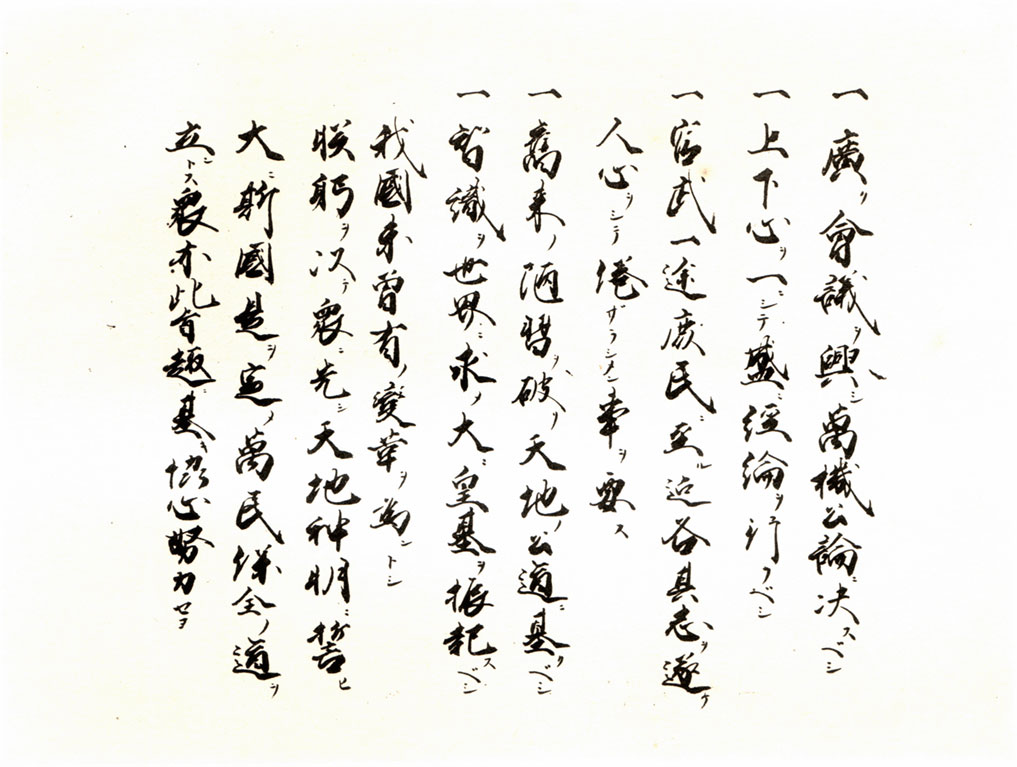 Document
Primary source
Charter Oath
Kido Takayoshi · 6 April 1868
 Document
Primary source
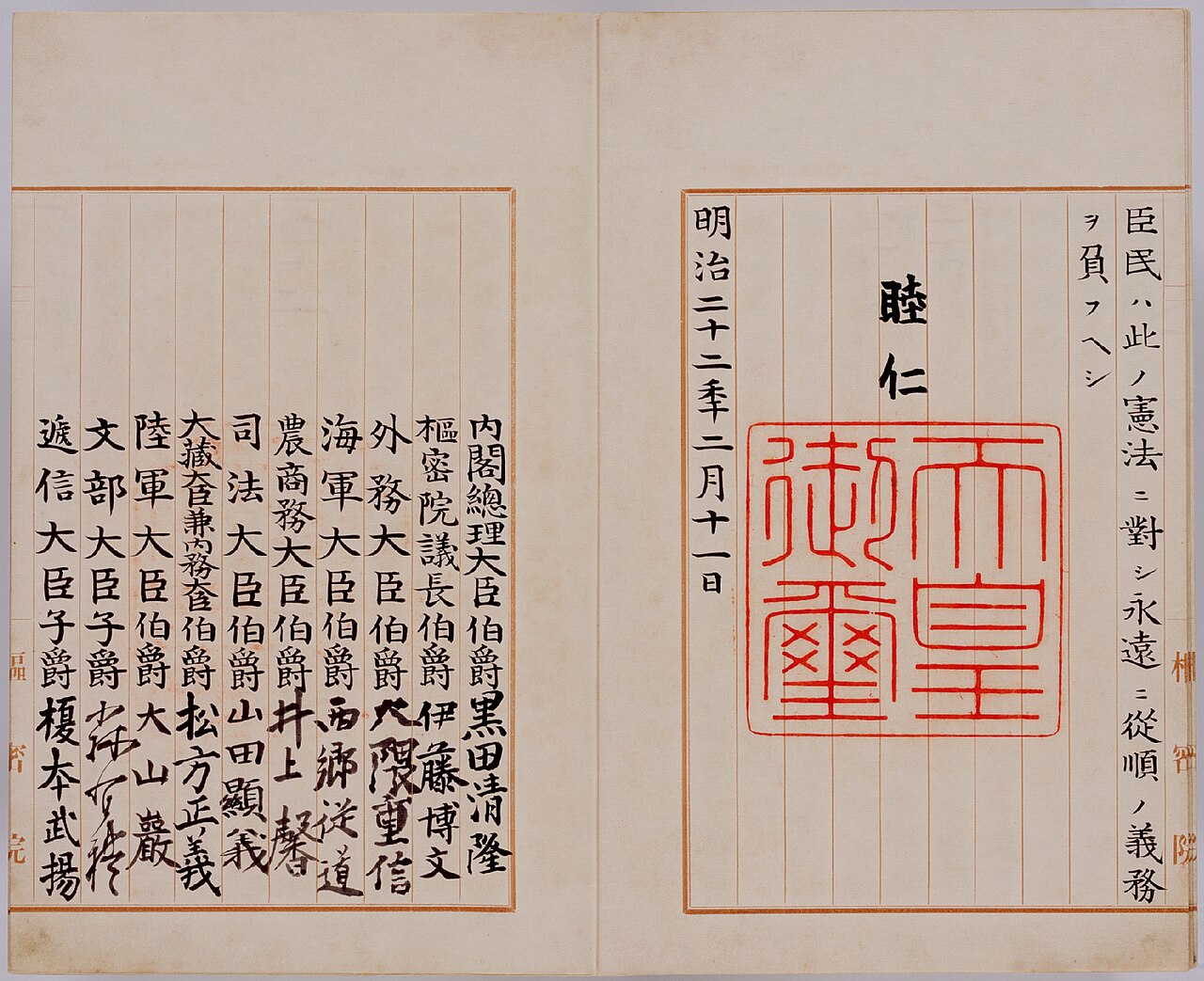
Constitution of the Empire of Japan
11 February 1889
 Document
Primary source
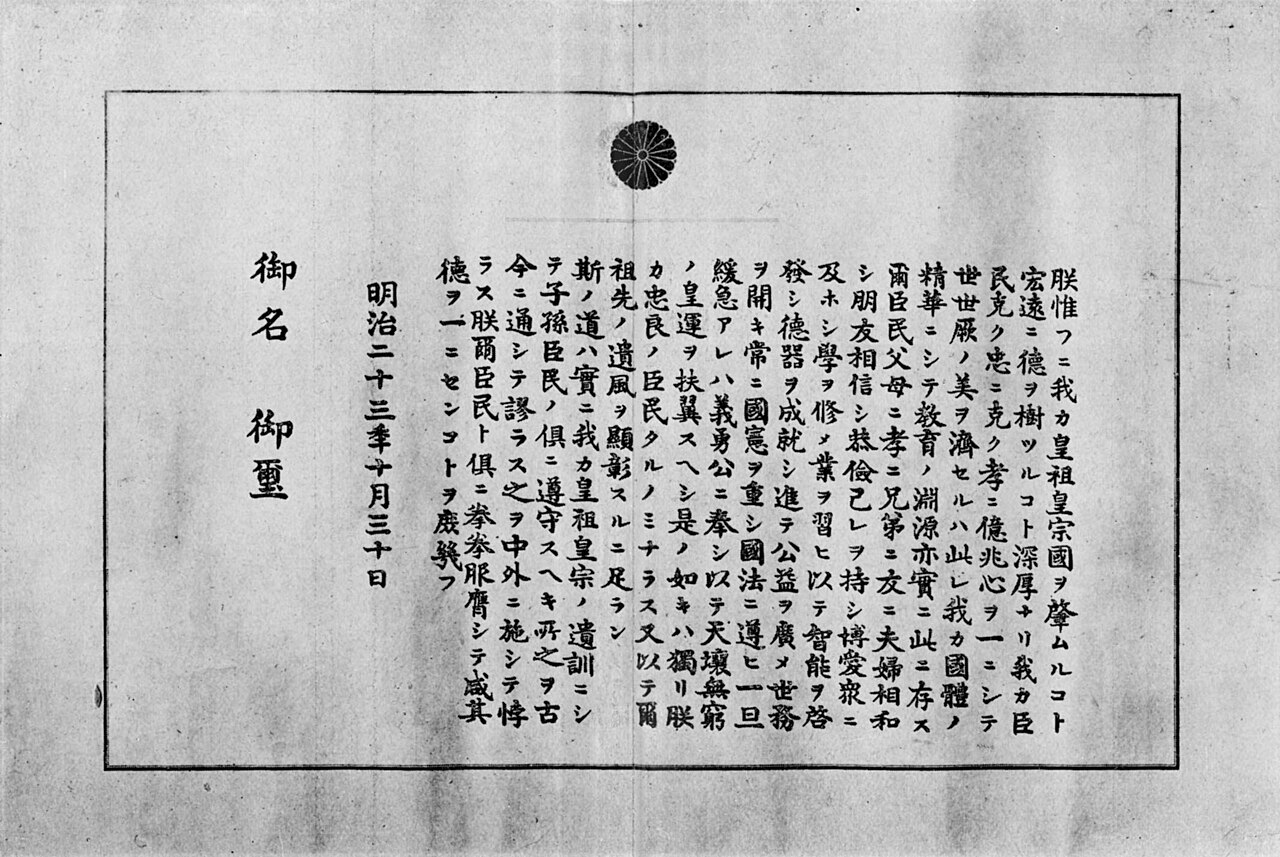
Imperial Rescript on Education
Inoue Kowashi · 30 October 1890
 Document
Primary source
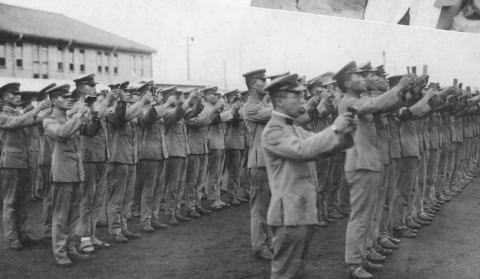
Imperial Rescript to Soldiers and Sailors
Yamagata Aritomo · 4 January 1882
Free account
Read every Emperor Meiji source
Sign up free →
Ready when you are
Start chatting with Emperor Meiji now.
20 messages free · No credit card · Available in 50+ languages.