


Primary sourcePaintingca. 1834-1835
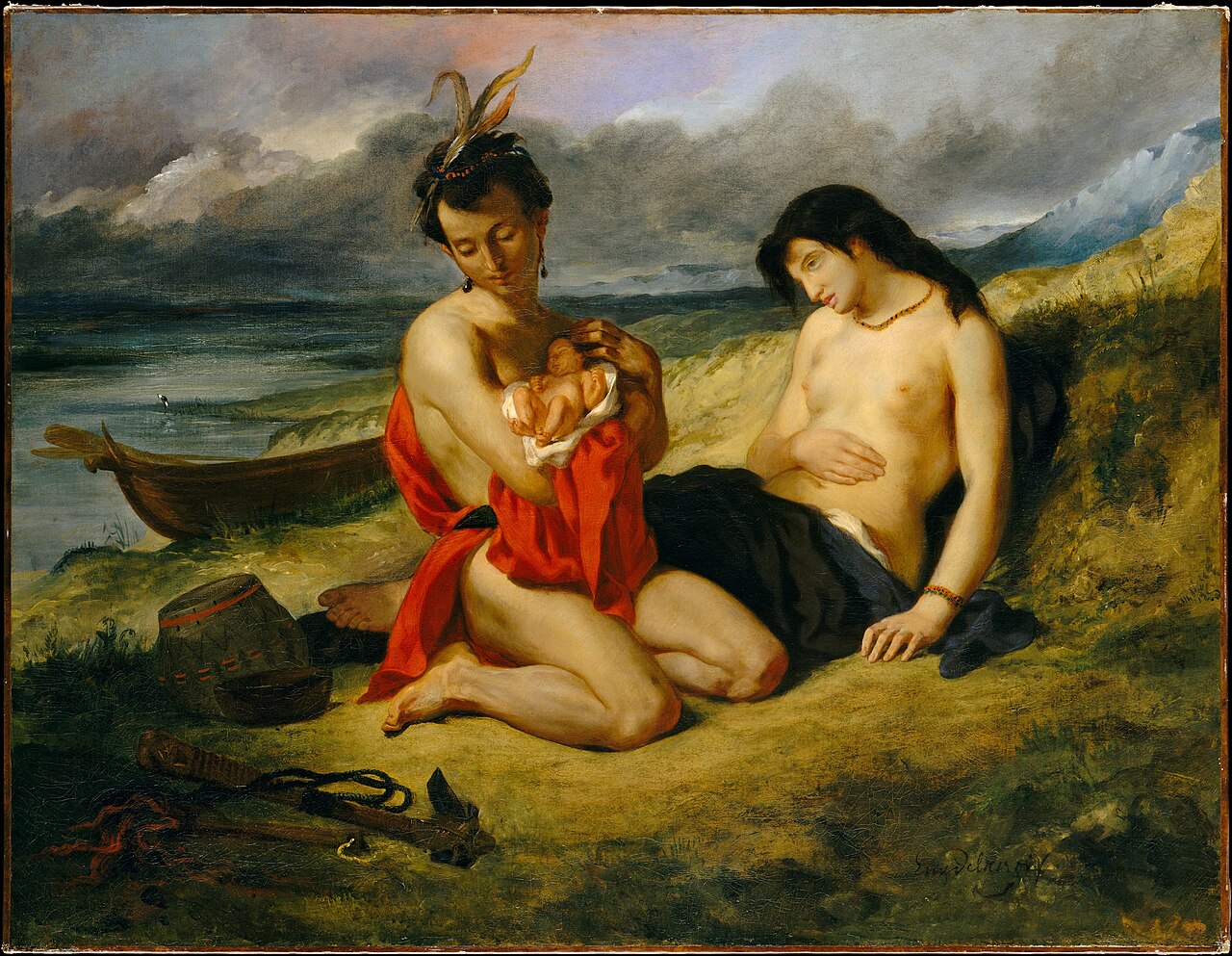
The Natchez
Eugène Delacroix · ca. 1834-1835
An oil painting by Eugène Delacroix, made around 1834 to 1835, showing a Native American couple with their newborn child. It draws on Chateaubriand's tale Atala and shows Delacroix's interest in subjects beyond Europe.
Delacroix painted this scene himself, showing how his reading of French literature shaped his choice of subjects.
About this source
What it is
This oil painting by Eugène Delacroix was made around 1834 to 1835 and is held by the Metropolitan Museum of Art. It shows a Native American couple with their newborn child on a grassy lakeshore. A canoe, a basket, a bow and a club lie on the ground beneath stormy clouds.
Delacroix based the scene on a passage in Chateaubriand's tale Atala. That passage describes the family as the last members of the Natchez tribe after a massacre committed by the French.
Why it matters
The painting shows how far French Romantic writers and artists looked for subjects beyond Europe. Delacroix referred to the figures as "savages", yet he admired the jewelry, tools and clothing around them. The work also reflects his repeated interest in the persecution of the innocent, a theme he had already explored in The Massacre at Chios.
Look closer
- What do the objects around the family suggest about the people they belonged to, and who chose to include them?
- Delacroix used the word "savages" for these figures. How does that word shape what you see in the painting?
- What might this scene leave out about the Natchez people's own history and voices?
This painting is part of the curated material that grounds the AI version of Eugène Delacroix on Humy.ai — when students ask about related events, the AI can quote it and cite it.
More Eugène Delacroix sources
Browse all 95 →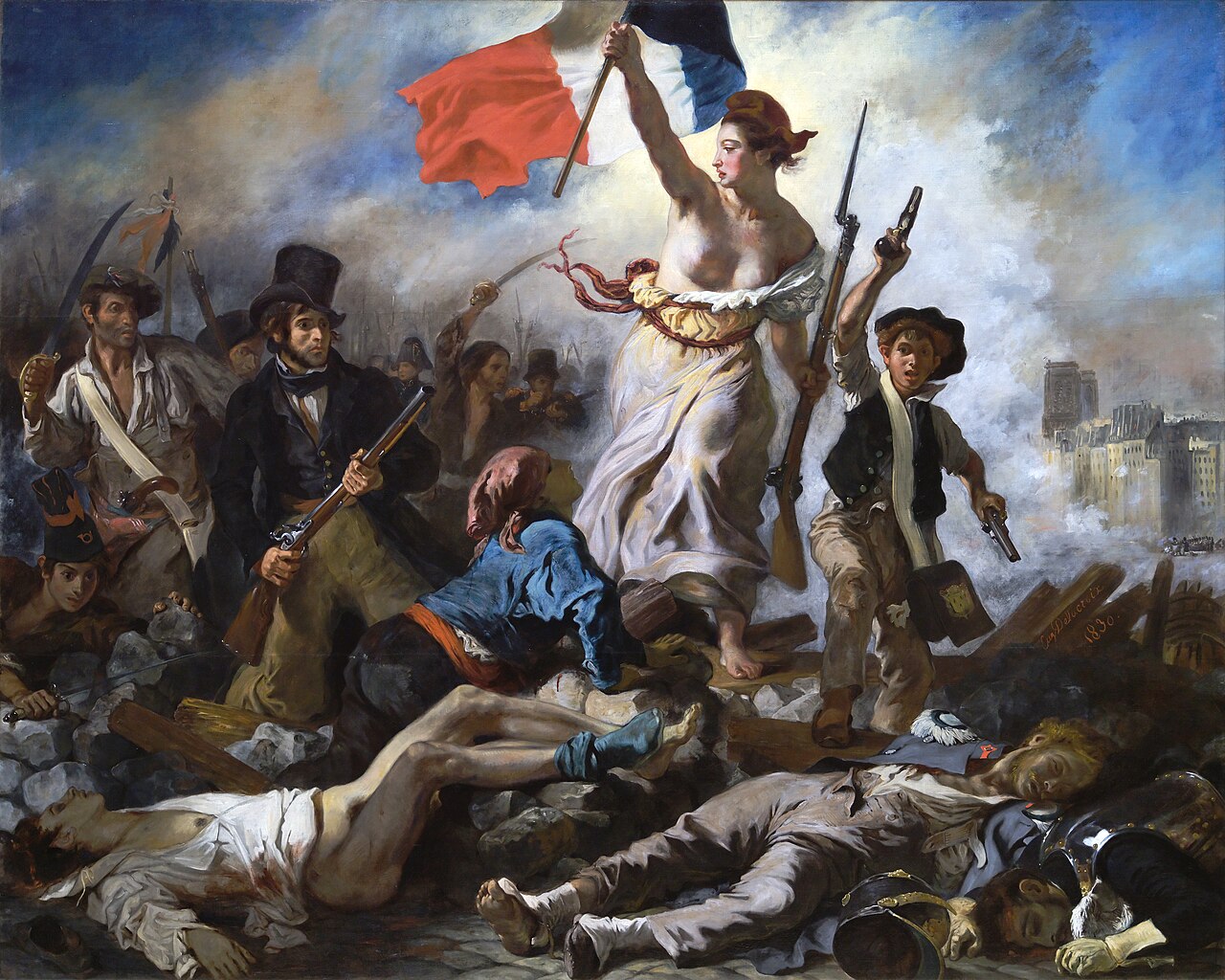 Painting
Primary source
Liberty Leading the People
Eugène Delacroix · 1830
 Painting
Secondary source
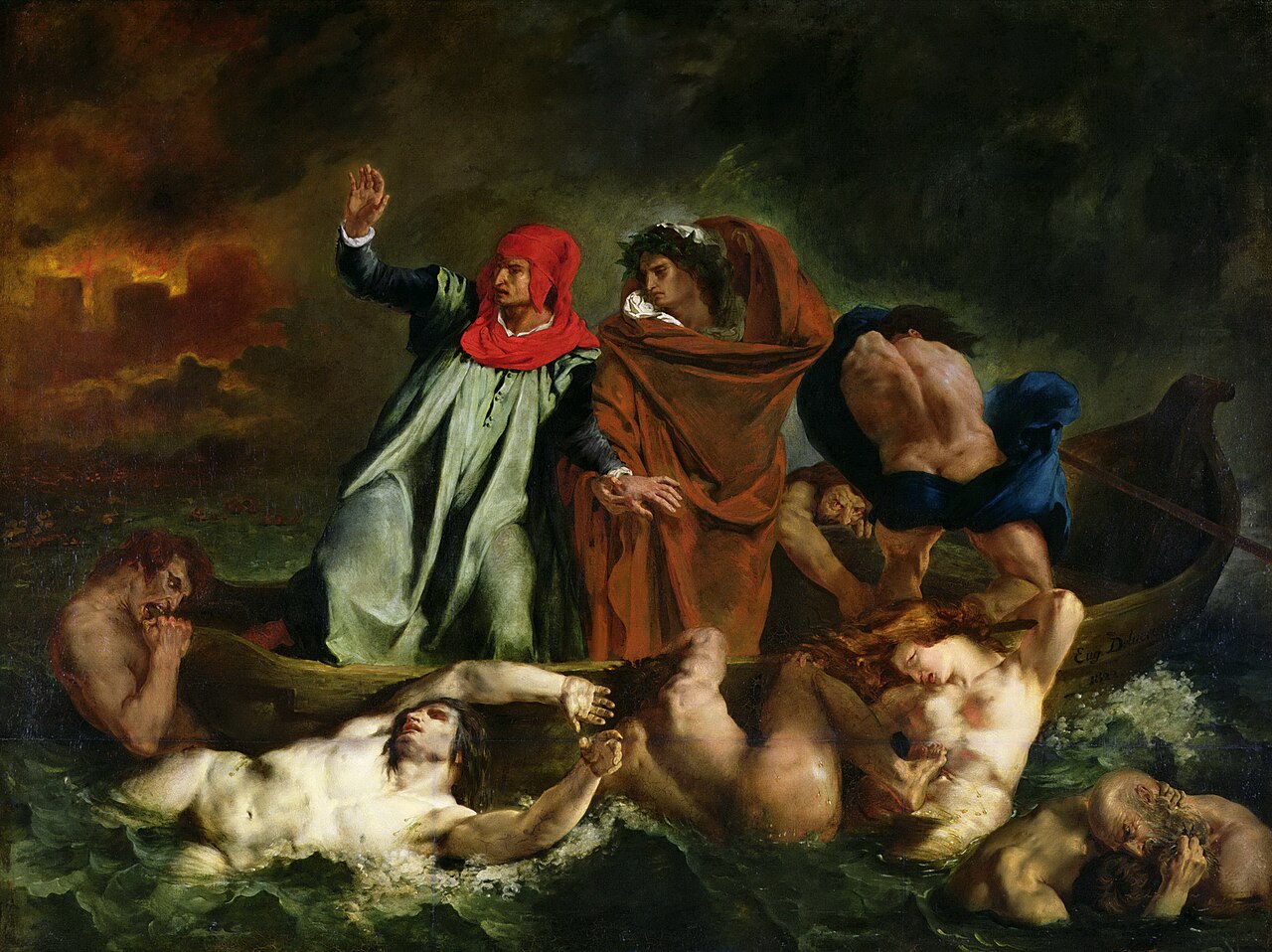
The Barque of Dante
Eugène Delacroix · 1822
 Painting
Primary source
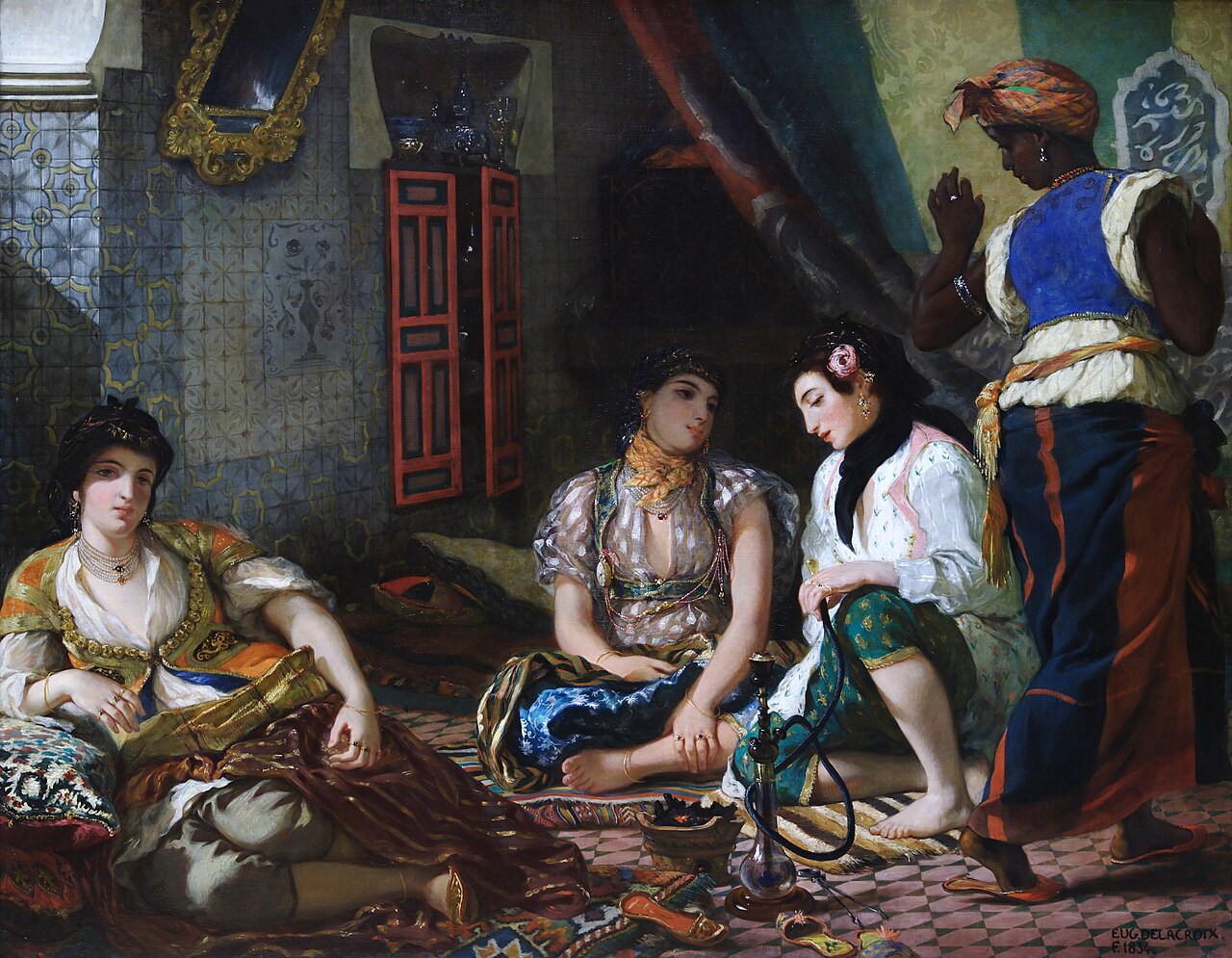
Women of Algiers
Eugène Delacroix · 1834
Primary source
Journal of Delacroix
Eugène Delacroix · 1822–1863
Free account
Read every Eugène Delacroix source
Sign up free →
Ready when you are
Start chatting with Eugène Delacroix now.
20 messages free · No credit card · Available in 50+ languages.