


Primary sourcePainting1637
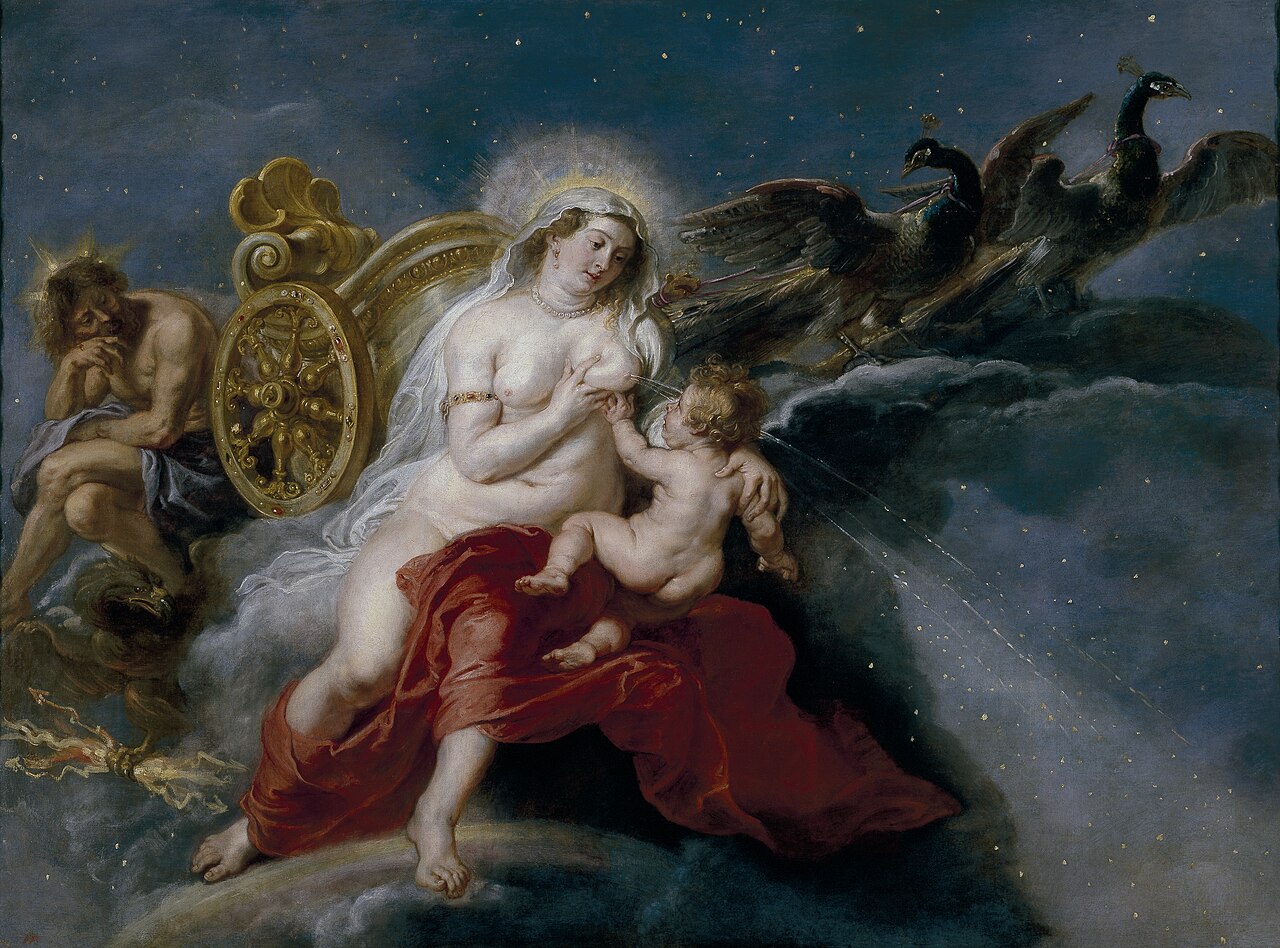
The Origin of the Milky Way
Peter Paul Rubens · 1637
An oil painting by Peter Paul Rubens showing the Greek myth of how the Milky Way formed from milk spilled by the goddess Hera. It was made for the Torre de la Parada commission of King Philip IV of Spain.
Shows Rubens at work on the royal Torre de la Parada commission for Philip IV, one of the few works from that set believed to be painted by his own hand.
About this source
What it is
This oil-on-canvas painting by Peter Paul Rubens shows the Greco-Roman myth of the origin of the Milky Way. Hera (Juno) reclines on a cloud in a starry sky while milk sprays from her breast, and the infant Hercules reaches toward her. Zeus watches from the background beside his eagle, and two peacocks pull her golden chariot. Wikipedia dates it to between 1636 and 1638, and it is now in the Museo del Prado in Madrid.
Why it matters
Rubens made it for King Philip IV of Spain's commission to decorate the Torre de la Parada, a hunting lodge on Monte de El Pardo. The commission included many mythological and hunting scenes, and Rubens let former pupils such as Jacob Jordaens and Jan Boeckhorst do much of the work. Only about fifteen works from the set, this one included, are believed to be by Rubens himself. Hera's face is modelled on Rubens' wife, Hélène Fourment. The painting also shows how Rubens reinterpreted the myth: the infant is not pushed away, and the milk gushes out.
Look closer
- What do the peacocks and the eagle tell you about who each figure is?
- Why might Rubens have chosen to show the infant at the breast instead of being pushed away?
- What does the painting leave out of the story, and why might a royal hunting lodge have wanted this scene?
This painting is part of the curated material that grounds the AI version of Peter Paul Rubens and Philip IV of Spain on Humy.ai — when students ask about related events, the AI can quote it and cite it.
More Peter Paul Rubens sources
Browse all 97 →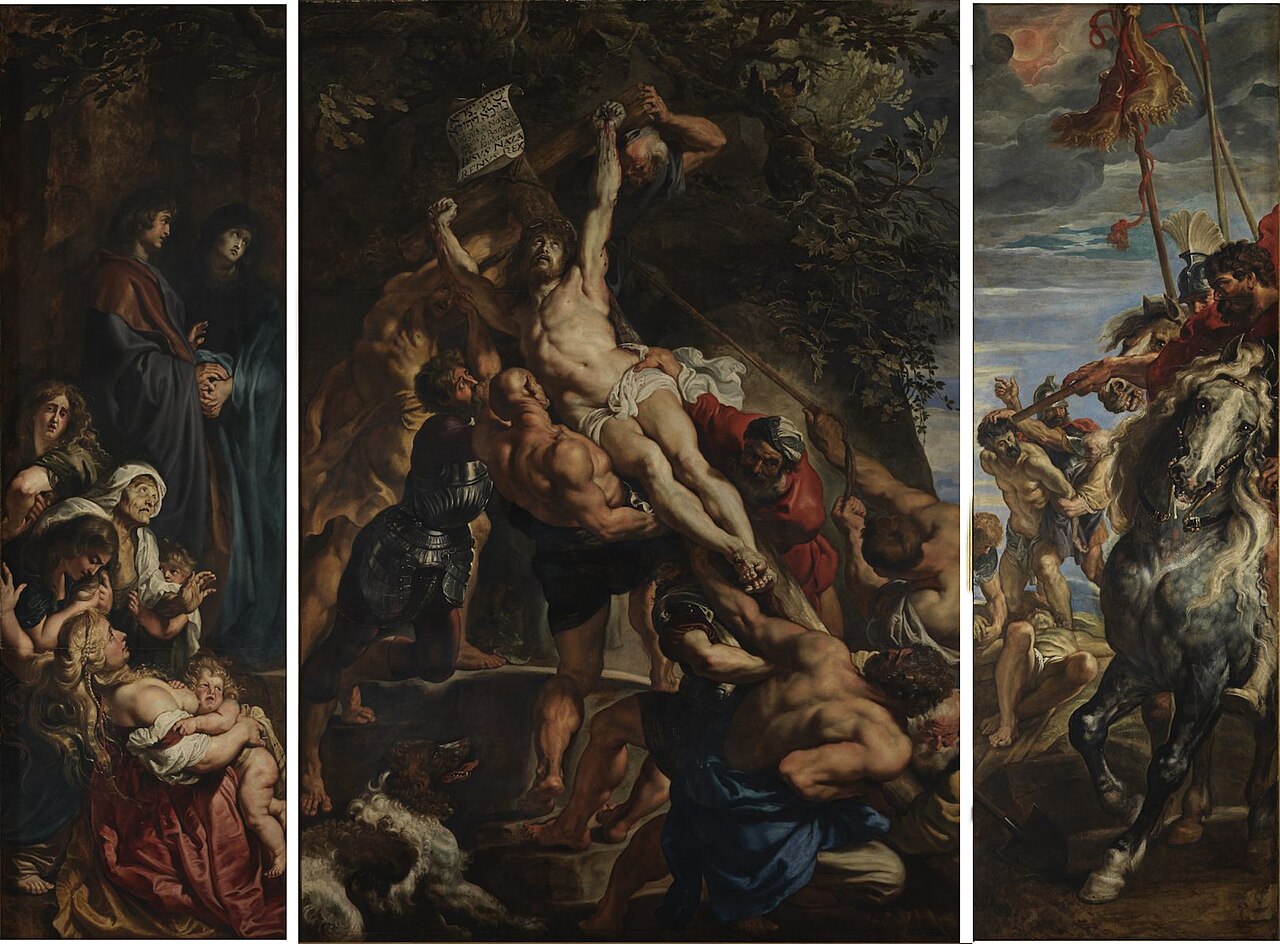 Painting
Primary source
The Elevation of the Cross
Peter Paul Rubens · 1610–1611
 Painting
Primary source
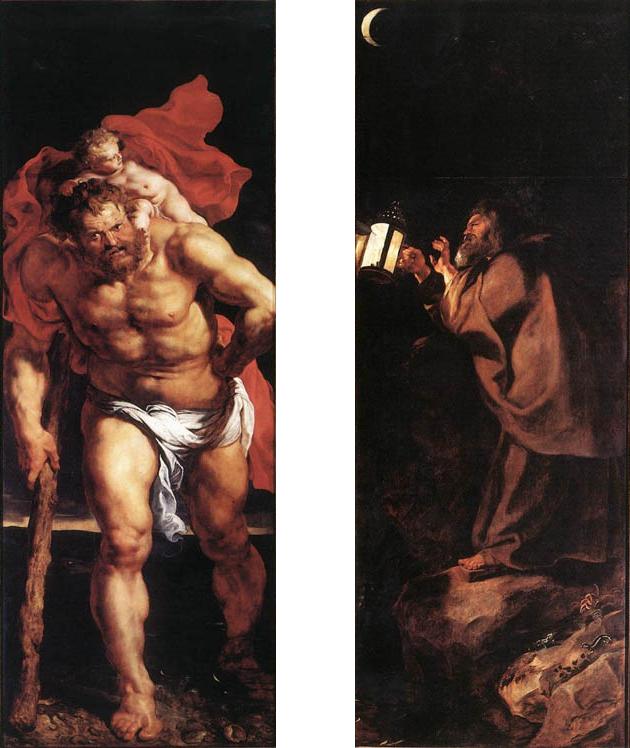
The Descent from the Cross
Peter Paul Rubens · 1611–1614
 Painting
Primary source
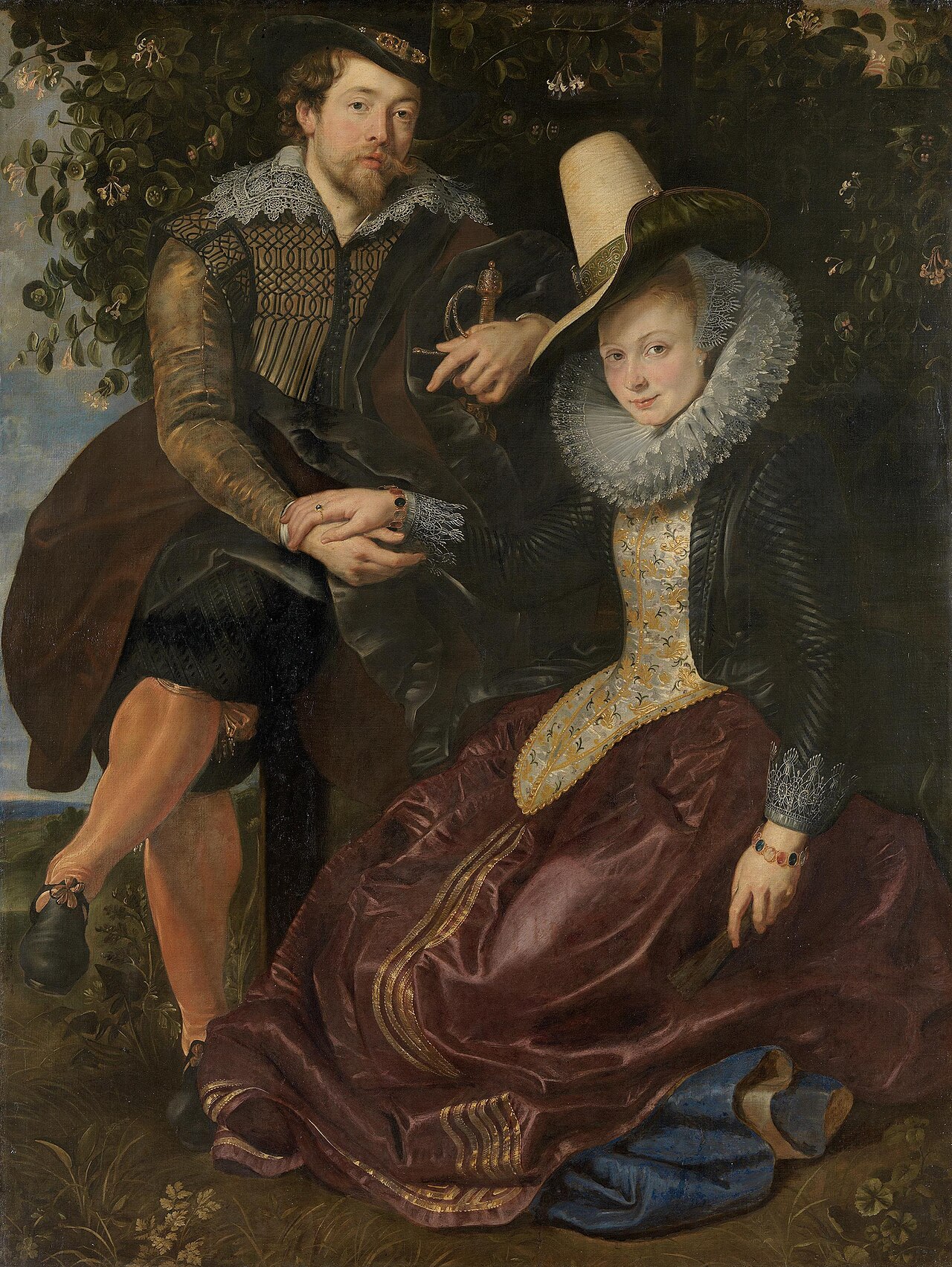
The Honeysuckle Bower
Peter Paul Rubens · c. 1609
 Painting
Primary source
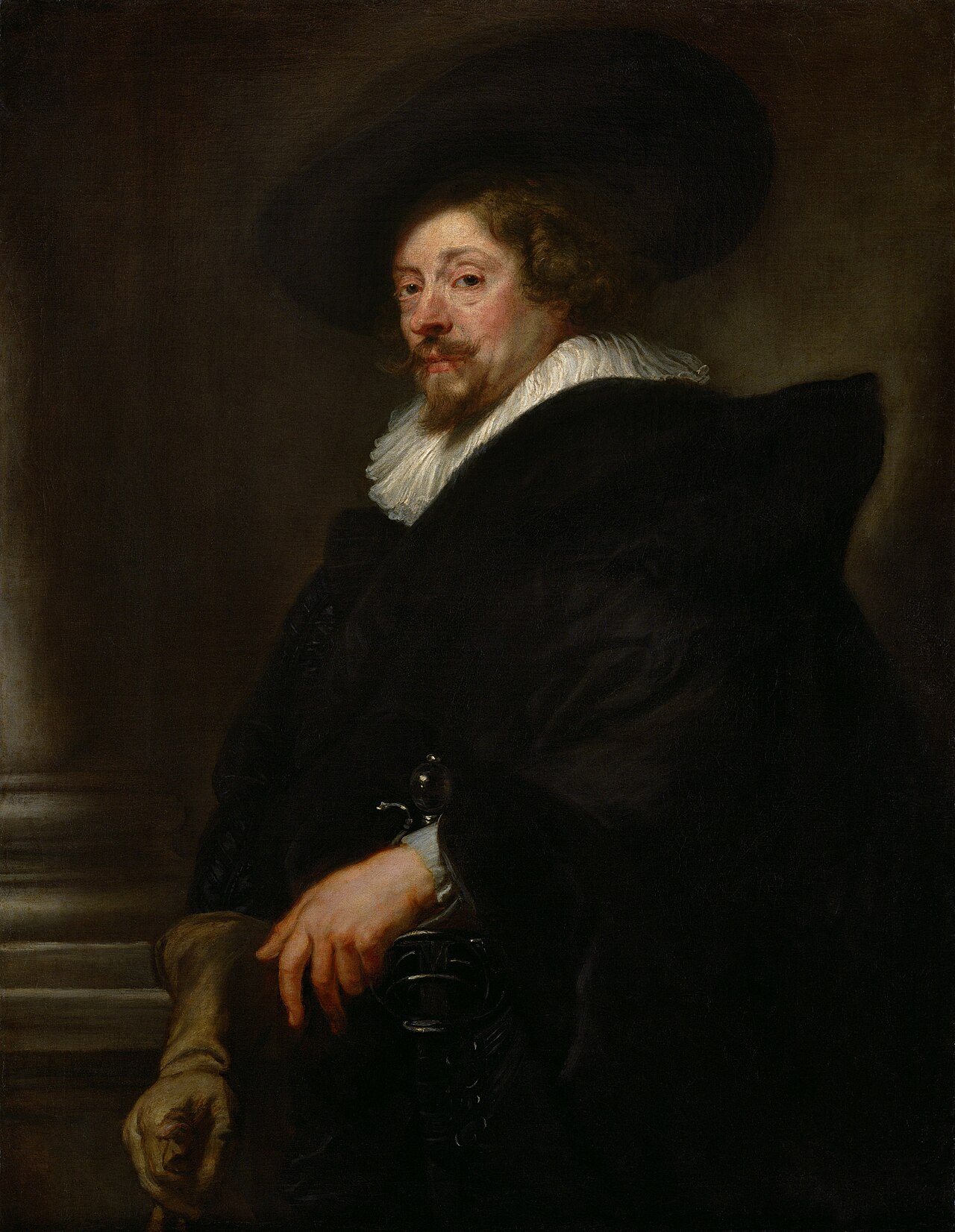
Self-Portrait
Peter Paul Rubens · 1638–1639
Free account
Read every Peter Paul Rubens source
Sign up free →
Ready when you are
Start chatting with Peter Paul Rubens now.
20 messages free · No credit card · Available in 50+ languages.