


Primary sourcePainting1672
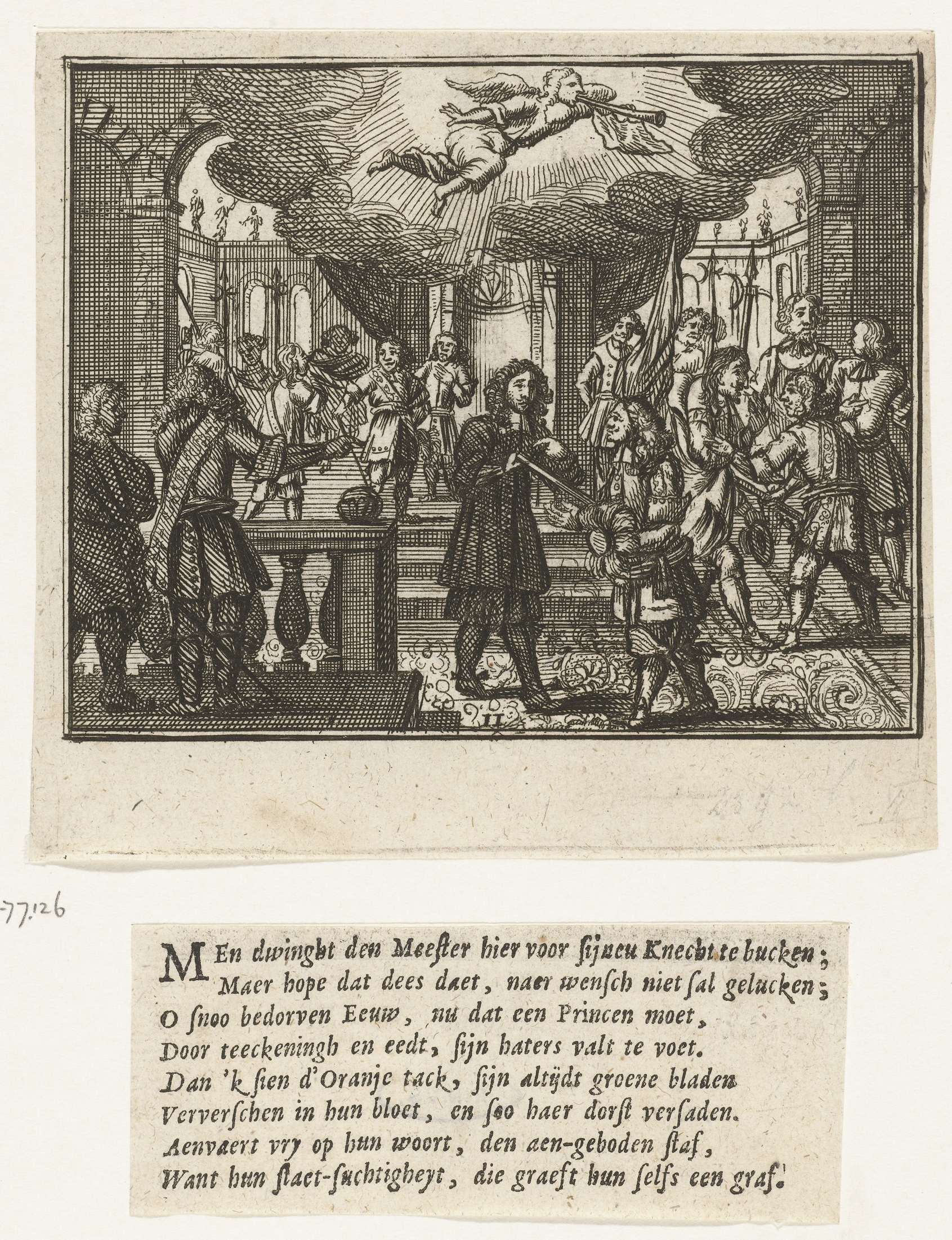
The Prince of Orange Must Bow to Johan de Witt
1672
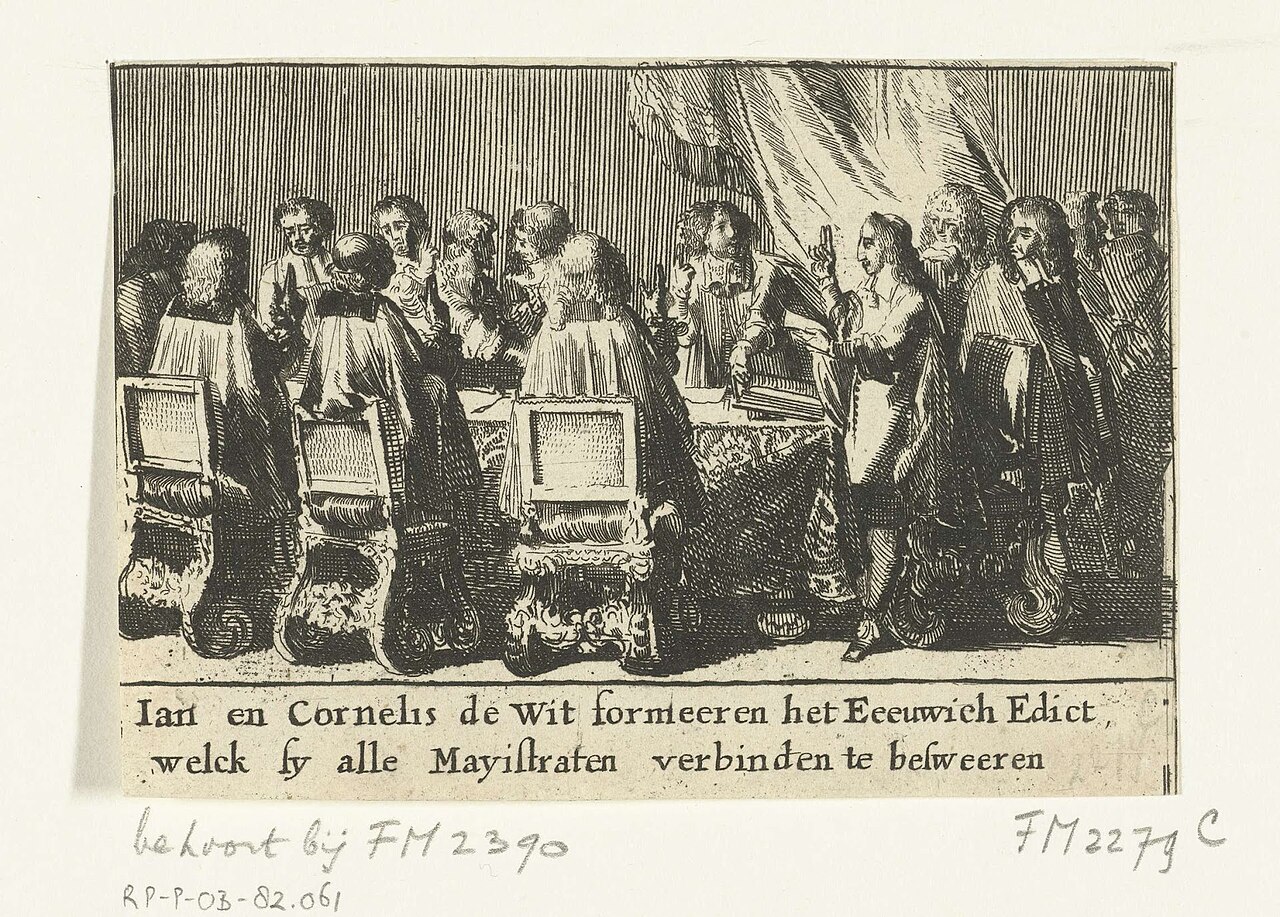
A 1672 print showing William III asking Johan de Witt and the States for permission for his appointment, reflecting Orangist-republican tensions.
Depicts William III seeking permission from Johan de Witt and the States, showing De Witt's political authority before his fall.
About this source
What it is
This etching from 1672 is numbered II in a series of prints, each accompanied by a loose eight-line verse. It depicts William, Prince of Orange, asking Johan de Witt and the States of Holland for permission concerning his appointment. It is held by the Rijksmuseum.
Why it matters
The scene captures the deep rivalry between the republican government led by Johan de Witt and the Orangist supporters of William III. It shows how printmakers of the time used dramatic, almost theatrical imagery—angels, clouds, richly dressed men—to comment on real political struggles.
Look closer
- What symbols (the angel, the trumpet, the helmet) do you notice, and what might they mean?
- Whose side does this print seem to favor, and how can you tell?
- Why would someone print and circulate images like this during a political crisis?
This painting is part of the curated material that grounds the AI version of Johan de Witt on Humy.ai — when students ask about related events, the AI can quote it and cite it.
More Johan de Witt sources
Browse all 70 →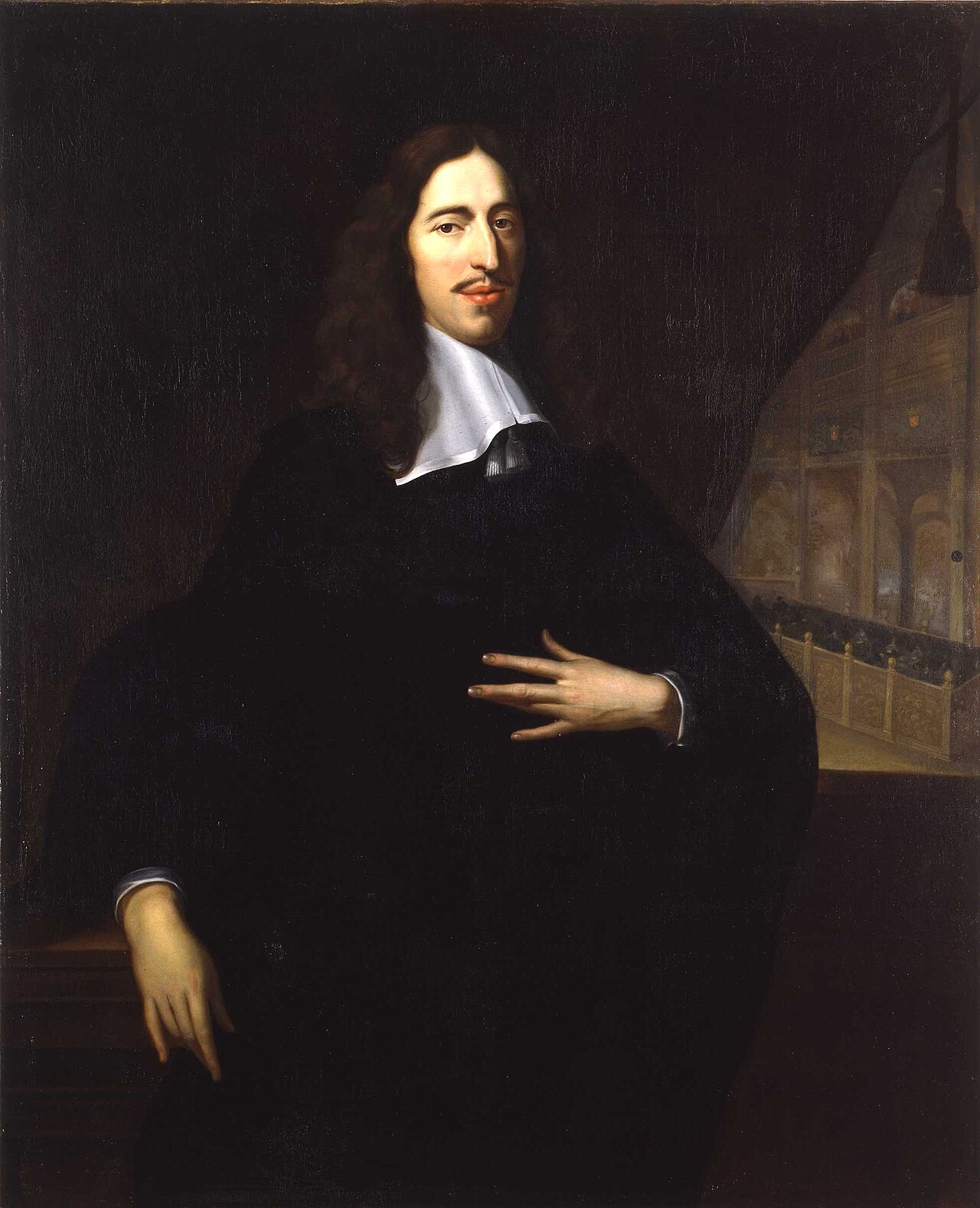 Painting
Primary source
Portrait of Johan de Witt (Jan de Baen, 1669)
Jan de Baen · 1669
 Painting
Primary source
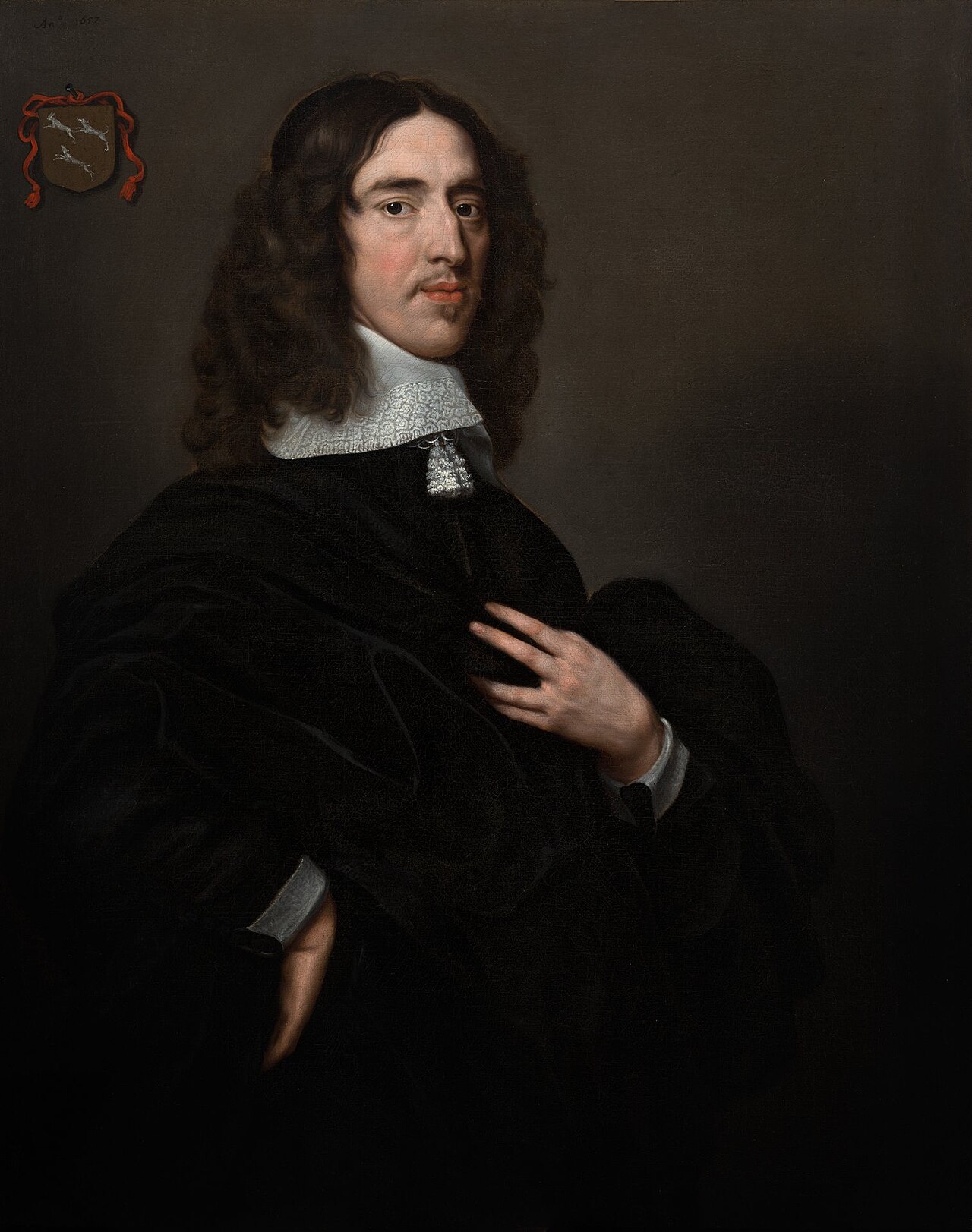
Portrait of Johan de Witt (Hanneman)
Adriaen Hanneman · c. 1652
 Book
Primary source
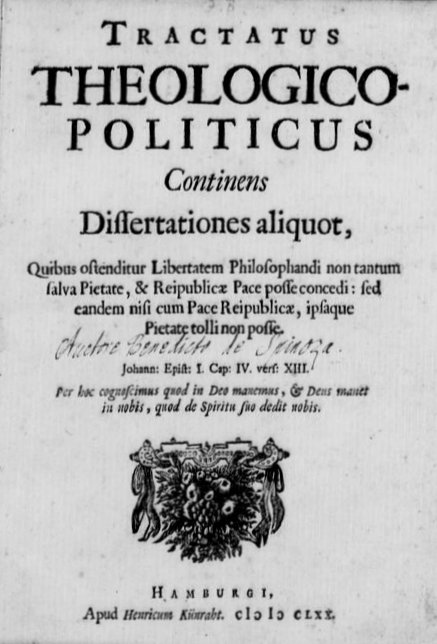
Tractatus Theologico-Politicus
Benedictus de Spinoza · 1670
 Document
Primary source
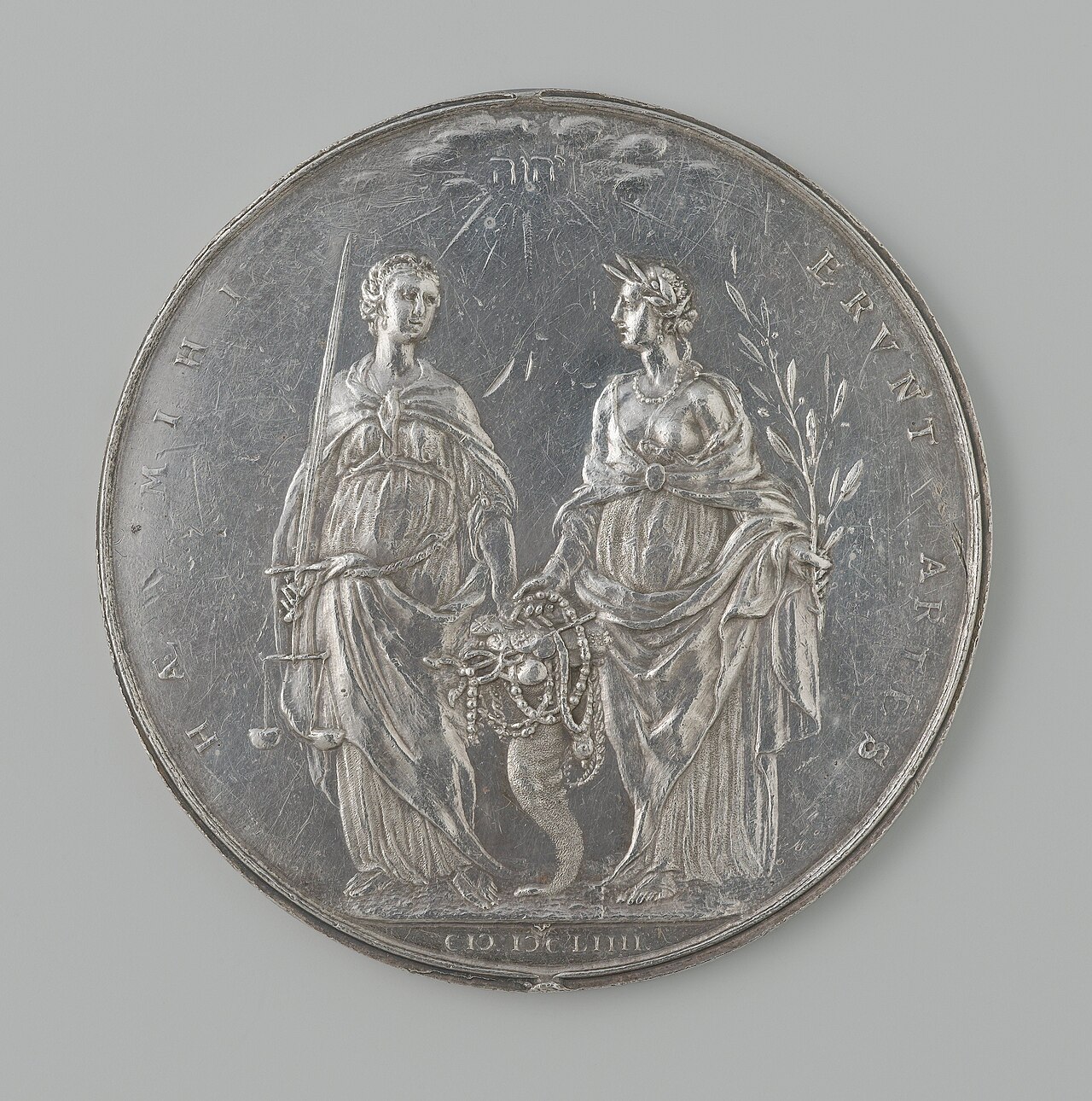
Treaty of Westminster
1654
Free account
Read every Johan de Witt source
Sign up free →
Ready when you are
Start chatting with Johan de Witt now.
20 messages free · No credit card · Available in 50+ languages.