


Secondary sourcePainting1861
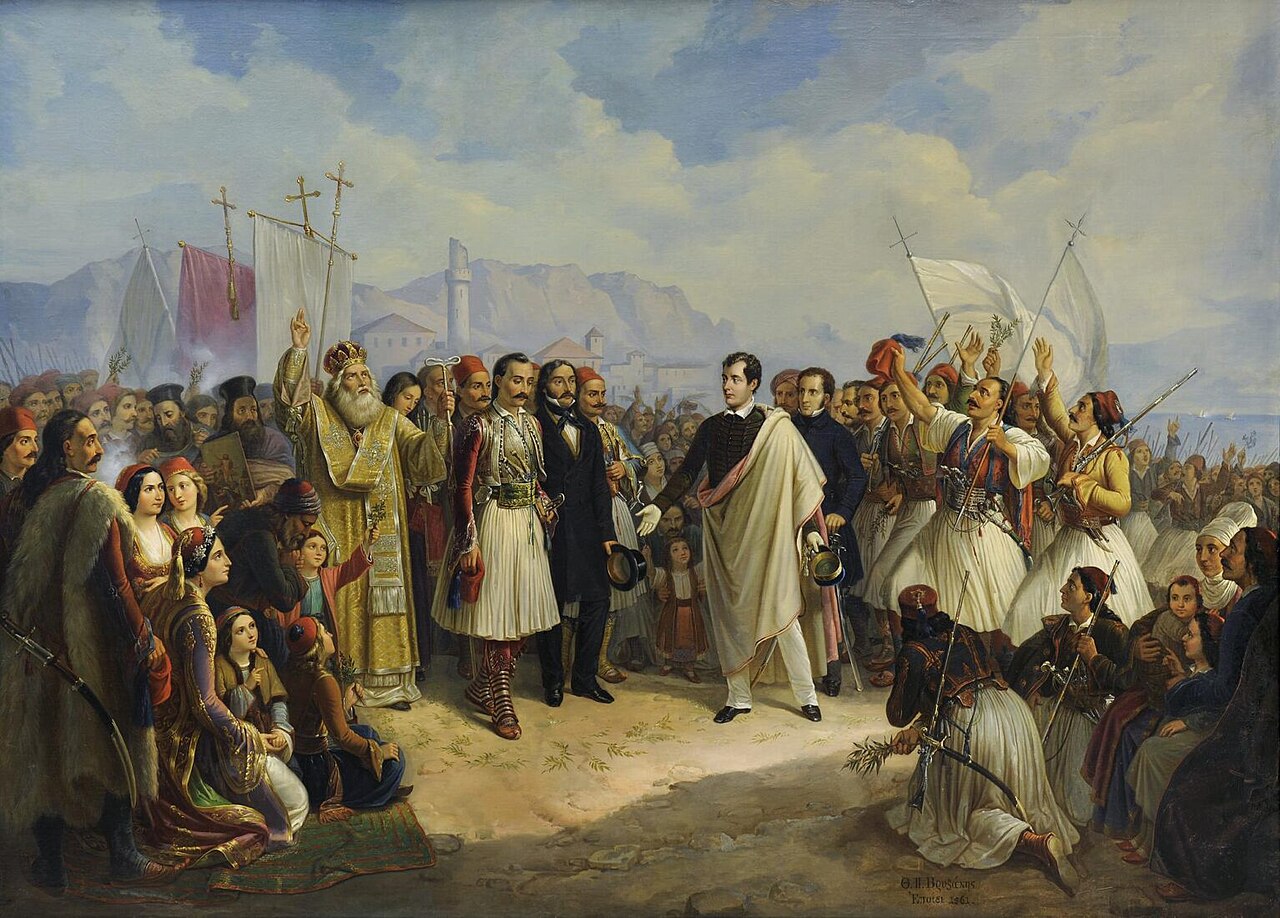
The Reception of Lord Byron at Missolonghi
Theodoros Vryzakis · 1861
An 1861 oil painting by Theodoros Vryzakis showing Byron welcomed at Missolonghi by Greek leaders and fighters. It shows how Greeks later remembered him.
Shows how Byron's support for Greek independence became part of Greek national memory, decades after he died at Missolonghi.
About this source
What it is
This is an oil painting by Theodoros Vryzakis, created in 1861 and now in the National Gallery in Athens. It depicts the arrival of the English philhellene Lord Byron at Missolonghi and his welcome. Byron appears to come from the port, with his friend Edward John Trelawny and cheering soldiers. Local authorities and Alexandros Mavrokordatos, who had invited him, greet him. A bearded Orthodox priest holds a banner with crosses, and women and children kneel at the left.
Why it matters
Byron went to Greece to support its war of national liberation and died at Missolonghi in 1824. Painted almost four decades later, the work reflects how Greeks came to honour him as a symbol of their struggle. Art historians criticise its stiff, rigid figures and its symbolism, such as the priest's picture of the Resurrection, which they read as a sign of Greece's rebirth. They also note that Byron is shown almost like a messiah. The painting reveals national memory as much as the events it claims to show.
Look closer
- Who is greeting Byron, and what roles do the priest, the officials and the fighters seem to play?
- What symbols in the background might the painter have meant to show, and how would a Greek viewer read them?
- What does the scene leave out, such as Byron's illness and the difficulties of the war?
This painting is part of the curated material that grounds the AI version of Lord Byron on Humy.ai — when students ask about related events, the AI can quote it and cite it.
More Lord Byron sources
Browse all 98 →
Ready when you are
Start chatting with Lord Byron now.
20 messages free · No credit card · Available in 50+ languages.