


Secondary sourcePaintingc. 1620
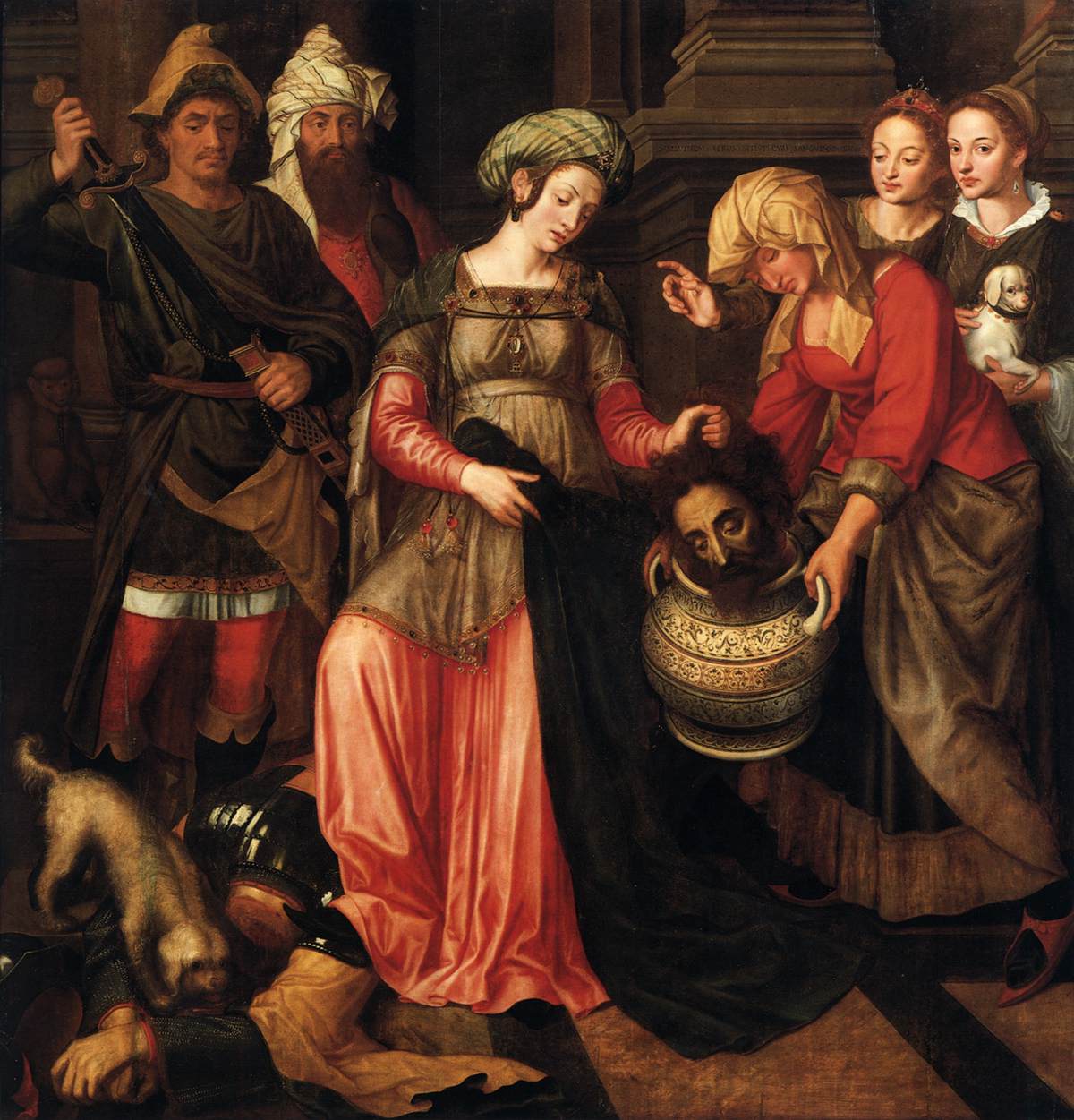
The Revenge of Tomyris
Michiel Coxie · c. 1620
A 17th-century painting by Michiel Coxie depicting Queen Tomyris's revenge on Cyrus after his death in battle.
Depicts the legendary revenge of Tomyris after defeating and killing Cyrus in battle.
About this source
What it is
This oil painting, made around 1620 by the Flemish artist Michiel Coxie, shows Queen Tomyris ordering the severed head of Cyrus the Great to be dipped in blood, a scene from the legendary account of his death.
Why it matters
The story of Tomyris's revenge was recorded by ancient historians and became a popular subject for European painters interested in dramatic tales of ancient rulers. The painting reflects how Cyrus's death, as much as his life, became part of his lasting legend.
Look closer
- What does Tomyris's posture and expression suggest about how the artist wanted viewers to see her?
- Why might this gruesome moment have been considered a fitting subject for a painting?
- What does the presence of onlookers suggest about how the artist wanted this act to be understood — as justice, revenge, or horror?
This painting is part of the curated material that grounds the AI version of Cyrus the Great on Humy.ai — when students ask about related events, the AI can quote it and cite it.
More Cyrus the Great sources
Meet the AI Cyrus the Great →

Ready when you are
Start chatting with Cyrus the Great now.
20 messages free · No credit card · Available in 50+ languages.