


Primary sourceBook1834 (published 1847)
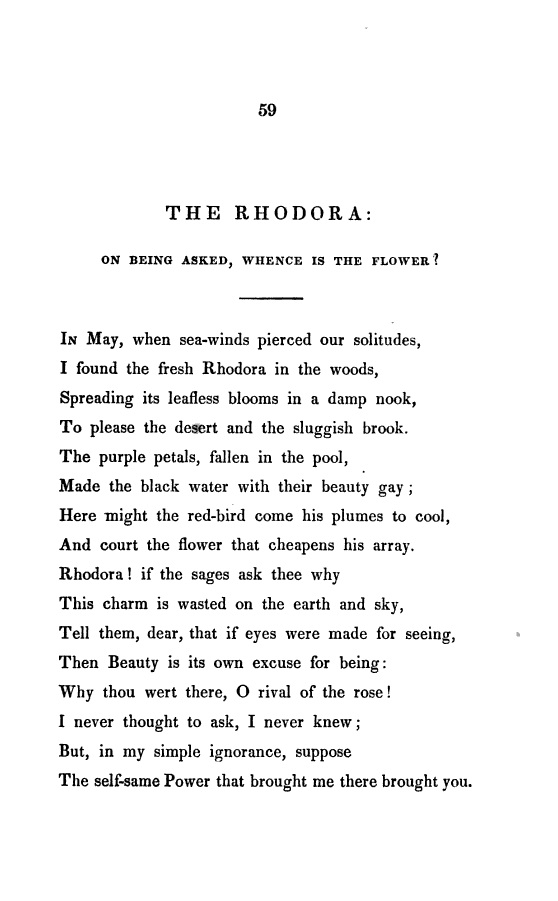
The Rhodora
Ralph Waldo Emerson · 1834 (published 1847)
An 1834 nature poem by Ralph Waldo Emerson about a flowering shrub, expressing his idea that beauty needs no justification.
A poem written by Emerson, central to his early thinking on nature and beauty.
About this source
What it is
"The Rhodora, On Being Asked, Whence Is the Flower" is a poem written by Ralph Waldo Emerson in May 1834, after a visit to Mount Auburn Cemetery. It was later included in his 1847 collection Poems.
Why it matters
The poem shows Emerson developing ideas he would expand in his 1836 essay "Nature": that humans share a spiritual bond with the natural world and with God through it. Its famous line, "Beauty is its own excuse for being," condenses his aesthetic philosophy. As an early Transcendentalist work, it reveals how Emerson's thinking moved from observing a flower to questions about humility, purpose and divine power.
Look closer
- Why does Emerson focus mostly on the flower's color and sight, leaving out smell or sound?
- What does the poem's structure—question, then answer—tell you about how Emerson wanted readers to think?
- What might Emerson mean when he says beauty 'is its own excuse for being'?
This book is part of the curated material that grounds the AI version of Ralph Waldo Emerson on Humy.ai — when students ask about related events, the AI can quote it and cite it.
More Ralph Waldo Emerson sources
Meet the AI Ralph Waldo Emerson →Primary source
Nature
Ralph Waldo Emerson · 1836
 Speech
Primary source
The American Scholar
Ralph Waldo Emerson · 31 August 1837
Primary source
Concord Hymn
Ralph Waldo Emerson · 1837, published 1847
Primary source
Essays: First Series
Ralph Waldo Emerson · 1841
 Letter
Primary source
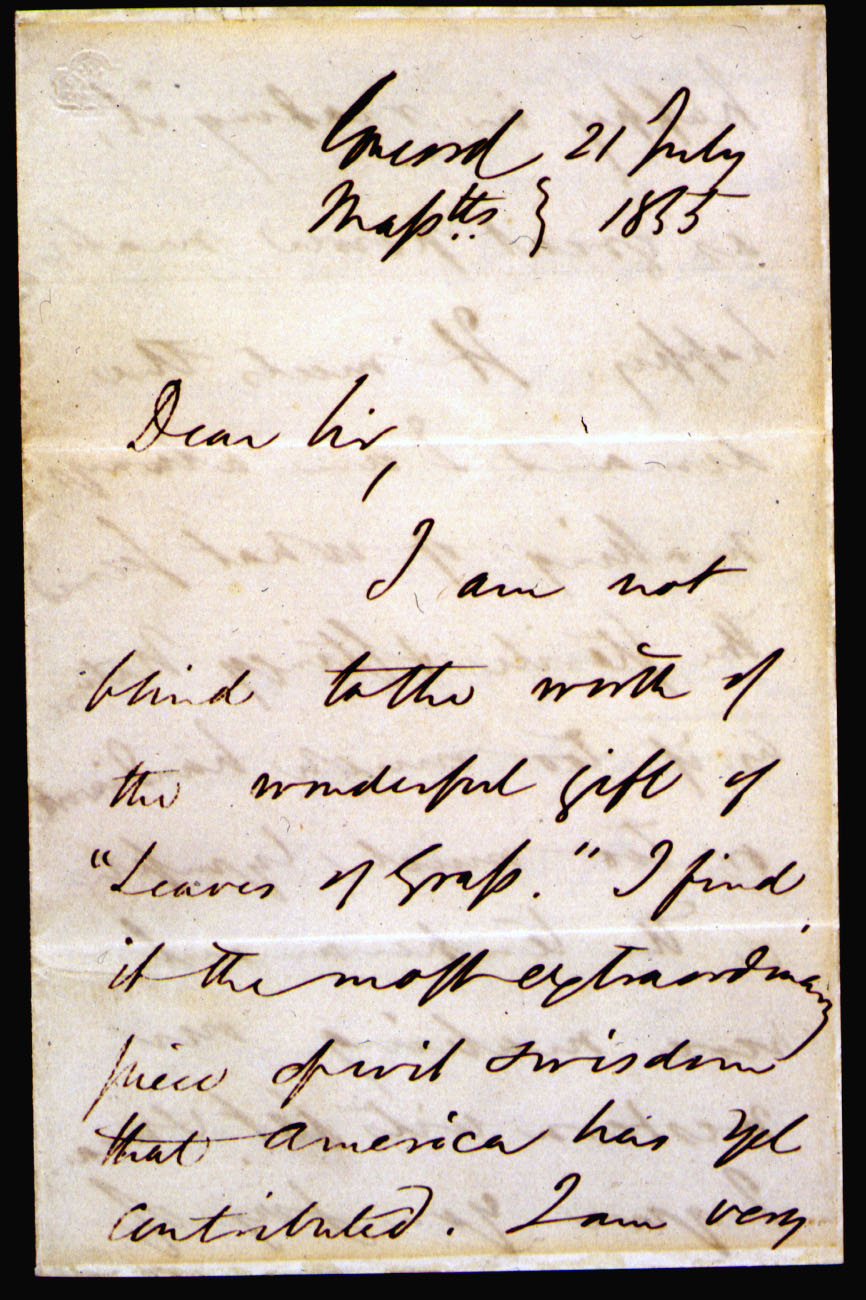
Emerson's Letter to Whitman
Ralph Waldo Emerson · 21 July 1855
Ready when you are
Start chatting with Ralph Waldo Emerson now.
20 messages free · No credit card · Available in 50+ languages.