


Secondary sourceSculpture
The Romance between Arminius and Thusnelda
Carl Johann Steinhauser
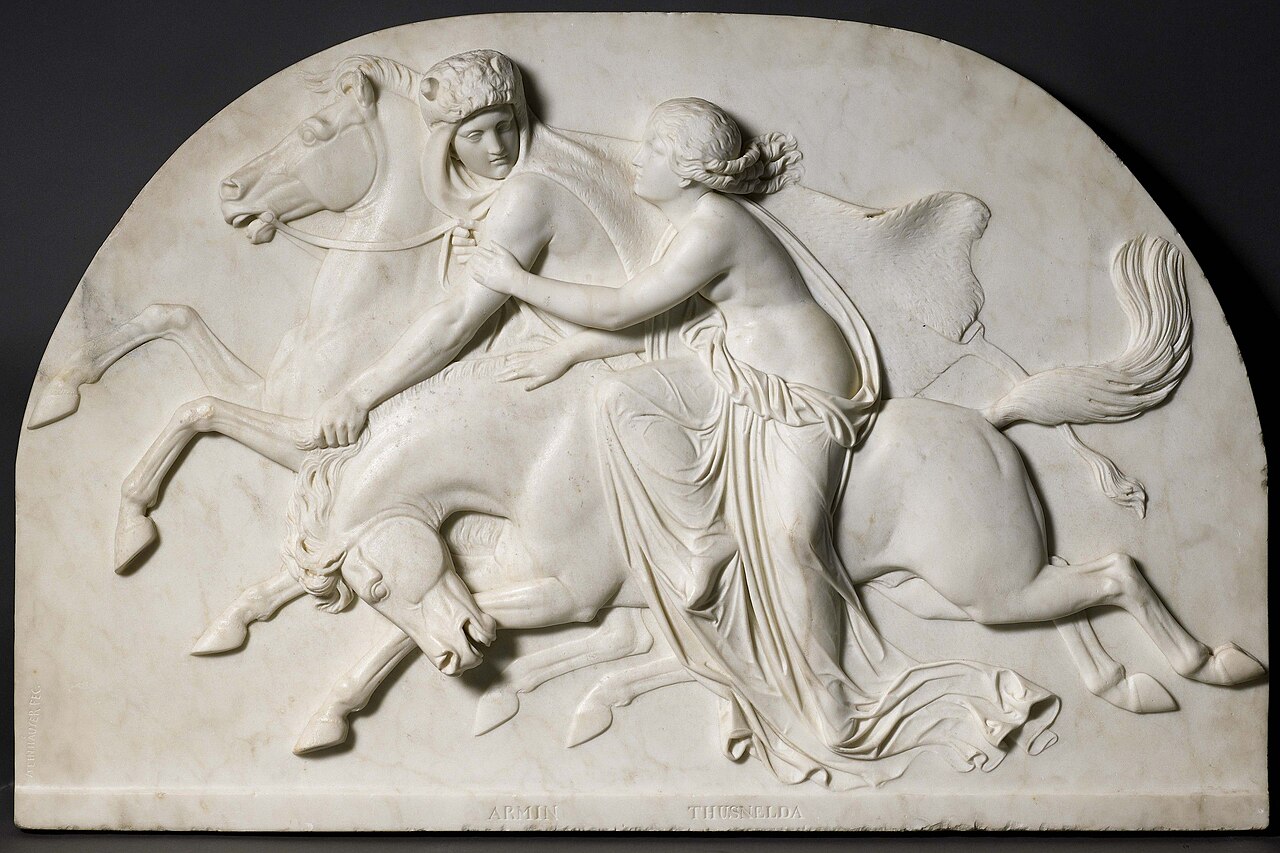
A 19th-century neoclassical marble relief by Carl Johann Steinhauser depicting Arminius abducting Thusnelda on horseback.
A romanticised later artwork showing Arminius's abduction of Thusnelda, his wife and the mother of his captured son.
About this source
What it is
This is a marble relief carved by the sculptor Carl Johann Steinhauser. It shows a nude male rider on a rearing horse holding the arm of a partly draped woman seated on a second horse, with the names Armin and Thusnelda carved below.
Why it matters
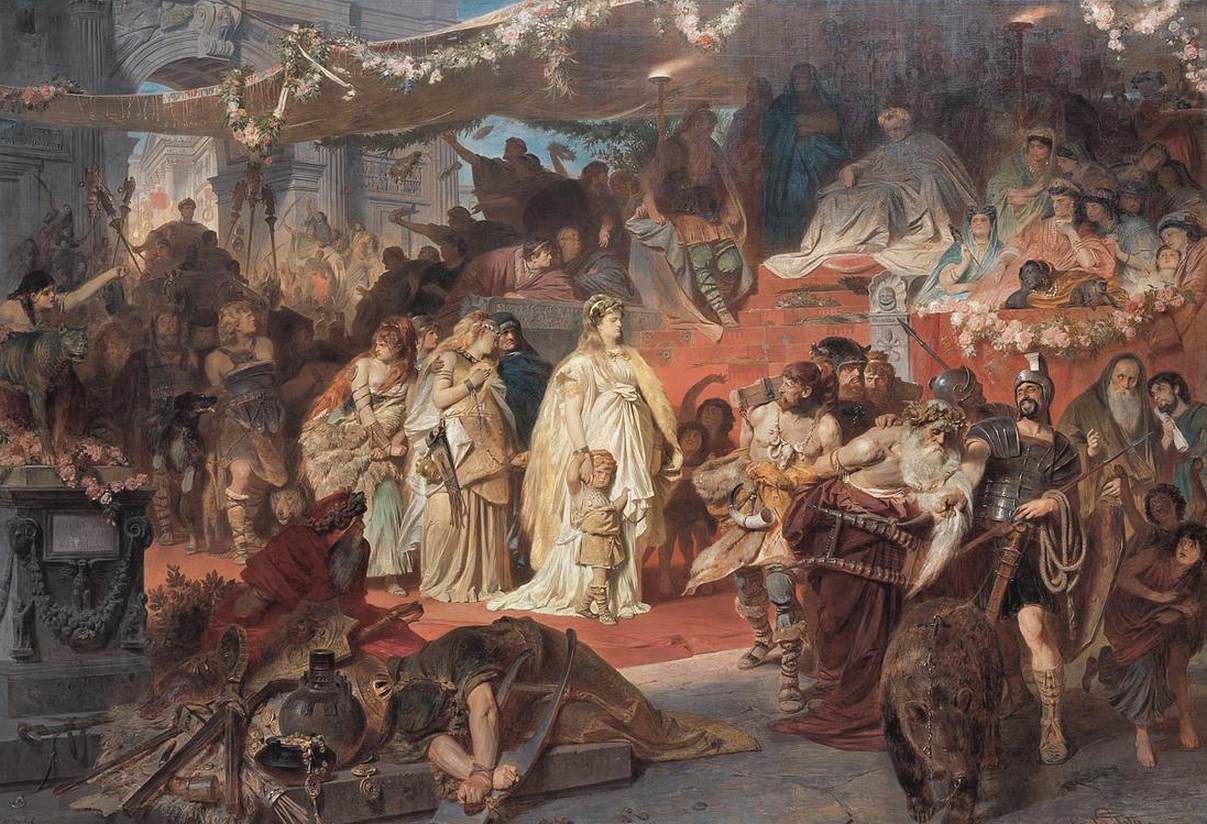
The relief retells the story of Thusnelda, daughter of the Cheruscan noble Segestes, who was taken by Arminius to be his wife. Thusnelda later became a symbol in nineteenth-century German nationalism, even though her real story ended in humiliation: she was handed to the Romans by her father and paraded as a captive in Rome. The sculpture romanticises a relationship that in reality brought Arminius personal loss, since he never saw his wife or son again.
Look closer
- Why might a sculptor in the 1800s choose to show this story as a romantic abduction rather than a tragedy?
- What does the relief leave out about what happened to Thusnelda afterwards?
- How do the poses of the two horses and figures create a sense of motion and drama?
This sculpture is part of the curated material that grounds the AI version of Arminius on Humy.ai — when students ask about related events, the AI can quote it and cite it.
More Arminius sources
Browse all 79 →
Ready when you are
Start chatting with Arminius now.
20 messages free · No credit card · Available in 50+ languages.