


Secondary sourcePainting1908
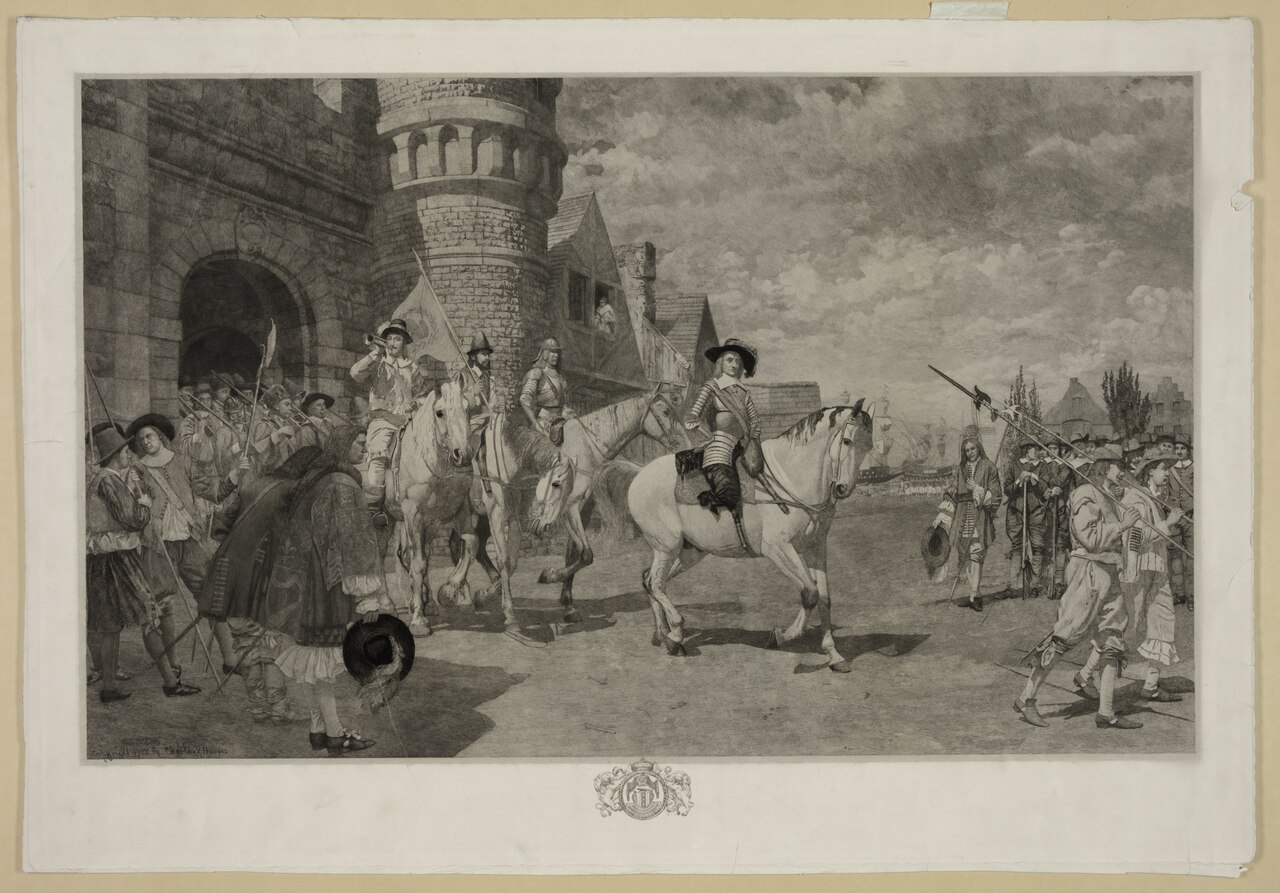
The Surrender of Nieuw Amsterdam in 1664
Charles X. Harris · 1908
A black and white etching by Charles X. Harris, made in 1908, showing the 1664 surrender of New Amsterdam. It depicts the event Peter Stuyvesant faced.
It is a 1908 etching of the 1664 surrender that Stuyvesant faced, so it shows a later artist's view of the event, not his own.
About this source
What it is
This is a black and white etching titled The Surrender of Nieuw Amsterdam in 1664. Charles X. Harris made it, and it dates from 1908. It is a single print. On the left, a stone gatehouse with an arched entrance and a round tower stands beside mounted officers in plumed hats and armor. A figure in a dark cloak stands near a hat on the ground. On the right, soldiers with long pikes and muskets stand on a dusty field under a cloudy sky.
Why it matters
The etching depicts the 1664 surrender of New Amsterdam, the Dutch town that Peter Stuyvesant governed as director-general of New Netherland. Harris made it 244 years after the event, so it tells us how an artist of the early 1900s imagined the scene. The record does not say who the figures are, so students should be careful not to treat the details as eyewitness fact. The print is a secondary source that helps show how later Americans pictured the handover of Dutch New York to the English.
Look closer
- Who looks powerful in this scene, and how does the artist show it?
- What clues in the clothing and buildings tell you the scene is set in the 1600s?
- What might the artist have wanted viewers in 1908 to feel about the surrender?
This painting is part of the curated material that grounds the AI version of Peter Stuyvesant on Humy.ai — when students ask about related events, the AI can quote it and cite it.
More Peter Stuyvesant sources
Meet the AI Peter Stuyvesant →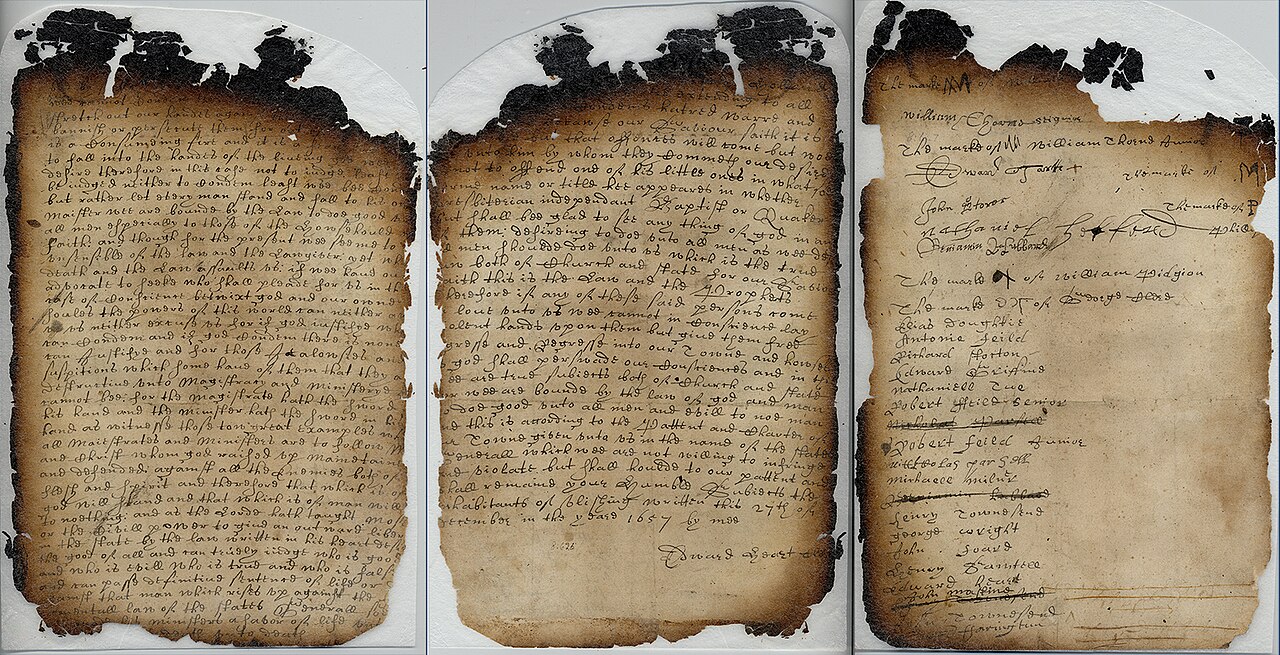 Document
Primary source
Flushing Remonstrance
Edward Hart · 27 December 1657
 Document
Primary source
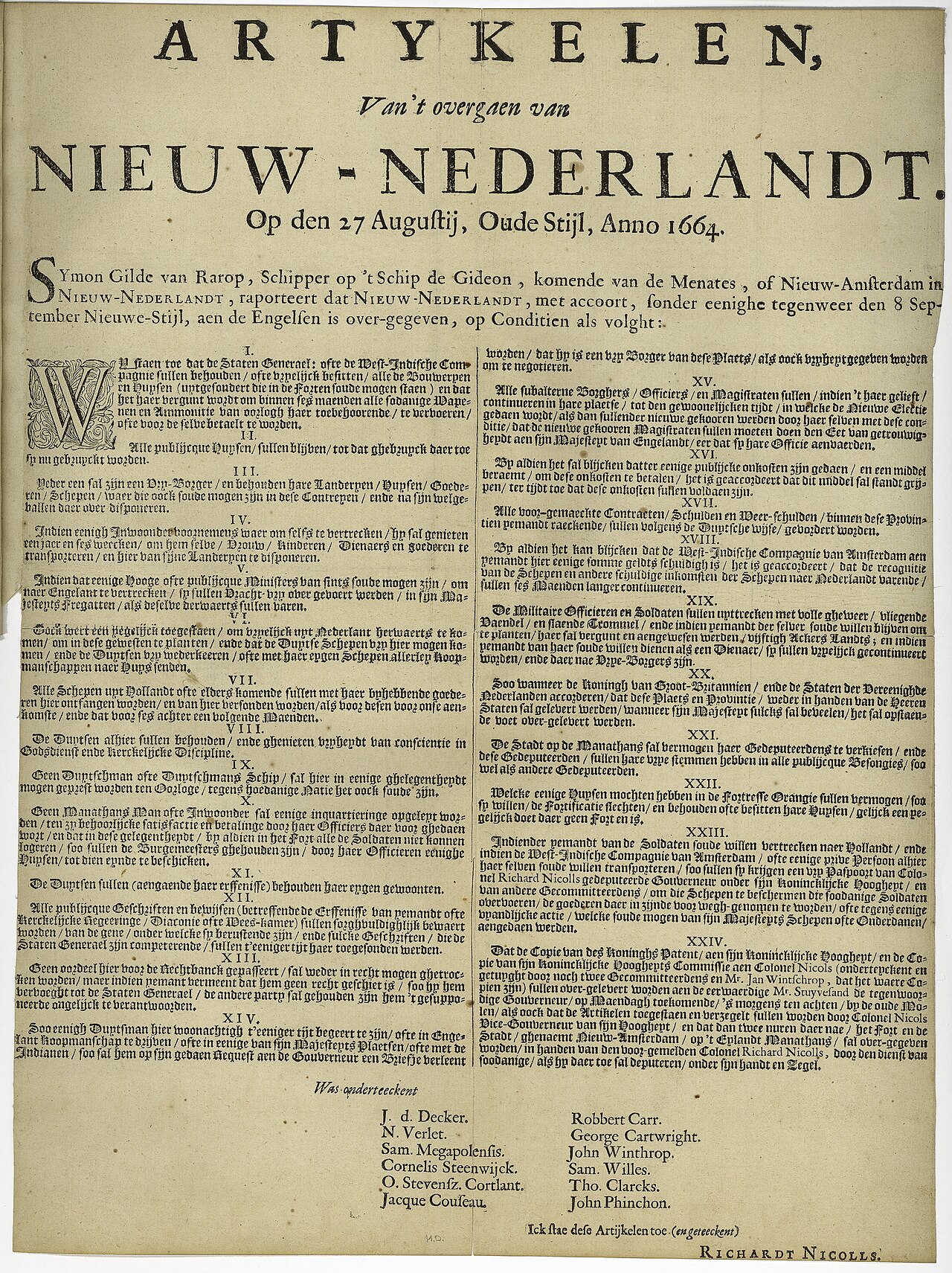
Articles of Capitulation on the Reduction of New Netherland
29 September 1664
 Painting
Primary source
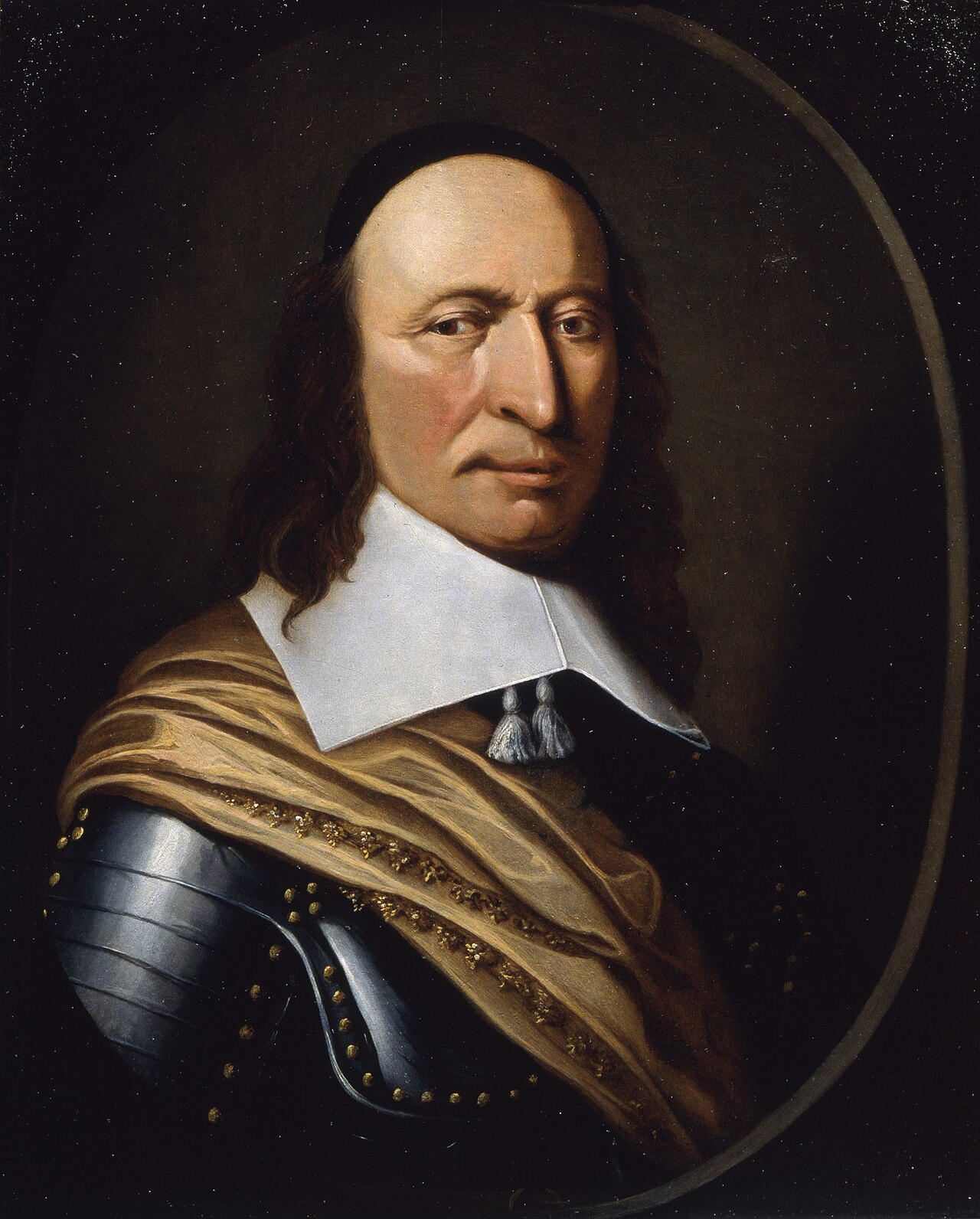
Petrus (Peter) Stuyvesant
Hendrick Couturier (attributed) · 1652
Secondary source
Laws and Ordinances of New Netherland, 1638–1674
E. B. O'Callaghan · 1647–1664 (compiled 1868)
 Artifact
Primary source
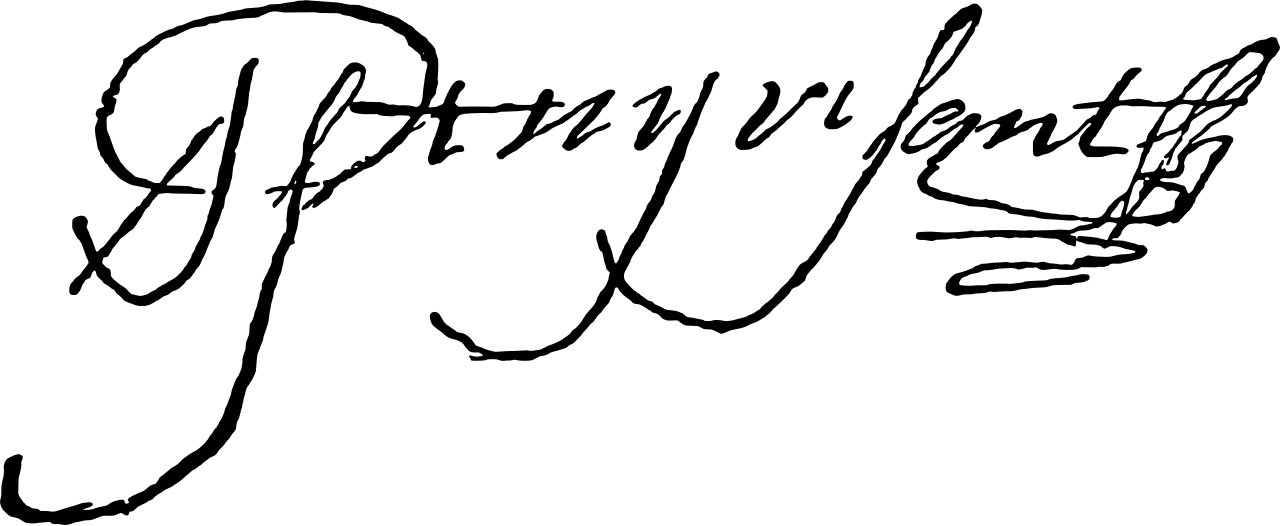
Signature of Peter Stuyvesant
Peter Stuyvesant
Ready when you are
Start chatting with Peter Stuyvesant now.
20 messages free · No credit card · Available in 50+ languages.