


Primary sourceBook1759
The Theory of Moral Sentiments
Adam Smith · 1759
Smith's 1759 book on ethics, sympathy and the 'impartial spectator', written before his famous economic work.
Smith's own earlier philosophical work, written before his economic masterpiece, showing his roots as a moral philosopher.
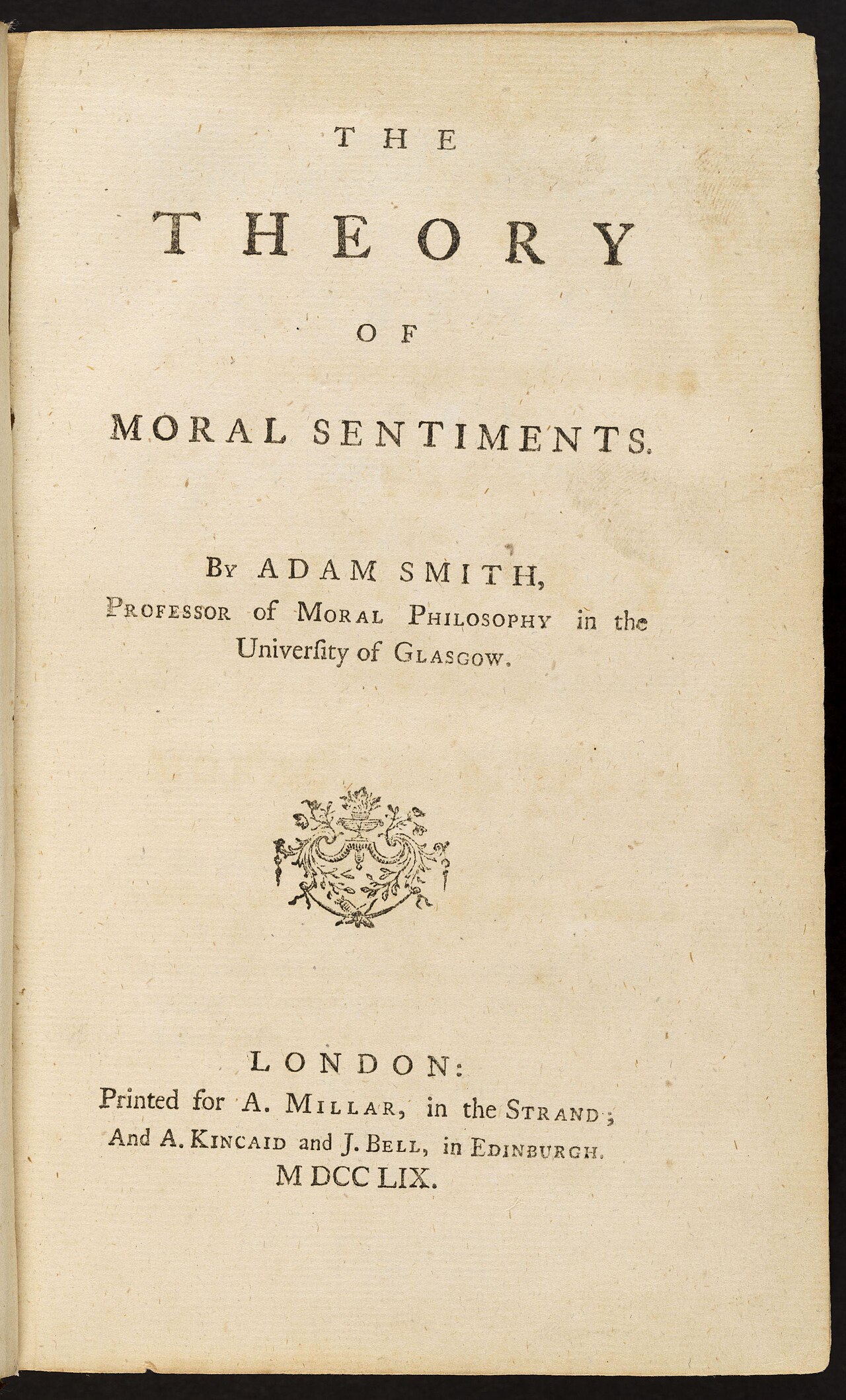
About this source
What it is
The Theory of Moral Sentiments is a book by Adam Smith, first published in 1759 while he was Professor of Moral Philosophy at the University of Glasgow. The image here shows the title page of that first edition.
Why it matters
Before Smith became known as an economist, he was a moral philosopher. This book explains how people judge right and wrong through 'sympathy', imagining themselves in another person's situation, and introduces the idea of an 'impartial spectator' who checks our behaviour. It laid the ethical and philosophical groundwork for his later economic ideas, including an early use of the phrase 'invisible hand'. The book shows that Smith's famous economic theories grew out of deeper questions about human nature and morality.
Look closer
- Why might understanding sympathy help explain how people behave in markets?
- What does Smith mean by imagining yourself in someone else's situation?
- How does this book change how you think about the 'invisible hand' in his later work?
This book is part of the curated material that grounds the AI version of Adam Smith on Humy.ai — when students ask about related events, the AI can quote it and cite it.
More Adam Smith sources
Meet the AI Adam Smith →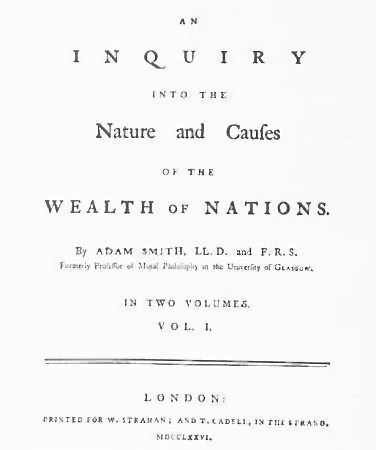 Book
Primary source
The Wealth of Nations
Adam Smith · 1776
 Painting
Primary source
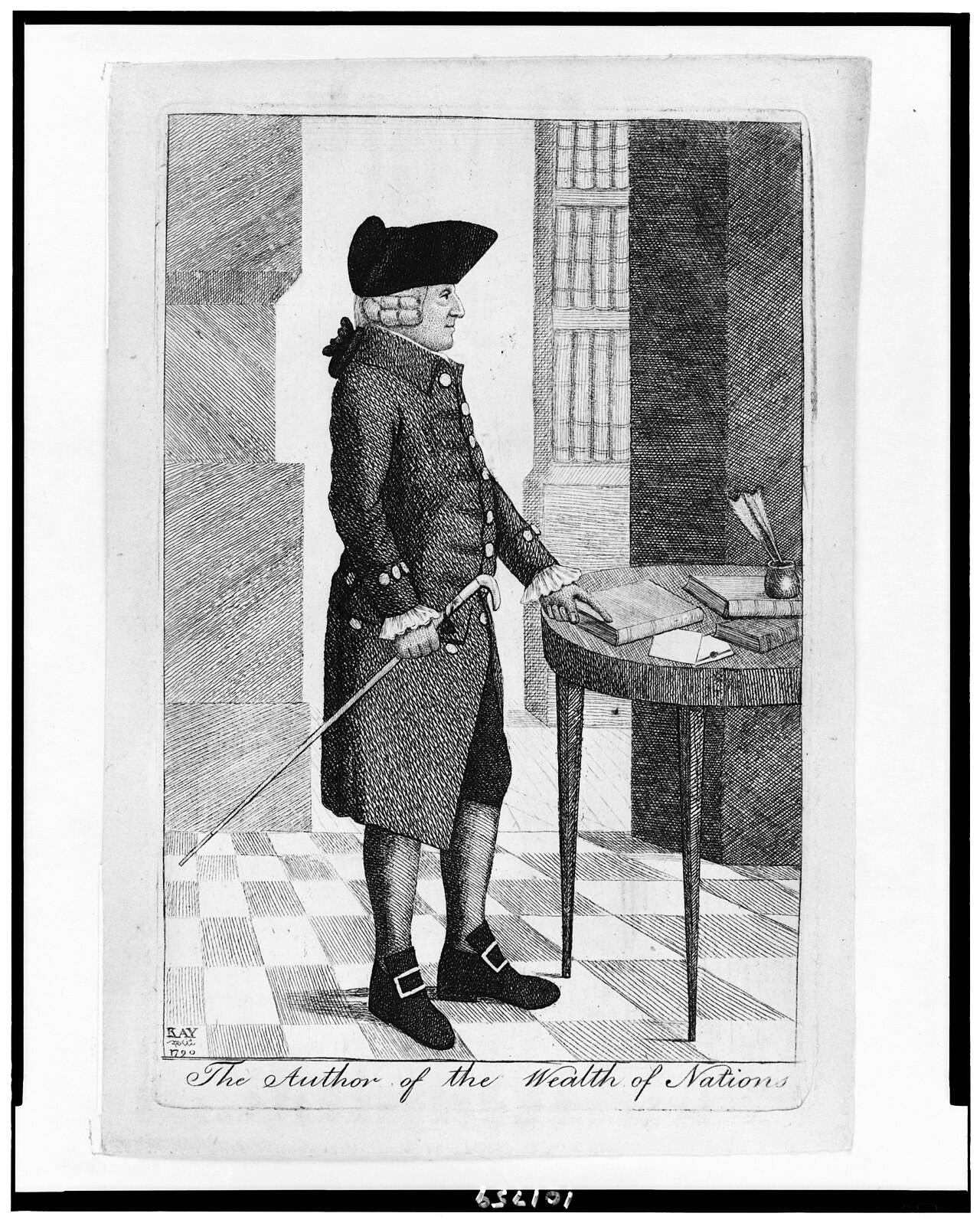
Adam Smith, 1790
John Kay · 1790
 Painting
Secondary source
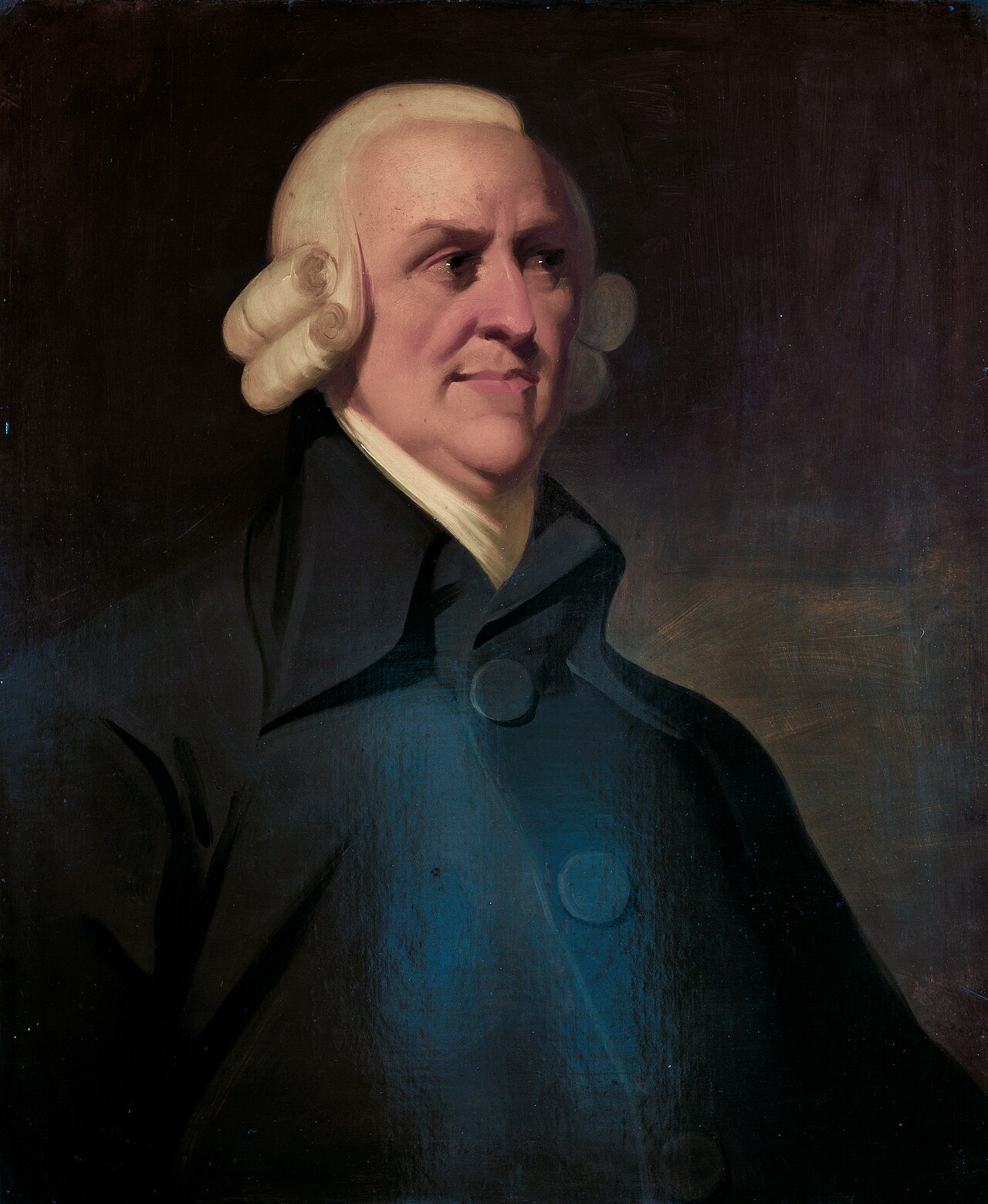
The Muir Portrait of Adam Smith
Unknown · c. 1790
 Artifact
Primary source
Panmure House
1691-1693 (built); Smith resided 1778-1790
 Painting
Secondary source
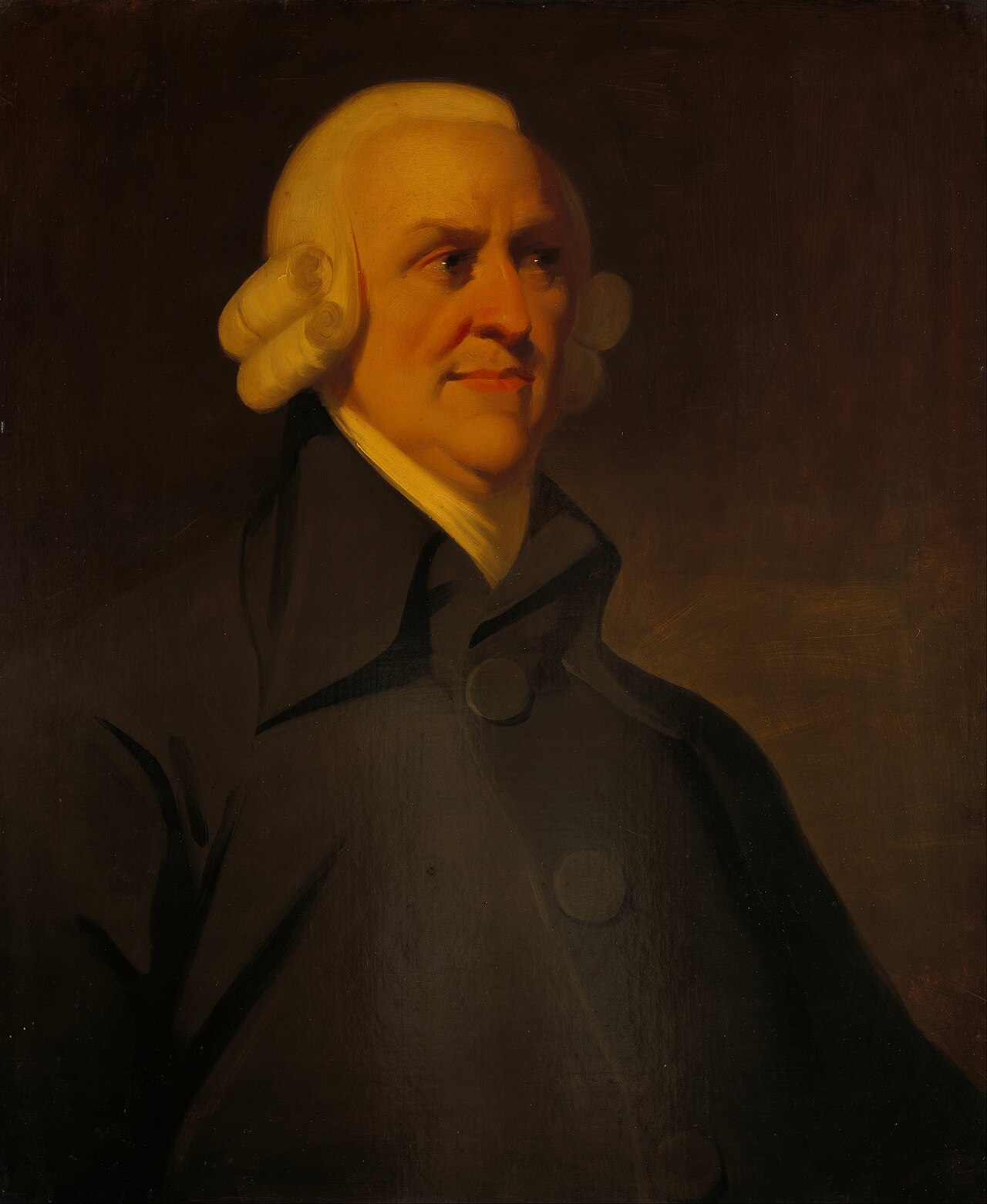
Adam Smith, Political Economist, Portrait of 1800
Unknown (Scottish) · c. 1800
Ready when you are
Start chatting with Adam Smith now.
20 messages free · No credit card · Available in 50+ languages.