


Secondary sourcePainting1904
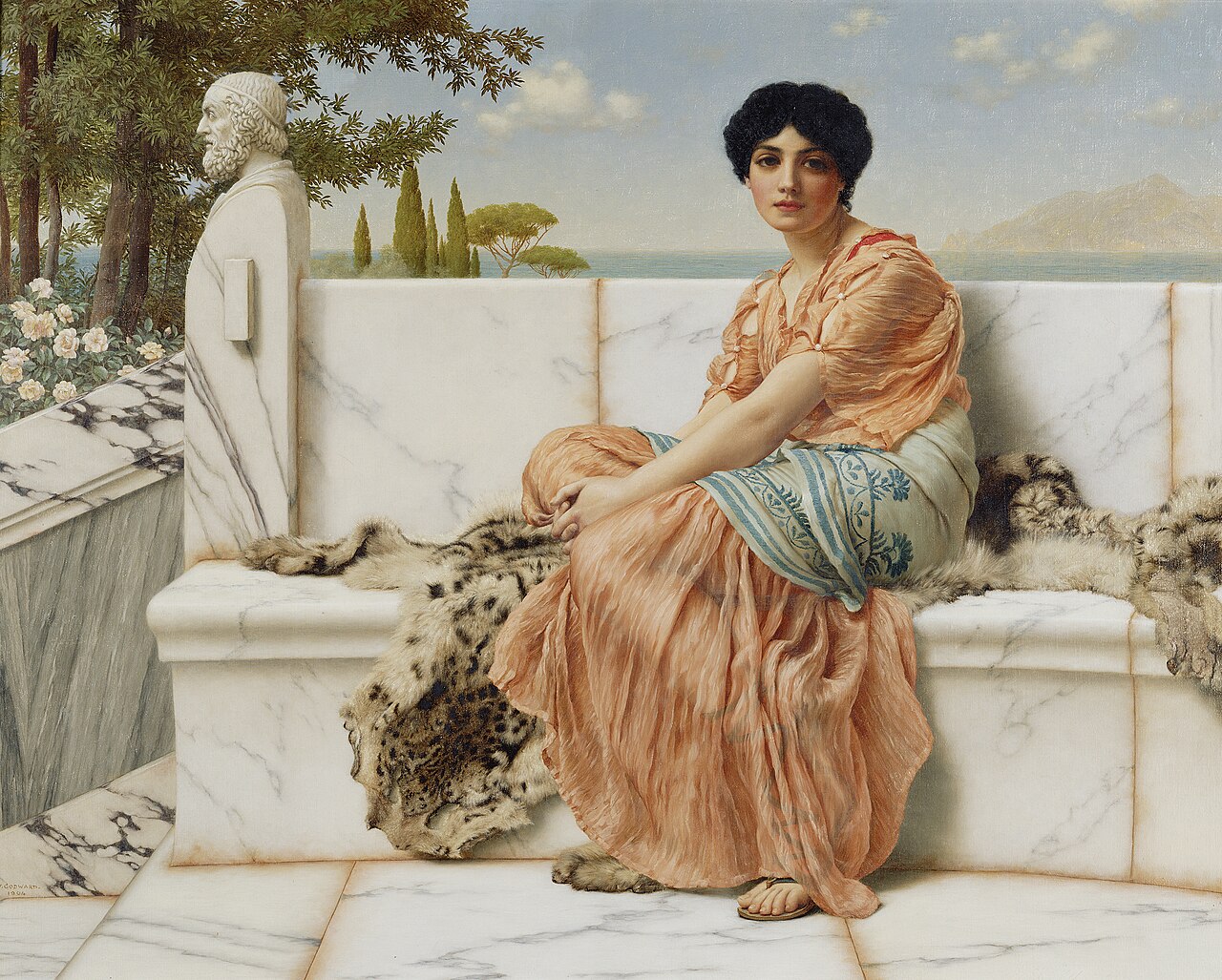
The Time of Sappho
John William Godward · 1904
A Victorian aestheticist painting using Sappho's name as a symbol of female longing, showing a woman beside a marble bust.
Uses Sappho's name as a symbol of beauty and longing in a Victorian aestheticist painting.
About this source
What it is
A painting made in 1904 by the British artist John William Godward, titled with reference to Sappho. It is held at the J. Paul Getty Museum.
Why it matters
Painted around 1900, this work reflects the late Victorian aestheticist fashion for using classical figures like Sappho as symbols of beauty and erotic longing, rather than depicting her as a real historical poet. It shows how far removed later images could be from the actual woman and her writing.
Look closer
- Why might Godward place a bust and an inscription of Sappho's name rather than show her directly?
- What mood does the setting—marble, flowers, sea—create?
- How does this image differ from what we actually know about Sappho's life and poetry?
This painting is part of the curated material that grounds the AI version of Sappho on Humy.ai — when students ask about related events, the AI can quote it and cite it.
More Sappho sources
Browse all 89 →


Ready when you are
Start chatting with Sappho now.
20 messages free · No credit card · Available in 50+ languages.