


Secondary sourcePainting1772
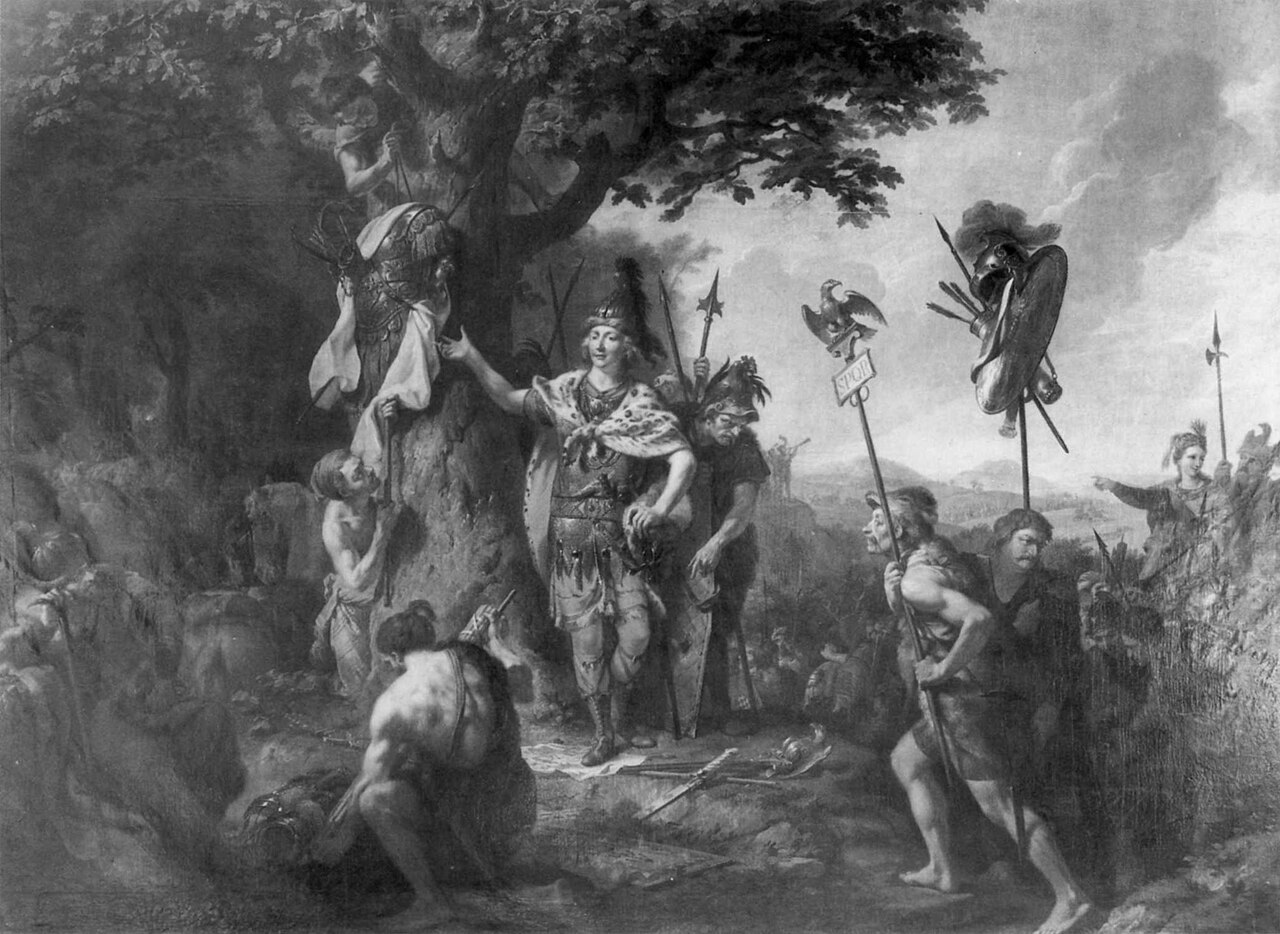
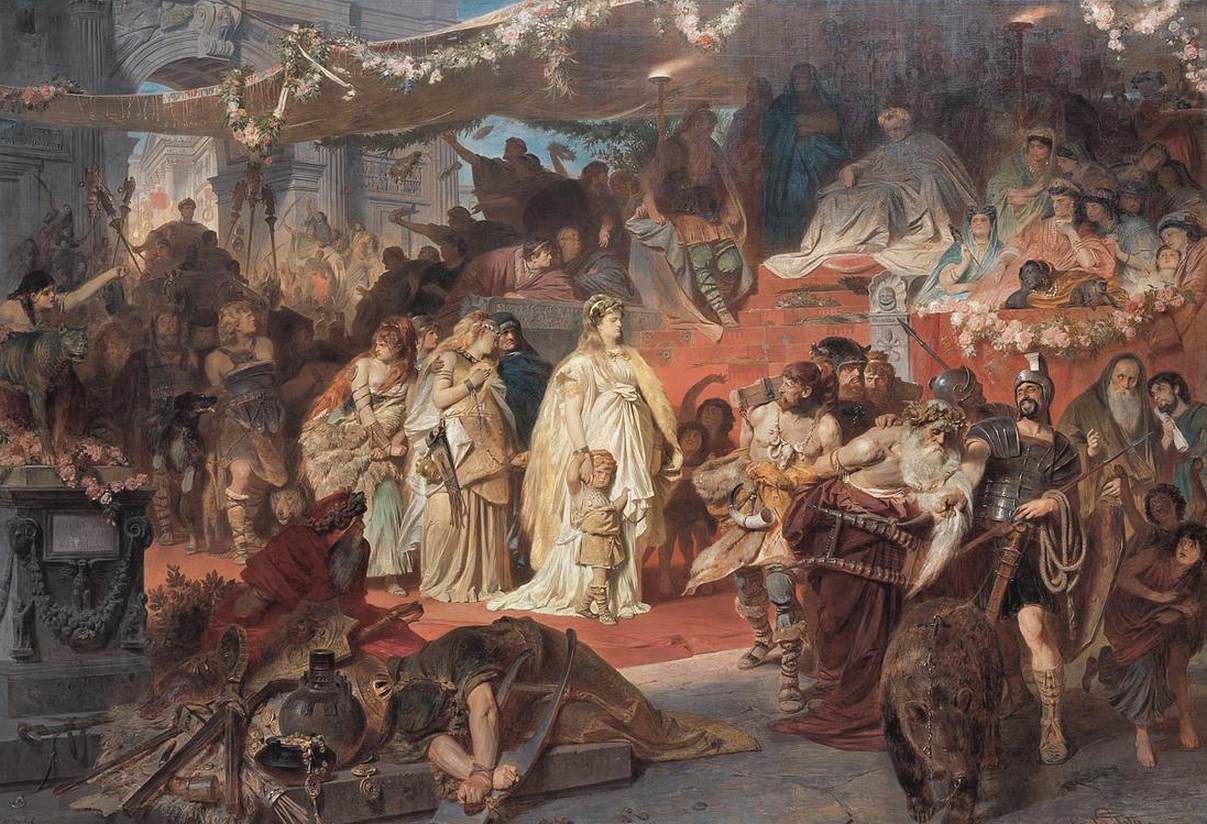
The Triumph of Hermann
Johann Heinrich Tischbein · 1772
A large 1772 painting imagining Arminius's triumph after defeating the Roman general Varus.
An imagined 18th-century depiction of Arminius's triumph after his victory over the Roman general Varus.
About this source
What it is
This is a large oil painting, 316 by 431 centimeters, made in 1772 by the German artist Johann Heinrich Tischbein the Elder. It shows Arminius (called Hermann) standing beside an oak tree after his victory over the Roman general Varus, surrounded by warriors, captives, and captured Roman arms including an eagle standard. The painting is held at Schloss Arolsen, a foundation of the Princely House of Waldeck and Pyrmont.
Why it matters
This painting was made over 1,700 years after the events it depicts, during a time when German artists and writers were celebrating Arminius as a national hero who had defeated the Romans. It does not record an actual historical scene but instead reflects 18th-century ideas about heroism, victory, and German identity, showing bound captives and Roman trophies to emphasize Arminius's triumph.
Look closer
- What symbols of victory and defeat has the painter included, and what story do they tell?
- Why might an 18th-century German artist want to paint this scene so dramatically?
- How does the near-nakedness of the captives shape how viewers are meant to see them?
This painting is part of the curated material that grounds the AI version of Arminius on Humy.ai — when students ask about related events, the AI can quote it and cite it.
More Arminius sources
Browse all 79 →
Ready when you are
Start chatting with Arminius now.
20 messages free · No credit card · Available in 50+ languages.