


Primary sourceBook1822
The Vision of Judgment
Lord Byron · 1822
Byron's 1822 satire mocking King George III and Poet Laureate Robert Southey, written in response to Southey's own poem on the king's death.
Byron wrote this satire, which led to his publisher being prosecuted for seditious libel.
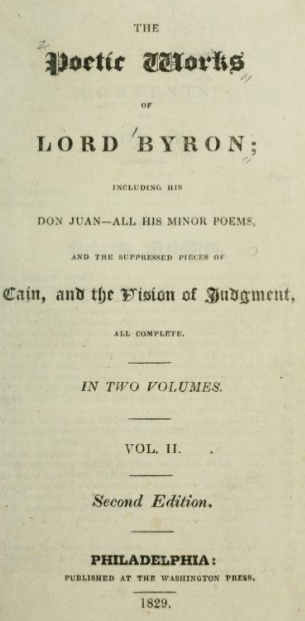
About this source
What it is
A satirical poem in ottava rima, written by Lord Byron in 1822. It imagines a dispute in Heaven over whether King George III's soul should be admitted, and mocks Poet Laureate Robert Southey, who had written a flattering poem on the same subject.
Why it matters
Byron wrote it to attack Southey's High Tory politics and the Laureate's attack on the so-called 'Satanic school' of poets, which he felt was aimed at him personally. Published anonymously by the radical publisher John Hunt, it led to a prosecution for seditious libel against Hunt, showing how dangerous political satire could be in this period. The poem badly damaged Southey's reputation and is now seen as one of Byron's finest satirical works.
Look closer
- Why might Byron have chosen to set his satire in Heaven rather than on Earth?
- What risks did the publisher take in printing this poem, and why?
- How does mocking a king's death reveal Byron's attitude towards monarchy and authority?
This book is part of the curated material that grounds the AI version of Lord Byron on Humy.ai — when students ask about related events, the AI can quote it and cite it.
More Lord Byron sources
Browse all 98 →
Ready when you are
Start chatting with Lord Byron now.
20 messages free · No credit card · Available in 50+ languages.