


Primary sourcePaintingca. 1657
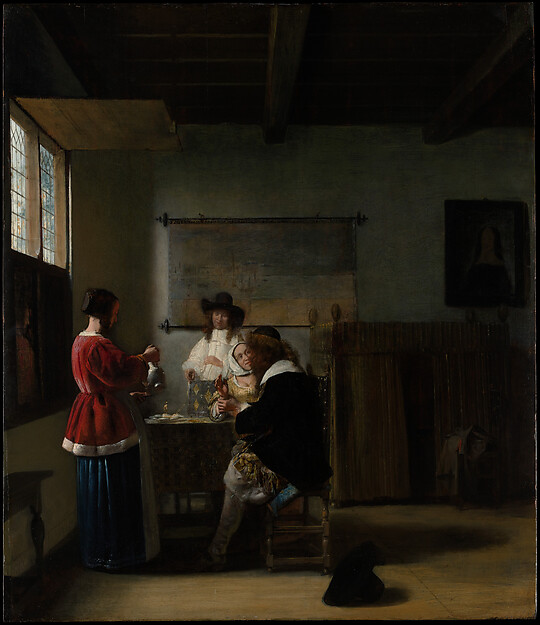
The Visit
Pieter de Hooch · ca. 1657
A seventeenth-century Dutch interior painting by Pieter de Hooch, a Delft contemporary of Johannes Vermeer. It shows everyday domestic life in the city where Vermeer worked.
It is a Delft interior by a contemporary painter, offering context for the city and domestic scenes of Vermeer's world rather than his own work.
About this source
What it is
This oil painting on wood, dated around 1657, is by Pieter de Hooch and is held by The Metropolitan Museum of Art in New York. It came to the museum through the H. O. Havemeyer Collection, Bequest of Mrs. H. O. Havemeyer, 1929. It shows a dim interior with a wooden-beamed ceiling. A woman in a red jacket and blue skirt pours from a jug at a table by a window. A man in a wide-brimmed hat stands behind the table, and a seated man in a black coat with a white collar faces the table and holds a glass.
Why it matters
De Hooch was a contemporary painter working in Delft, the city where Johannes Vermeer lived and painted. This painting is not by Vermeer, so it cannot show his own technique or choices. It does show the kind of interior scene painted in Delft in the seventeenth century, with rooms, clothing and everyday activity like those that surround Vermeer's work. It is useful context for understanding the world Vermeer lived in.
Look closer
- Which people and objects seem to be the focus, and how does the light from the window shape them?
- Why might a painter include a framed picture on the back wall and a hat lying on the floor?
- What does this scene leave out about the people who worked in such households?
This painting is part of the curated material that grounds the AI version of Johannes Vermeer on Humy.ai — when students ask about related events, the AI can quote it and cite it.
More Johannes Vermeer sources
Browse all 95 →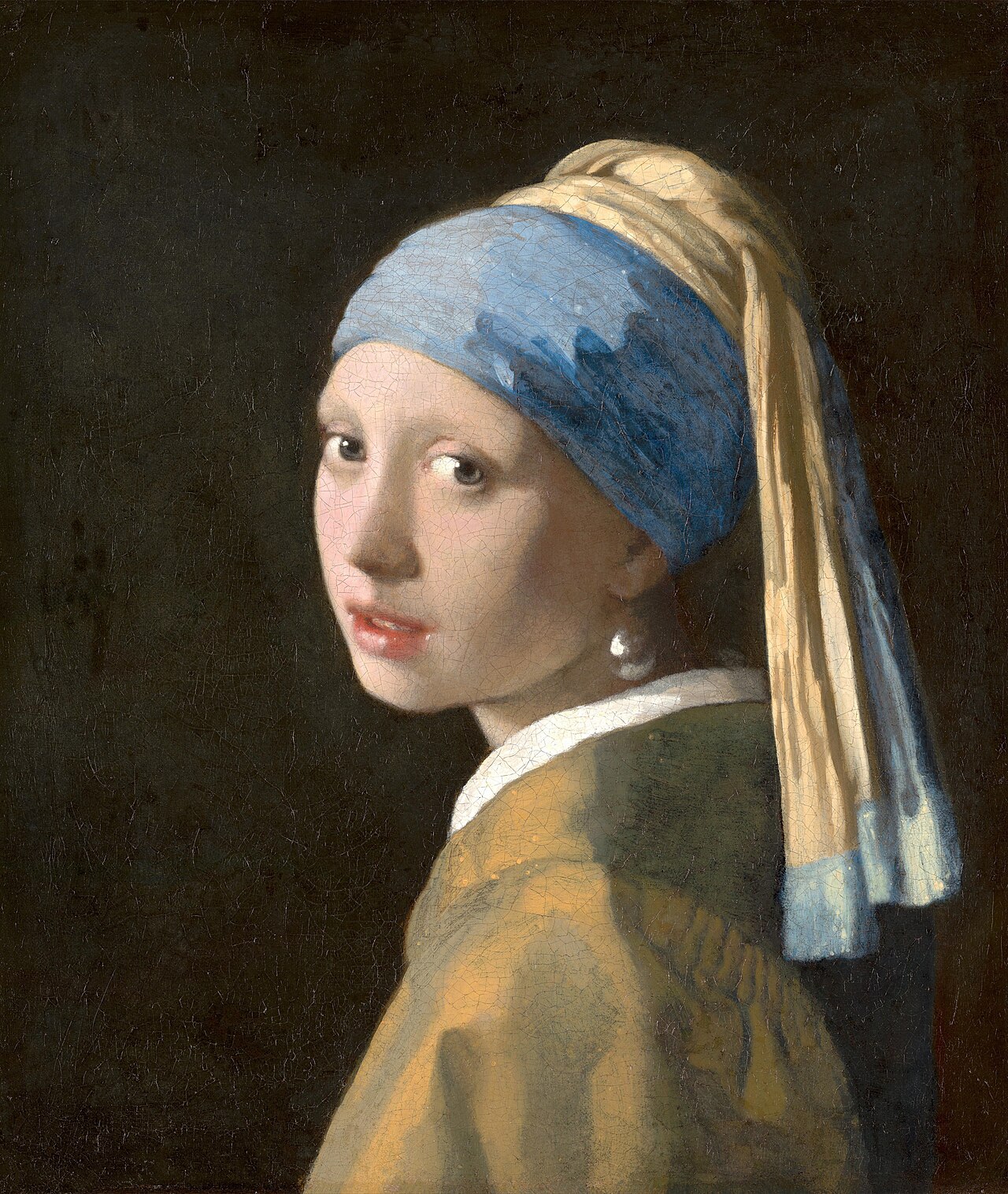 Painting
Primary source
Girl with a Pearl Earring
Johannes Vermeer · c. 1665
 Painting
Primary source
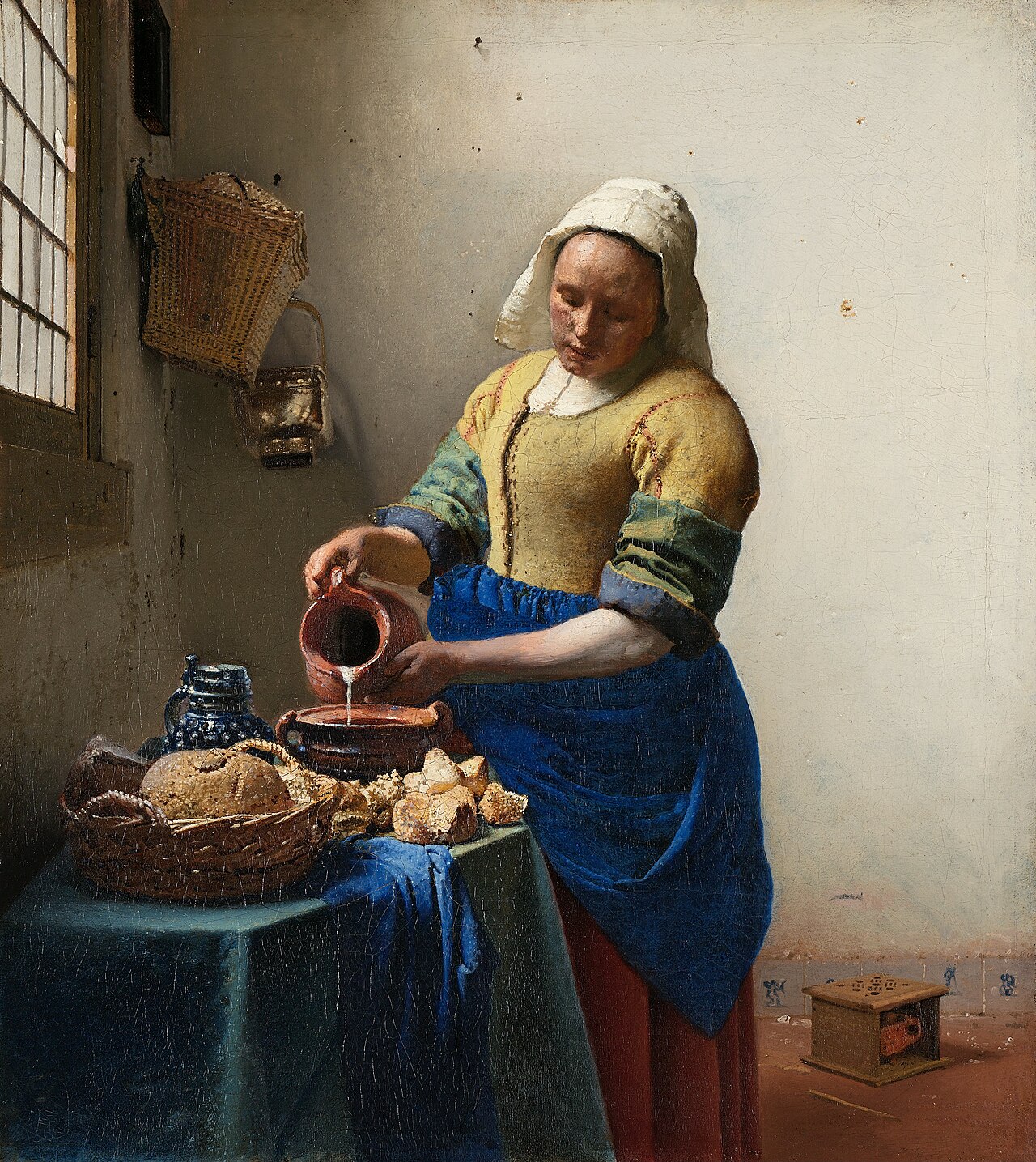
The Milkmaid
Johannes Vermeer · c. 1658-1661
 Painting
Primary source
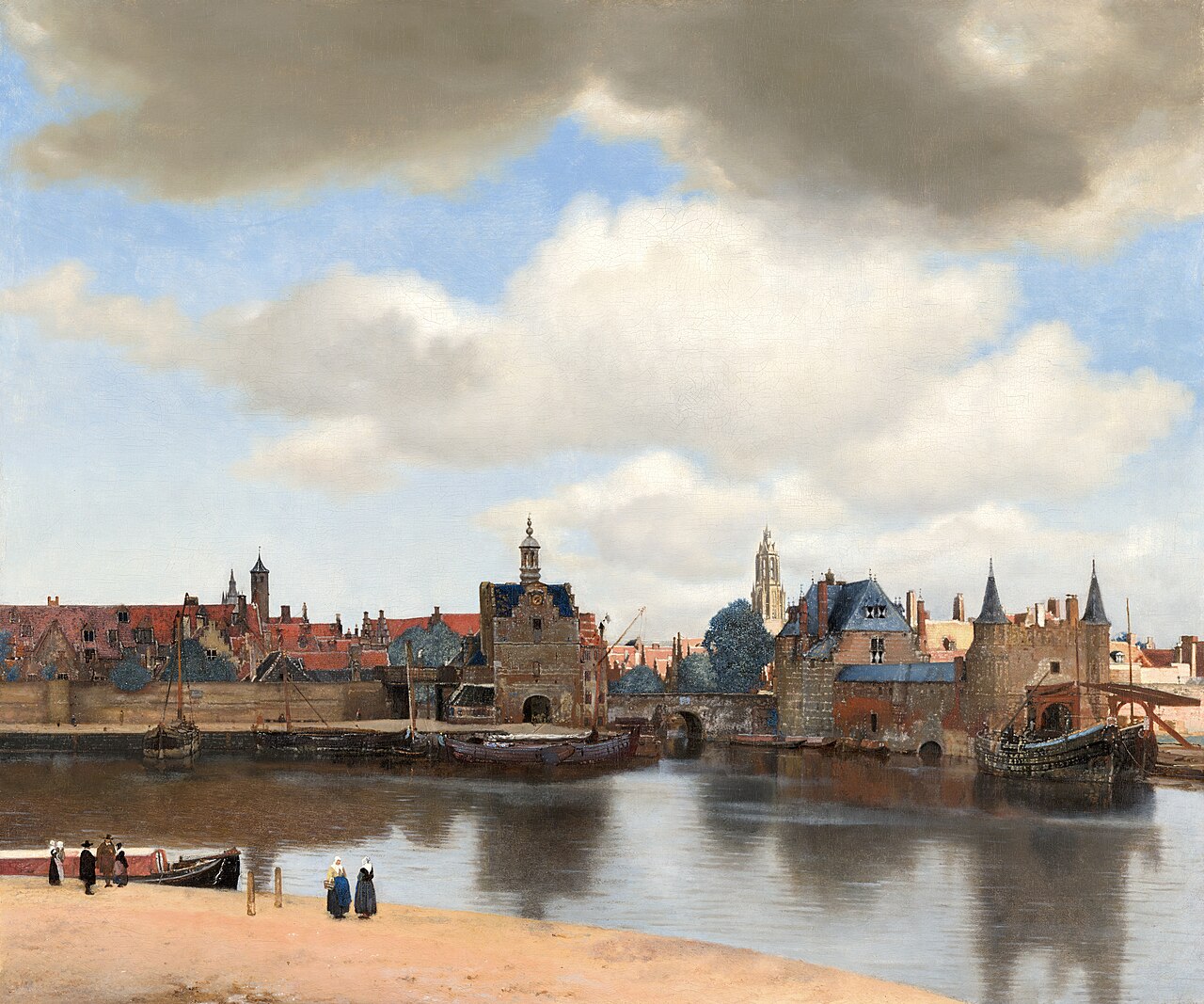
View of Delft
Johannes Vermeer · c. 1659-1661
 Painting
Primary source
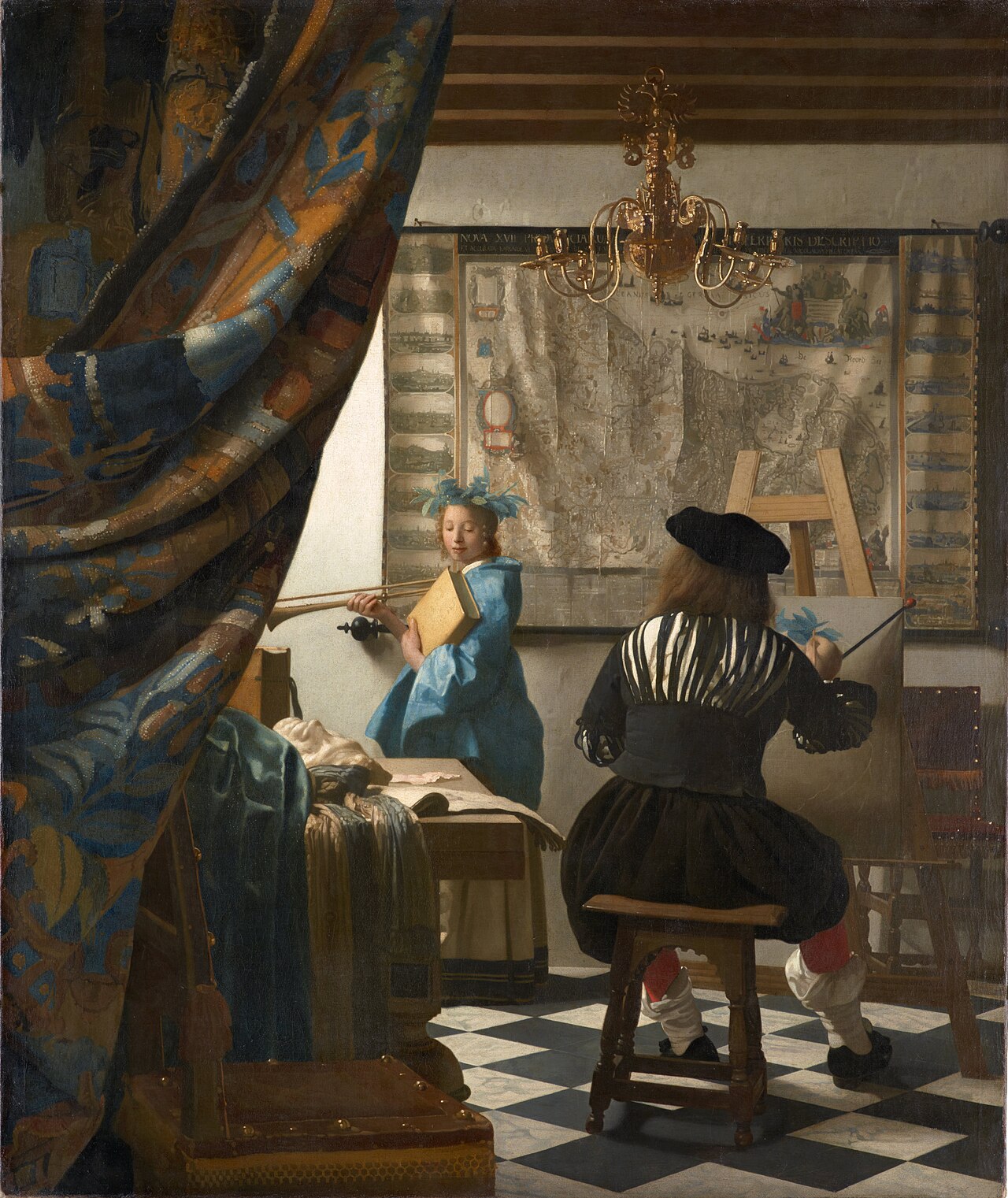
The Art of Painting
Johannes Vermeer · c. 1665-1668
Free account
Read every Johannes Vermeer source
Sign up free →
Ready when you are
Start chatting with Johannes Vermeer now.
20 messages free · No credit card · Available in 50+ languages.