


Primary sourceBook1776
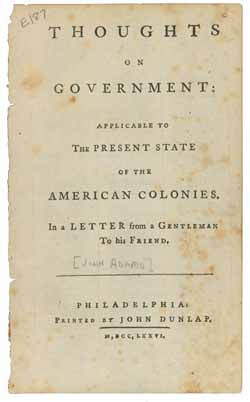
Thoughts on Government
John Adams · 1776
John Adams's 1776 pamphlet outlining a blueprint for balanced, republican government with separate branches.
Adams wrote this pamphlet, laying out his blueprint for balanced republican government that shaped new state constitutions.
About this source
What it is
This is 'Thoughts on Government,' a pamphlet written by John Adams in spring 1776, printed in Philadelphia. Adams wrote it in response to a request from the North Carolina Provincial Congress for advice on drafting a new constitution.
Why it matters
Adams argued that 'the Felicity of Societies depends on the Constitutions of Government under which they live,' and sketched out executive, legislative, and judicial branches with checks and balances. He also argued, against Thomas Paine's ideas, for two legislative bodies instead of one. Many of his ideas were adopted into North Carolina's first constitution later that year, showing how Adams's thinking shaped the structure of new American governments.
Look closer
- Why might Adams have worried about giving too much power to a single legislative body?
- How do Adams's ideas here compare to the government structure used in the United States today?
- What does the fact that other colonies requested his advice tell you about his reputation in 1776?
This book is part of the curated material that grounds the AI version of John Adams and Thomas Paine on Humy.ai — when students ask about related events, the AI can quote it and cite it.
More John Adams sources
Meet the AI John Adams →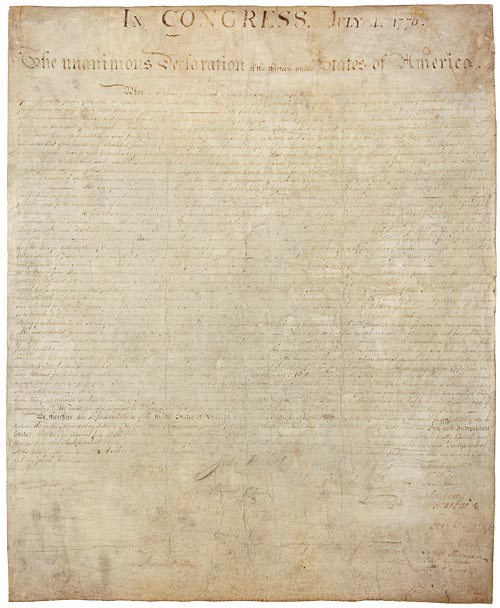 Document
Primary source
Declaration of Independence
Continental Congress (drafted by Thomas Jefferson) · 1776
 Painting
Primary source
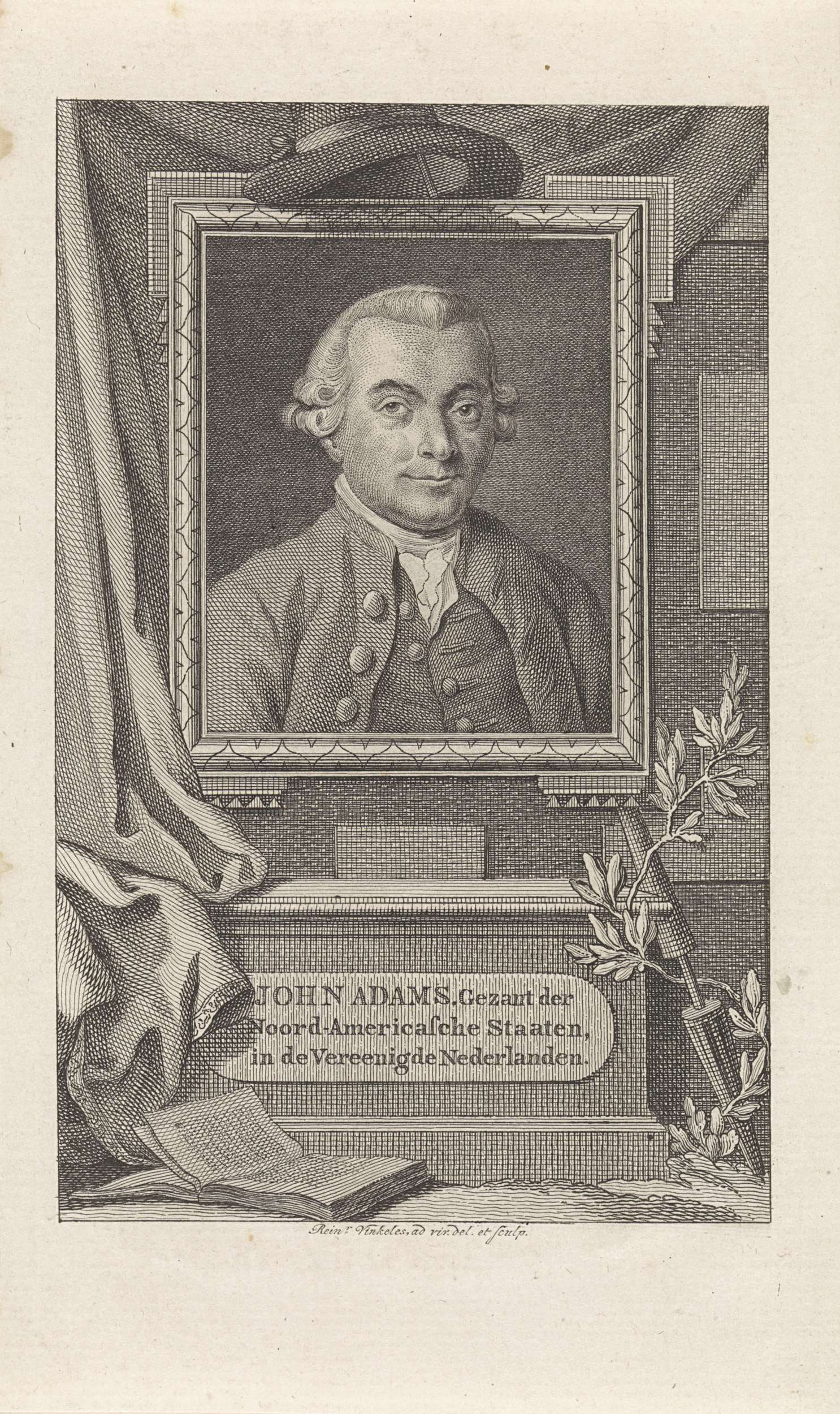
Portrait of John Adams, American Diplomat
1790
 Painting
Primary source
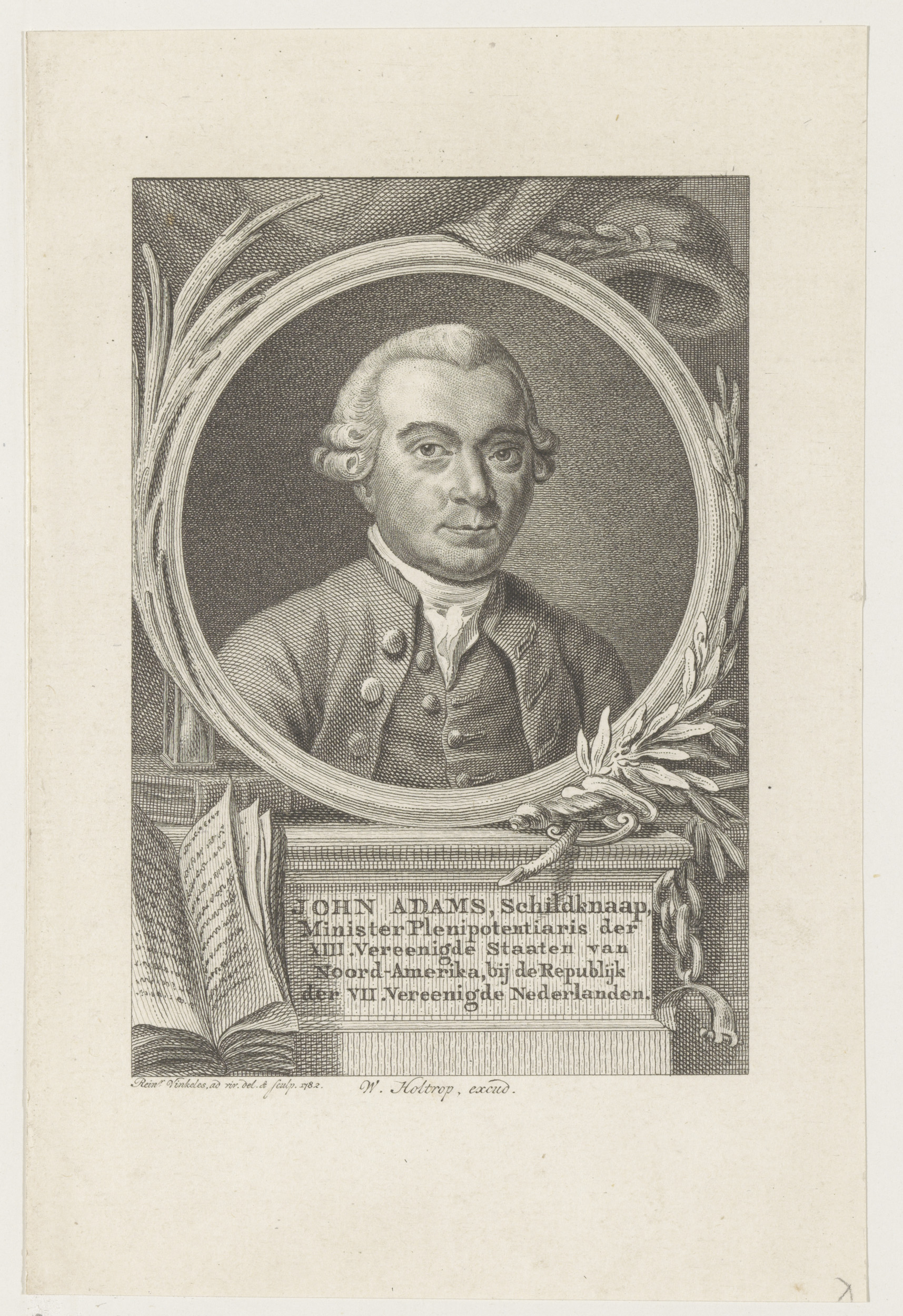
Allegorical Portrait of John Adams
1782
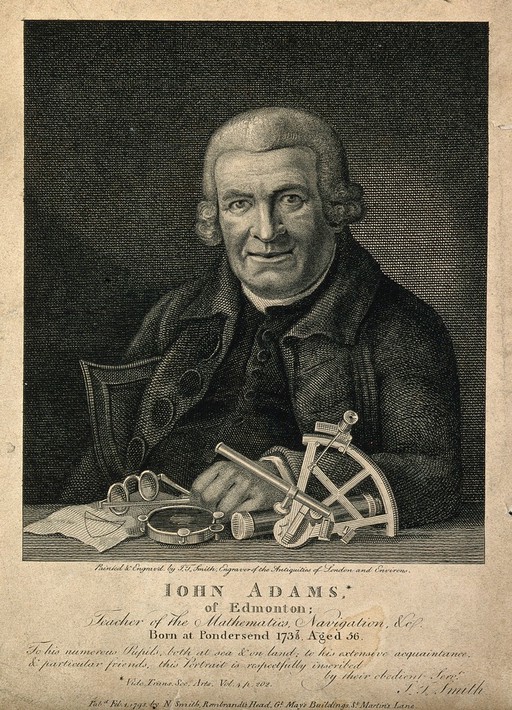 Painting
Primary source
Engraving of John Adams by J. T. Smith
J. T. Smith · 1795
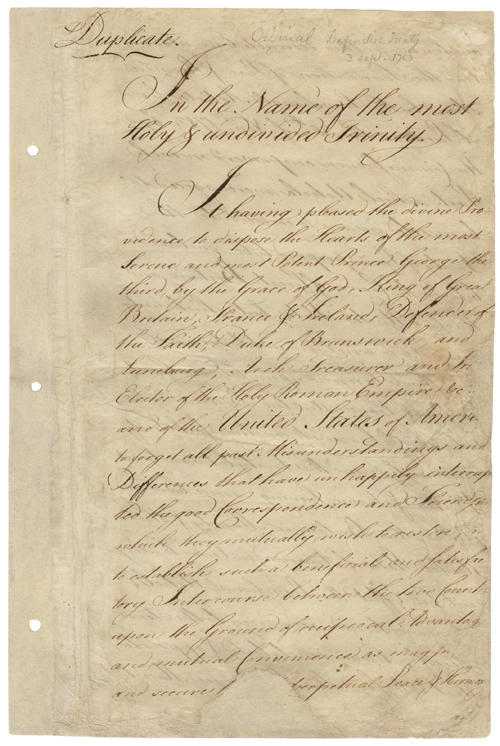 Document
Primary source
Treaty of Paris
3 September 1783
Ready when you are
Start chatting with John Adams now.
20 messages free · No credit card · Available in 50+ languages.