


Secondary sourcePainting1885
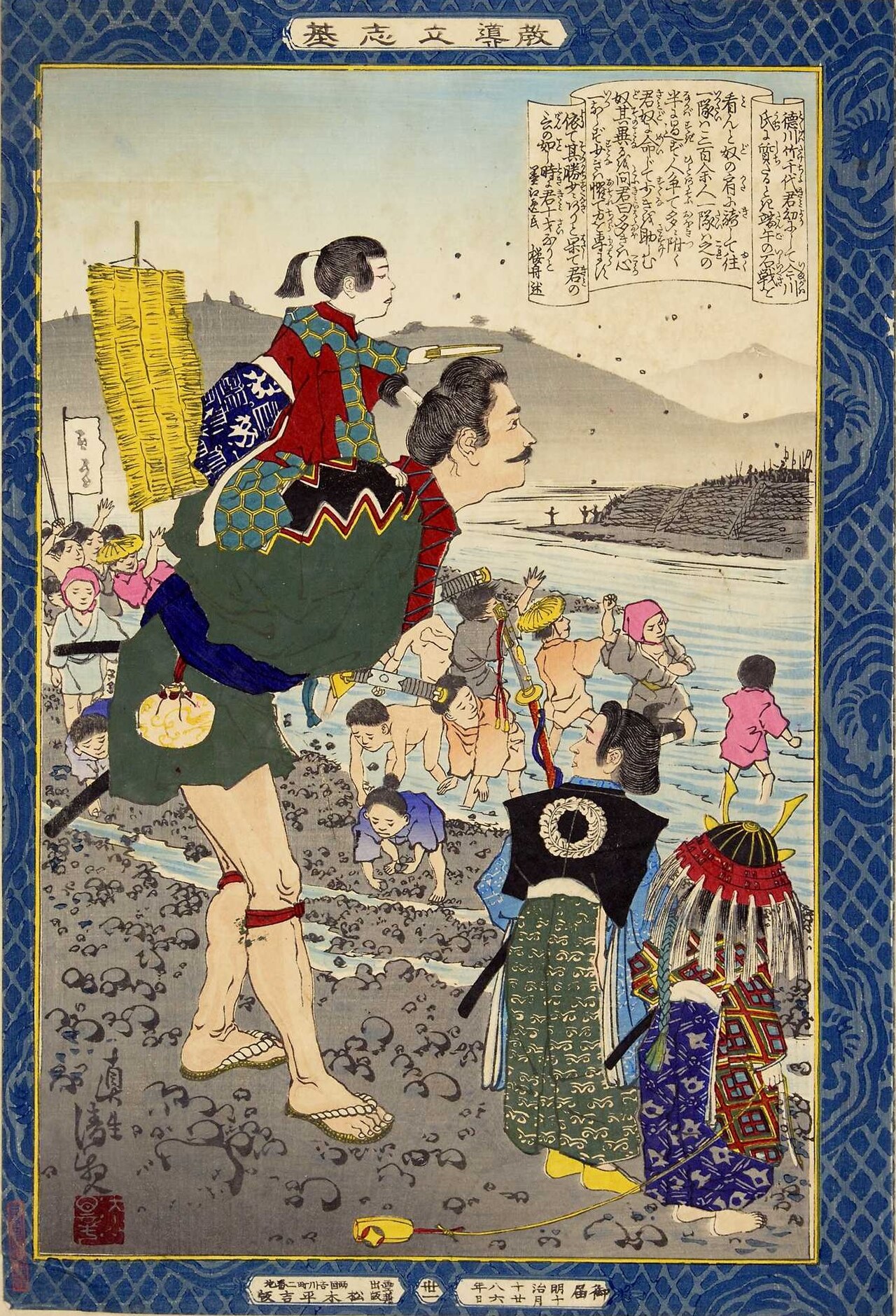
Tokugawa Takechiyo
Kobayashi Kiyochika · 1885
A Meiji-era woodblock print showing Ieyasu as a boy (Takechiyo) being carried across a river, part of a moral-instruction series.
Depicts Ieyasu as a child, showing how his early life was later retold as a moral example.
About this source
What it is
This is a colored woodblock print by Kobayashi Kiyochika, published in 1885, from a series called Instruction in the Fundamentals of Success. It shows a boy named Takechiyo — the childhood name of Tokugawa Ieyasu — being carried piggyback across a river by a mustached man, while other children play in the water.
Why it matters
The print was made nearly 300 years after Ieyasu's death, during the Meiji era, when Japan was reshaping its history into moral lessons for children. It shows how later generations retold the childhood of the man who founded the Tokugawa shogunate, turning him into an example of virtue and success.
Look closer
- What mood does the artist create with the river and playing children?
- Why might a Meiji-era artist want to show Ieyasu's childhood instead of his adult rule?
- What does this print leave out about Ieyasu's actual life and reign?
This painting is part of the curated material that grounds the AI version of Tokugawa Ieyasu on Humy.ai — when students ask about related events, the AI can quote it and cite it.
More Tokugawa Ieyasu sources
Browse all 94 →Primary source
Kinchū narabini Kuge Shohatto
Tokugawa Ieyasu · 1615
 Document
Primary source
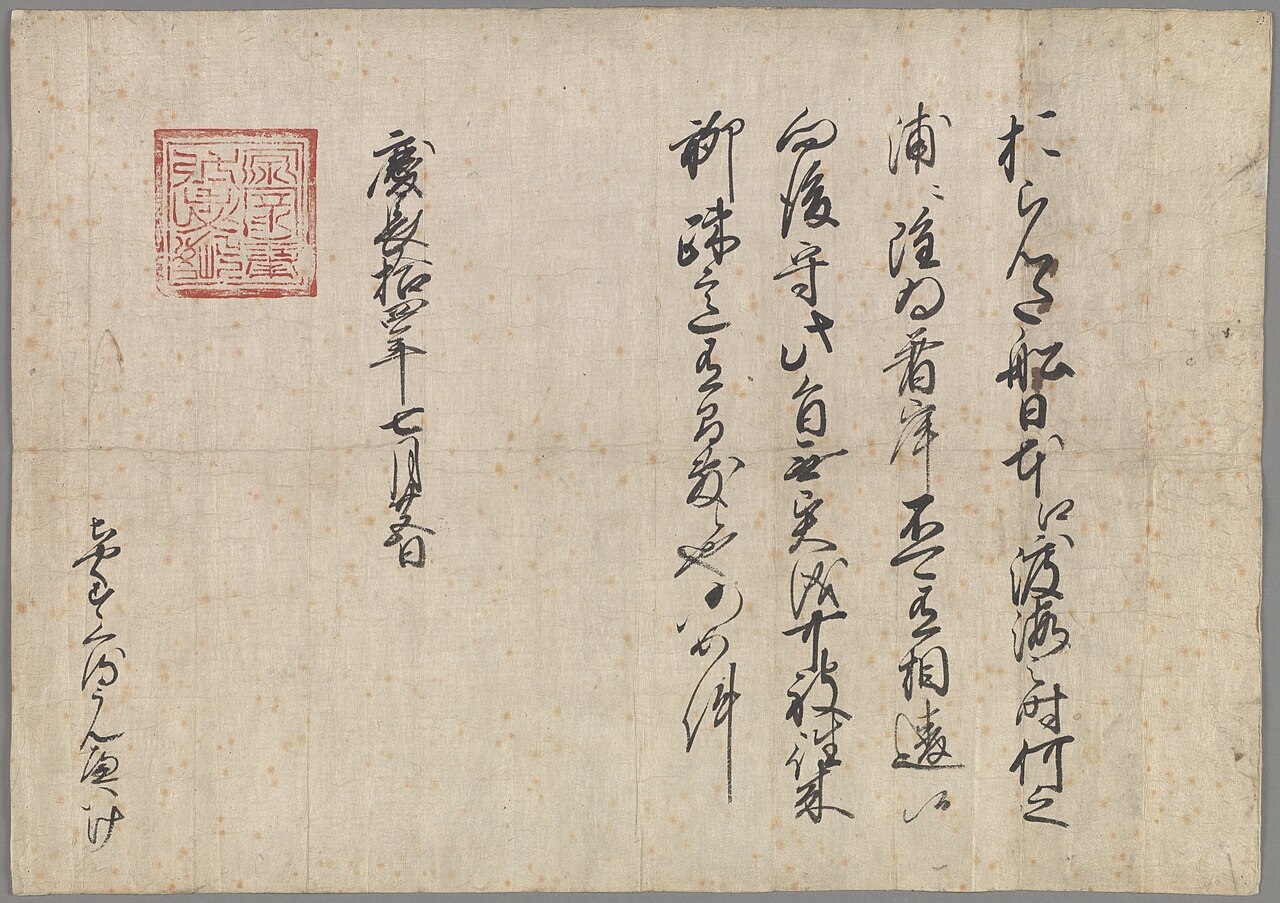
Trading Pass for Dutch Ships in Japan
Tokugawa Ieyasu · 24 August 1609
 Letter
Primary source
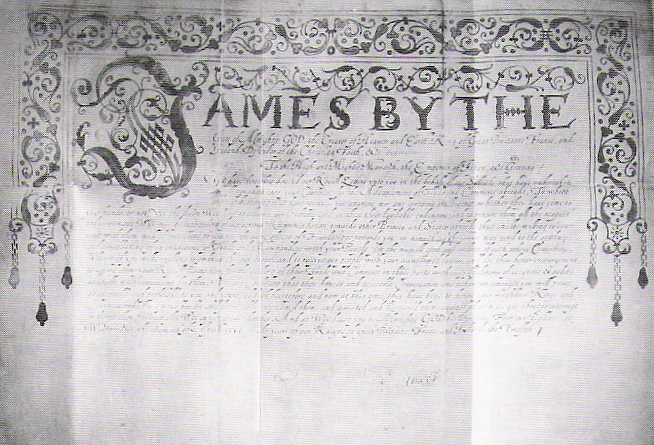
Letter of King James to Tokugawa Ieyasu
James VI and I · 1613
 Artifact
Secondary source
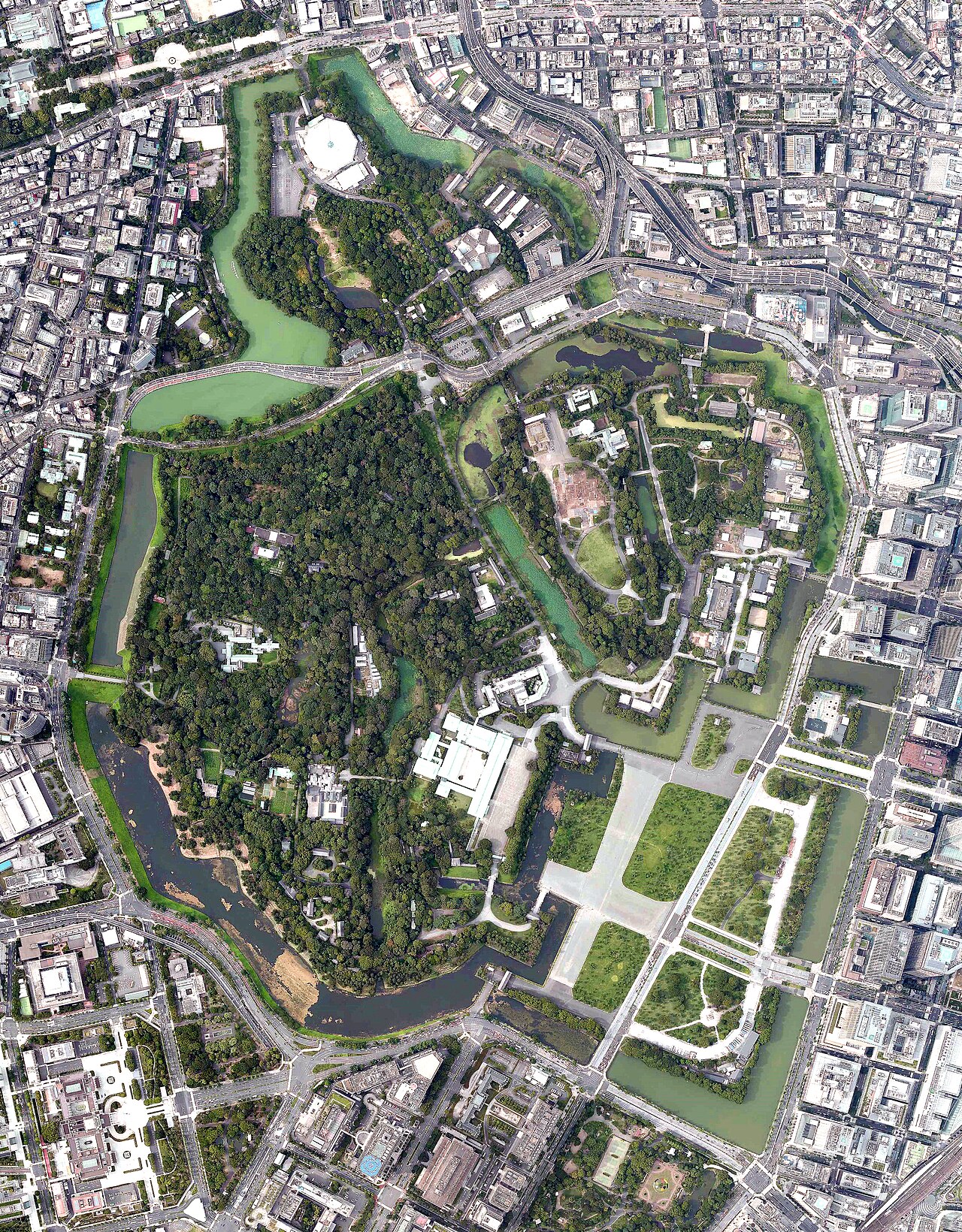
Edo Castle
Ōta Dōkan · 1457; expanded from 1590
Free account
Read every Tokugawa Ieyasu source
Sign up free →
Ready when you are
Start chatting with Tokugawa Ieyasu now.
20 messages free · No credit card · Available in 50+ languages.