


Secondary sourcePhotograph2021
Tomb effigy of Richard Lionheart
Paul M.R. Maeyaert · 2021
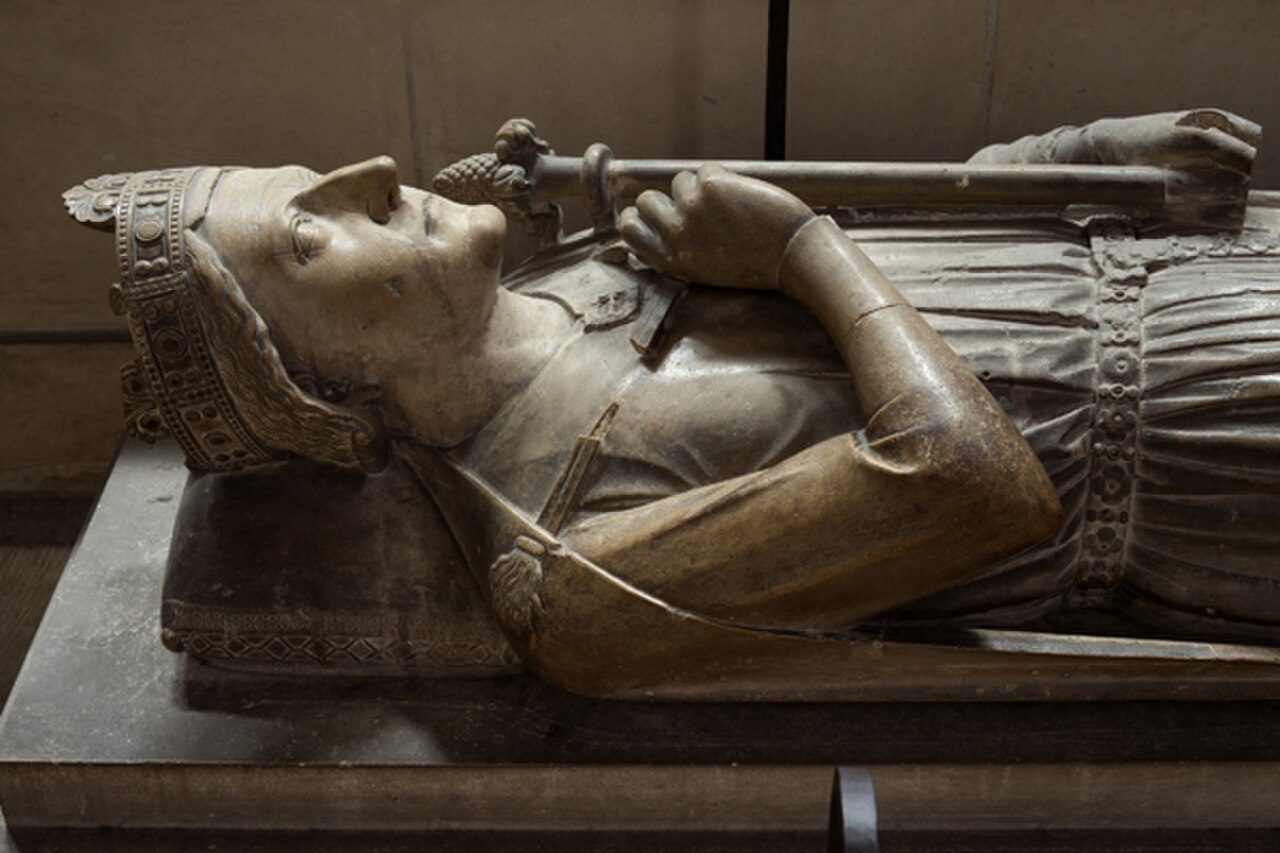
A 2021 photograph of a stone tomb effigy of Richard I at Rouen Cathedral. The curator notes it shows a later monument, not the original tomb.
Shows a later stone effigy commemorating Richard I at Rouen, a way his memory was kept in the cathedral long after his reign.
About this source
What it is
This is a 2021 photograph by Paul M.R. Maeyaert, held by him in Belgium. It shows a detail of a stone tomb effigy in the ambulatory of the Cathédrale Notre-Dame in Rouen, France. The effigy shows a crowned man lying on a raised slab, with his head turned to the left and his gaze directed upward. A long sword lies along his right side, and his hands are clasped near his chest. The record describes his garment as draped, with decorative bands.
Why it matters
The photograph shows a monument, not the original tomb, so it tells us how Richard was remembered at a later time rather than how he was buried. Tomb effigies were a common way for medieval and later societies to honour rulers, and the carved sword and crown are chosen symbols of kingship and warfare. The curator classes this as a secondary source because it documents a later representation of the king.
Look closer
- What objects does the sculptor show beside the king, and what might they say about how he wanted Richard to be seen?
- Why might a later monument be carved as a lying figure with a crown and sword rather than as an action scene?
- What does a modern photograph leave out about the cathedral, the monument's age, and the people who built it?
This photograph is part of the curated material that grounds the AI version of Richard the Lionheart on Humy.ai — when students ask about related events, the AI can quote it and cite it.
More Richard the Lionheart sources
Browse all 94 →
Ready when you are
Start chatting with Richard the Lionheart now.
20 messages free · No credit card · Available in 50+ languages.