


Primary sourceSculpturemedieval, near Richard's lifetime
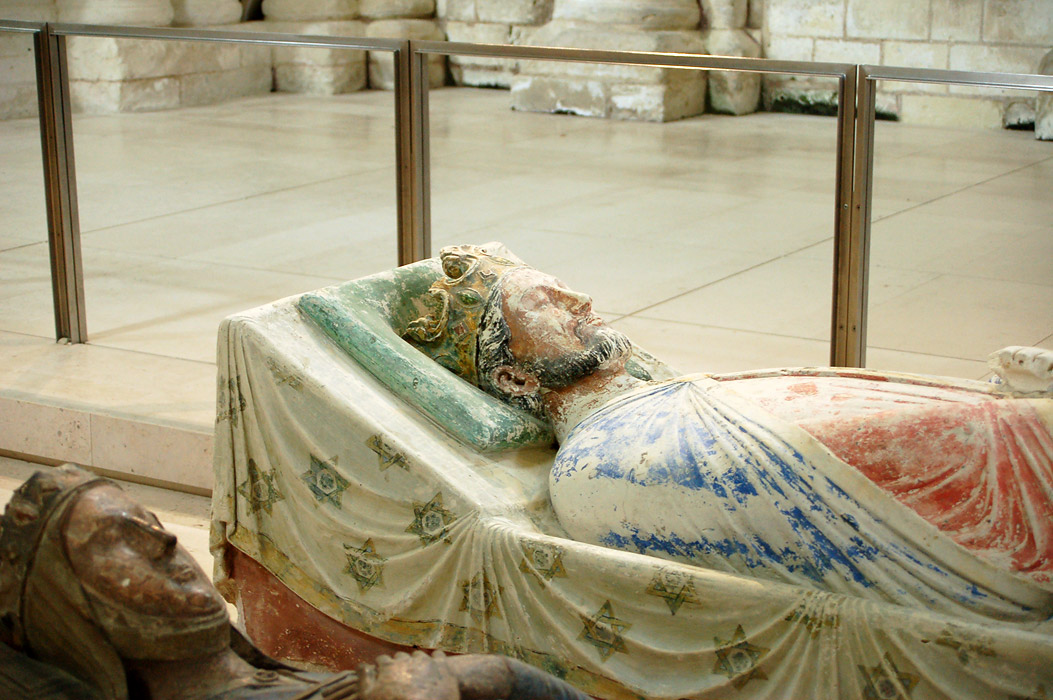
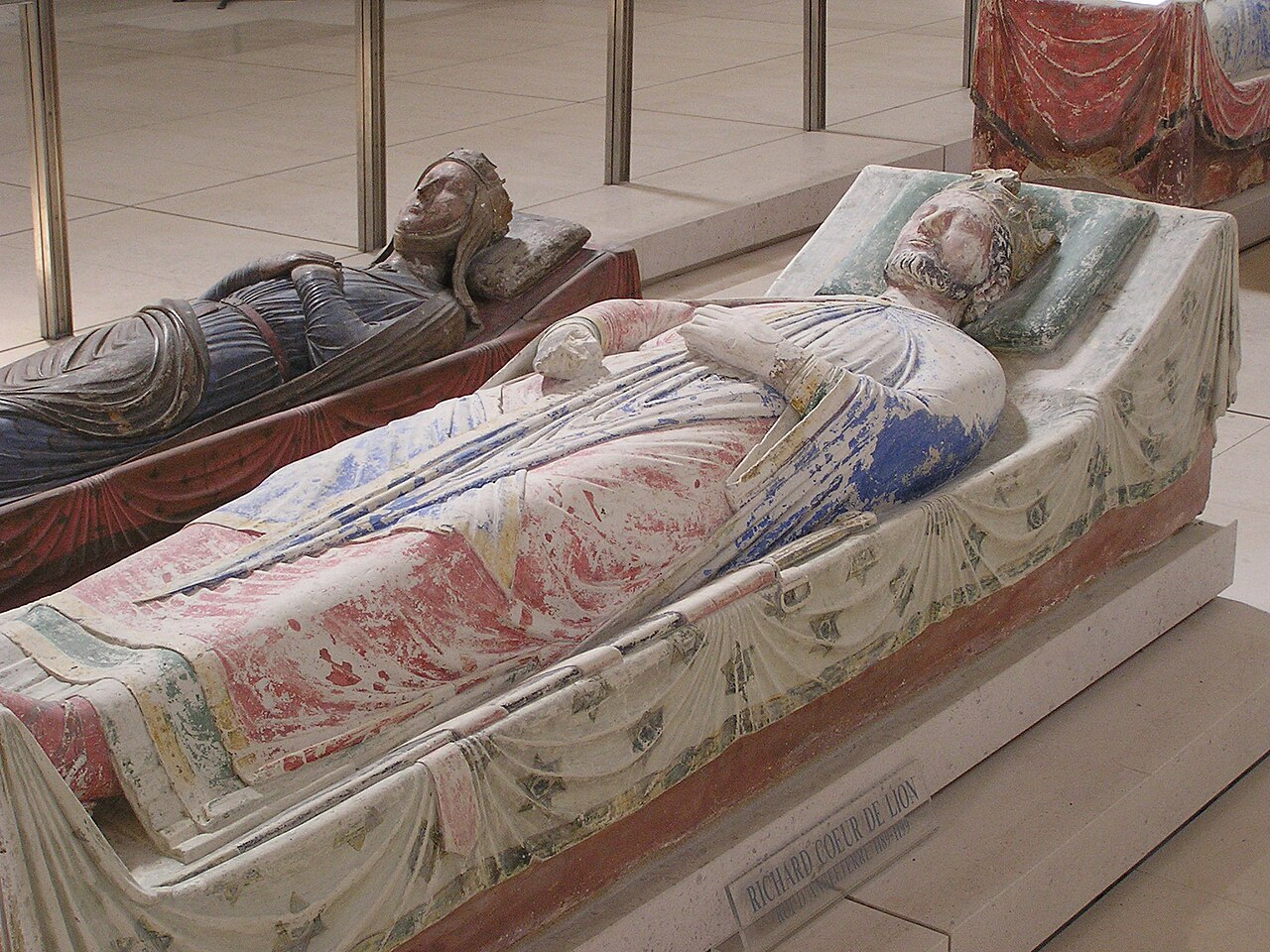
Tomb Effigy of Richard the Lionheart at Fontevraud Abbey
medieval, near Richard's lifetime
A painted stone effigy marking the tomb of Richard I at Fontevraud Abbey, where he was buried.
This effigy marks Richard's actual burial site at Fontevraud Abbey.
About this source
What it is
This photograph shows the painted stone recumbent effigy on the tomb of Richard I, known as Richard the Lionheart, at Fontevraud Abbey. The effigy depicts a bearded, crowned king lying with his head on a cushion, wearing a decorated robe. Nearby lies the effigy of Isabella of Angoulême, his sister-in-law.
Why it matters
Fontevraud Abbey was where Richard was buried, and this monument is a physical link to his death and burial. Royal tomb effigies like this were meant to project an image of majesty and piety long after death, showing how medieval rulers wanted to be remembered.
Look closer
- What does the crown, robe and calm pose suggest about how Richard was meant to be remembered?
- Why might Richard have been buried at this abbey rather than elsewhere?
- What can and can't a tomb effigy tell us about the real person it represents?
This sculpture is part of the curated material that grounds the AI version of Richard the Lionheart on Humy.ai — when students ask about related events, the AI can quote it and cite it.
More Richard the Lionheart sources
Browse all 94 →
Ready when you are
Start chatting with Richard the Lionheart now.
20 messages free · No credit card · Available in 50+ languages.