


Primary sourceArtifact1842
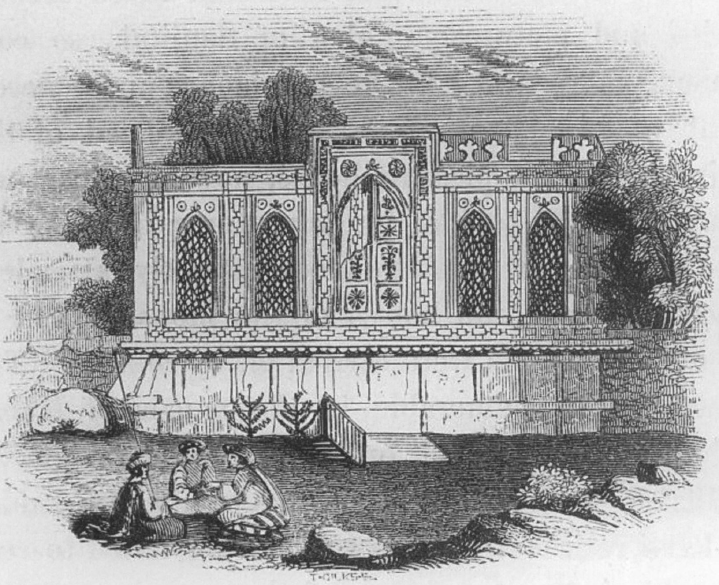
Tomb of Babur near Kabul
Charles Masson · 1842
An engraved drawing of Babur's tomb near Kabul, made by the traveller Charles Masson in 1842, showing a small marble pavilion above a platform by water.
Shows how Babur's tomb appeared in 1842, an early record of the memorial that honours him.
About this source
What it is
This is an engraved drawing of a small marble pavilion-style tomb with pointed arched lattice windows and decorative panels. The tomb sits above a stone platform with steps leading to water, and trees grow behind it. Three seated figures sit in the foreground. The drawing was made by Charles Masson in 1842, and it is an early European record of the tomb.
Why it matters
Babur died in 1530 and was buried in Kabul, a place he had ruled before he conquered India. Early drawings like this one show how the memorial looked to European travellers in the nineteenth century, long before later changes to the site. The image reveals how a European observer recorded a Mughal founder's grave, and it shows the people who gathered there.
Look closer
- What architectural features does the artist draw, and which details seem most carefully recorded?
- Who are the three seated figures, and what might their presence tell us about the site?
- Why would a European traveller choose to draw this building, and what might he have left out?
This artifact is part of the curated material that grounds the AI version of Babur on Humy.ai — when students ask about related events, the AI can quote it and cite it.
More Babur sources
Browse all 95 →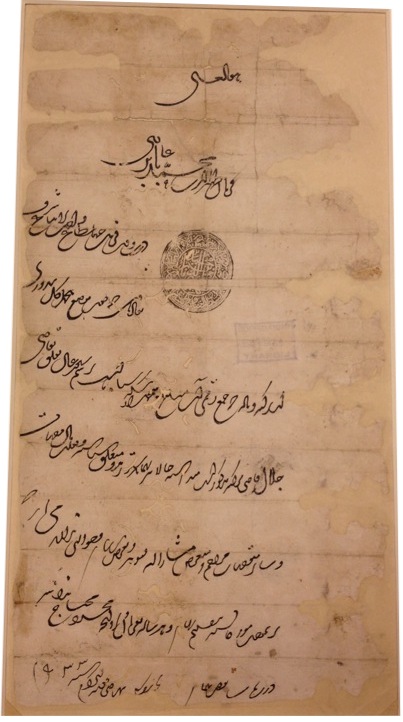 Document
Primary source
Mughal Land Grant of August 1527
Mughal emperor Babur's administration · August 1527
 Artifact
Primary source
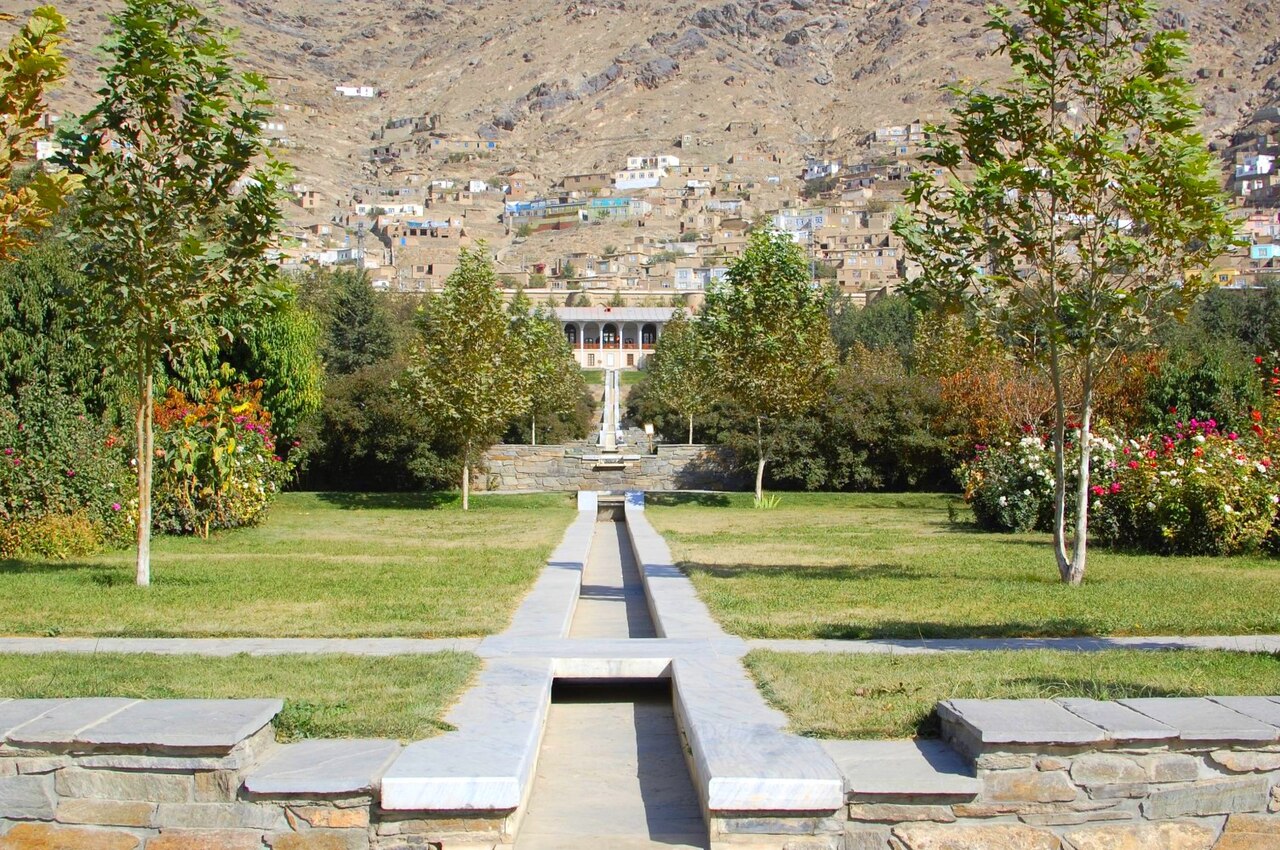
Gardens of Babur
Babur · c. 1504
 Artifact
Secondary source
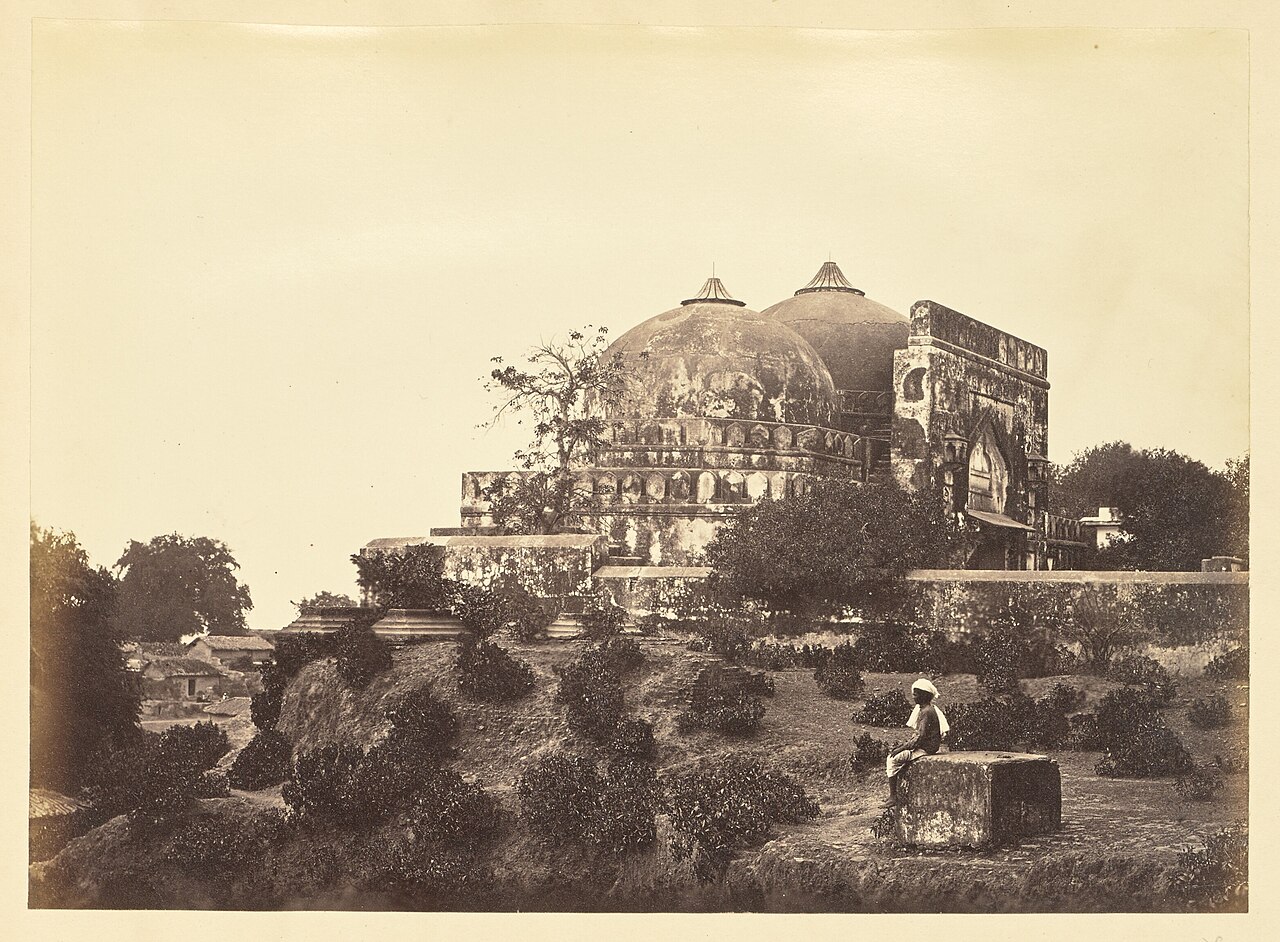
Babri Masjid
Mir Baqi · 1528/1529
 Painting
Primary source
Princes of the House of Timur
mid-16th century, later altered
Free account
Read every Babur source
Sign up free →
Ready when you are
Start chatting with Babur now.
20 messages free · No credit card · Available in 50+ languages.