


Primary sourceSculpturec. AD 43-55
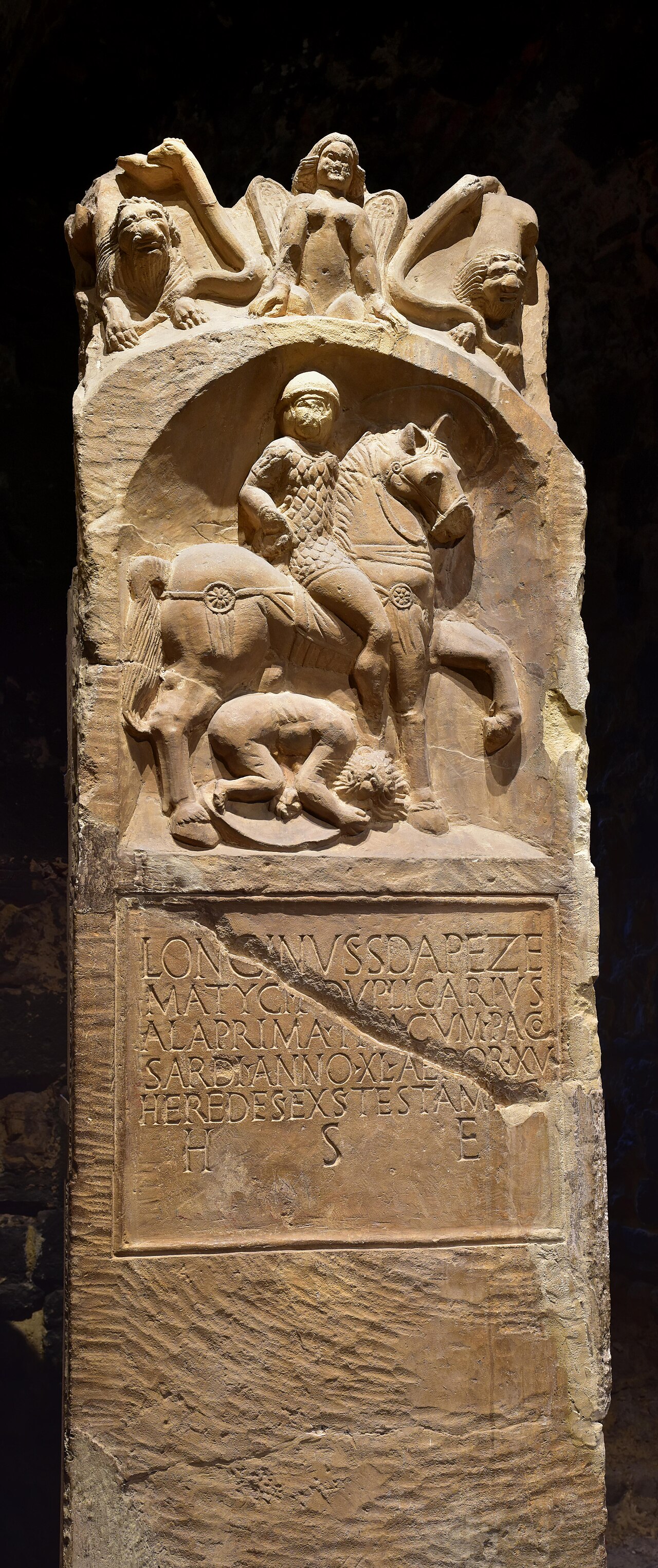
Tombstone of Longinus Sdapeze
c. AD 43-55
A Roman cavalry officer's tombstone found in Colchester, its face possibly smashed during Boudica's revolt against Roman rule there.
Shows the Roman military presence at Camulodunum that Boudica's forces attacked, and may bear damage from the revolt itself.
About this source
What it is
This is the funerary stela of Longinus Sdapeze, a Thracian cavalry officer in the Roman army, who died around AD 55 near Camulodunum (Colchester). Discovered in 1928, it is one of the oldest Roman tombstones found in Britain and is now held at Colchester Castle Museum. It shows the rider on horseback above a cowering figure, thought to be a native Briton.
Why it matters
The tombstone was found smashed and face-down, which some have linked to Boudica's revolt against Camulodunum, though recent study suggests the damage may instead be from careless excavation. Either way, it shows the Roman military presence at Camulodunum that Boudica's forces attacked, and the imagery of a Briton trampled beneath a Roman horseman reflects how Rome presented its conquest.
Look closer
- What does the image of a cowering figure beneath the horseman suggest about how Rome wanted to be seen?
- Why is it hard to be certain whether the damage came from the revolt or later handling?
- What does this tombstone tell us about the diversity of soldiers serving in the Roman army in Britain?
This sculpture is part of the curated material that grounds the AI version of Boudicca on Humy.ai — when students ask about related events, the AI can quote it and cite it.
More Boudicca sources
Browse all 64 →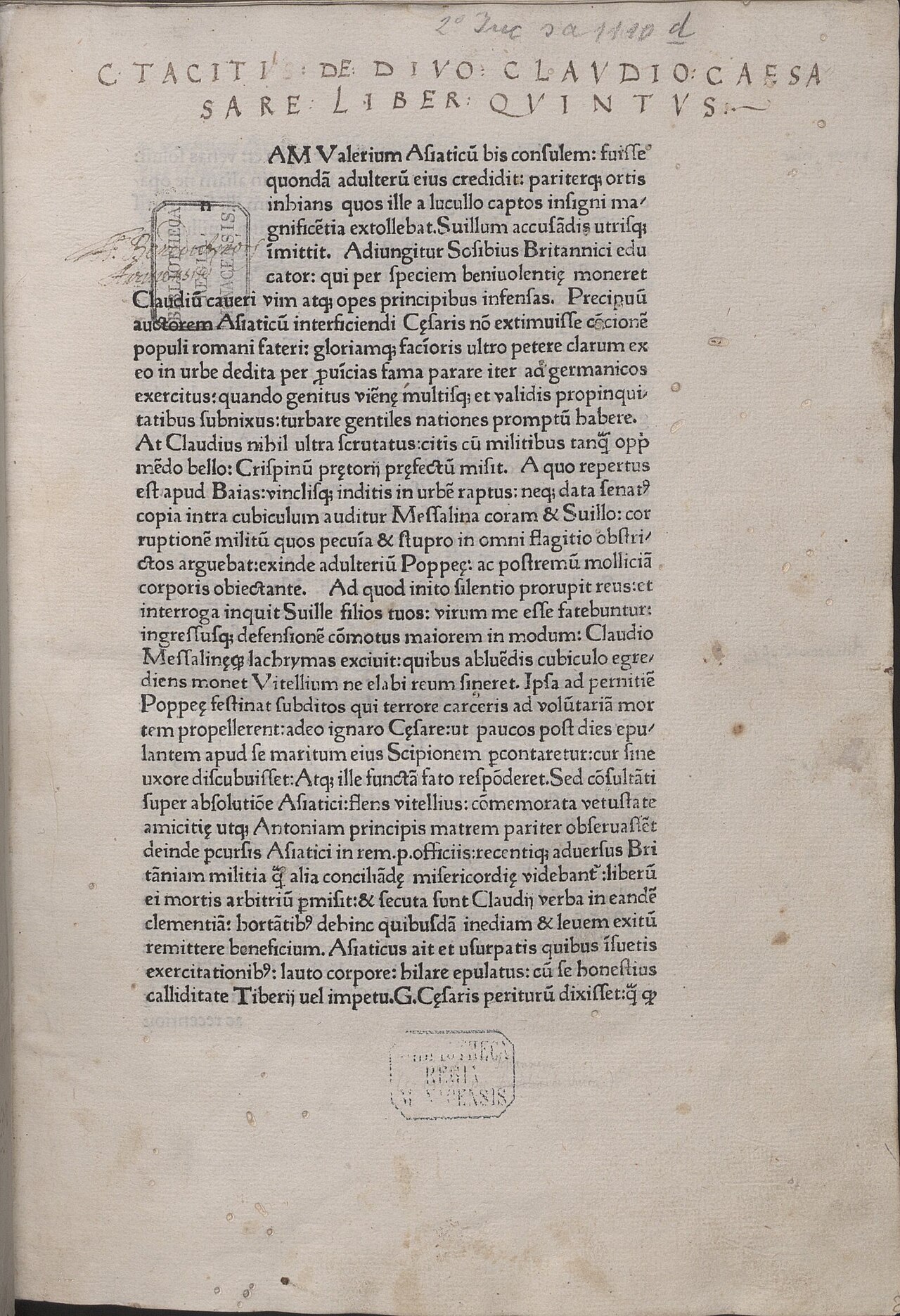 Book
Secondary source
Annals
Tacitus · c. AD 116 or later
 Artifact
Primary source
Temple of Claudius in Colchester
49-60 AD
 Sculpture
Secondary source
Boadicea and Her Daughters
Thomas Thornycroft · 1856-1902
 Artifact
Primary source
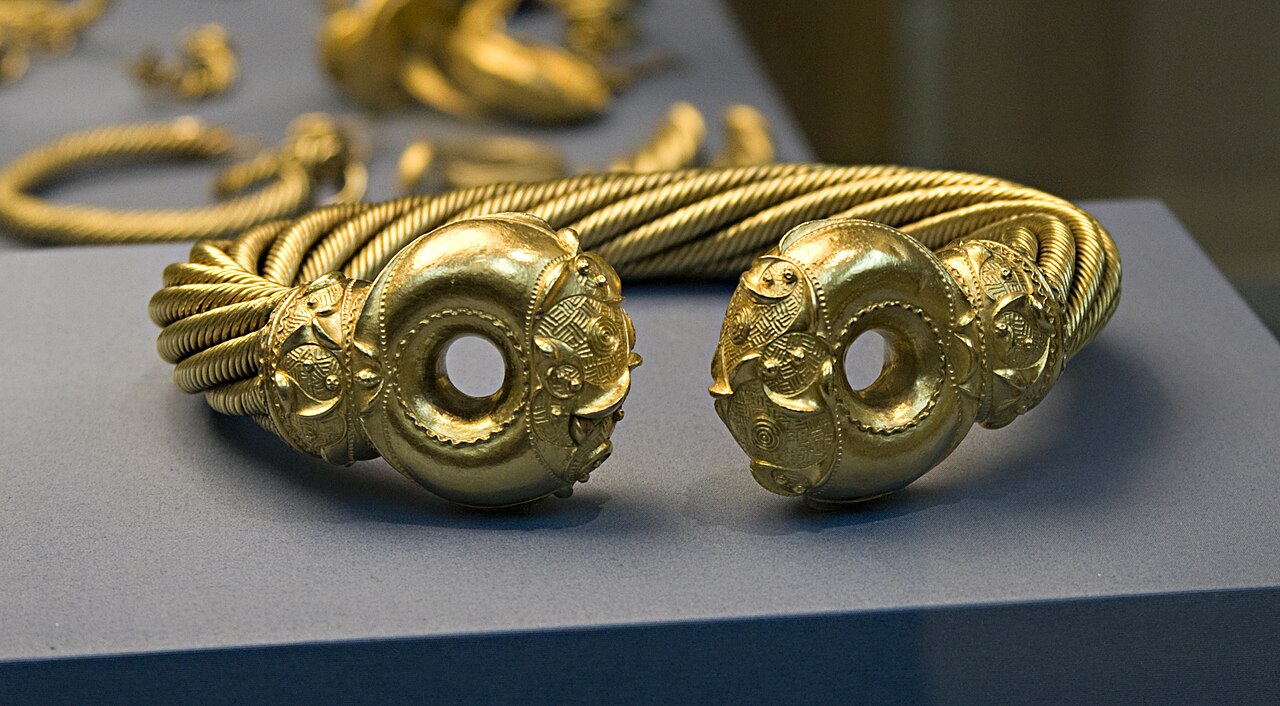
Great Torc from Snettisham
c. 75 BC

Free account
Read every Boudicca source
Sign up free →
Ready when you are
Start chatting with Boudicca now.
20 messages free · No credit card · Available in 50+ languages.