


Secondary sourcePainting17th century
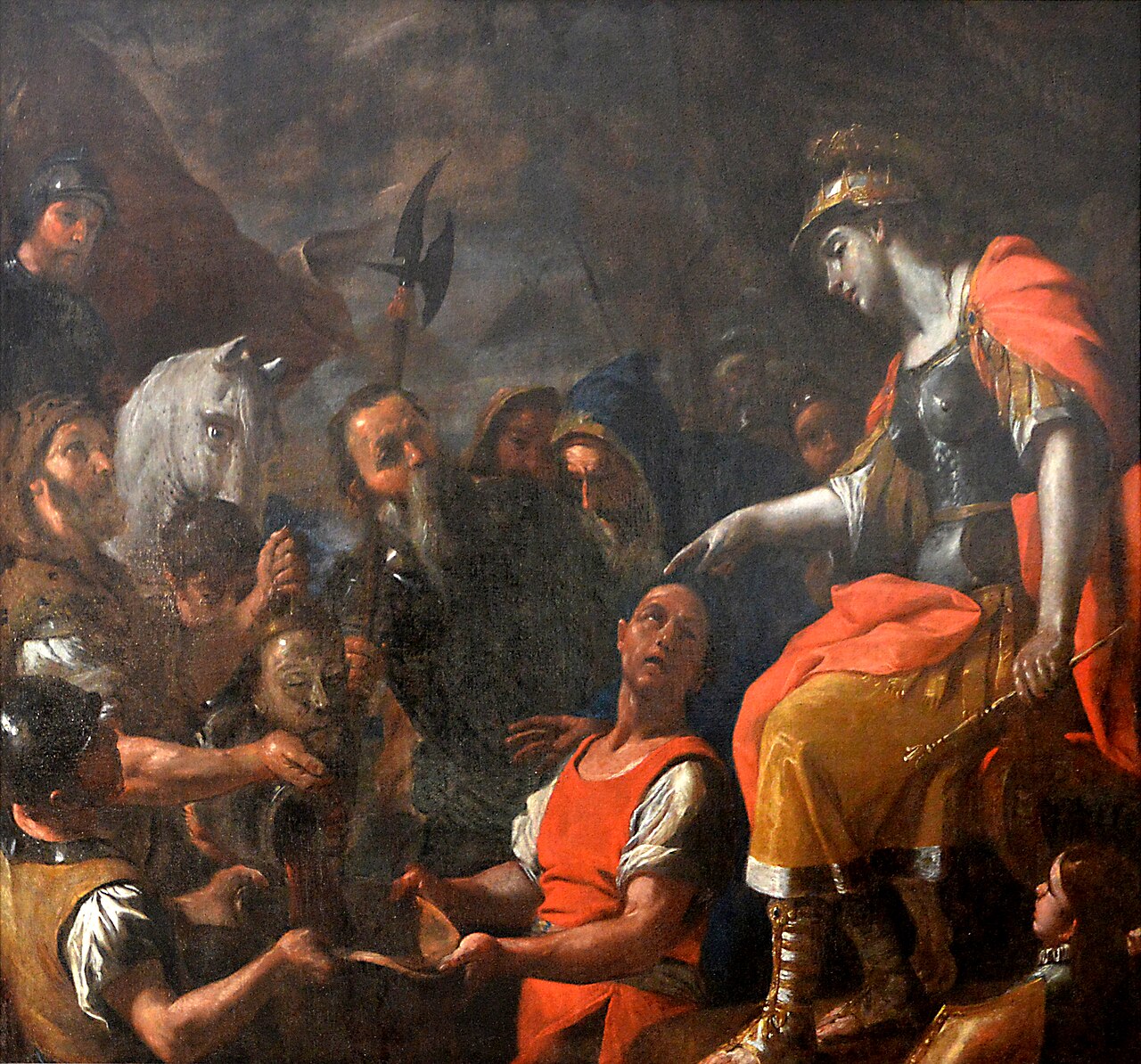
Tomyris Dipping the Head of Cyrus in Blood
Mattia Preti · 17th century
A 17th-century Baroque painting by Mattia Preti depicting Queen Tomyris's revenge on Cyrus the Great after his death.
This painting illustrates the ancient legend of Cyrus's violent death at the hands of Queen Tomyris.
About this source
What it is
This is a Baroque oil painting created in the 17th century by the Italian artist Mattia Preti. It shows a crowned, armored queen pointing at a kneeling man while soldiers gather around her, with a severed head held over a vessel as blood drips into it.
Why it matters
The painting depicts the story told by the ancient Greek historian Herodotus, in which Queen Tomyris of the Massagetae took revenge on Cyrus the Great after defeating him in battle, dipping his severed head in blood. Painted many centuries after Cyrus's death, it reflects how later European artists used dramatic and violent ancient stories to explore themes of power, vengeance, and the fall of great rulers.
Look closer
- What emotions does the artist try to create through the queen's pose and gesture?
- Why might this violent story about Cyrus's death have appealed to Baroque audiences?
- How reliable do you think this story is as history, given it was recorded by Herodotus long after the events?
This painting is part of the curated material that grounds the AI version of Cyrus the Great on Humy.ai — when students ask about related events, the AI can quote it and cite it.
More Cyrus the Great sources
Meet the AI Cyrus the Great →

Ready when you are
Start chatting with Cyrus the Great now.
20 messages free · No credit card · Available in 50+ languages.