


Secondary sourcePaintingc. 1700
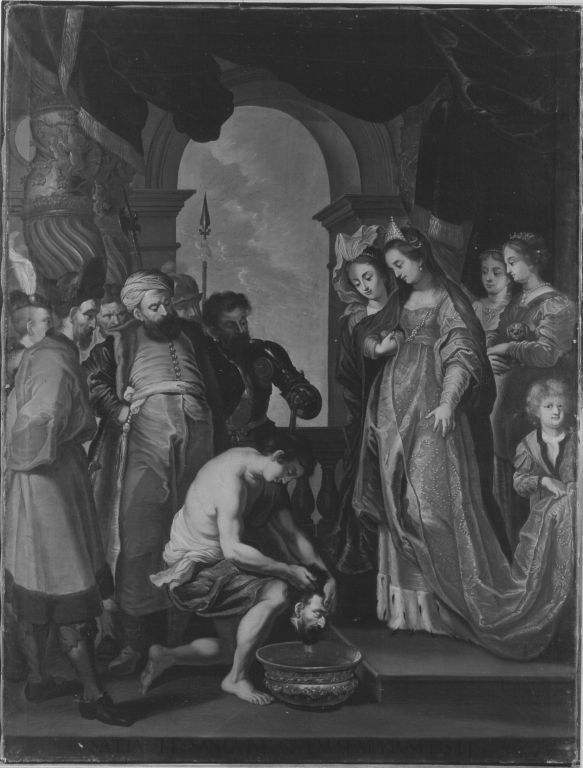
Tomyris Dips the Head of Cyrus in Blood
Peter Paul Rubens (composition); Paulus Pontius (engraving) · c. 1700
A print after Rubens's painting showing the legendary death of Cyrus, whose severed head was said to be dipped in blood by Queen Tomyris.
Depicts the legendary death of Cyrus at the hands of Queen Tomyris, a famous story about his end.
About this source
What it is
This print, made around 1700 by Paulus Pontius after a composition by Peter Paul Rubens, shows the legendary scene of Queen Tomyris dipping the severed head of Cyrus the Great into a basin of blood, fulfilling a vow of revenge.
Why it matters
This story, recorded by ancient historians, describes a dramatic and violent end to Cyrus's life after his defeat by the Massagetae led by Tomyris. Rubens's dramatic composition, copied here as a print, shows how later European artists were drawn to this grim legend centuries after it was first told.
Look closer
- How does the artist use the figures' expressions and poses to show triumph and horror?
- Why might this violent scene have appealed to artists and audiences in the 1600s and 1700s?
- What parts of this story might be legend rather than historical fact?
This painting is part of the curated material that grounds the AI version of Cyrus the Great on Humy.ai — when students ask about related events, the AI can quote it and cite it.
More Cyrus the Great sources
Meet the AI Cyrus the Great →

Ready when you are
Start chatting with Cyrus the Great now.
20 messages free · No credit card · Available in 50+ languages.