


Secondary sourceDocument2008-11-23
Transliteration and Translation of the Ganj Nameh Inscription of Xerxes
Klaus-Norbert Müller · 2008-11-23
A 2008 scholarly comparison of the Old Persian inscription of Xerxes at Ganj Nameh, with a transliteration and English translation.
Presents Xerxes's own Old Persian inscription at Ganj Nameh in transliteration and translation, letting students compare his words with a modern reading.
About this source
What it is
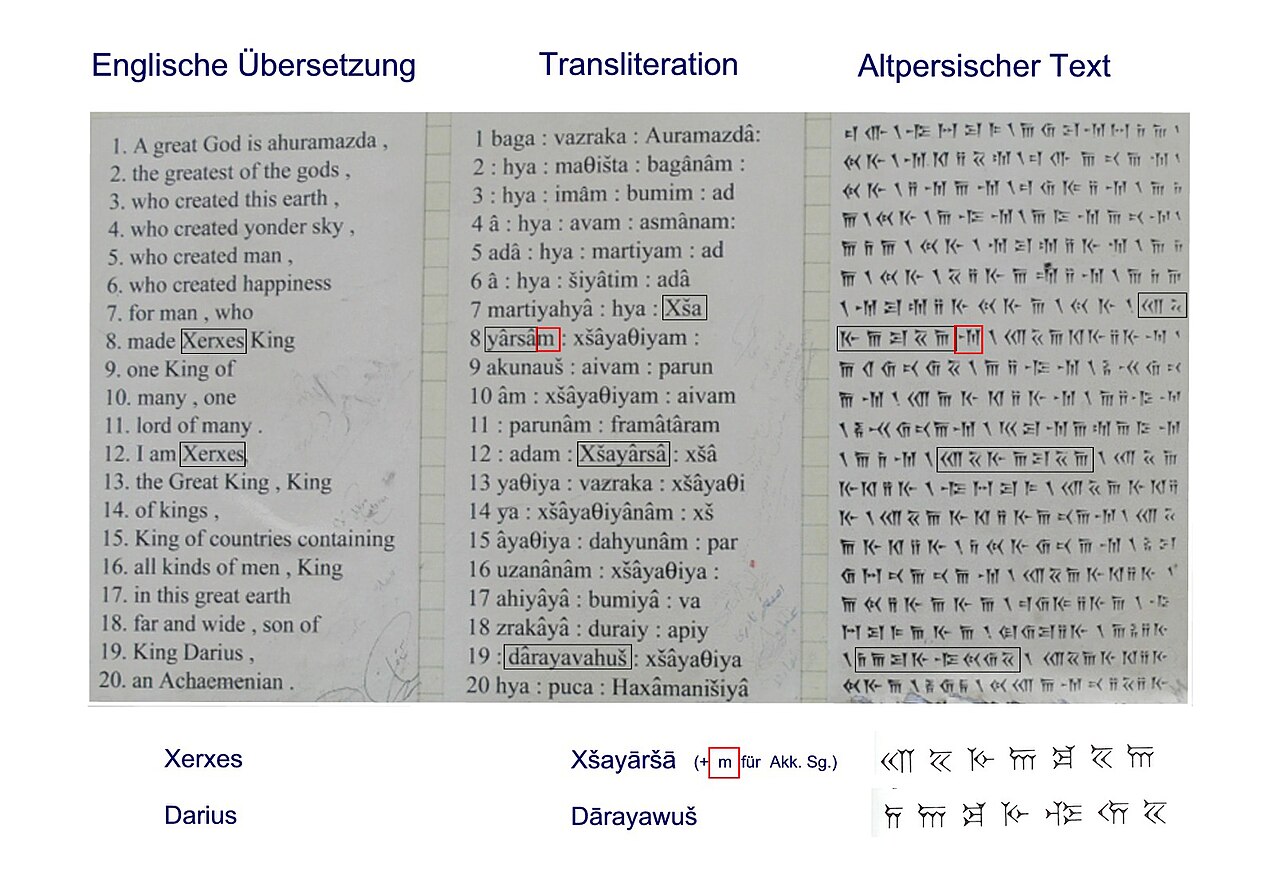
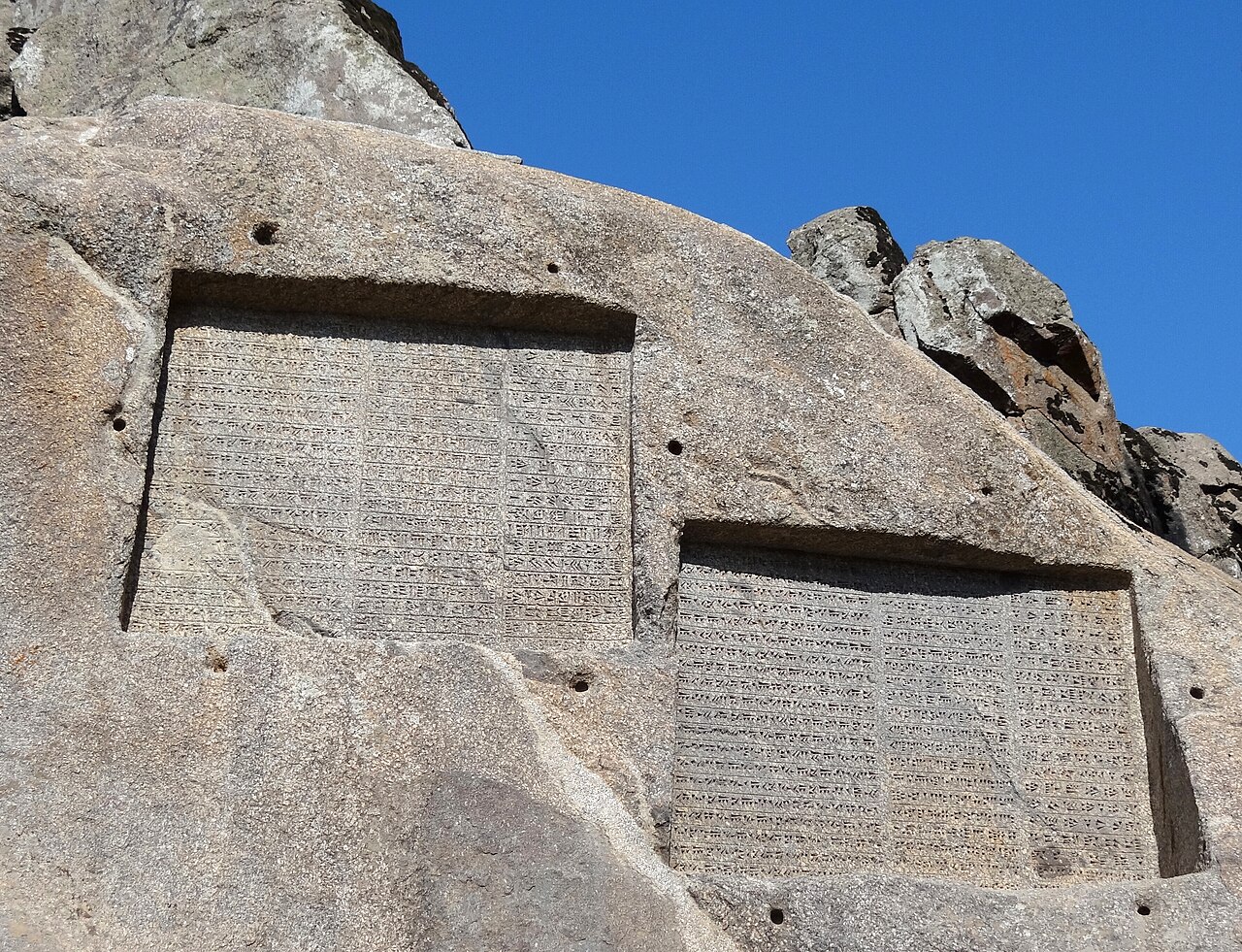
This is a modern study sheet made by Klaus-Norbert Müller, dated 23 November 2008. It sets out three columns: an English translation with German labels, a transliteration in Latin letters, and the original Old Persian cuneiform. Names of Xerxes and Darius are marked in boxes and red outlines. The text is a transliteration and translation of an Old Persian inscription by Xerxes at Ganj Nameh, near Hamadan in Iran. The translation reads phrases such as "I am Xerxes" and "an Achaemenian."
Why it matters
Xerxes wrote in Old Persian, and this sheet shows how scholars read that text in modern times. Reading an inscription in translation means choosing words, so different translators can make different choices. The Ganj Nameh text connects Xerxes to his father Darius, whose name also appears in the inscription. Such comparisons help students see how historians turn ancient words into language they can read.
Look closer
- Which words does the translator choose for "king" and "God," and why might another translator choose differently?
- How do the three columns help you check the translation against the original?
- What does the sheet tell you about Xerxes, and what does it leave out because it is only one inscription?
This document is part of the curated material that grounds the AI version of Xerxes I on Humy.ai — when students ask about related events, the AI can quote it and cite it.
More Xerxes I sources
Browse all 97 →
Ready when you are
Start chatting with Xerxes I now.
20 messages free · No credit card · Available in 50+ languages.