


Primary sourceSculpture
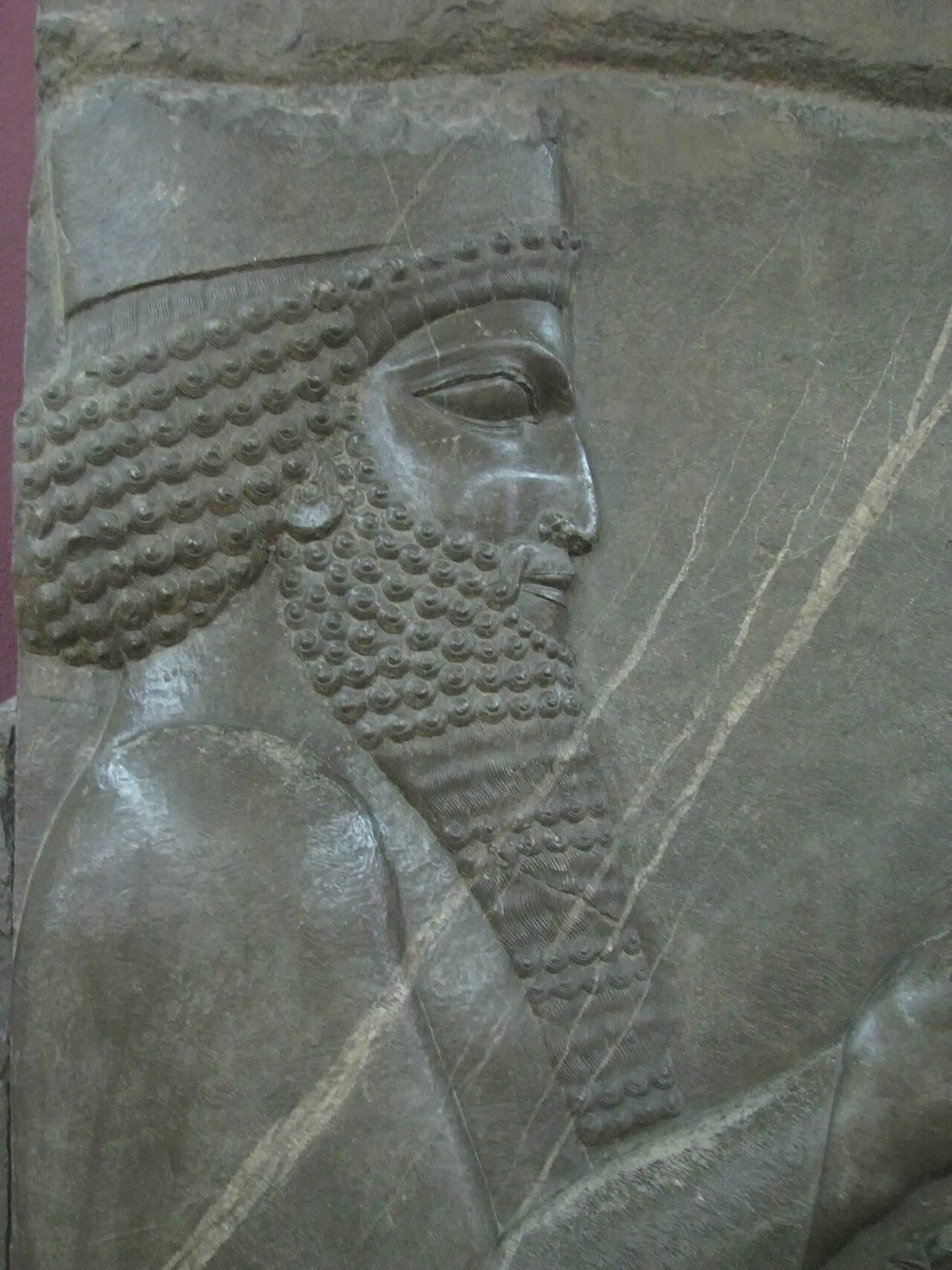
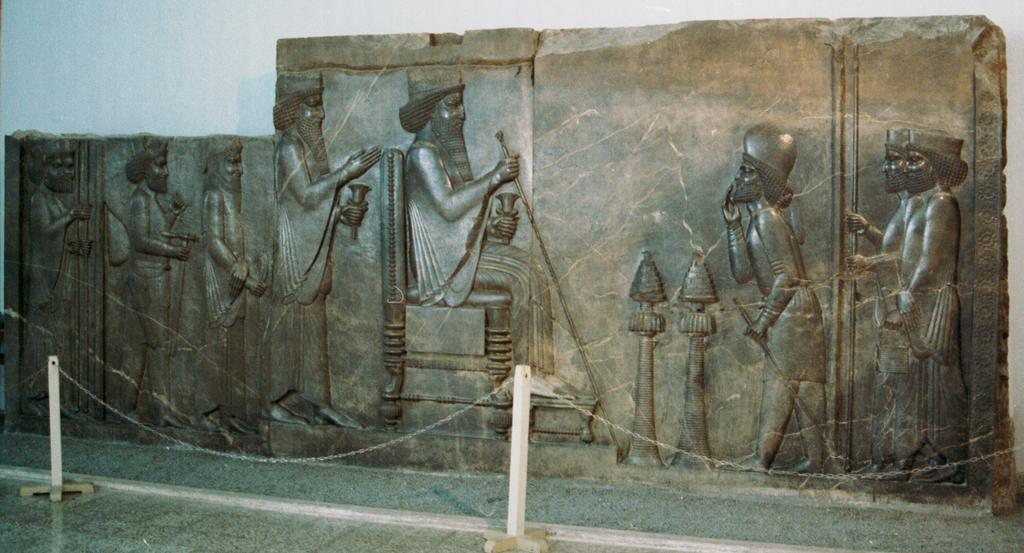
Treasury relief of a seated king, Persepolis
A carved stone relief from the Persepolis Treasury, held in the National Museum in Tehran, showing a seated king who is probably Xerxes or Darius.
It shows a seated king who is probably Xerxes, placing him within the royal art of his court at Persepolis.
About this source
What it is
This is a carved stone relief in profile, showing a bearded man with curled hair and beard and a flat-topped crown. It comes from the Persepolis Treasury and is held in the Tehran Museum. The museum record says the king is probably Xerxes, but possibly Darius. The photograph was taken on 2 March 2007 by Derfash Kaviani.
Why it matters
Persepolis was a ceremonial centre of the Achaemenid Empire, and its reliefs展示 the king as the ruler of many peoples. Xerxes and Darius both built there, so this image helps students see how the Persian court presented royal power. Because the identity is uncertain, the relief also shows how historians must weigh evidence carefully.
Look closer
- What details of the king's hair, beard and crown help you picture his authority?
- Why might historians disagree about which king this relief shows?
- What does a stone image of a king leave out about the people who carved it and lived under him?
This sculpture is part of the curated material that grounds the AI version of Xerxes I on Humy.ai — when students ask about related events, the AI can quote it and cite it.
More Xerxes I sources
Browse all 97 →
Ready when you are
Start chatting with Xerxes I now.
20 messages free · No credit card · Available in 50+ languages.