


Primary sourceDocument9 January 1789
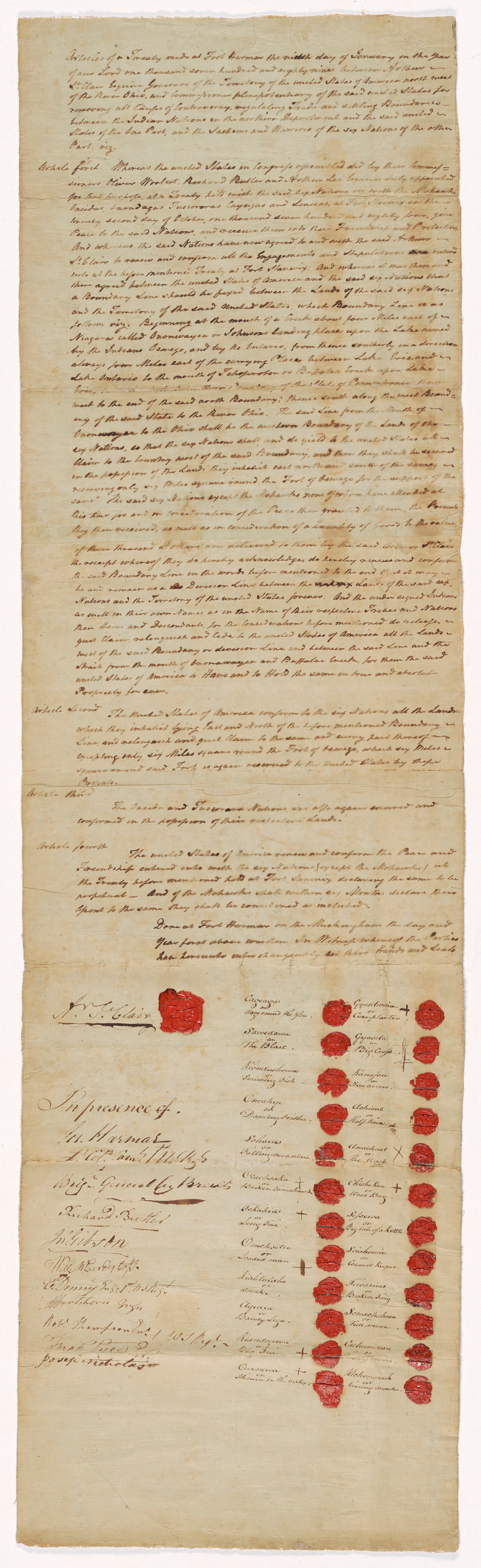
Treaty of Fort Harmar
9 January 1789
An 1789 treaty between the United States and several Indigenous nations that repeated earlier land cessions Brant's confederacy had opposed.
Brant tried to broker a compromise boundary before this treaty, but his effort failed, showing his role as a confederacy diplomat.
About this source
What it is
This is the 1789 Treaty of Fort Harmar, signed at Fort Harmar in the Northwest Territory between the United States and nations including the Haudenosaunee, Ojibwe, Odawa, Potawatomi, Sauk, Wyandot and Lenape. U.S. negotiators included Arthur St. Clair, Josiah Harmar and Richard Butler.
Why it matters
The treaty mostly repeated earlier agreements and ignored Indigenous grievances about white settlement on their lands. Joseph Brant offered a compromise boundary before negotiations, which other leaders rejected, and he then boycotted the talks. The treaty's failure helped push toward years of war between the United States and a Western Confederacy of Indigenous nations.
Look closer
- Who signed this document, and who did not?
- Why might Brant have refused to take part in these negotiations?
- What does the failure of this treaty tell you about trust between the two sides?
This document is part of the curated material that grounds the AI version of Joseph Brant (Thayendanegea) on Humy.ai — when students ask about related events, the AI can quote it and cite it.
More Joseph Brant (Thayendanegea) sources
Meet the AI Joseph Brant (Thayendanegea) →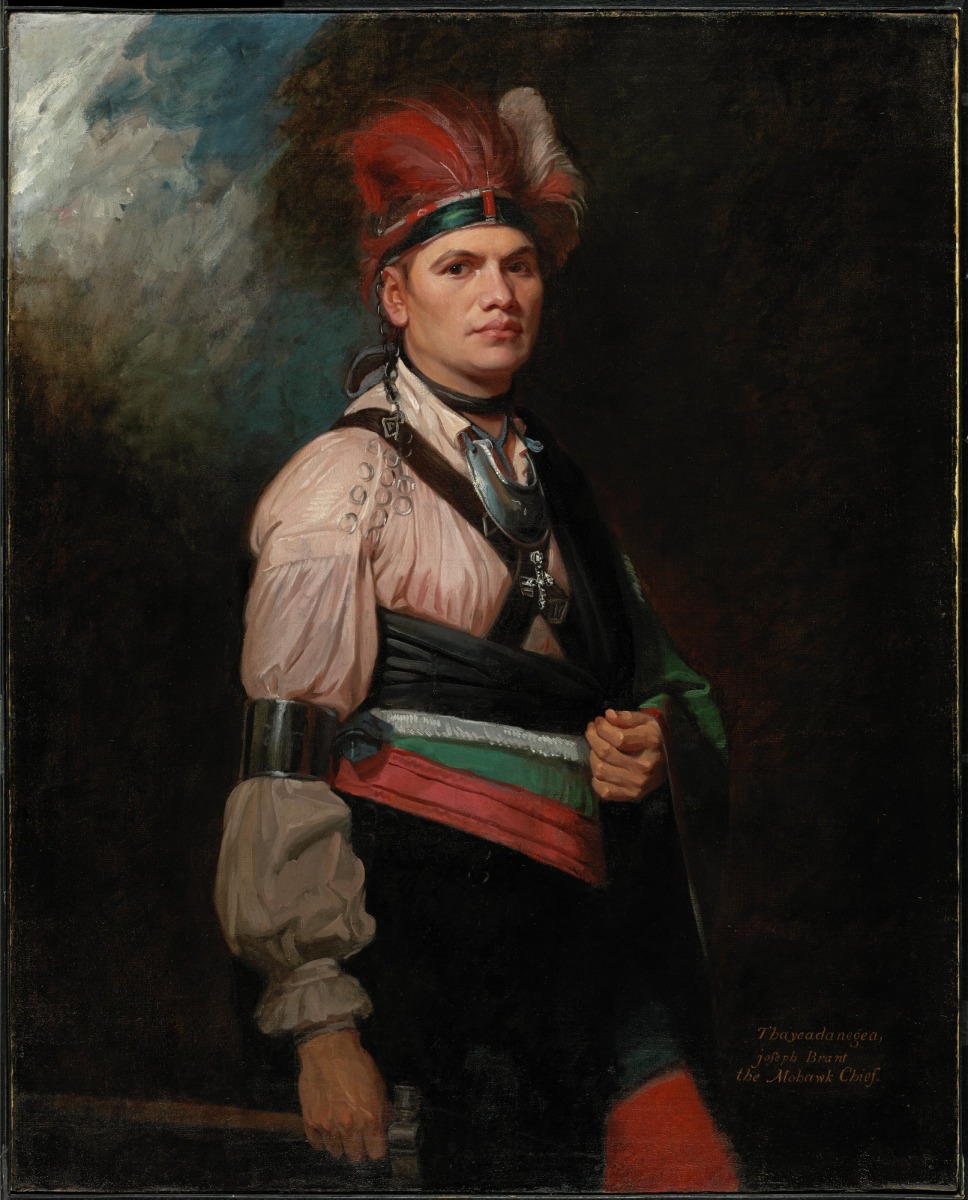 Painting
Primary source
Thayendanegea (Joseph Brant)
George Romney · 1776
 Painting
Primary source
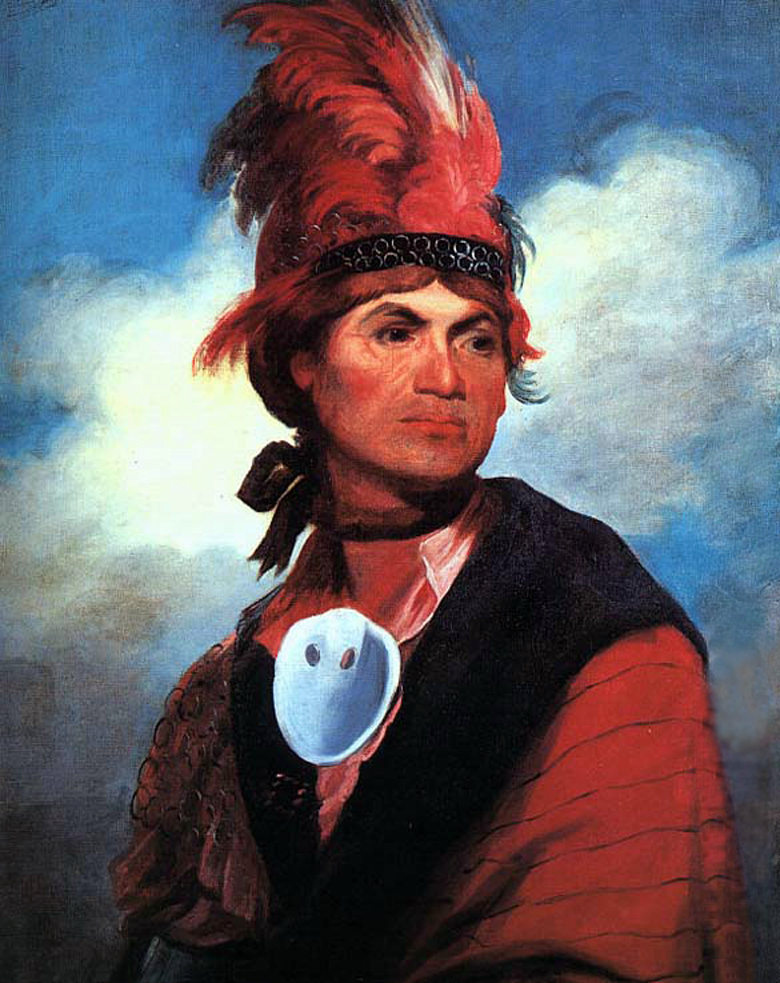
Joseph Brant by Gilbert Stuart
Gilbert Stuart · 1786
 Painting
Primary source
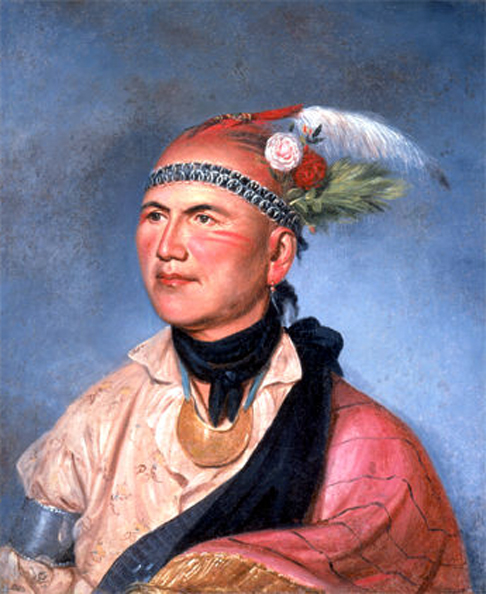
Joseph Brant by Charles Willson Peale
Charles Willson Peale · 1797
 Painting
Secondary source
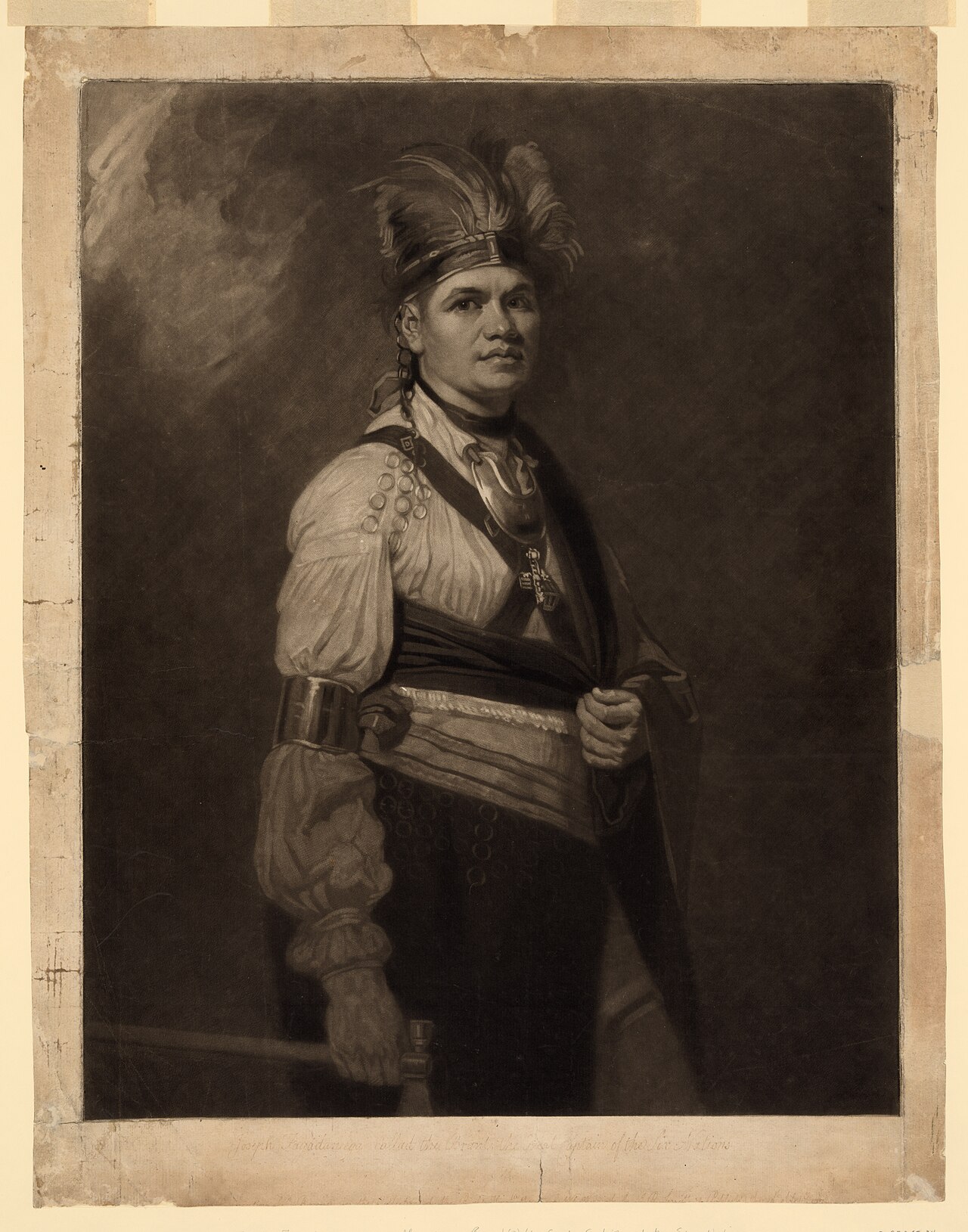
Joseph Fayadaneega, called the Brant, the Great Captain of the Six Nations
John Raphael Smith, after George Romney · 1779
 Painting
Primary source
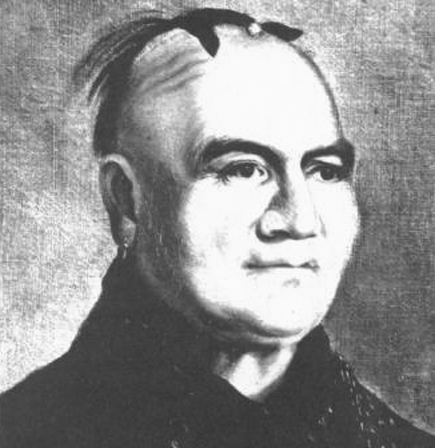
Joseph Brant by Ezra Ames
Ezra Ames · 1806
Ready when you are
Start chatting with Joseph Brant (Thayendanegea) now.
20 messages free · No credit card · Available in 50+ languages.